
The city's emblem
A red bridge with two tall towers.
Achmad Rabin Taim from Jakarta, Indonesia — CC BY 2.0 · Badan Usaha Milik Negara — Public domain · Gaudi Renanda — CC BY-SA 4.0 · Gaudi Renanda — CC BY-SA 4.0
Palembang's emblem and best-known sight: a huge red bridge spanning the broad Musi River and linking the two halves of the city. President Sukarno wanted a bridge that opened for ships like London's Tower Bridge; it was funded by Japanese war reparations and opened in the 1960s, its central span once rising to let ships pass. That stopped long ago, but its two tall towers remain. The best experience here is a boat on the Musi: small wooden boats known as ketek leave from the jetty near Kuto Besak fort, passing under the bridge, between timber houses on stilts over the water, floating homes and markets. On the far bank lies Al-Munawar, an old quarter founded by Hadrami traders from Yemen in the eighteenth century, whose timber houses and Arab families remain to this day. The bridge and riverside promenade are free, and boat trips start from about twenty-five thousand rupiah per person depending on distance. The finest time is evening, when the bridge is lit in colours reflected in the river and the Kuto Besak square fills with food stalls. On the bank, try Palembang's famous dish, pempek, fish cakes with a spicy vinegar sauce; most stalls selling it are halal.
A red bridge with two tall towers.
A centuries-old Hadrami quarter.
Palembang's most famous dish.
Over the Musi River, central Palembang
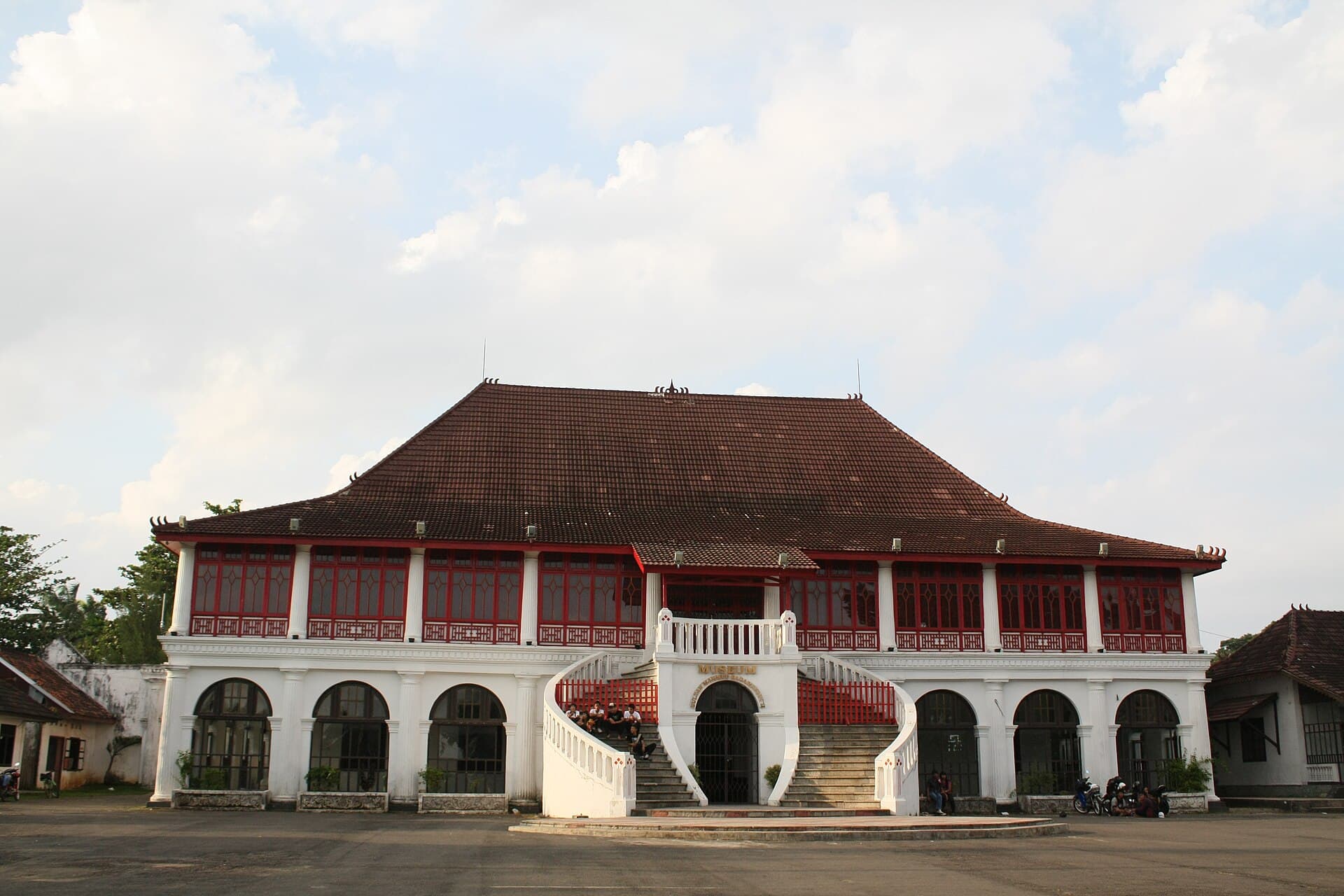 Sultan Mahmud Badaruddin II MuseumThe city museum, in a nineteenth-century building that was the Dutch Resident's 4 minutes walk
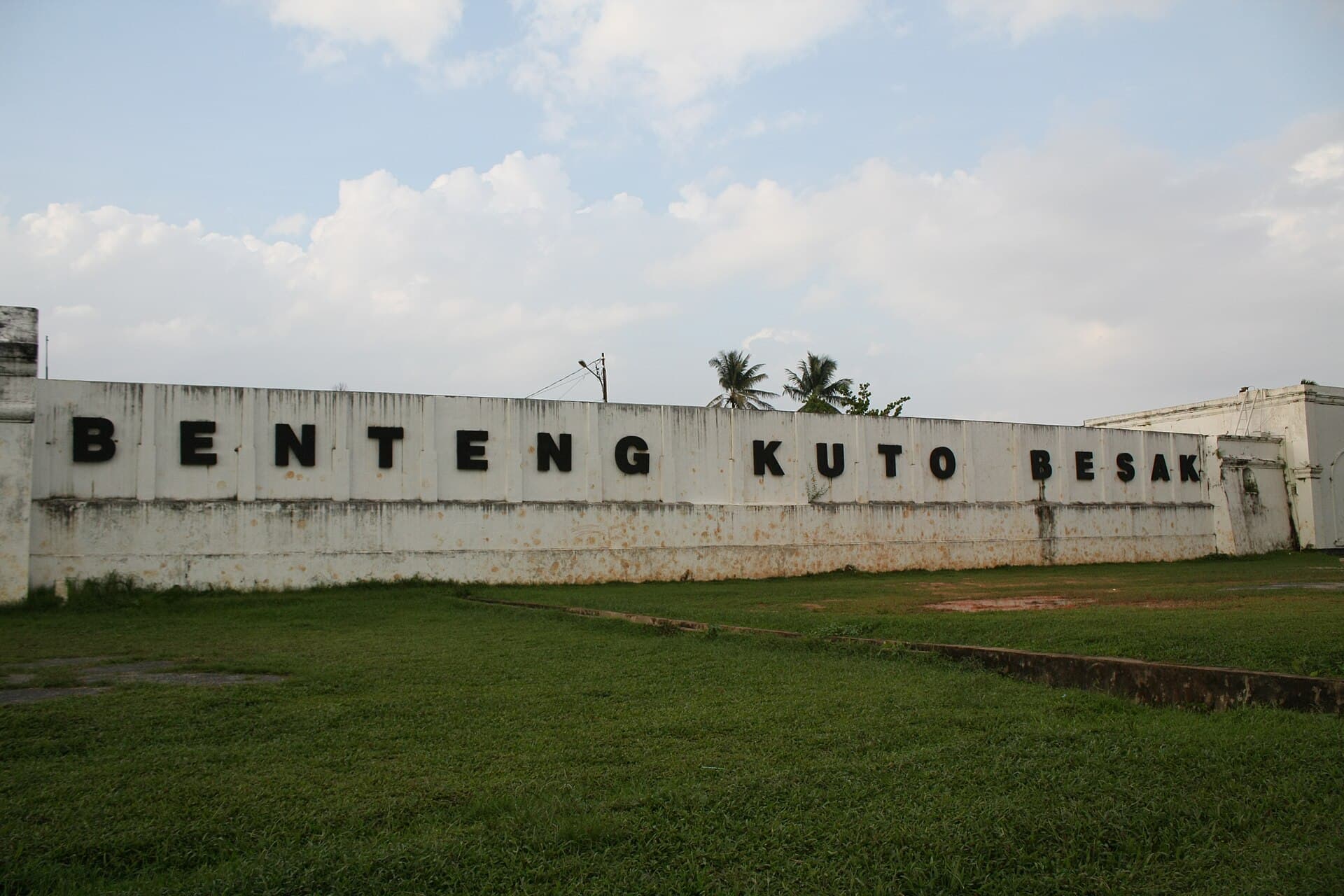 Kuto Besak FortThe fortified palace of the Palembang Sultanate, its name meaning great fortress6 minutes walk
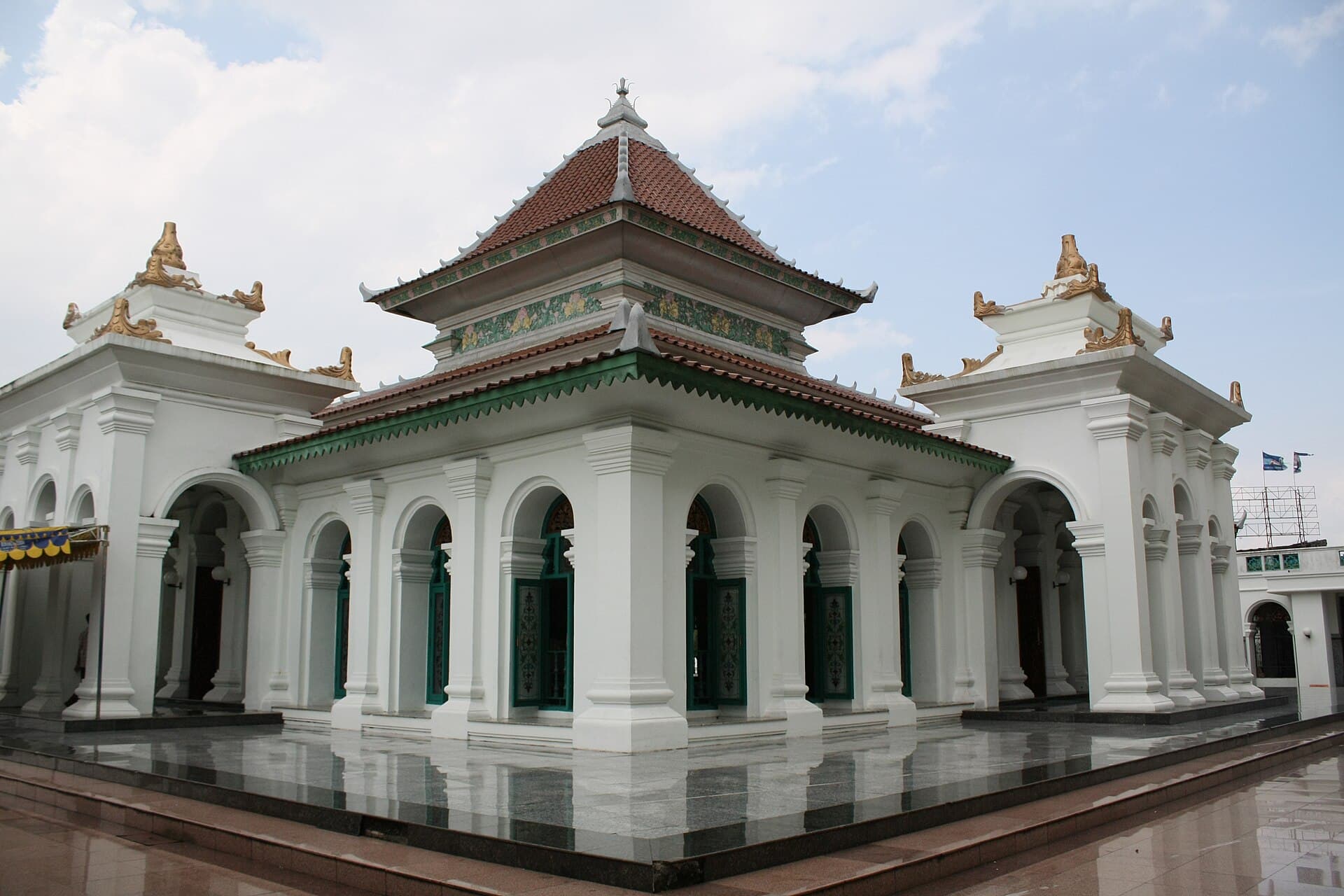 Great Mosque of Palembang (Sultan Mahmud Badaruddin I Mosque)The largest and most storied mosque in South Sumatra, built by Sultan Mahmud Bad7 minutes walk
A neighbourhood on the Musi's south bank founded by Hadrami traders from Yemen some two and a half centuries ago, whose descendants still keep its old timber houses and customs; you can reach it by boat.