
The sultanate's mosque
Built by Sultan Mahmud Badaruddin I.
fitri agung from Pekanbaru, Riau, Indonesia, Indonesia — CC BY 2.0 · Swarabakti — CC BY-SA 4.0 · Amr.photos — CC BY-SA 4.0
The largest and most storied mosque in South Sumatra, built by Sultan Mahmud Badaruddin I after the Dutch destroyed the old royal mosque in 1659. Work began in Jumada al-Akhirah 1151 AH, 1738 CE, and took ten years because of tension with the Dutch, finishing in 1748. It was first built in the traditional Javanese style, with a multi-tiered roof on four main posts crowned by an ornament, its edges sweeping upward like the roofs of Chinese temples; it was enlarged several times over the centuries, blending Javanese, Chinese and European styles and gaining minarets and a modern dome, and it is now the third-largest mosque in Sumatra. Entry is free; the mosque serves daily and Friday prayers and fills with worshippers, and non-Muslims visit outside prayer times in modest dress. It stands in the heart of the city, a few steps from the Ampera Bridge and the Musi River, Kuto Besak fort and the Sultan Mahmud Badaruddin II Museum, so they all fit into one walk through the old town.
Built by Sultan Mahmud Badaruddin I.
Javanese, Chinese and European.
By the river, bridge and fort.
Central Palembang, near the Ampera Bridge
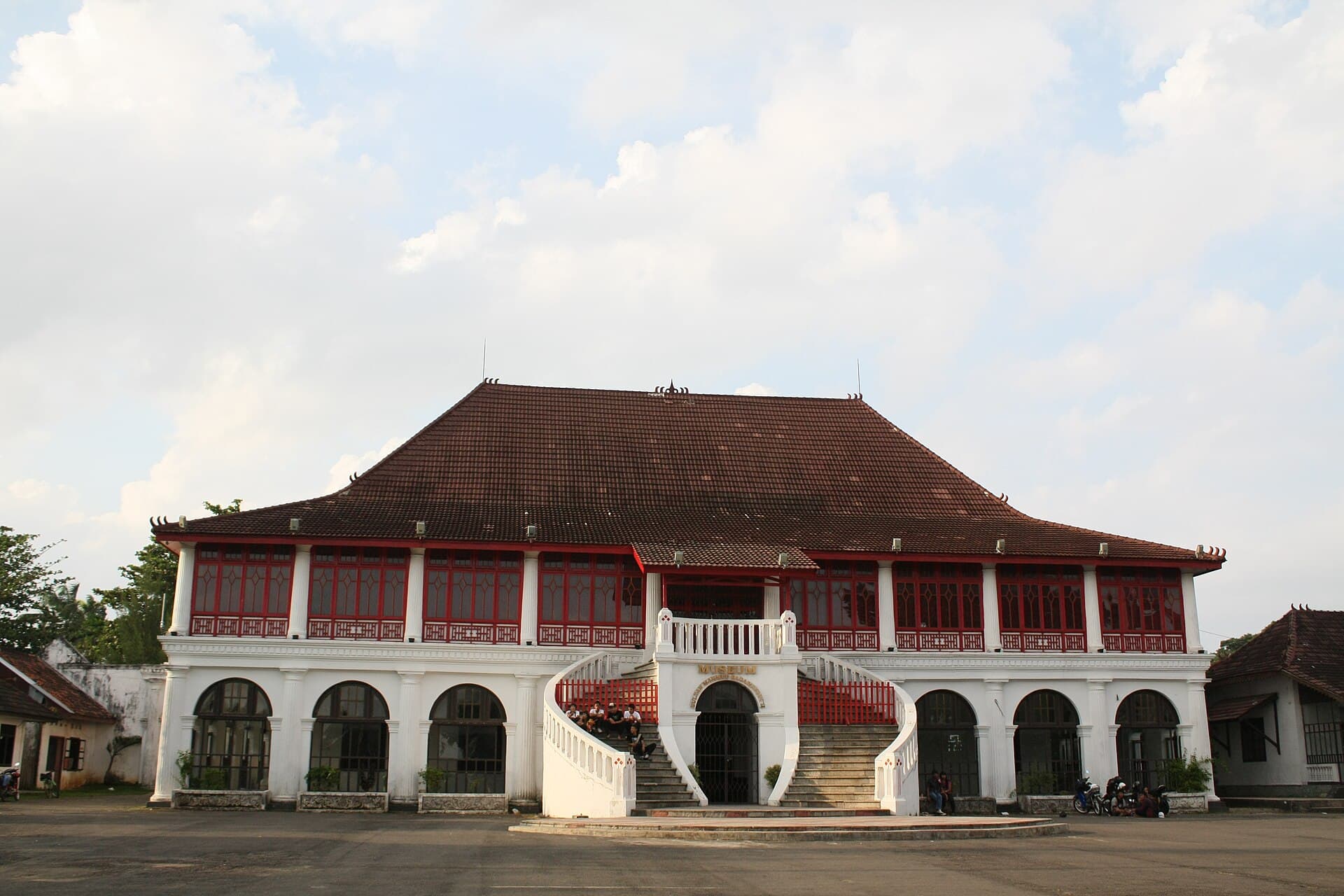 Sultan Mahmud Badaruddin II MuseumThe city museum, in a nineteenth-century building that was the Dutch Resident's 4 minutes walk
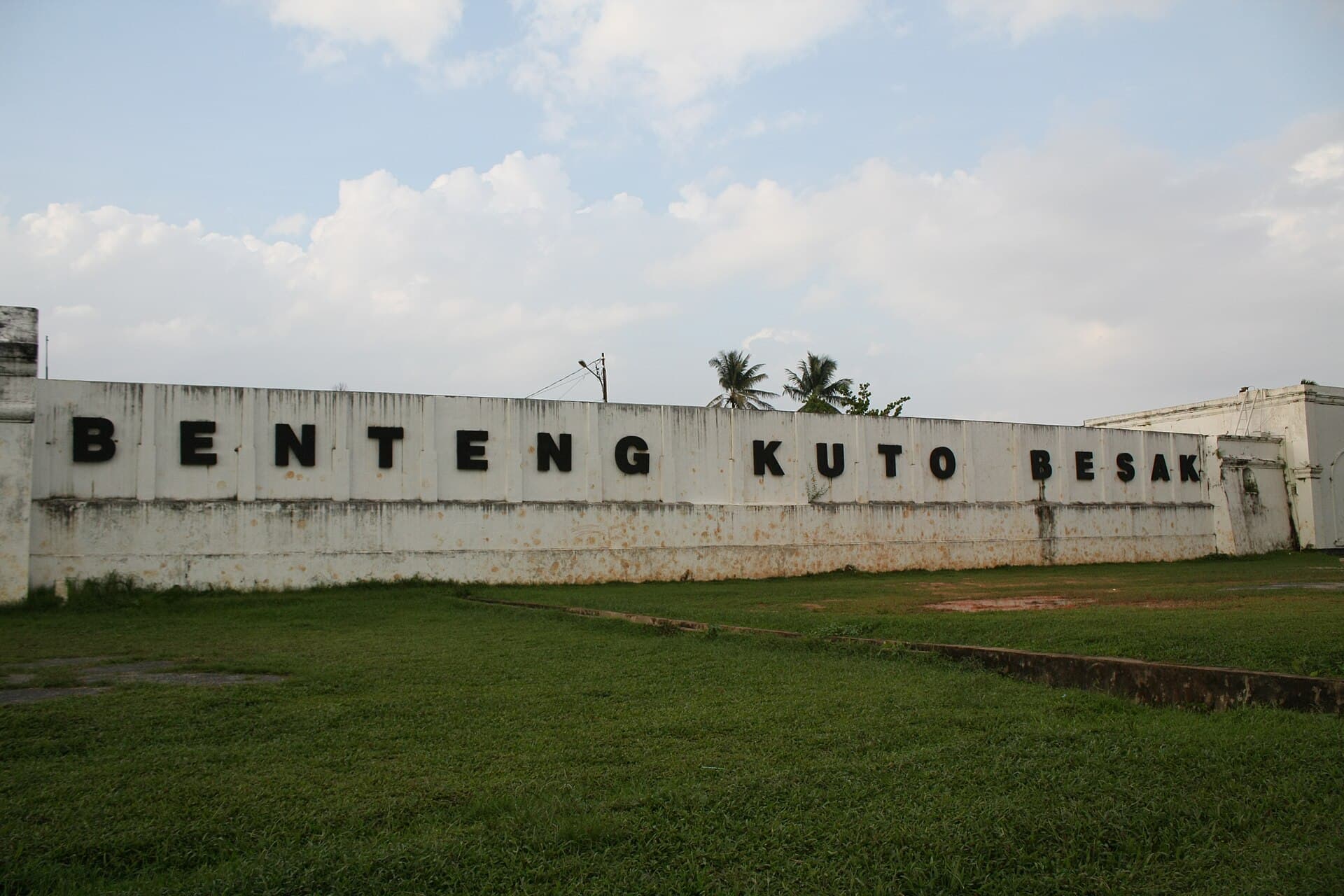 Kuto Besak FortThe fortified palace of the Palembang Sultanate, its name meaning great fortress5 minutes walk
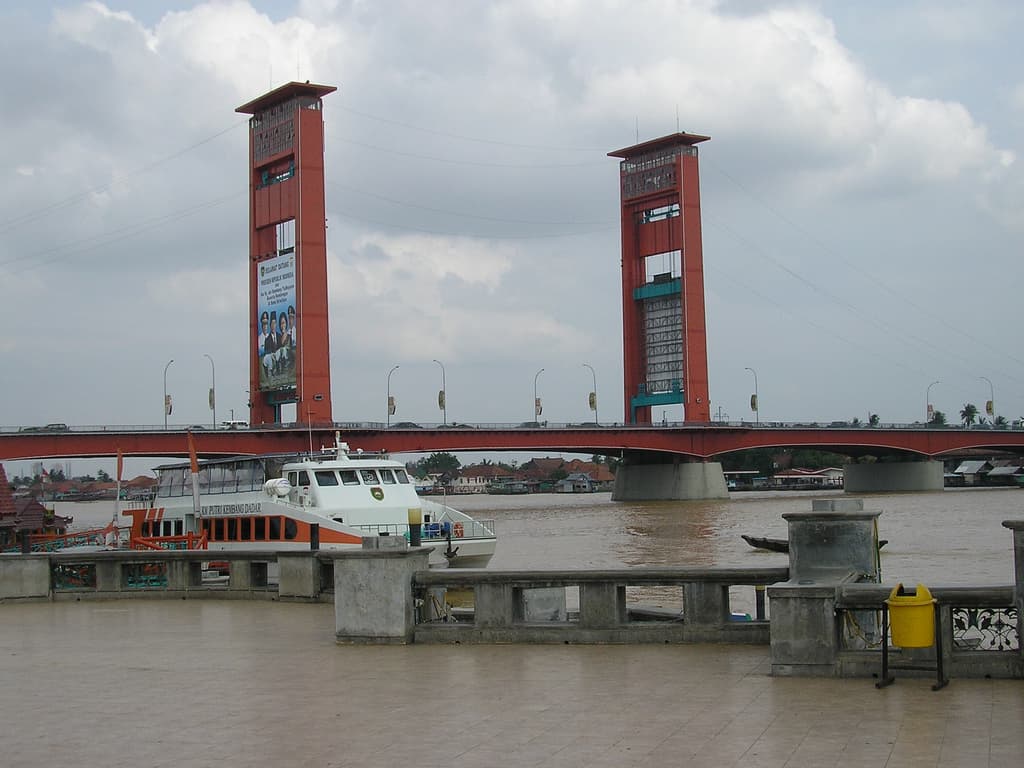 Ampera Bridge and the Musi RiverPalembang's emblem and best-known sight: a huge red bridge spanning the broad Mu7 minutes walk
Because Palembang is an old trading city where Chinese people lived for centuries, so its first mosque took the upswept roof edges of Chinese buildings, alongside the Javanese tiered form.