
The great fortress
The sultanate's palace from 1797.
fitri agung from Pekanbaru, Riau, Indonesia, Indonesia — CC BY 2.0 · Arisdp — CC BY-SA 3.0 · Iwan Said — CC BY-SA 4.0
The fortified palace of the Palembang Sultanate, its name meaning great fortress in the local tongue. Building began in 1780 and took seventeen years; the sultans moved here in 1797 from their older palace, and it remained the seat of the sultanate until the Dutch abolished it in the nineteenth century. The fort is rectangular, with high walls of brick and stone, towers at its corners and a main gate facing the Musi River. It was later used as barracks and a military base, and the army still occupies parts of it, so you usually cannot go all the way inside, but its walls and gate are easily seen and photographed from the broad square in front. The riverside square in front of the fort is the heart of the modern city: free and always open, where people gather in the evening among food stalls, where river boats set off, and with the best view of the lit Ampera Bridge. The visit is short; combine it with the neighbouring Sultan Mahmud Badaruddin II Museum and the Great Mosque, then a boat trip on the river at sunset.
The sultanate's palace from 1797.
The city's heart and evening stalls.
The best view of the lit Ampera Bridge.
On the Musi riverbank, near the Ampera Bridge
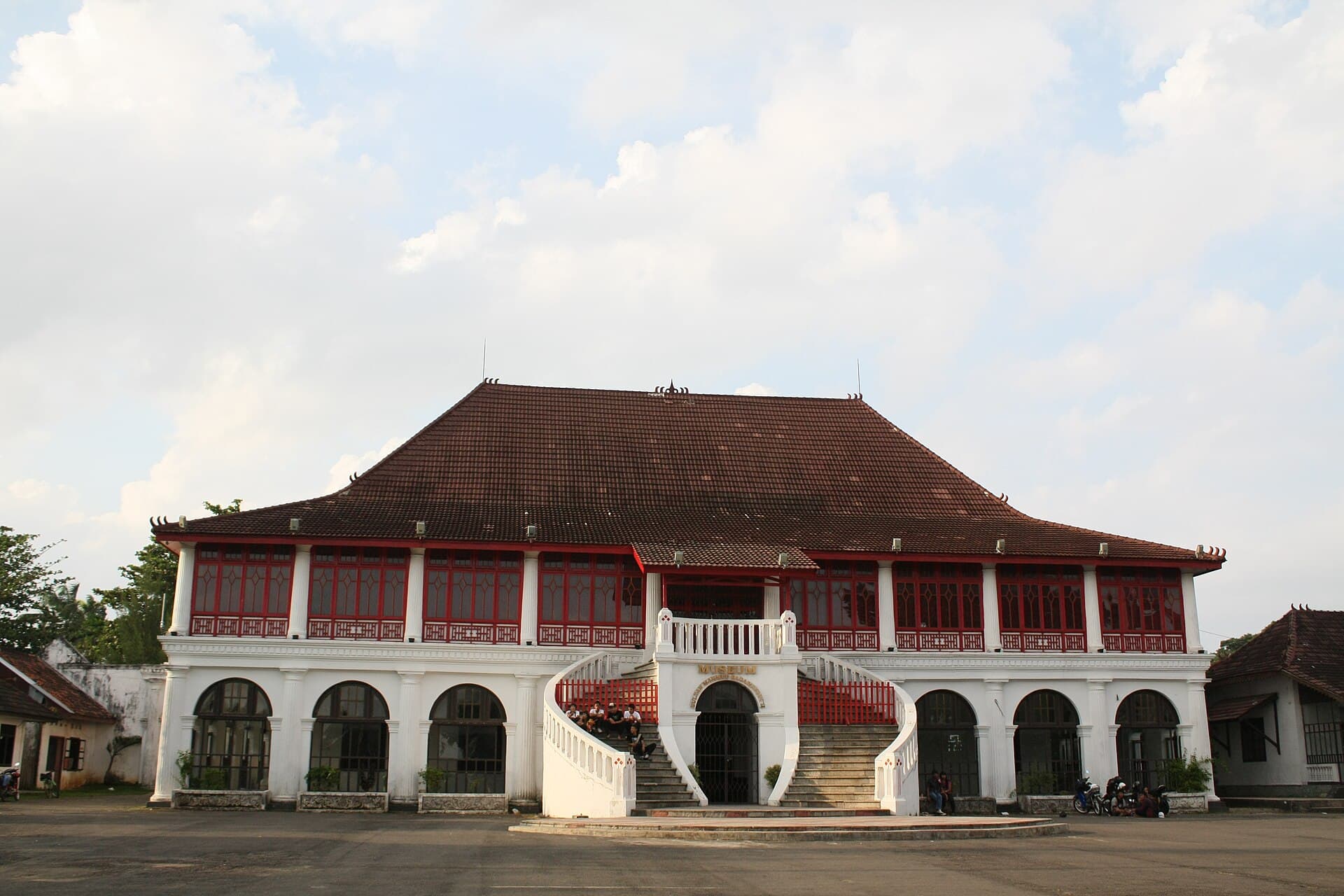 Sultan Mahmud Badaruddin II MuseumThe city museum, in a nineteenth-century building that was the Dutch Resident's 3 minutes walk
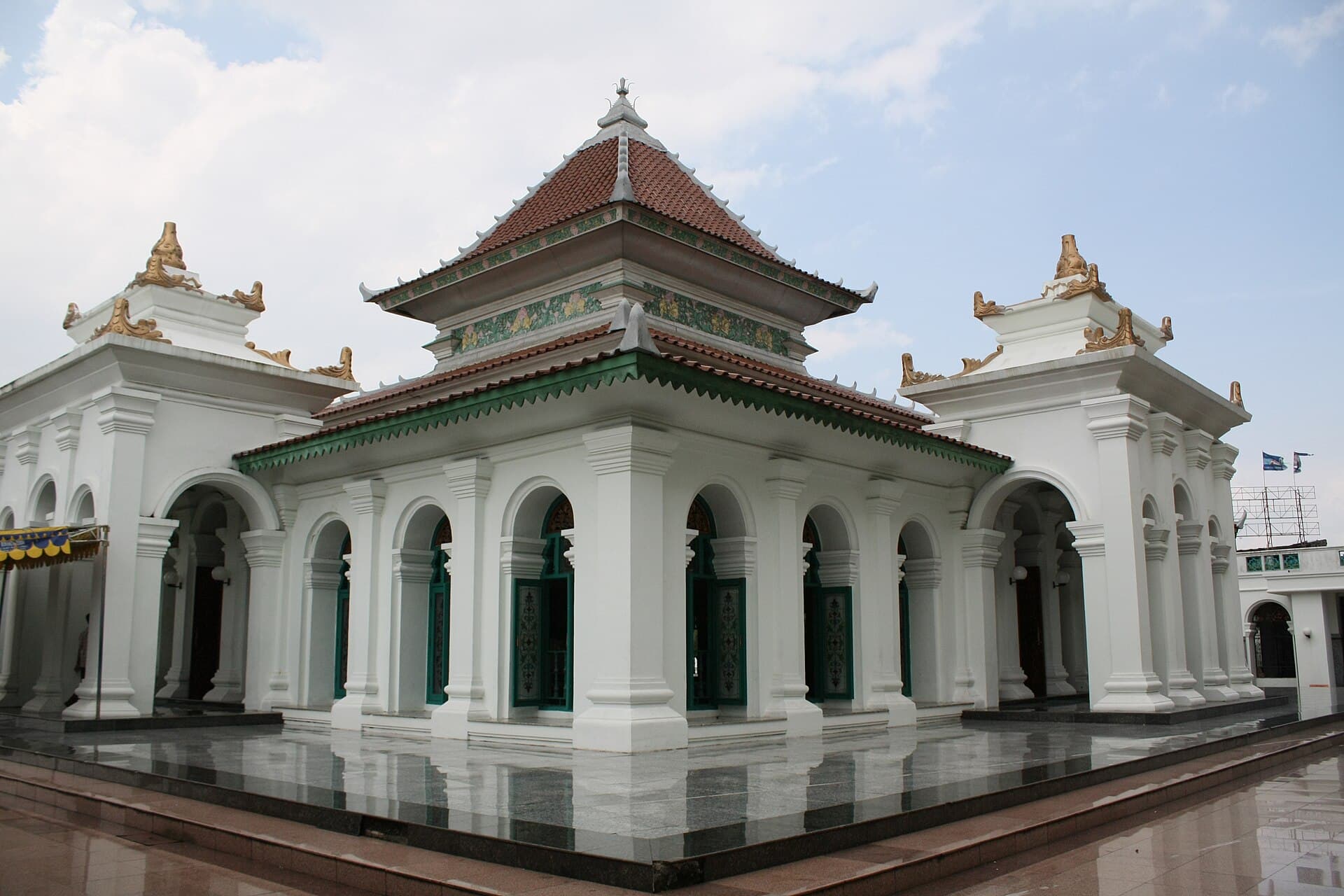 Great Mosque of Palembang (Sultan Mahmud Badaruddin I Mosque)The largest and most storied mosque in South Sumatra, built by Sultan Mahmud Bad5 minutes walk
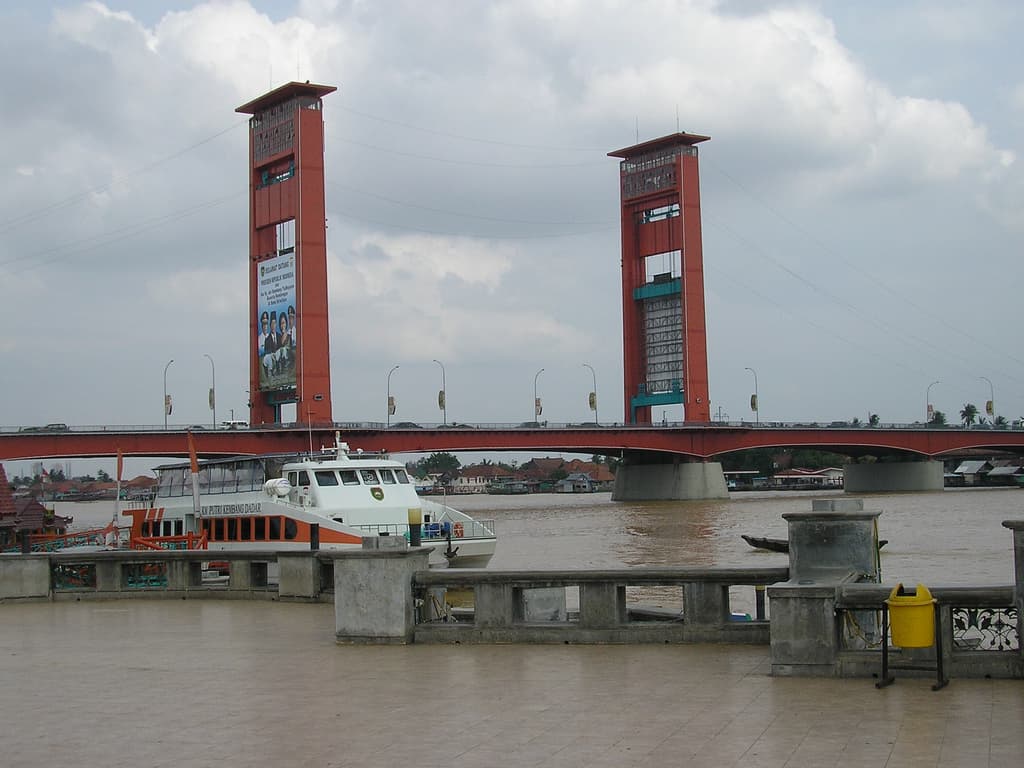 Ampera Bridge and the Musi RiverPalembang's emblem and best-known sight: a huge red bridge spanning the broad Mu6 minutes walk
Large parts are still held by the army, so access is usually limited. The walls, gate and front square are what visitors see.