
The Five-Day Battle
January 1947.
Cendy00 — CC BY 4.0 · Wulanjeli27 — CC BY-SA 4.0 · Cendy00 — CC BY 4.0 · Muhammad Riandi — CC BY 4.0
A monument and museum in the heart of Palembang, beside the Grand Mosque and near the Ampera Bridge, commemorating the Five-Day Battle of January 1947, when the townspeople fought the Dutch forces returning after the declaration of independence. The building takes the form of a lotus flower, with a bronze Garuda eagle, the national emblem, on its front. Inside is a museum over several floors showing fighters' weapons and equipment, photographs and documents on the battle and its leaders, and old maps of the city, and the top gives a view over the Musi River, the Ampera Bridge and the Grand Mosque. Entry is a token fee, and the museum opens in daytime on working days. The monument shares a square with the Grand Mosque, the Sultan Mahmud Badaruddin II museum and Kuto Besak fort, so combine them on one walking tour of the old centre.
January 1947.
And the Garuda eagle.
Bridge and mosque.
Beside the Grand Mosque, central Palembang
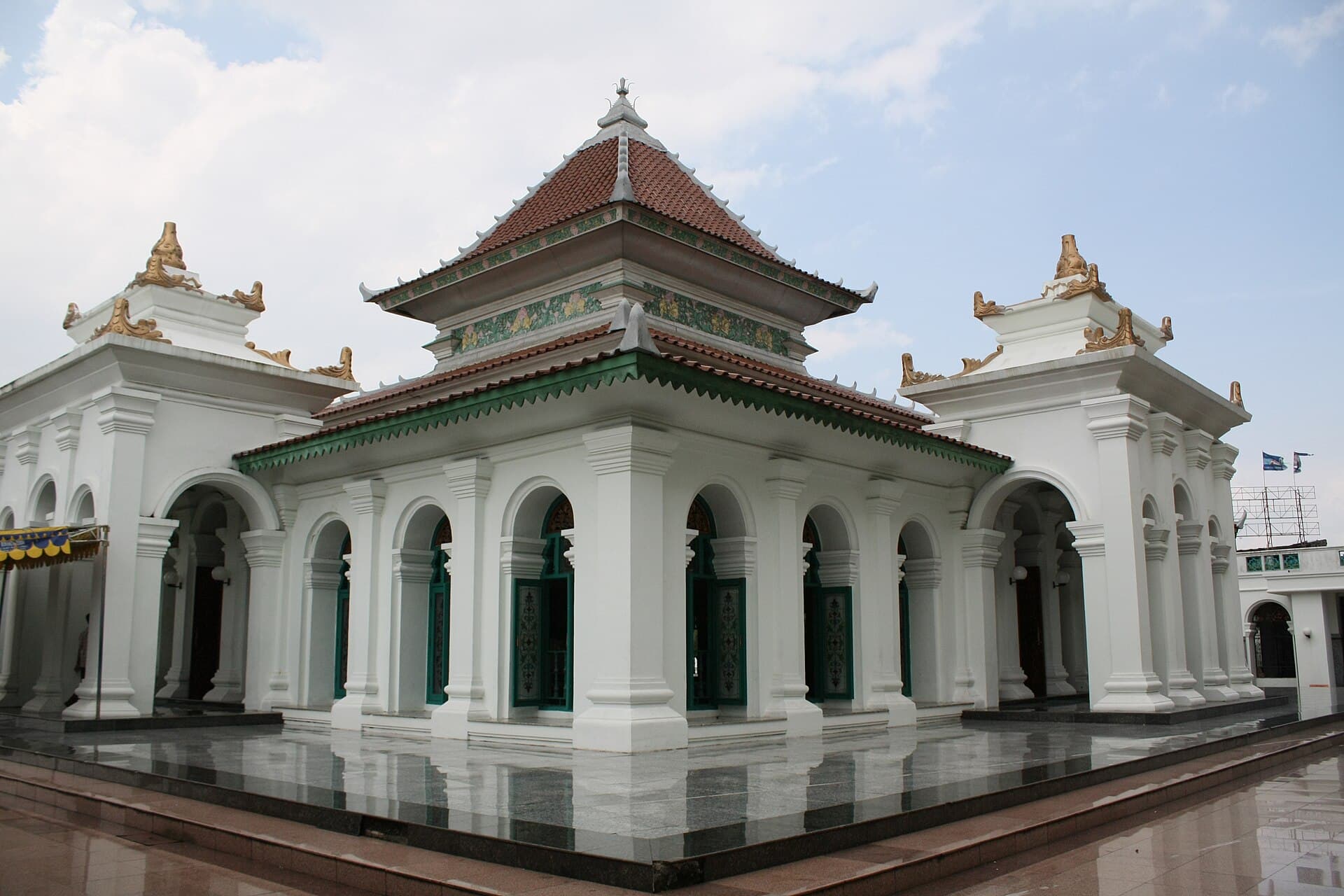 Great Mosque of Palembang (Sultan Mahmud Badaruddin I Mosque)The largest and most storied mosque in South Sumatra, built by Sultan Mahmud Bad2 minutes walk
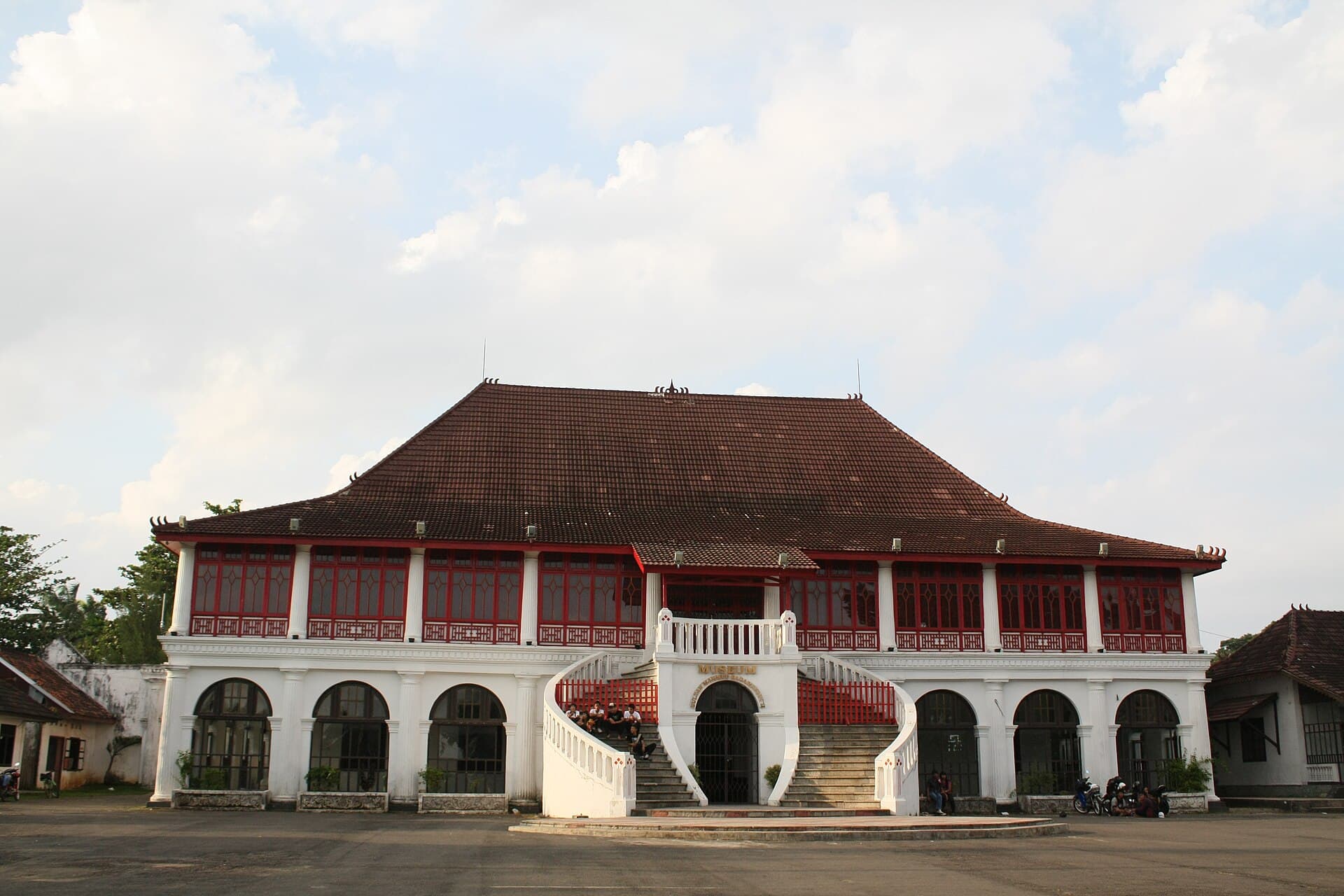 Sultan Mahmud Badaruddin II MuseumThe city museum, in a nineteenth-century building that was the Dutch Resident's 2 minutes walk
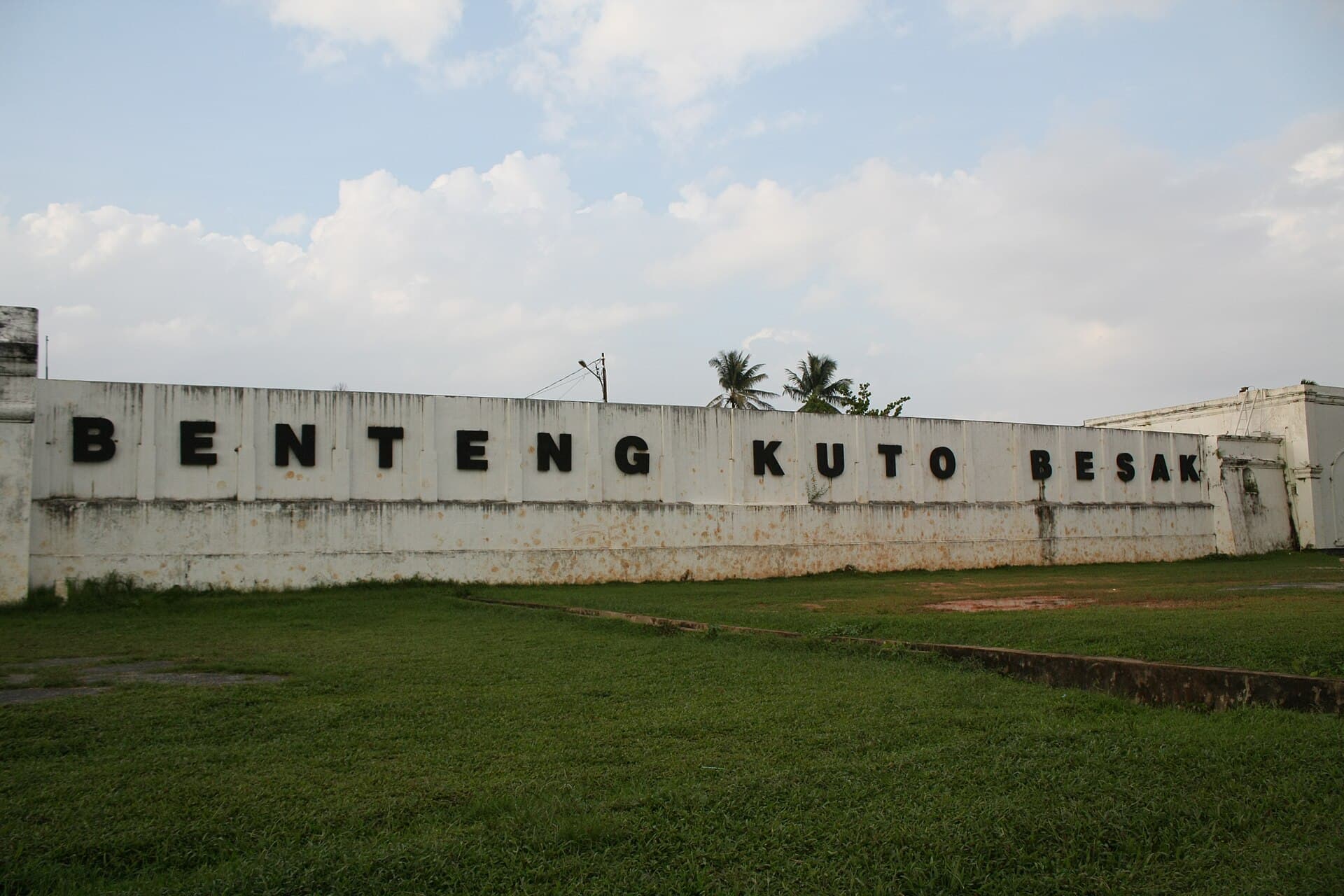 Kuto Besak FortThe fortified palace of the Palembang Sultanate, its name meaning great fortress3 minutes walk
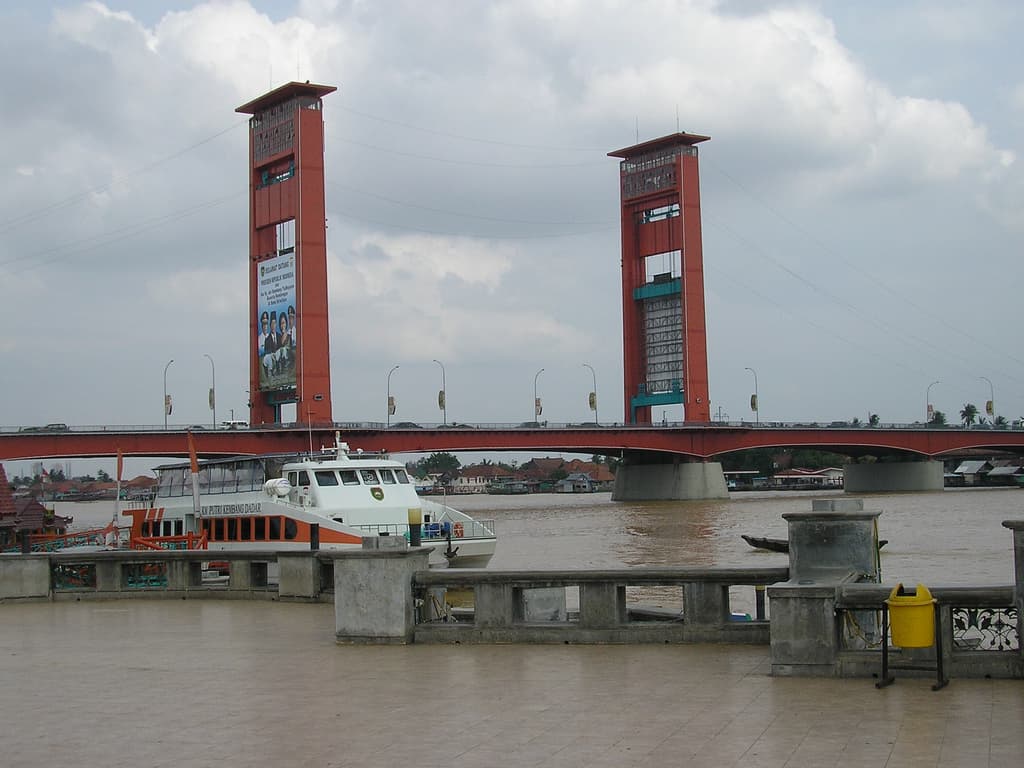 Ampera Bridge and the Musi RiverPalembang's emblem and best-known sight: a huge red bridge spanning the broad Mu6 minutes walk
The Grand Mosque across the way, the Sultan Mahmud Badaruddin II museum and Kuto Besak fort on the riverbank, and the Ampera Bridge a few minutes' walk away.