
A national hero
A sultan who resisted and was exiled.
fitri agung from Pekanbaru, Riau, Indonesia, Indonesia — CC BY 2.0 · D.W. Fisher-Freberg — CC BY-SA 3.0 · Kaliper1 — CC BY-SA 4.0 · Gunawan Kartapranata; Anon. — CC BY-SA 3.0
The city museum, in a nineteenth-century building that was the Dutch Resident's office, standing on the site of the old palace of Sultan Mahmud Badaruddin I, which the British demolished in 1823 to punish the sultanate. It bears the name of Sultan Mahmud Badaruddin II, who resisted the Dutch and British and was exiled; he is now a national hero whose portrait appears on Indonesian banknotes. The museum shows the history of the Palembang Sultanate and of the Srivijaya kingdom before it, with artefacts and statues, lavish gold-embroidered wedding costumes, the songket cloth the city is famous for, traditional tools and weapons, and models of the timber houses known as rumah limas. The fee is about twenty thousand rupiah for foreigners, much less for locals. It opens on weekdays from half past seven to four, and at weekends from nine to three. The museum is small, an hour is enough, and it stands beside Kuto Besak fort, the Great Mosque and the Ampera Bridge, a natural stop on a city-centre walk.
A sultan who resisted and was exiled.
Palembang's gold-woven cloth.
Relics of the old maritime kingdom.
Next to Kuto Besak fort, central Palembang
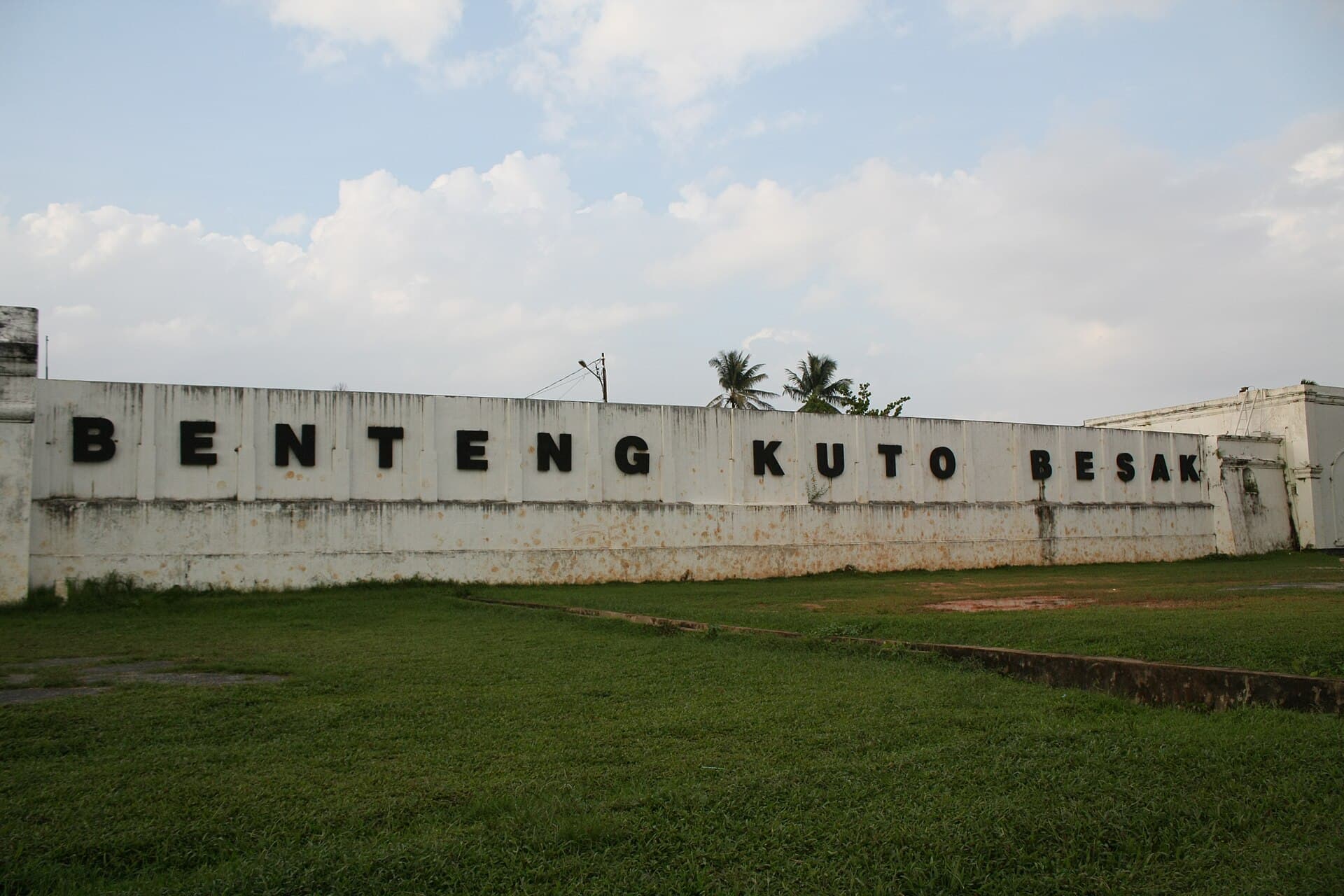 Kuto Besak FortThe fortified palace of the Palembang Sultanate, its name meaning great fortress3 minutes walk
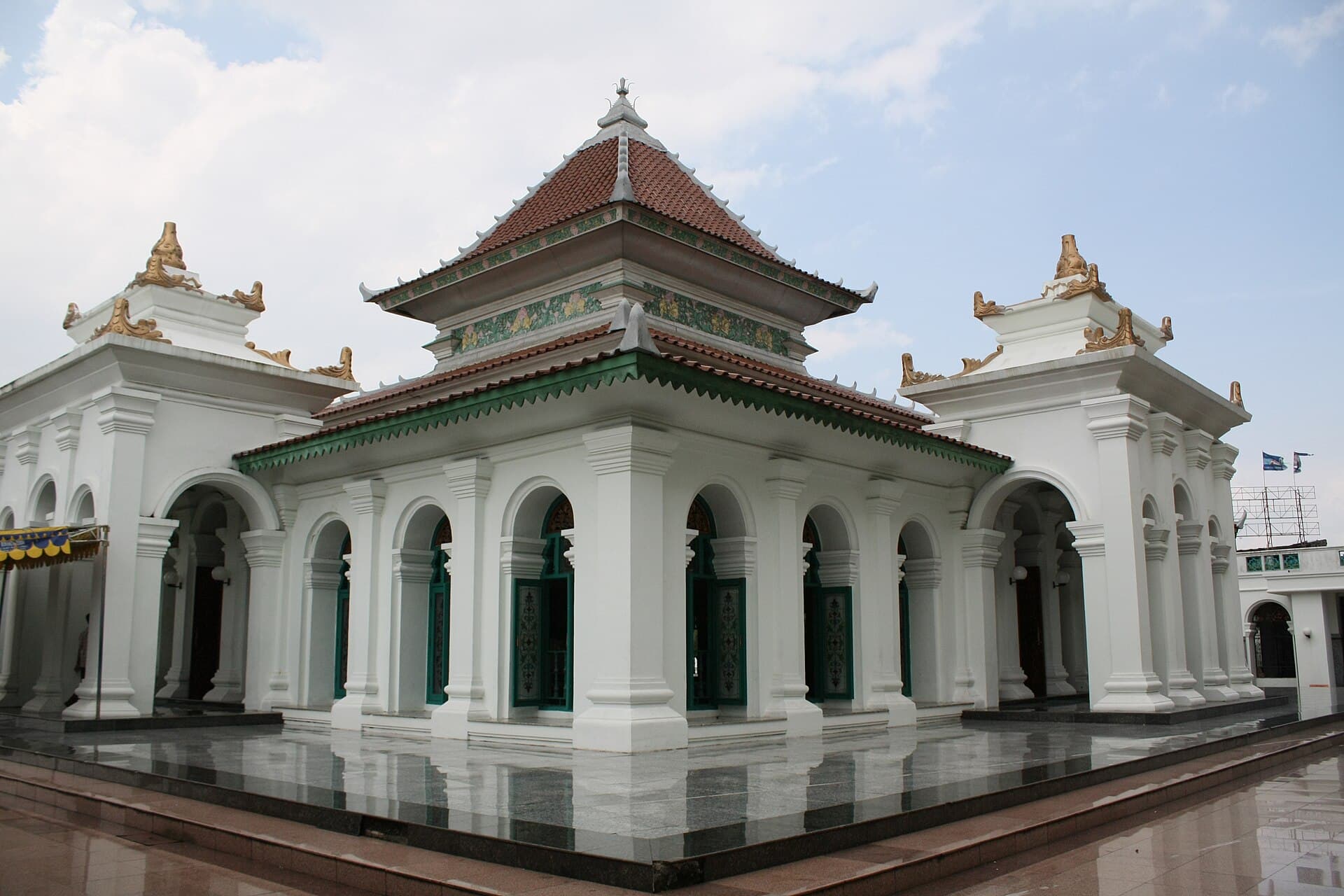 Great Mosque of Palembang (Sultan Mahmud Badaruddin I Mosque)The largest and most storied mosque in South Sumatra, built by Sultan Mahmud Bad4 minutes walk
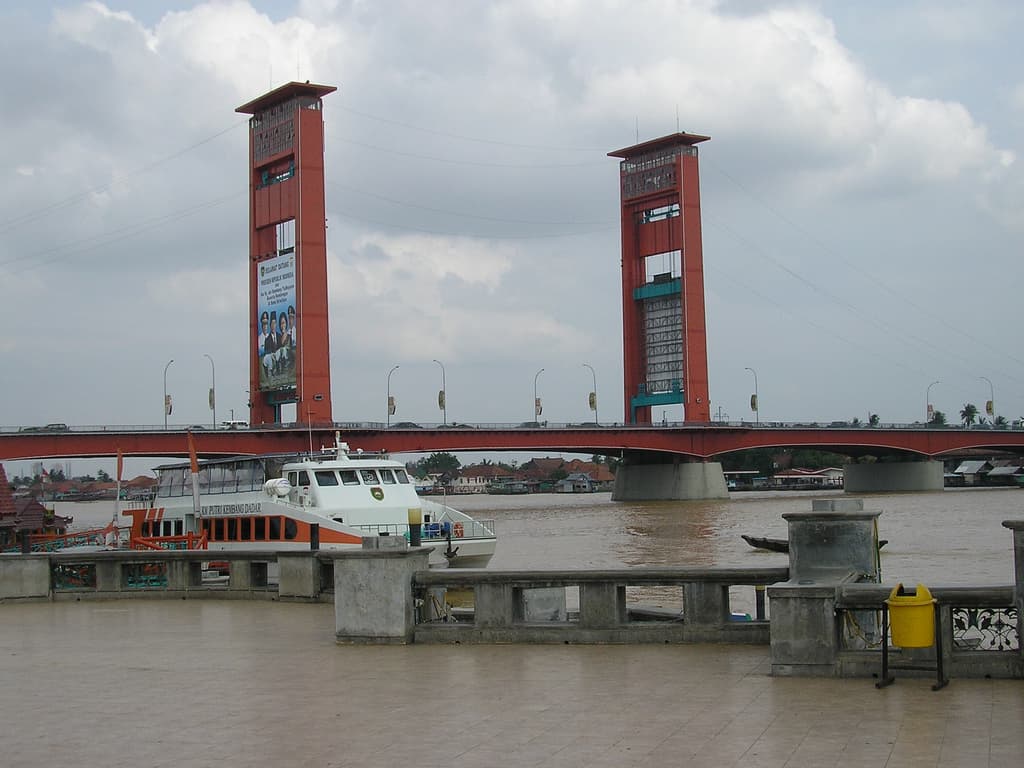 Ampera Bridge and the Musi RiverPalembang's emblem and best-known sight: a huge red bridge spanning the broad Mu4 minutes walk
The Sultan of Palembang in the early nineteenth century, who resisted the Dutch and British for years until he was defeated and exiled to a distant island; Indonesia honours him today as a national hero.