
The Hephaestus temple
A roof intact for twenty-four centuries.
Jean Housen — CC BY-SA 4.0 · Jean Housen — CC BY-SA 4.0 · Chabe01 — CC BY-SA 4.0 · Chabe01 — CC BY-SA 4.0
The Agora is where democracy invented its daily life: Athens' public square where Socrates walked arguing, citizens voted, philosophers stood trial — today a shaded garden of ruins beneath the Acropolis where you read the council house foundations, the courts, the actual ceramic voting discs. Its two jewels: the Temple of Hephaestus, classical Greece's best-preserved temple on its knoll (roof intact — showing what the Parthenon once was), and the completely rebuilt Stoa of Attalos (1956): the ancient shopping colonnade in shade and columns, now a museum of daily-life pieces — the office-lottery machine, the ostraka exile shards with the banished names in hand. It is the living half of the rock visit: that one for gods, this one for people — on the same combined ticket, and its shade forgives where the Acropolis never does.
A roof intact for twenty-four centuries.
The colonnade whole again — walking the old market in shade.
Shards naming the banished — democracy in handwriting.
Adrianou 24, 10555 Athens
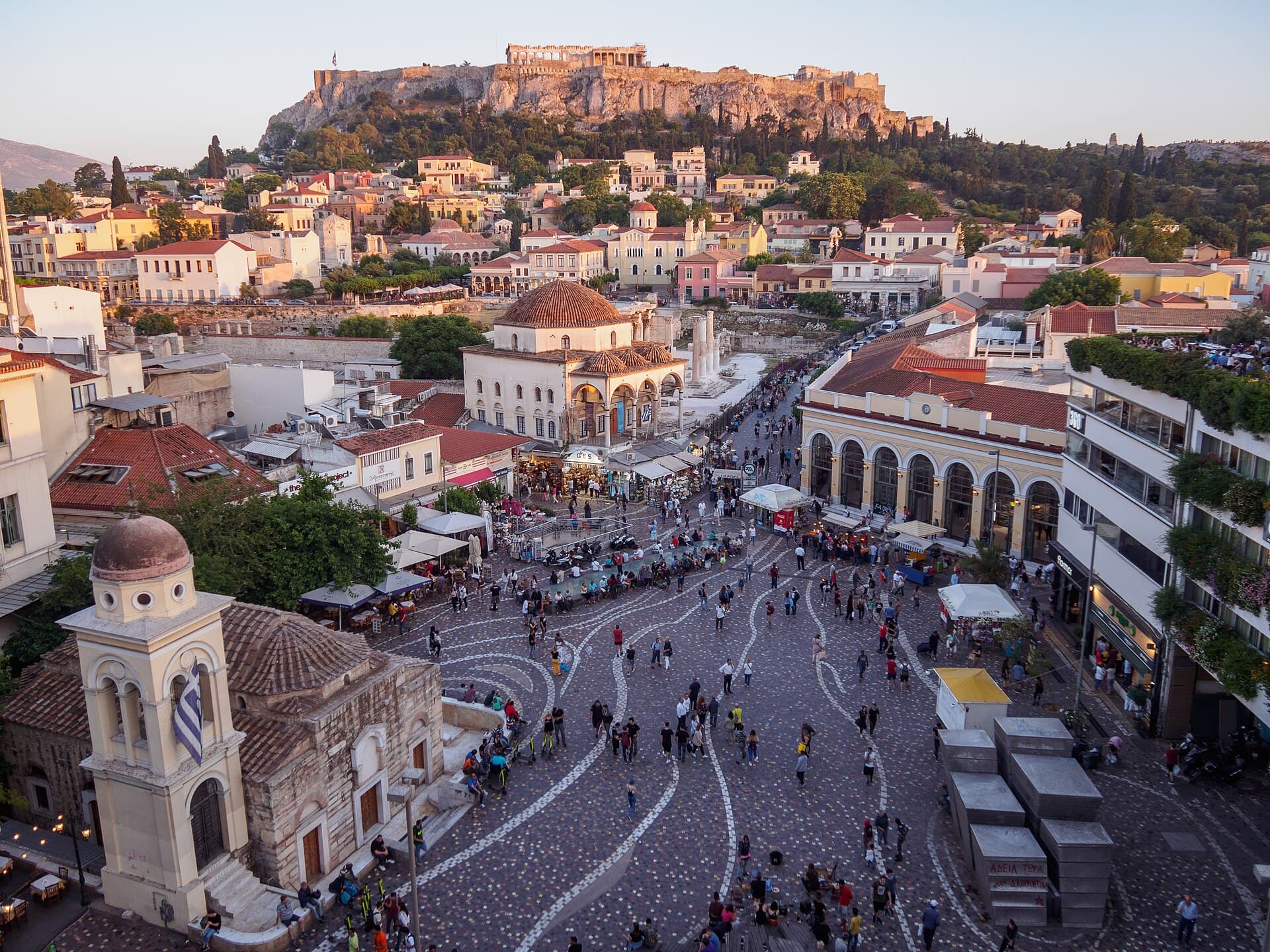 Monastiraki Square & BazaarMonastiraki is people's Athens itself: the square where everything meets — the A2 minutes walk4.4
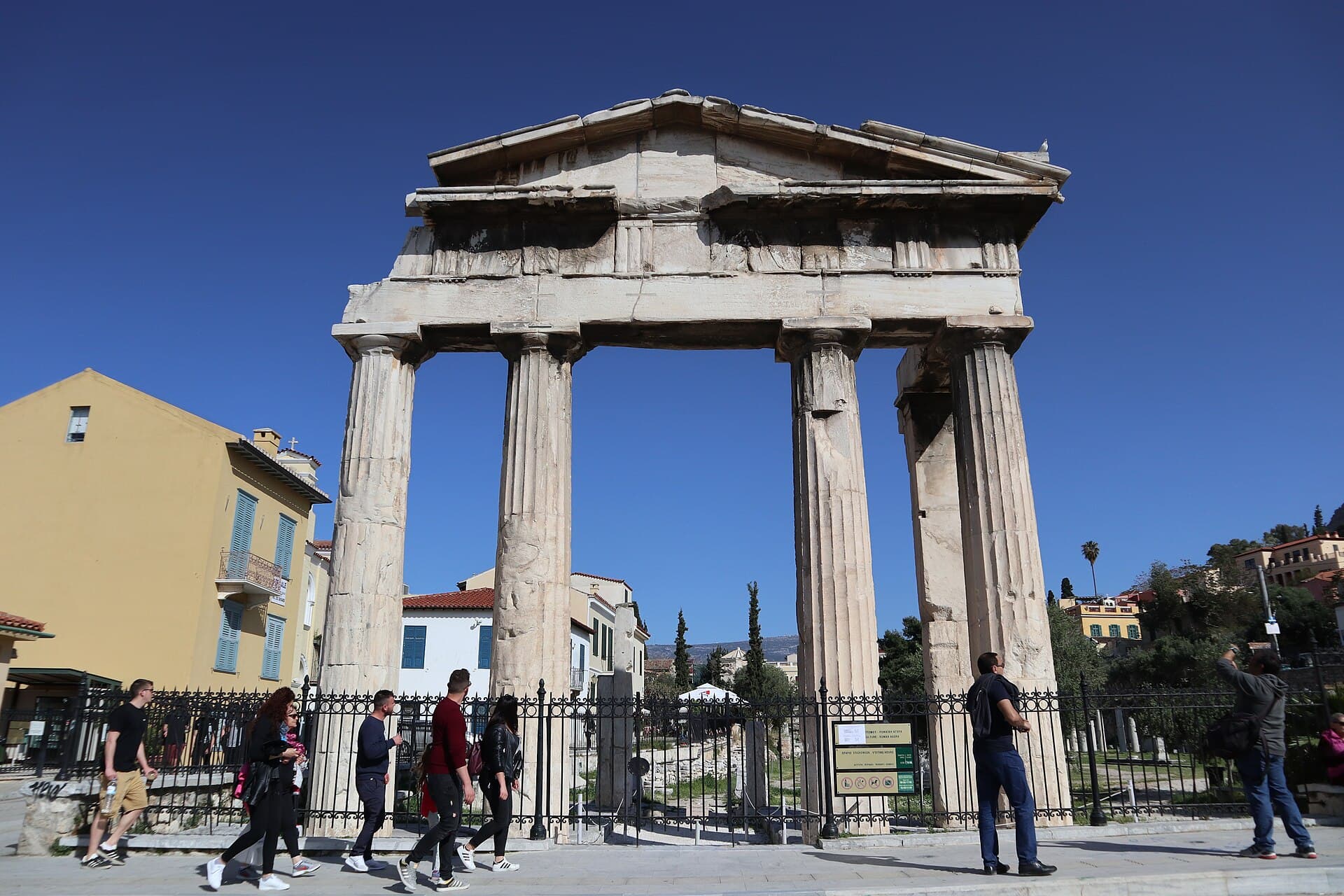 The Gate of Athena ArchegetisA marble gate of four Doric columns at the western entrance to the Roman Agora i3 minutes walk4.8
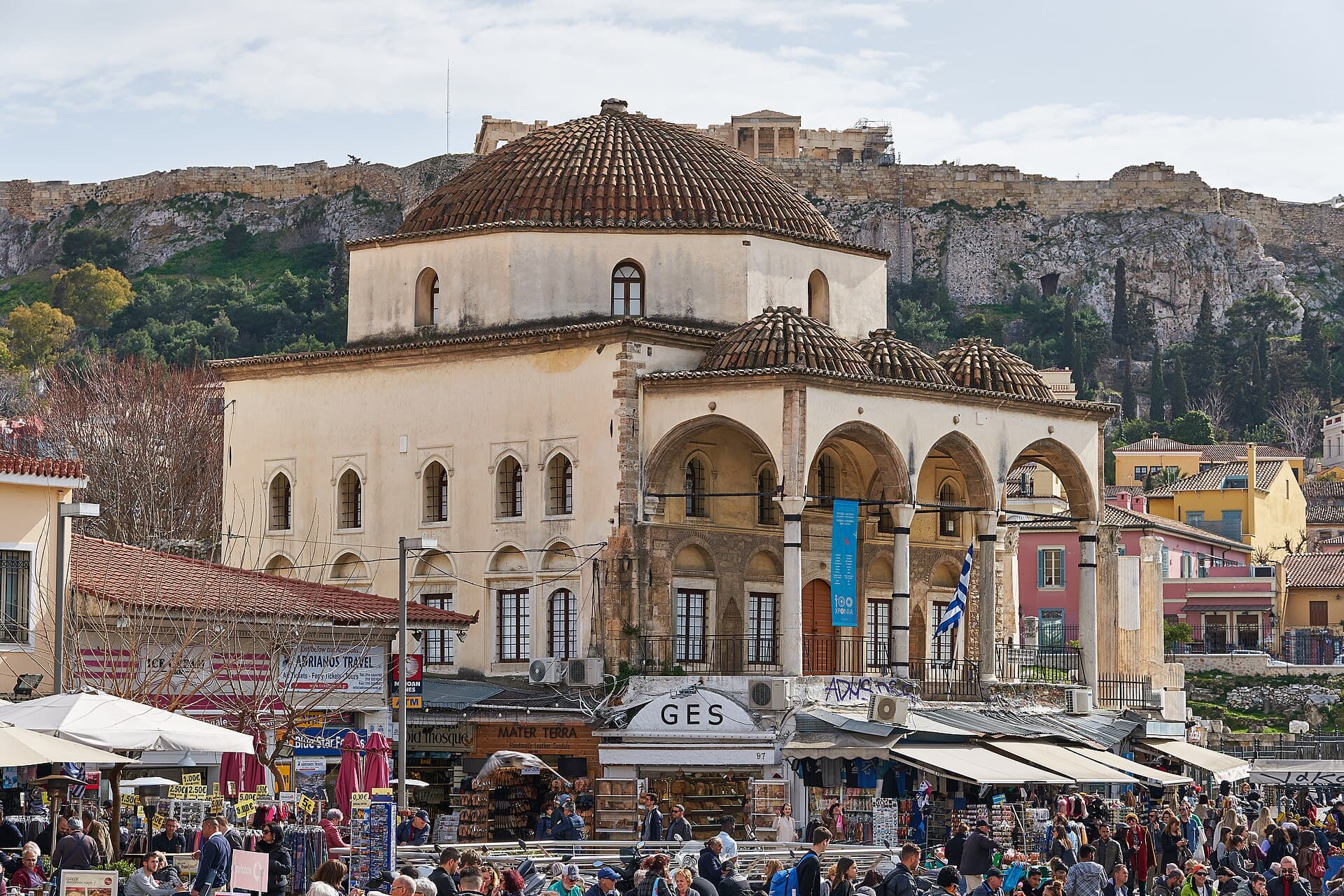 Tzistarakis MosqueIt stands directly on **Monastiraki Square**, and is among the clearest survival4 minutes walk4.5
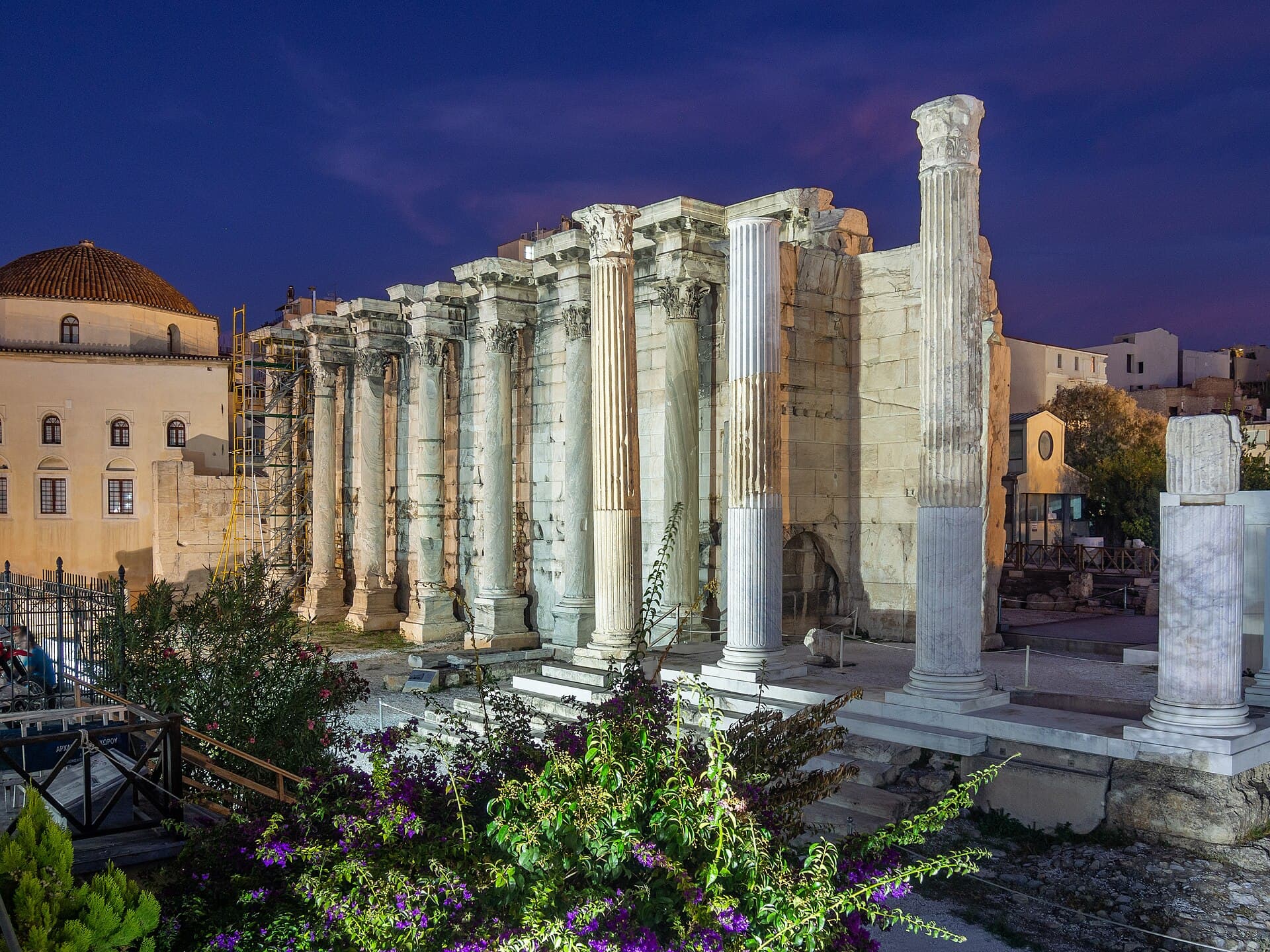 Hadrian's LibraryIn the middle of **Monastiraki**, steps from the metro station and the flea mark4 minutes walk4.5
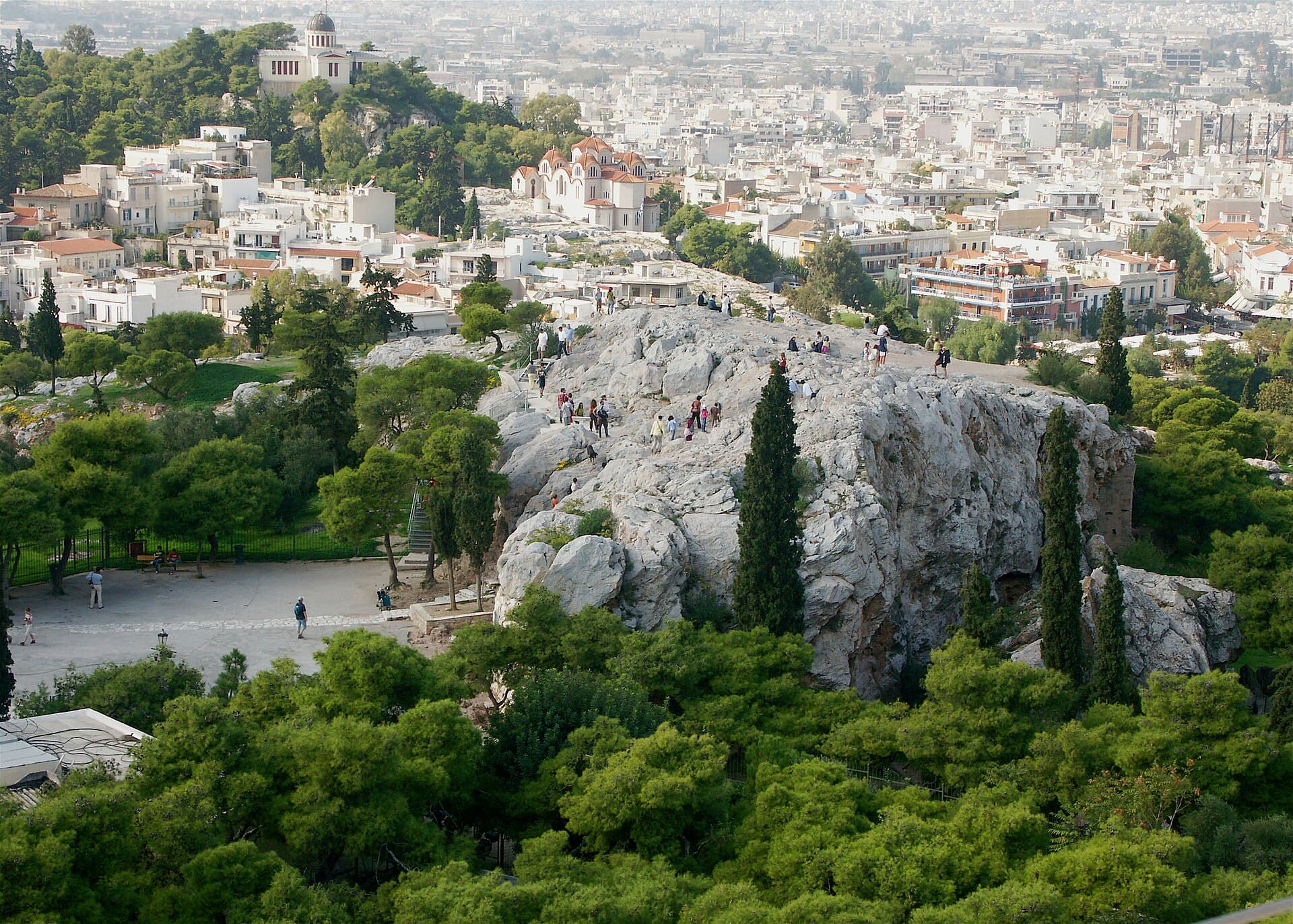 The Areopagus RockThe Areopagus is a bare rock beneath the Acropolis gate that carried the heavies4 minutes walk4.7
It adds the meaning: the rock was the city's worship, this its life — Socrates, courts and votes happened here, not above. A shaded ninety minutes with a temple better-kept than anything up there: an emphatic yes.