
Athena Archegetis
Athena the leader — the goddess's title as protector of the city.
George E. Koronaios — CC BY-SA 4.0 · Rijksmuseum — CC0 · Jean Housen — CC BY-SA 4.0 · George E. Koronaios — CC BY-SA 4.0
A marble gate of four Doric columns at the western entrance to the Roman Agora in Athens, built in the late first century BC. The inscription cut into it explains where the money came from: Julius Caesar and Augustus. That is, Athens's new market was funded from Rome, and this was written plainly across the front. The gate was dedicated to Athena Archegetis — Athena the leader or founder, the title of the goddess as the city's protector. This summarises Athens's position in that period. It was no longer a political power but had become a culturally respected city under Roman rule, visited by the sons of the Roman elite for their education and with its buildings funded by emperors. The respect was genuine and the independence was over. On one of the columns is a later Roman-period inscription setting the selling prices of oil and the taxes on it — a market notice carved in stone. It is seen free from the street and visited inside the Roman Agora site.
Athena the leader — the goddess's title as protector of the city.
A later inscription fixing oil prices and their taxes.
Rome paid, and the city taught its elite's sons.
The western entrance to the Roman Agora
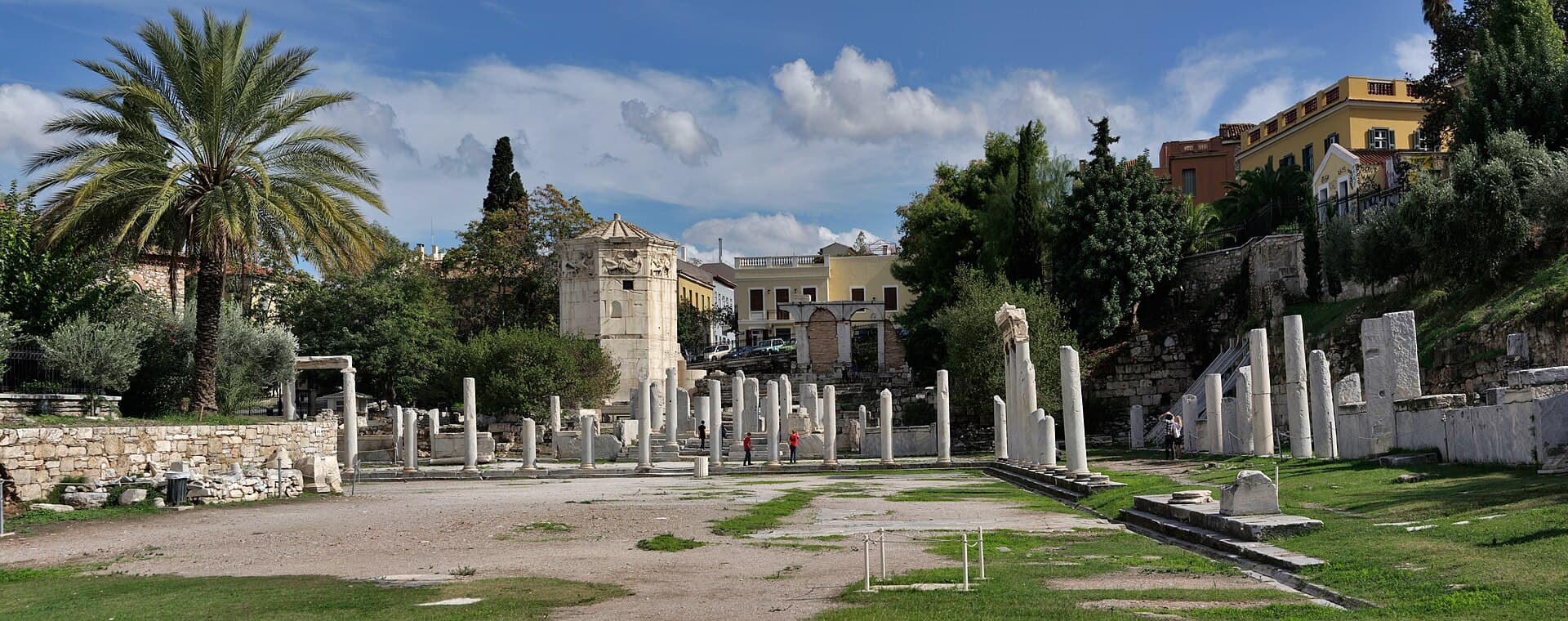 The Roman Agora & Tower of the WindsThe Roman Agora is the market the Caesars built Athens: Socrates' agora grown ol1 minute walk4.6
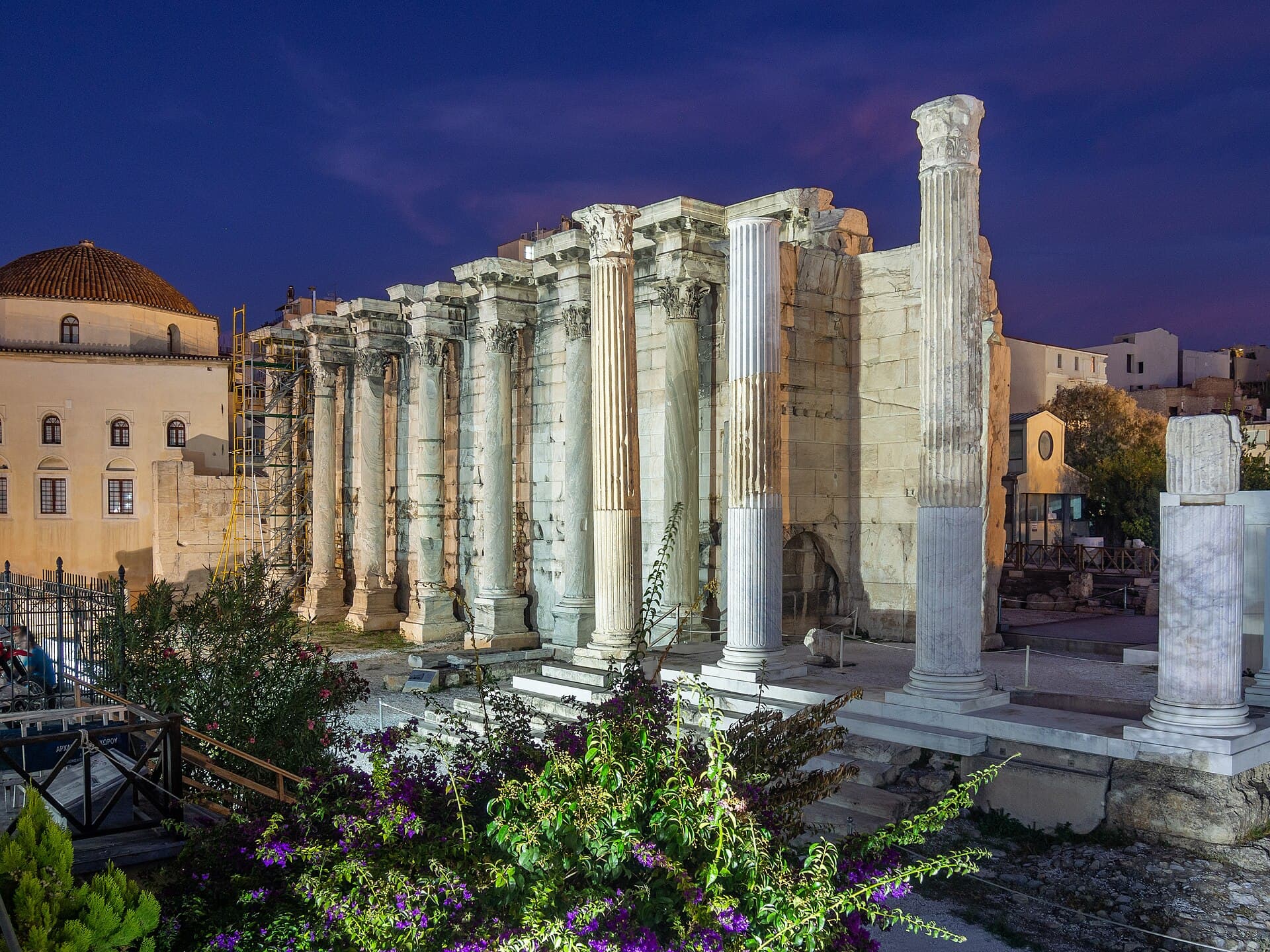 Hadrian's LibraryIn the middle of **Monastiraki**, steps from the metro station and the flea mark1 minute walk4.5
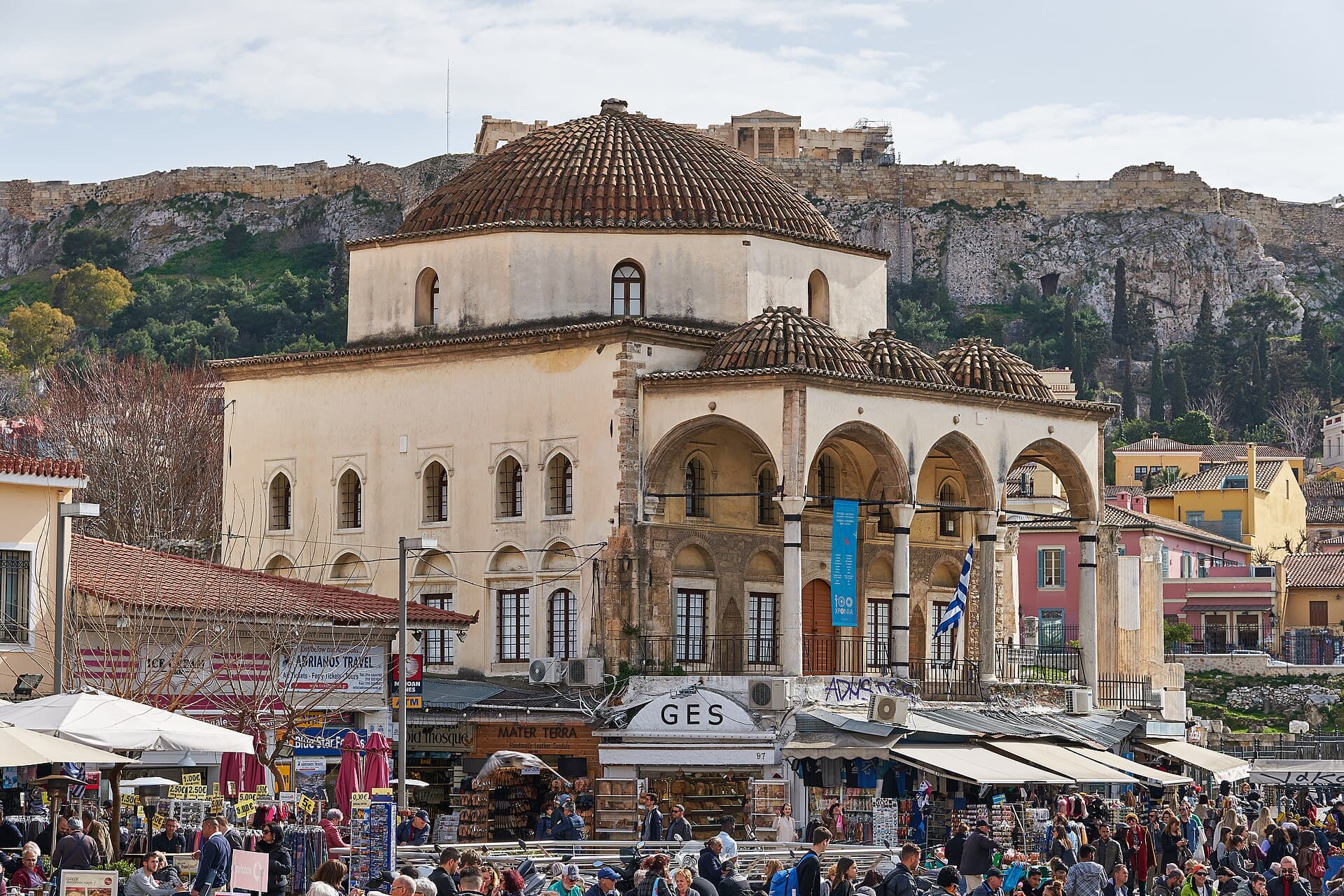 Tzistarakis MosqueIt stands directly on **Monastiraki Square**, and is among the clearest survival2 minutes walk4.5
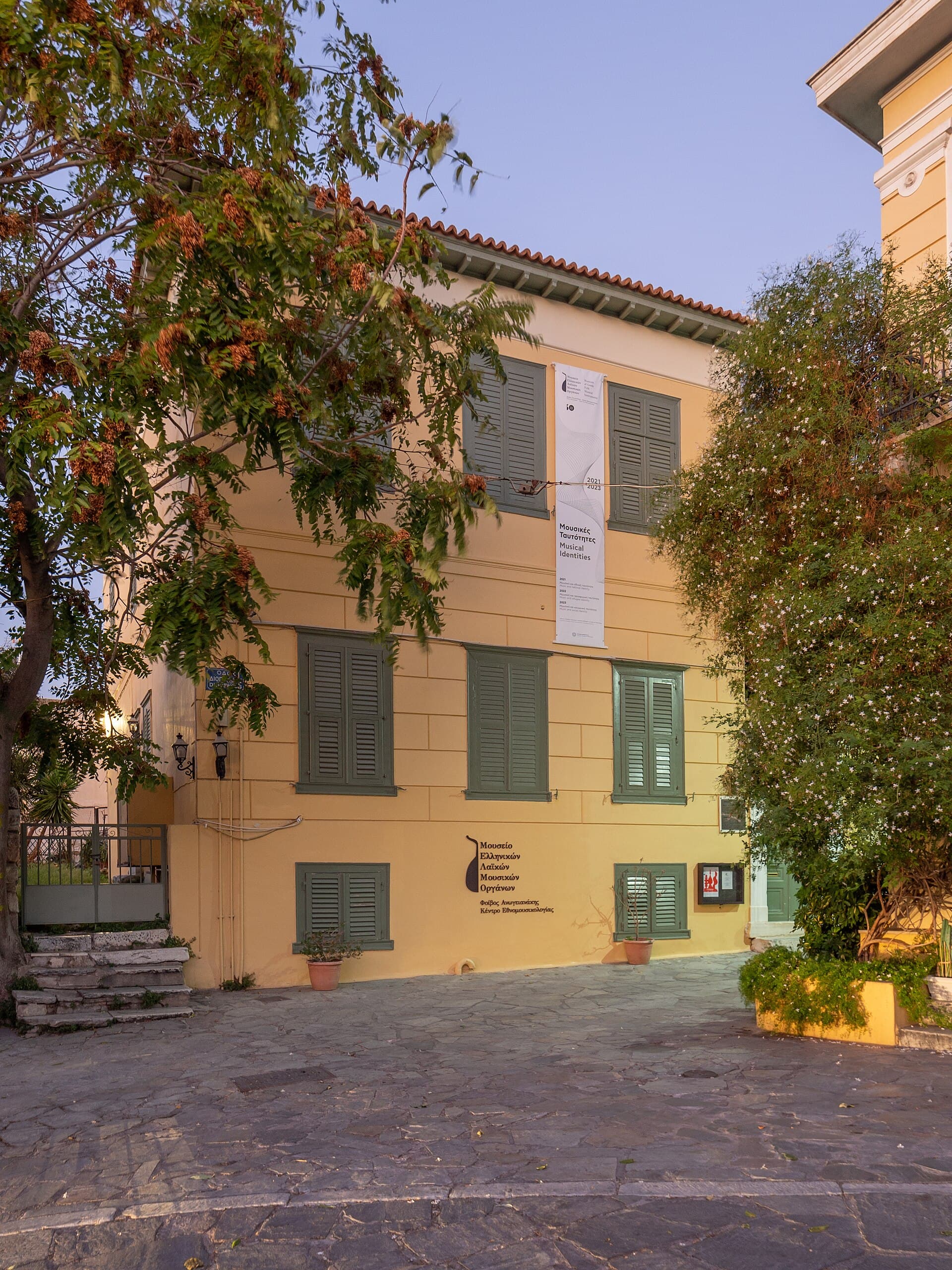 The Museum of Greek Folk Musical InstrumentsA museum in a small nineteenth-century mansion in Plaka showing the collection o2 minutes walk4.5
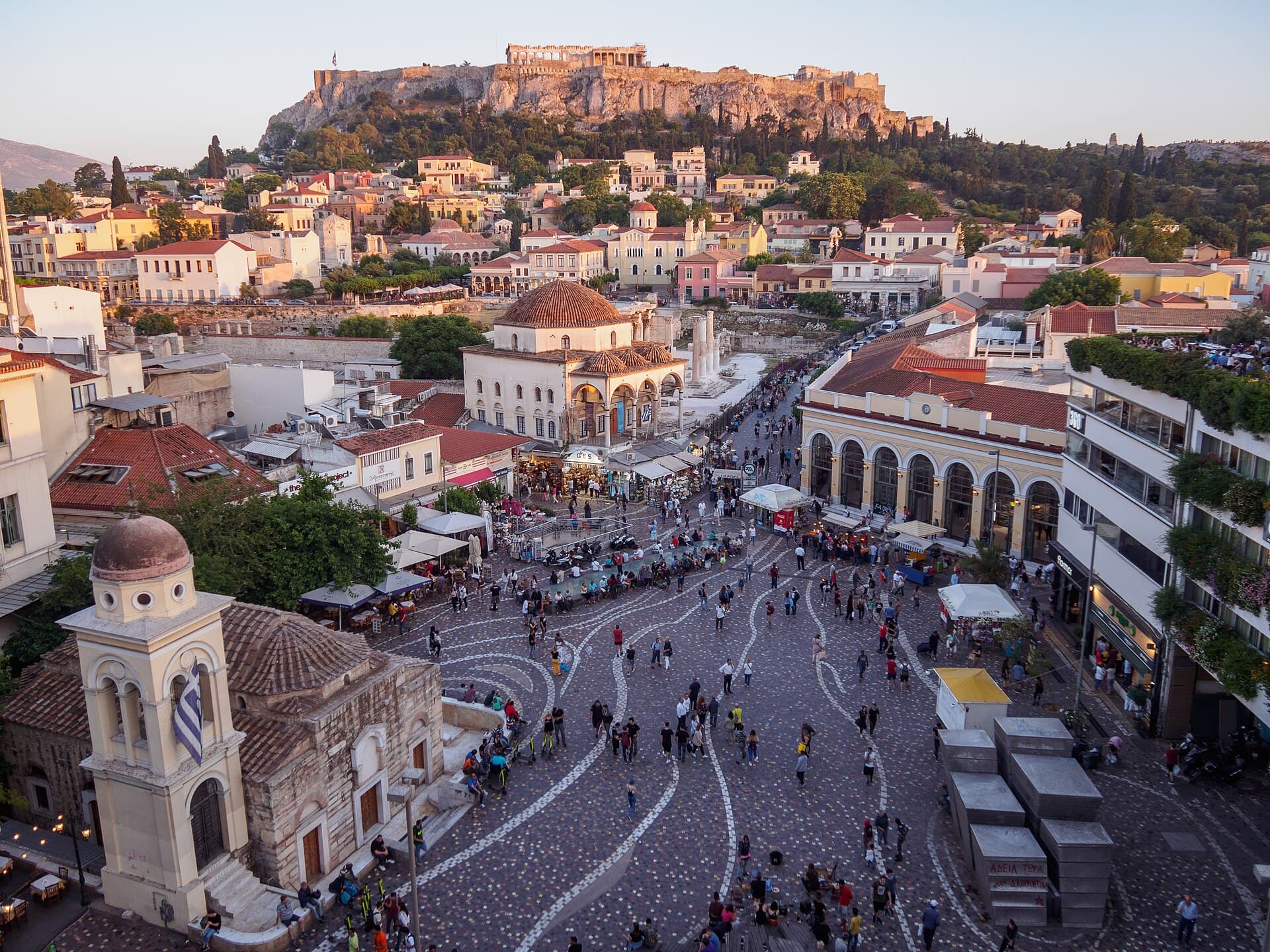 Monastiraki Square & BazaarMonastiraki is people's Athens itself: the square where everything meets — the A3 minutes walk4.4
The Ancient Agora is Athens's classical square north-west of the Acropolis: the centre of politics, justice, trade and philosophy at once, where Socrates walked. The Roman Agora is smaller and later, built in the Roman period a few hundred metres east as a purely commercial market once the old one grew crowded. They are two separate sites with two tickets, and both are covered by the combined ticket.
A single ticket covering the Acropolis, the Ancient Agora, the Roman Agora, Hadrian's Library, the Temple of Olympian Zeus, Kerameikos and Aristotle's Lyceum, valid over several days. It is clearly worth it if you intend to visit three sites or more, which usually happens because they are all within walking distance. It is bought at any of their ticket desks, and buying it at a quieter site than the Acropolis saves a long wait in the queue.