
The red marble
Local stone rising some thirteen metres.
Andrew Bossi — CC BY-SA 2.5 · Simon Legner (User:simon04) — CC BY-SA 4.0 · Rijksmuseum — CC0 · Tiia Monto — CC BY-SA 3.0
St Anne's Column stands in the middle of Maria-Theresien-Strasse, some thirteen metres of local red marble, and functions in practice as Innsbruck's known meeting point, the way a clock tower does in other cities. Its name refers to a date rather than to the statue on top. It was raised in 1706 to commemorate the withdrawal of Bavarian troops from Tyrol on the twenty-sixth of July 1703, St Anne's day, during the War of the Spanish Succession. St Anne herself stands at the base with three other saints, while the column is crowned by a figure of the Virgin Mary. The street around it is among the handsomest in Austria: coloured baroque facades on both sides and the Nordkette closing the view to the north. The site is free and open, and standing at the column looking north is the angle that appears in most photographs of Innsbruck.
Local stone rising some thirteen metres.
What Innsbruck locals use to arrange to meet.
Maria-Theresien-Strasse, 6020 Innsbruck
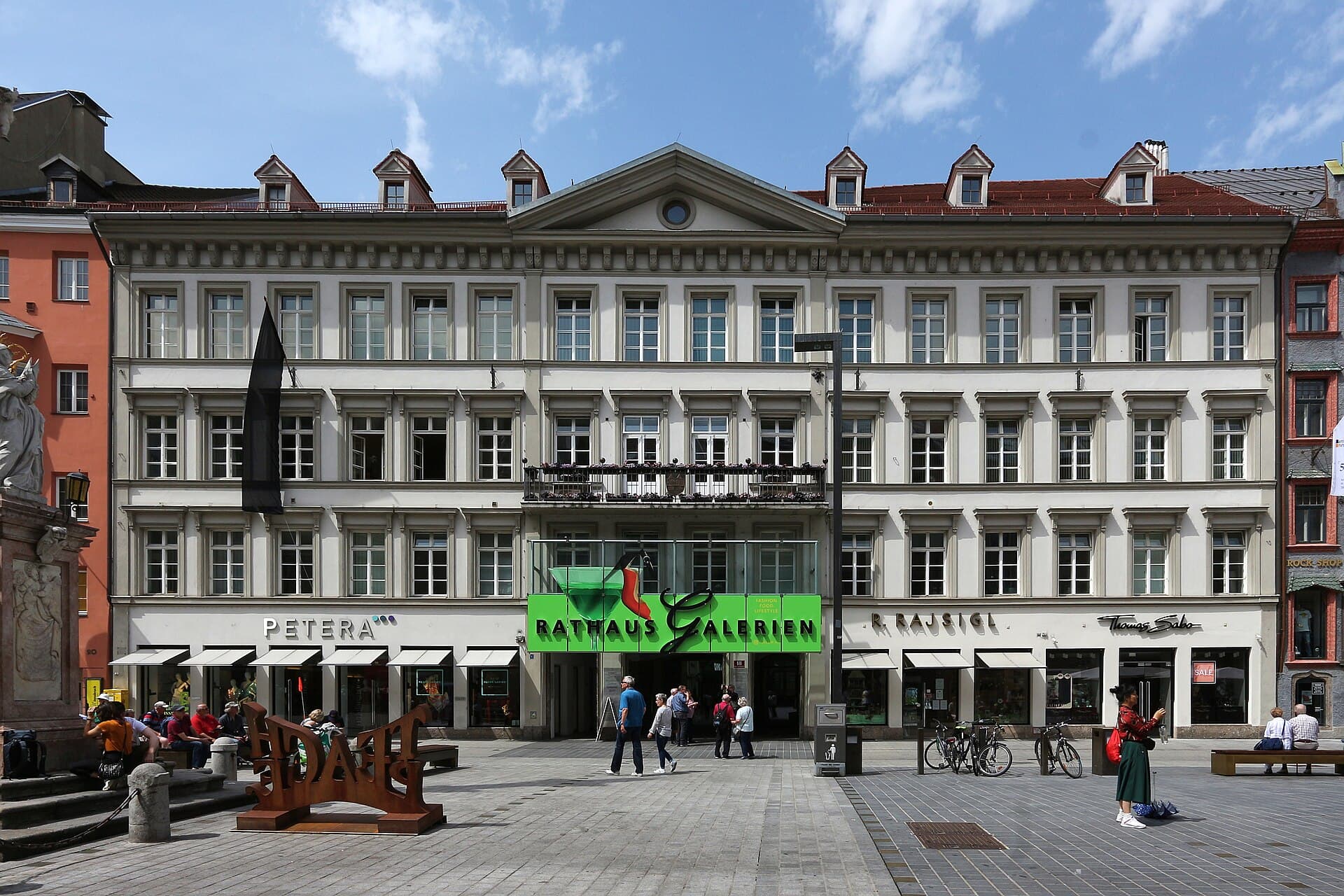 Innsbruck Town HallInnsbruck's town hall in the city centre, a complex combining historic buildings1 minute walk3.8
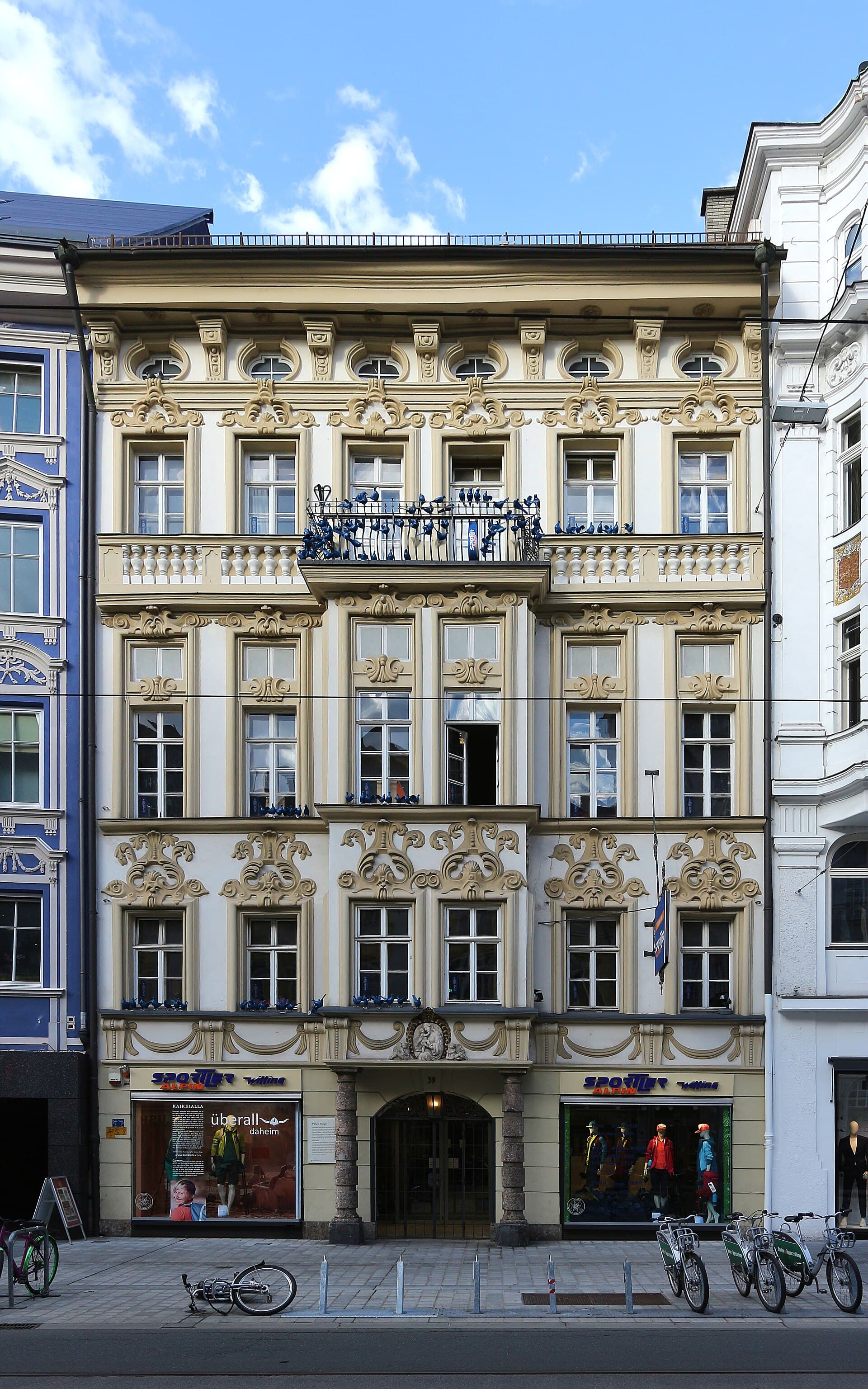 Palais Troyer-SpaurA Baroque town palace near Maria-Theresien-Straße, carrying the names of two Tyr1 minute walk4.4
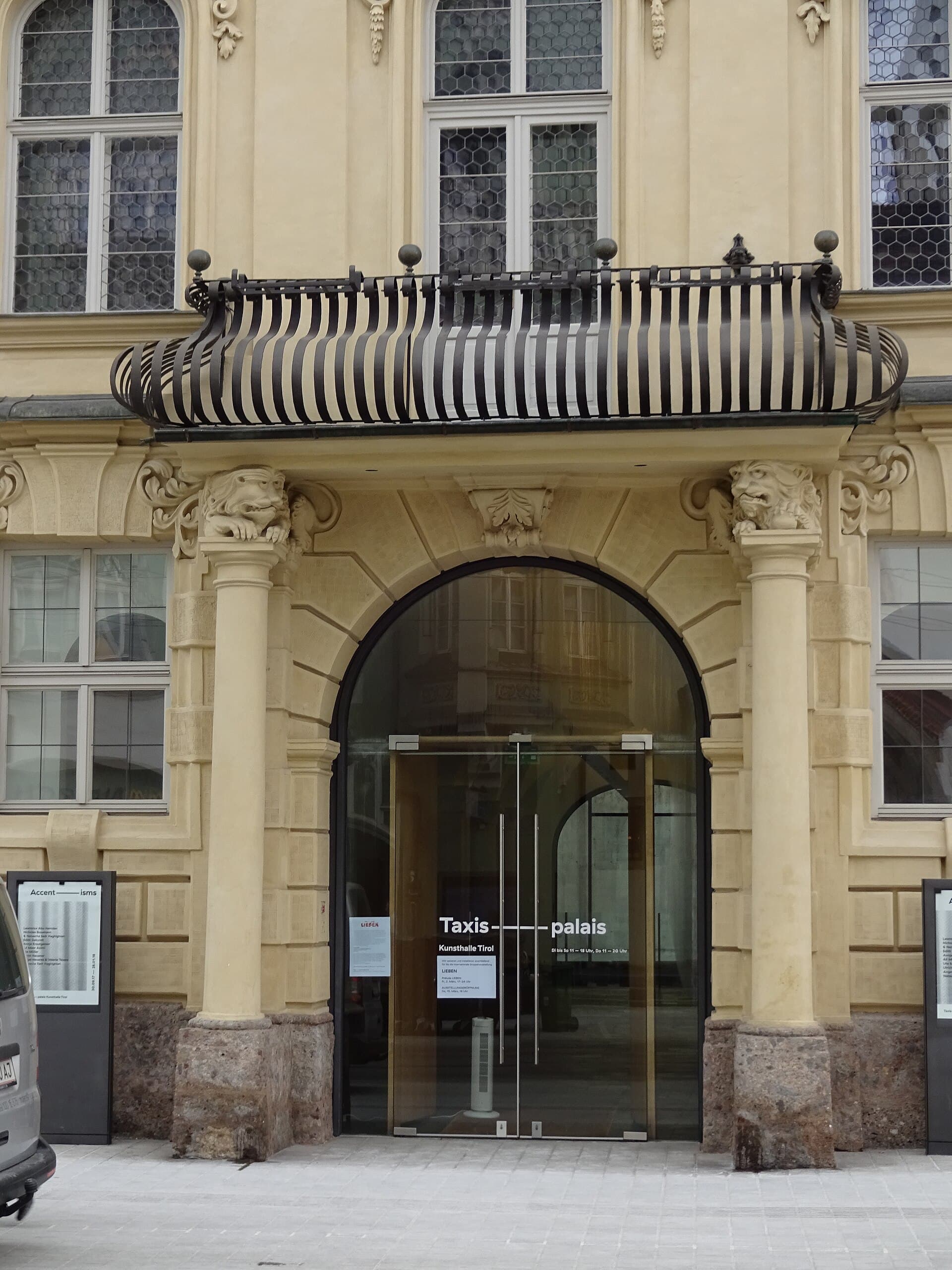 Taxispalais — Kunsthalle TirolA Baroque palace on Maria-Theresien-Straße, Innsbruck's main street, working tod2 minutes walk4.2
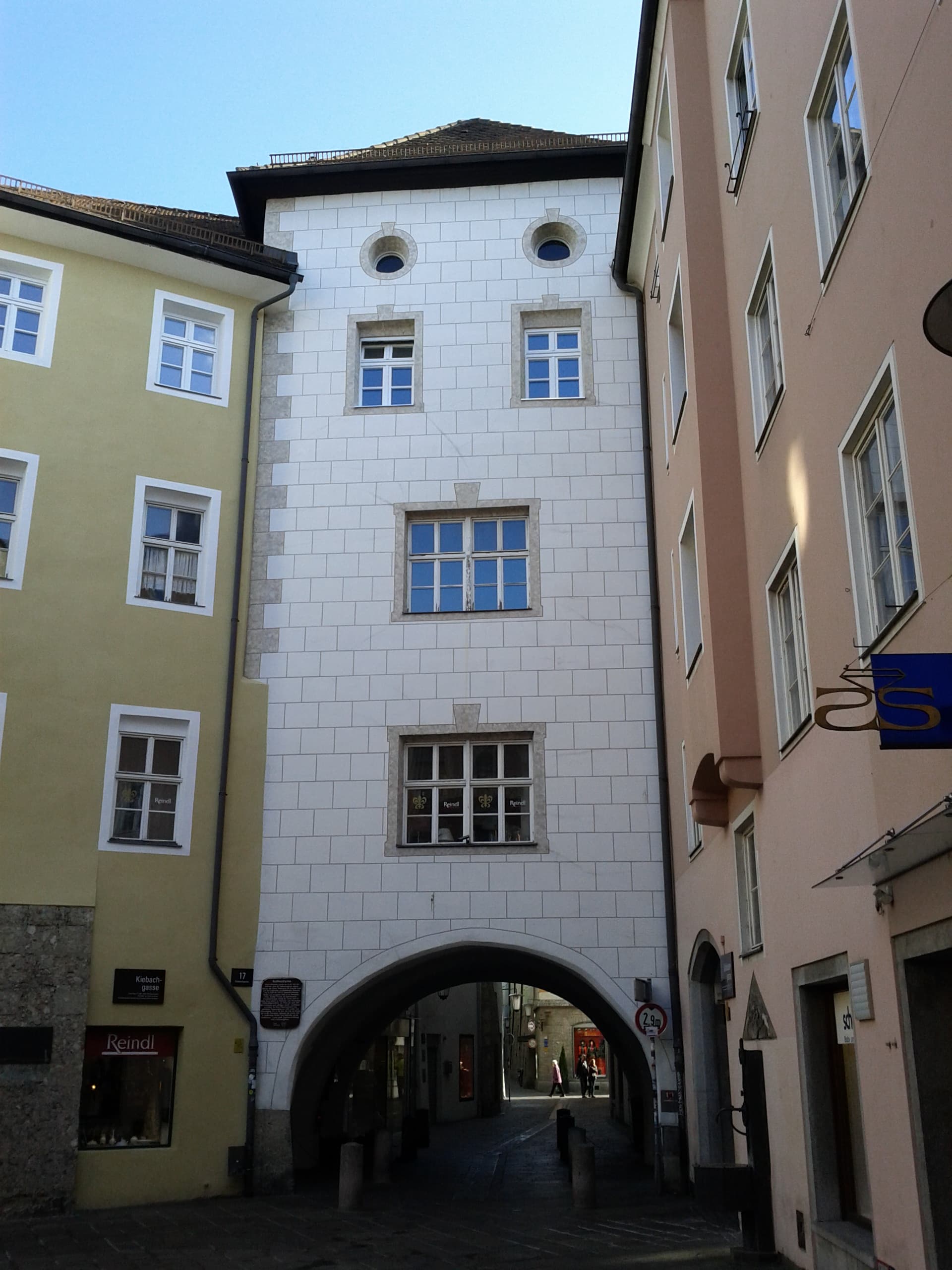 The Kolbenturm HouseAn old-town house incorporating an older tower within its structure, an example 2 minutes walk4.1
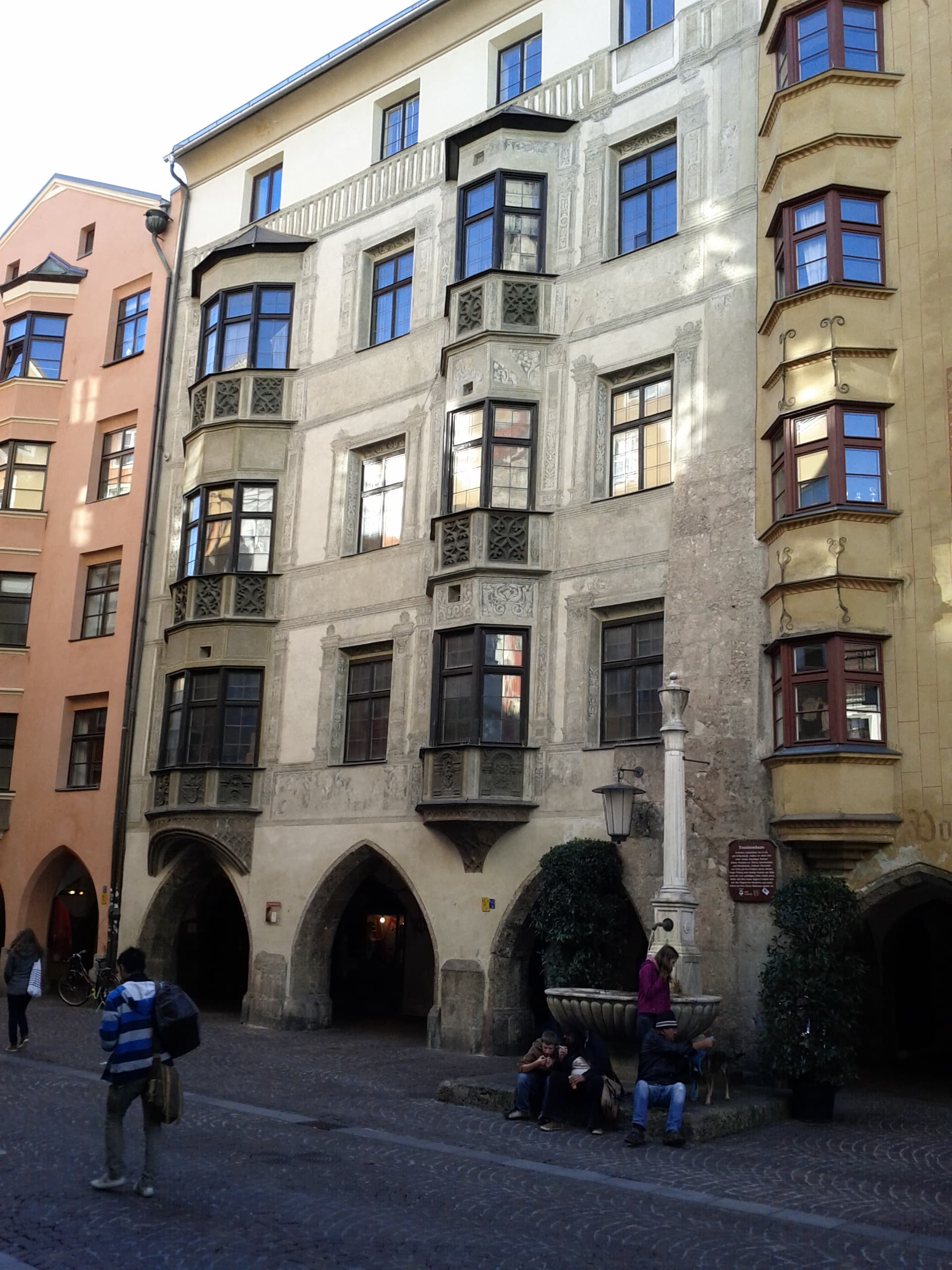 The TrautsonhausA Gothic-era house in the old town carrying the name of the Trautson family, amo3 minutes walk4.6
Because they are a Catholic tradition of the Counter-Reformation: a column carrying the Virgin or the Trinity raised in the main square in thanks for a city's deliverance from plague, siege or invasion. You will see them in Vienna, Prague, Salzburg and dozens of smaller towns. Innsbruck's is of that type, but its occasion is military rather than epidemic, which distinguishes it from the more common plague columns.