
An Egyptian mummy and coffins
Within the archaeological part of the Czartoryski collection.
Mach240390 — CC BY-SA 3.0 · Christinagrabelusshaikh — CC BY 4.0 · Christinagrabelusshaikh — CC BY 4.0 · Jeremiah Z. Cockroach — CC BY-SA 4.0
A sixteenth-century arsenal building attached to Kraków's walls, today a branch of the Czartoryski Museum showing antiquities. The arsenal was built to store the city's weapons and cannon, part of the fortification system with the Florian Gate and the neighbouring Barbican. When most of the wall was demolished in the nineteenth century this building survived along with the northern stretch. Prince Władysław Czartoryski bought it in the 1870s to house the family collection — the same collection that holds Leonardo's Lady with an Ermine. What the arsenal shows today is the archaeological part of that collection: Egyptian, Greek, Roman and Etruscan pieces gathered by the family in the nineteenth century, including a mummy, coffins, pottery and glass. This is a familiar pattern in central European museums: a collecting noble's holdings become a public museum. Small and rarely crowded compared with the main Czartoryski building.
Within the archaeological part of the Czartoryski collection.
When most of Kraków's wall was demolished in the nineteenth century.
A familiar pattern in central European museums.
Pijarska street, by the Florian Gate
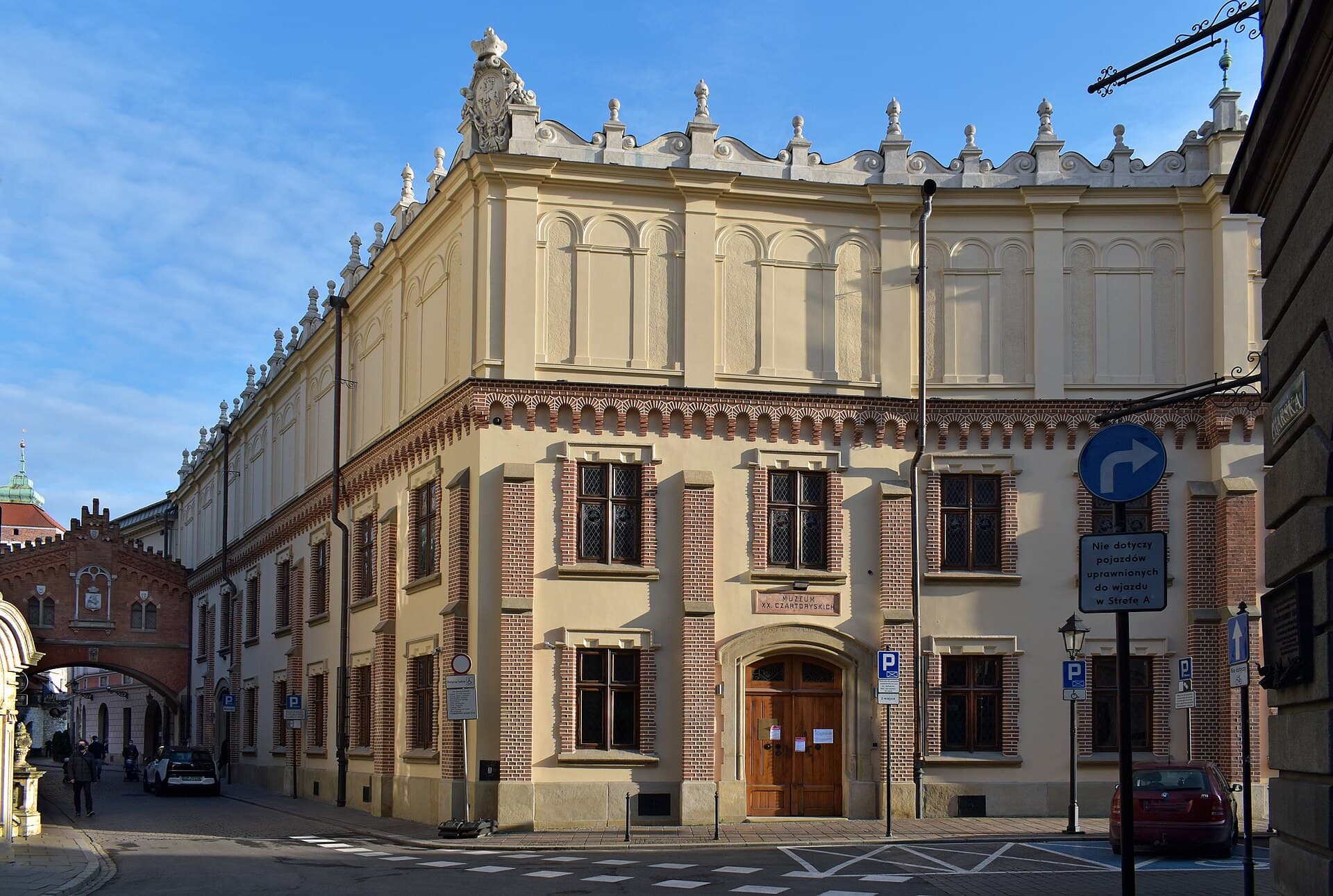 The Czartoryski Museum & the LeonardoThe Czartoryski is home of Poland's most famous painting: the Lady with an Ermin1 minute walk4.9
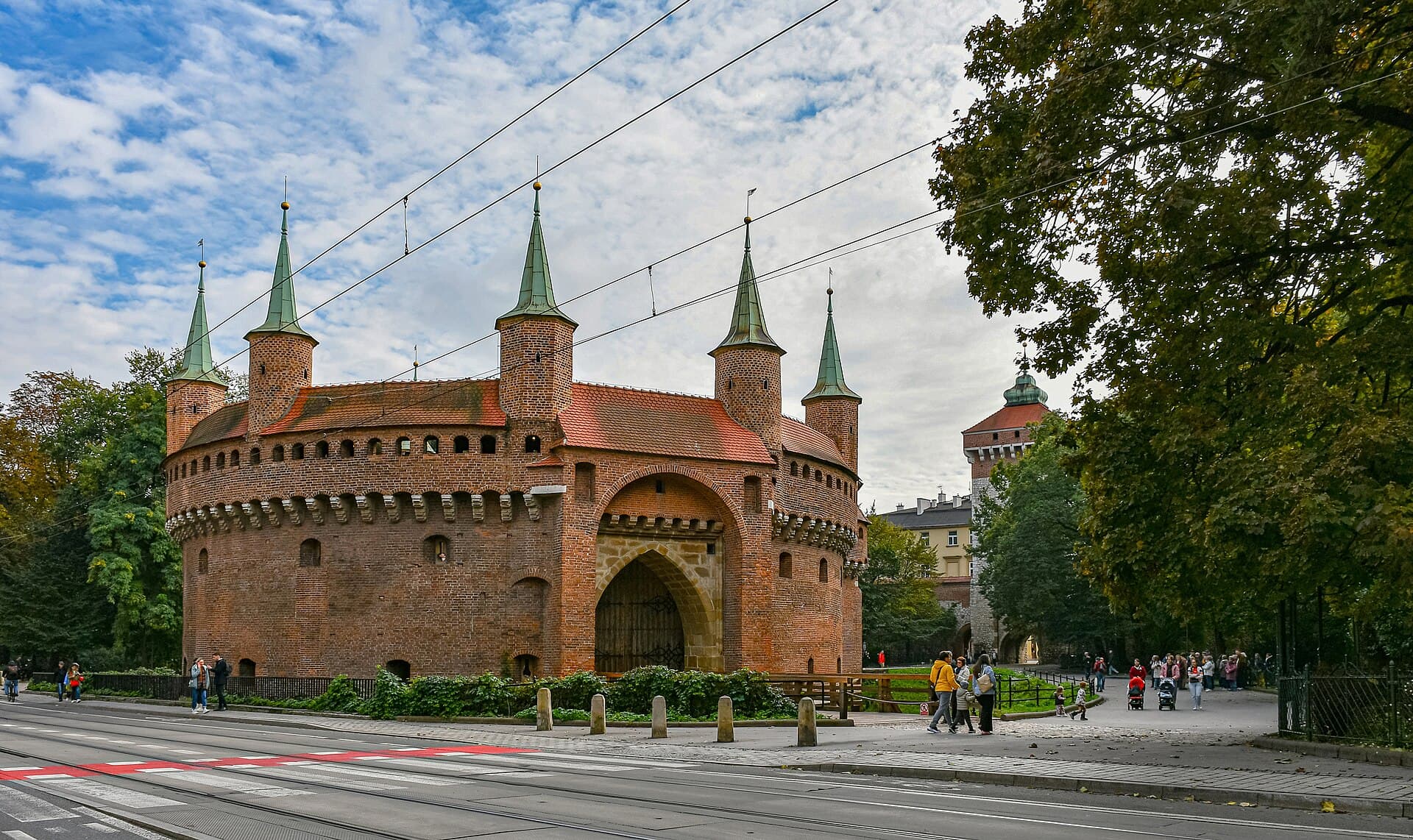 The Barbican, Florian Gate & PlantyThe Barbican is Krakow's war helmet: a round gate-fort (1498) of three-metre wal1 minute walk4.7
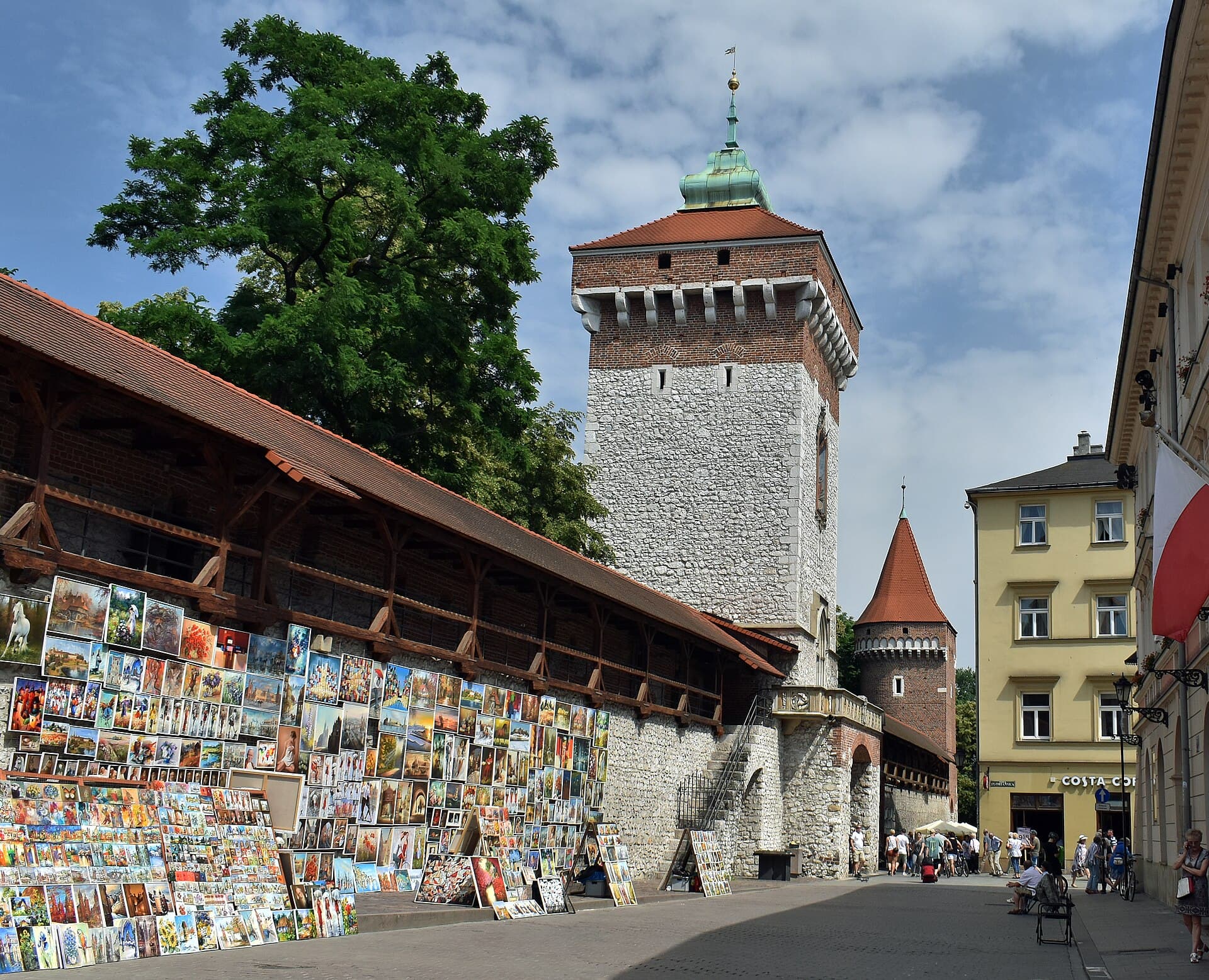 The Defensive WallsWhat remains of Kraków's medieval wall: a short stretch holding the Florian Gate2 minutes walk4.7
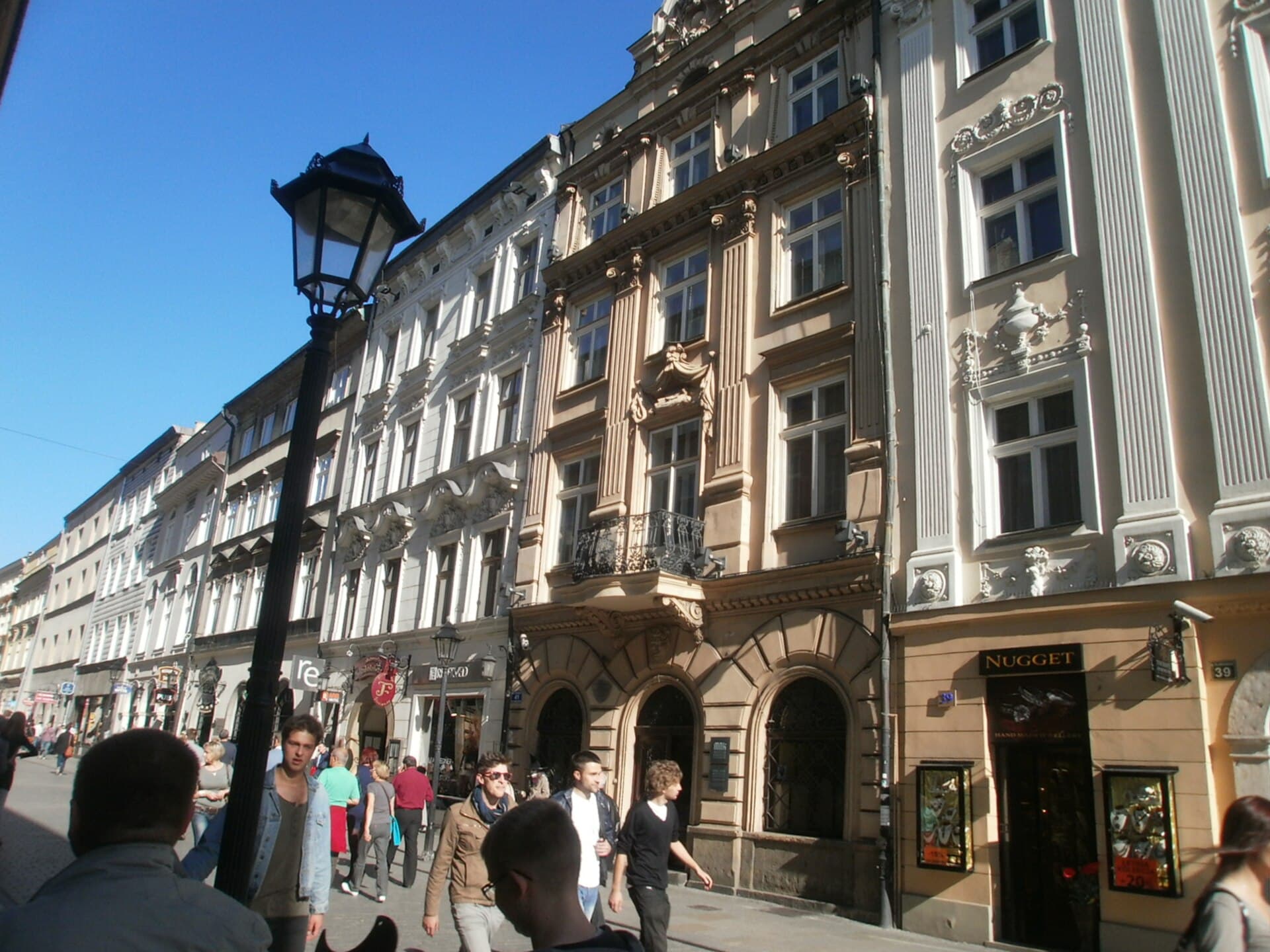 Jan Matejko HouseThe house of the painter Jan Matejko on Floriańska street in the old town, where2 minutes walk4.7
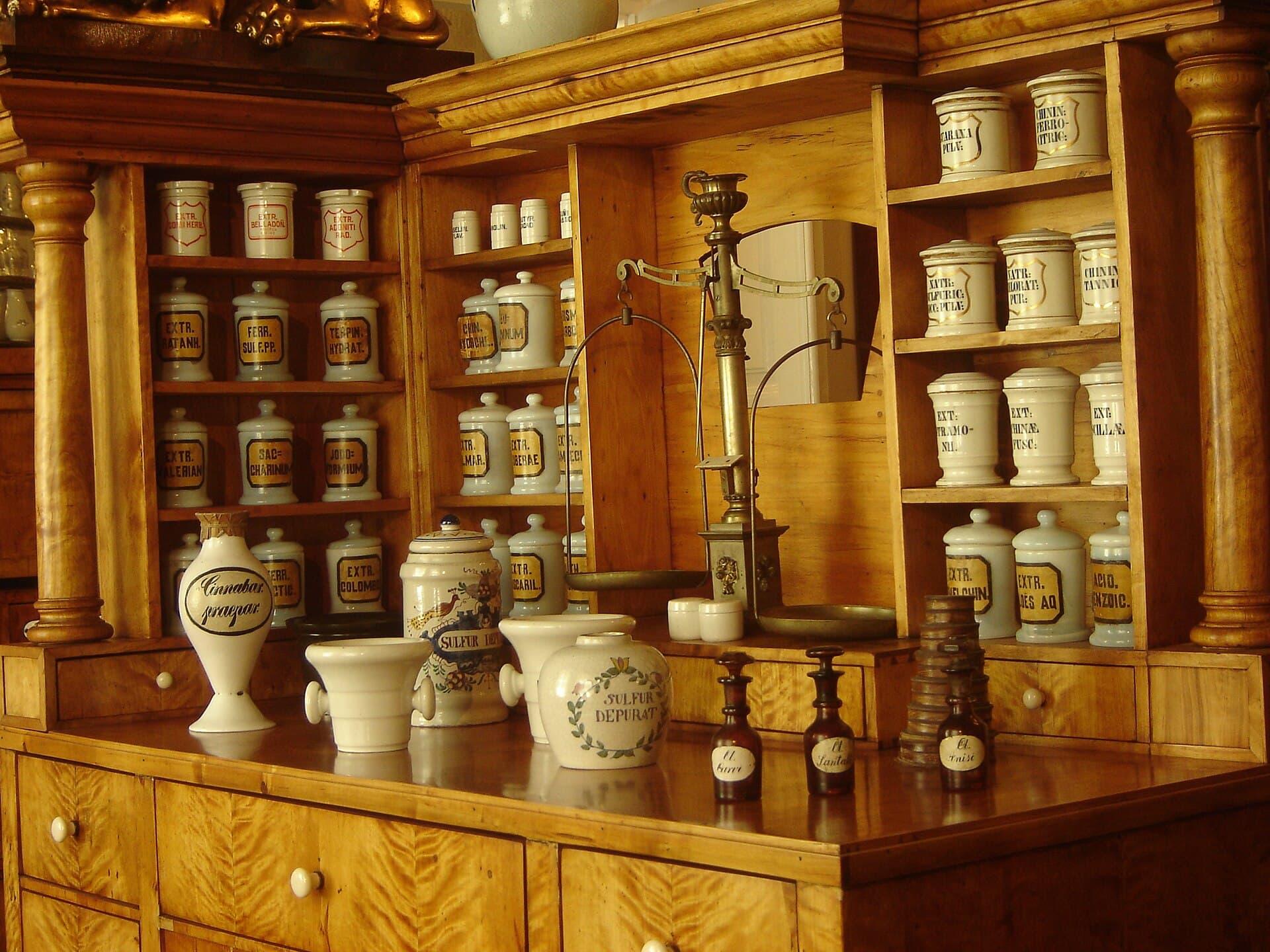 Museum of Pharmacy, KrakówA museum of the Jagiellonian University in a fifteenth-century house on Floriańs3 minutes walk4.8
Poland's oldest museum, founded by Princess Izabela Czartoryska in 1801 at Puławy with an explicit purpose: preserving national memory after the state's disappearance. The collection was moved to Paris and then to Kraków. It holds Leonardo da Vinci's Lady with an Ermine — one of four surviving female portraits by him — a Rembrandt landscape, and antiquities, arms and historical relics. The Polish state bought it from the family in 2016.
A massive circular fort before the Florian Gate, built around 1499 and one of three barbicans surviving in Europe and the most complete. Its walls are three metres thick with a hundred and thirty firing slits, and it was linked to the gate by a fortified passage. Its purpose was protecting the main entrance: an attacker had to storm the barbican first under fire from every direction. It is visited on a ticket, seasonally.