
The hunchbacks by the first columns
Two crouching figures bearing the holy water stoups on bent backs — the single most photographed detail in the building.
Didier Descouens — CC BY-SA 4.0 · Coaterflagman — CC BY 4.0 · Coaterflagman — CC BY 4.0 · Adert — CC BY-SA 4.0
Seven centuries on, Verona's largest church still has no face. Bare brick rises above a marble base whose cladding stops halfway up and was never carried any further. The Dominicans began building in 1290 and were still at it nearly two centuries later, when the church was finally consecrated in 1471; smaller works dragged on for generations after that, and nobody ever got to the facade. Oddly, the deficiency now works in its favour: a blank slab of brickwork that opens without warning onto a carved Gothic doorway, and behind that an interior that bears no resemblance to the outside at all. Step in and you find a forest of enormous columns cut from red Verona marble, pink where the low light catches it, holding up a vaulted ceiling covered in fine painted foliage that runs overhead like a hanging carpet, while underfoot the floor is worked in interlocking geometry of white, red and black marble. The space is far larger than the exterior suggests, the light is low and calm, and seating in the nave is sparse — this is a church you walk through rather than sit in. Its most famous feature, though, is neither an altar nor a painting. At the foot of the first two columns crouch two small hunchbacked men, bearing the holy water stoups on bent backs with tired, patient faces. Verona calls them i gobbi, the hunchbacks; the left one (1491) is traditionally credited to Gabriele Caliari, father of the painter Veronese, and the right one (1591) to Paolo Orefice, though scholars argue about both attributions. They are the most photographed thing in the building: the first thing you see and the last you forget. As for Pisanello's fresco of Saint George and the Princess, brace for mild disappointment. It sits high on the wall above the arch of the Pellegrini chapel, painted in the 1430s, stripped off the wall at the end of the nineteenth century to save it from damp, and worn to the point that the left half is all but gone; it is smaller than the reproductions imply, and without a phone zoom or a small pair of binoculars you will barely read it. The chapel is worth standing in front of regardless, lined as it is with Michele da Firenze's sculpted terracotta panels of 1435. The church stands two minutes from the Scaliger Tombs and about five from Ponte Pietra, so it folds into one walk without effort. If you only have time for a single Verona church, make it San Zeno for its bronze doors; but if you buy the combined ticket, Anastasia is the one closest to the centre and the easiest to slot into a day.
Two crouching figures bearing the holy water stoups on bent backs — the single most photographed detail in the building.
Massive columns of red Verona marble carrying a vault painted with foliage that spreads overhead like a carpet.
The Saint George and the Princess fresco is genuinely there, but far up and worn — bring a zoom and modest expectations.
Piazza Sant'Anastasia, 37121 Verona, Italy
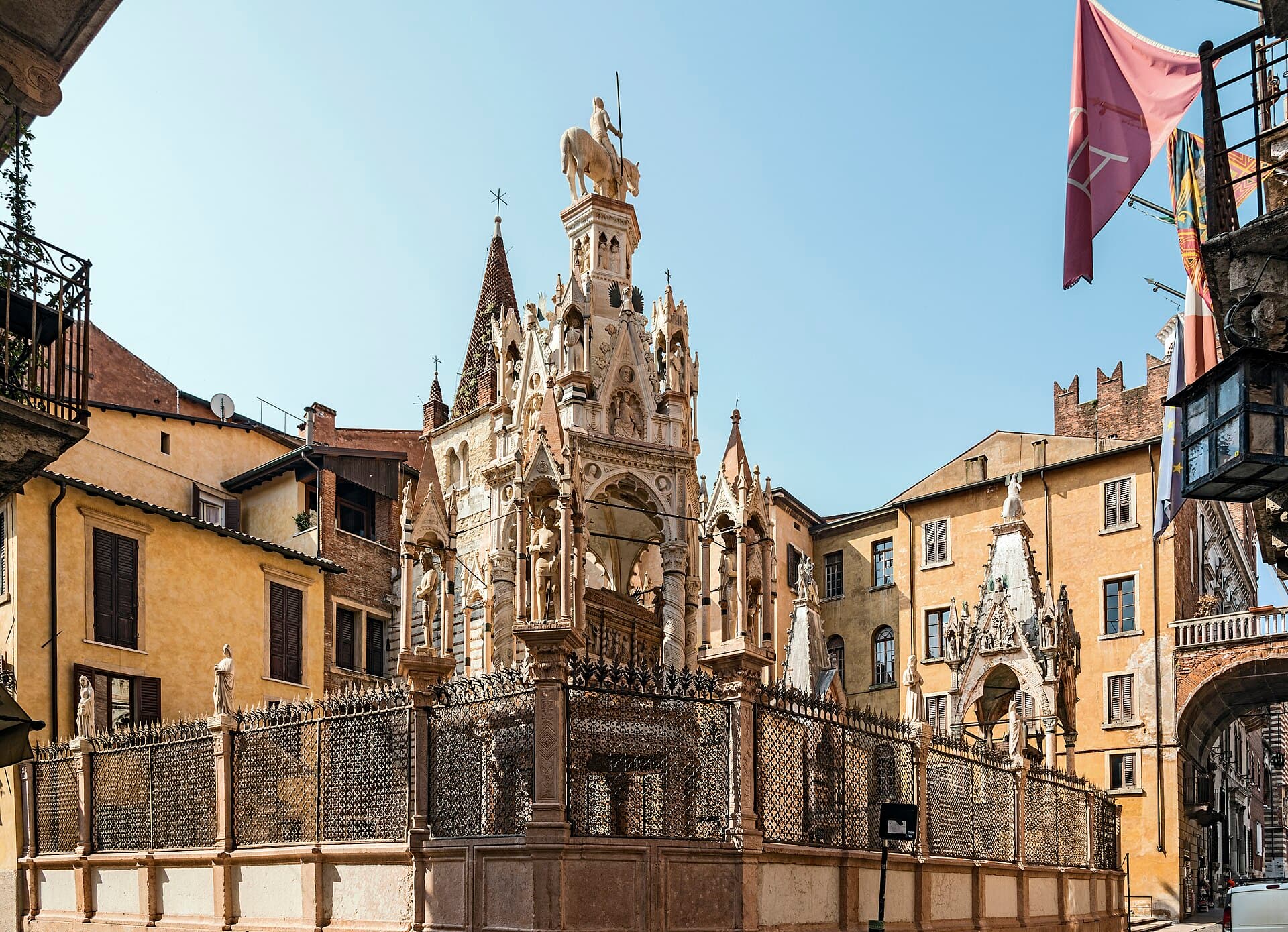 The Scaliger TombsIn a small fenced court behind Piazza dei Signori rise the Scaliger Tombs: the g2 minutes walk4.6
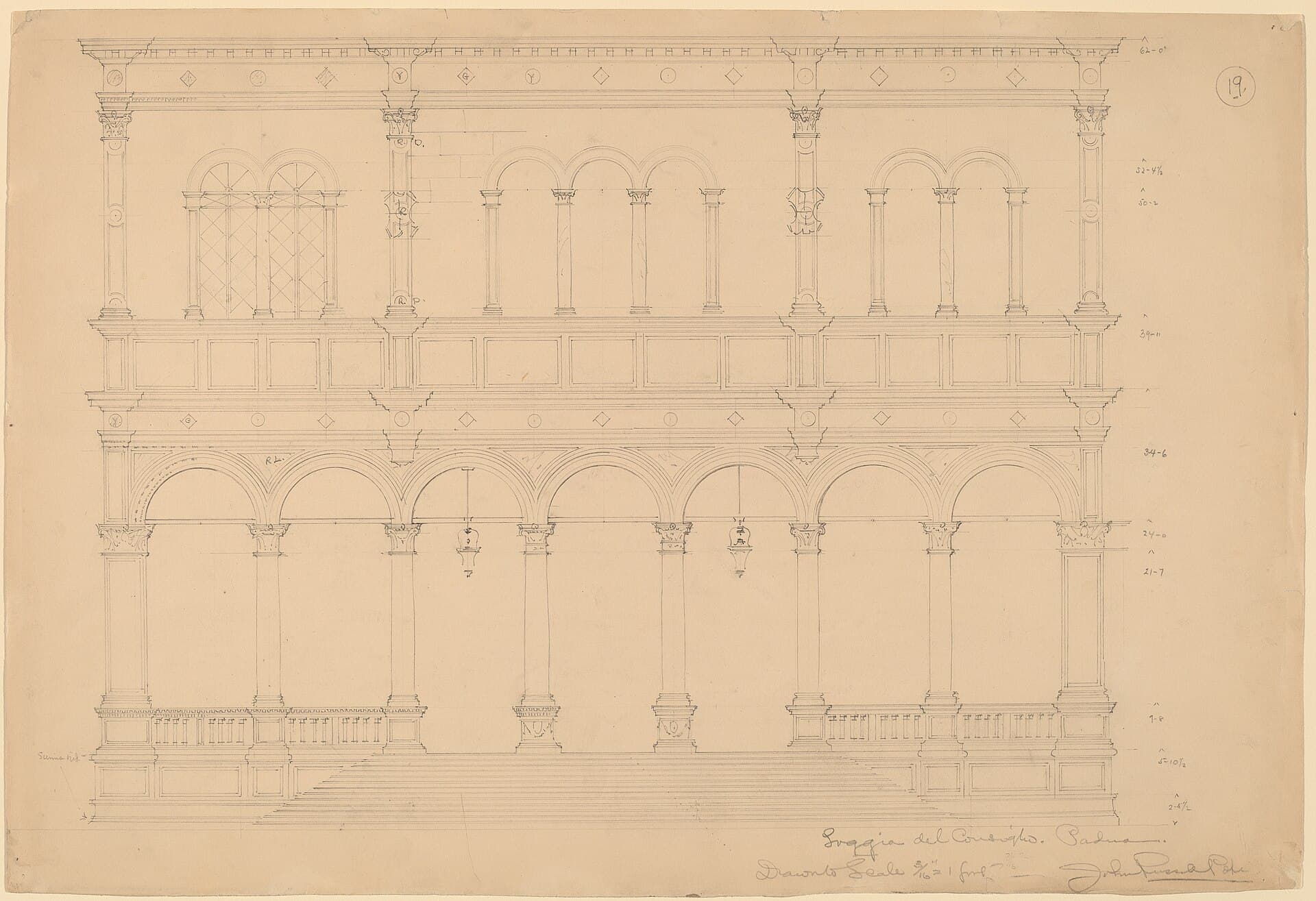 Loggia del ConsiglioFive ancient Romans have stood along the roofline since 1493, looking down on th2 minutes walk4.7
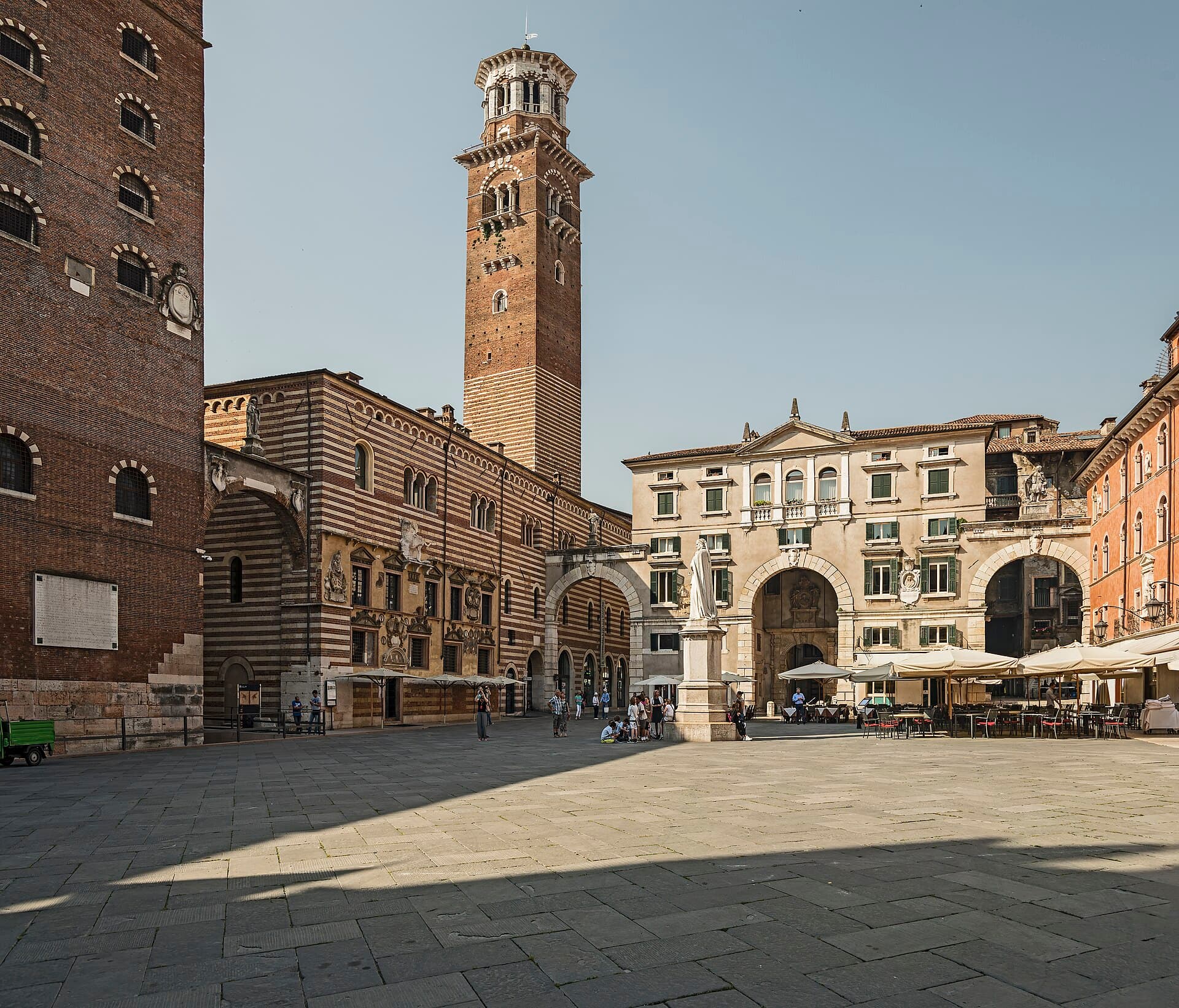 Piazza dei SignoriOne step under the whale-rib arch moves you from the Erbe market's clamour into 3 minutes walk4.6
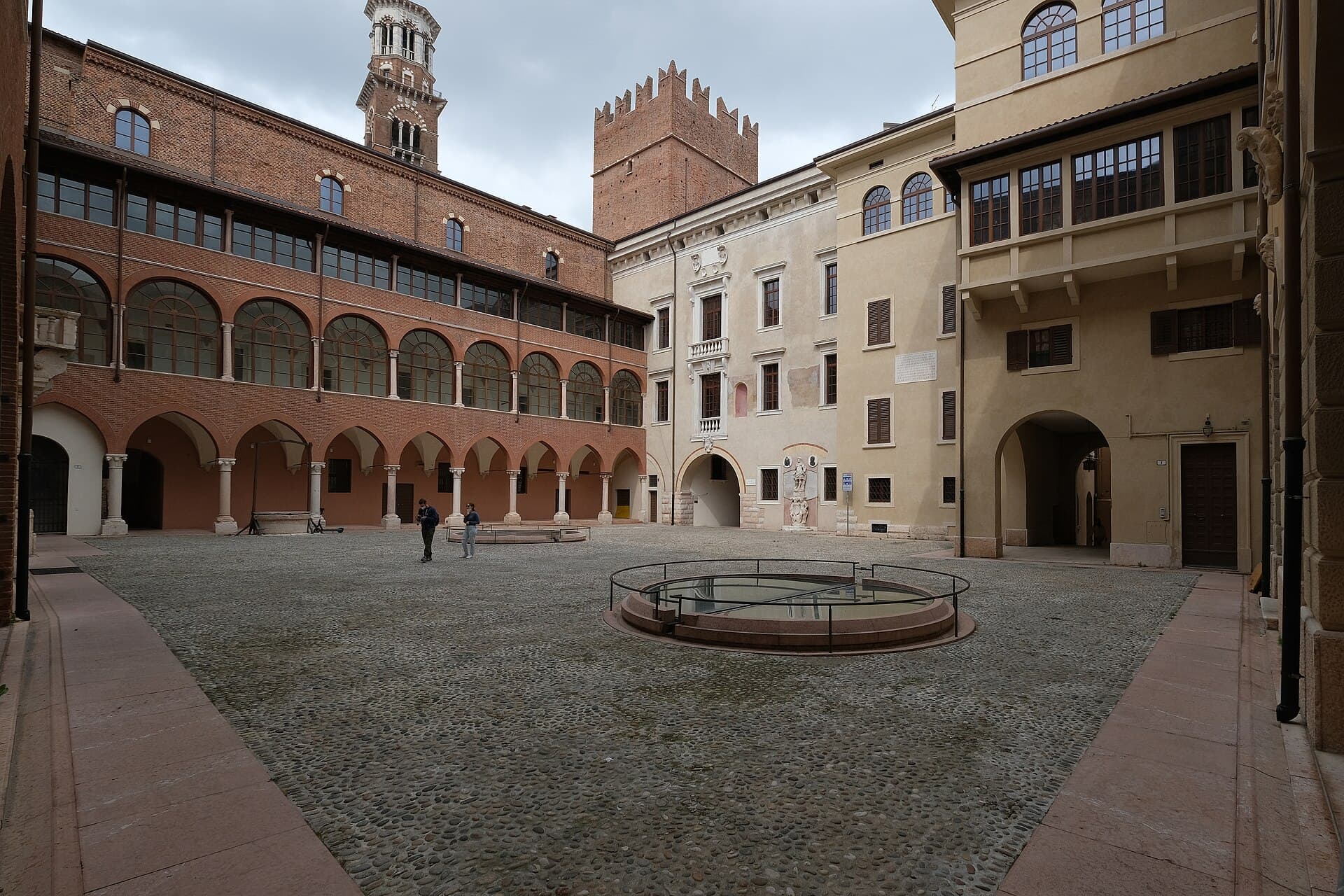 Palazzo del CapitanioA palace on Piazza dei Signori in the heart of Verona, the seat of the Venetian 3 minutes walk4.7
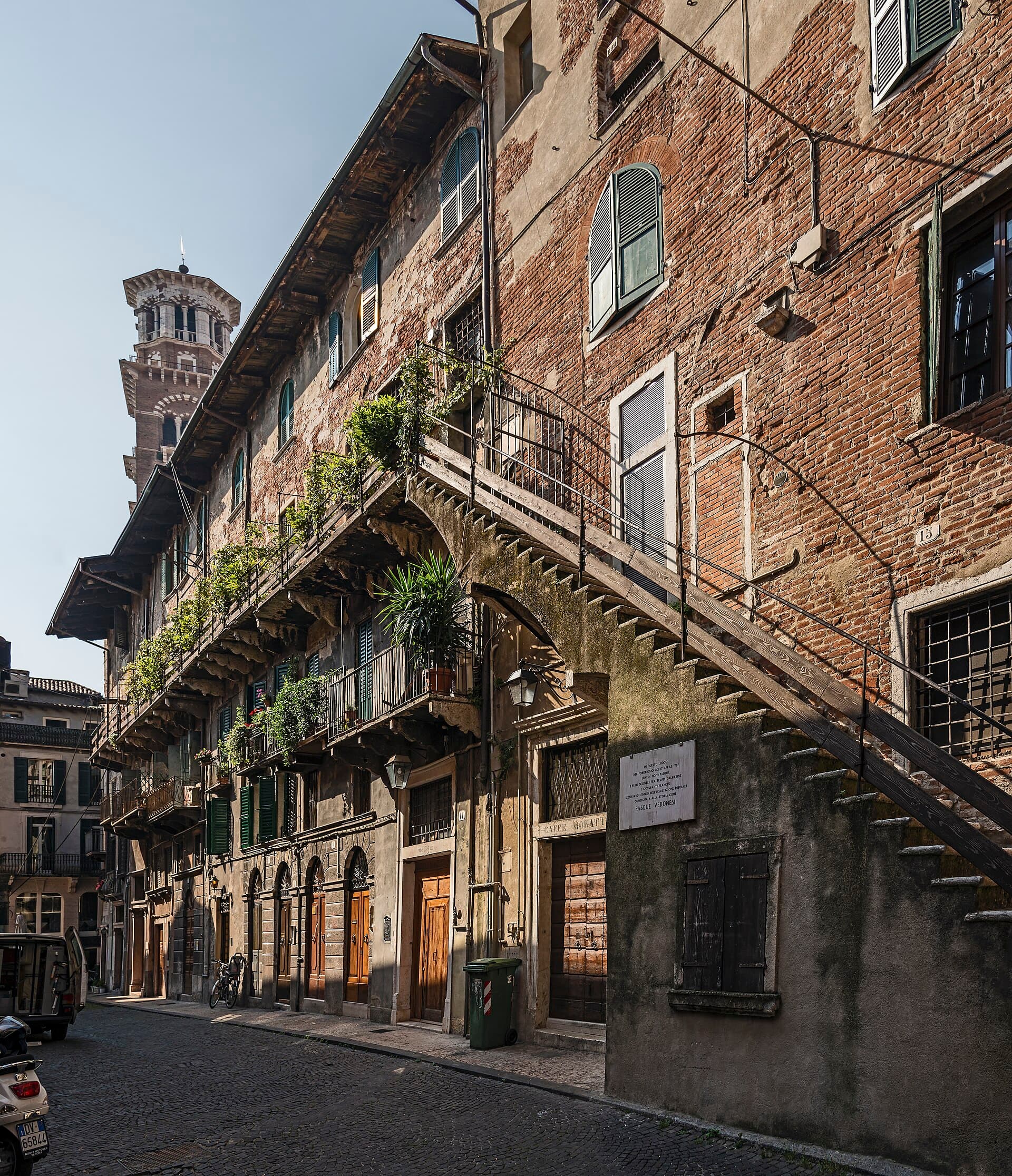 Case MazzantiA group of buildings on the Piazza delle Erbe in central Verona whose fronts are3 minutes walk4.5
Yes if you will see three or more: two churches cost EUR 8 either way, so the saving starts at the third, and the ticket stays valid for 90 days. Our order: San Zeno first (the best of them by a distance), then Anastasia, then the Cathedral. San Fermo can be dropped if time is short — one church stacked on another is a fun idea, but it will not change your day.
Skip Sunday morning: visits do not begin before 13:00 because of mass, and Saturday closes a little earlier than the rest of the week. Early on a weekday is quietest and best for photographs, and visits are occasionally suspended for religious occasions, so glance at the official site the day before. Modest dress is required — shoulders and knees covered — which is no obstacle for most of our readers.