
Saved as a grain store
Conversion to a warehouse saved it from demolition in the Revolution.
Kent Wang — CC BY 4.0 · Chabe01 — CC BY-SA 4.0 · AnonymousUnknown author — Public domain
A Gothic church in the commercial heart of Lyon, and the only surviving church of the city's pre-revolutionary monasteries. It was built from the fourteenth to the fifteenth century as the church of the Franciscan order, and named after Saint Bonaventure — the Italian theologian who died in Lyon in 1274 during a church council held there and was buried in it. What distinguishes it is its position: it stands directly on the Place de la Bourse among nineteenth-century commercial buildings and shops, so you step out of a shopping street and find yourself in a Gothic space. It survived the Revolution because it was turned into a grain store rather than demolished — which is what saved many religious buildings in France. The interior is wide and plain with tall columns and nineteenth-century stained glass, less decorated than Lyon's other churches and quieter. A working place of worship with normally free entry.
Conversion to a warehouse saved it from demolition in the Revolution.
The Italian theologian died during a church council in 1274.
You step off a shopping street into a Gothic space.
Place de la Bourse, the Presqu'île
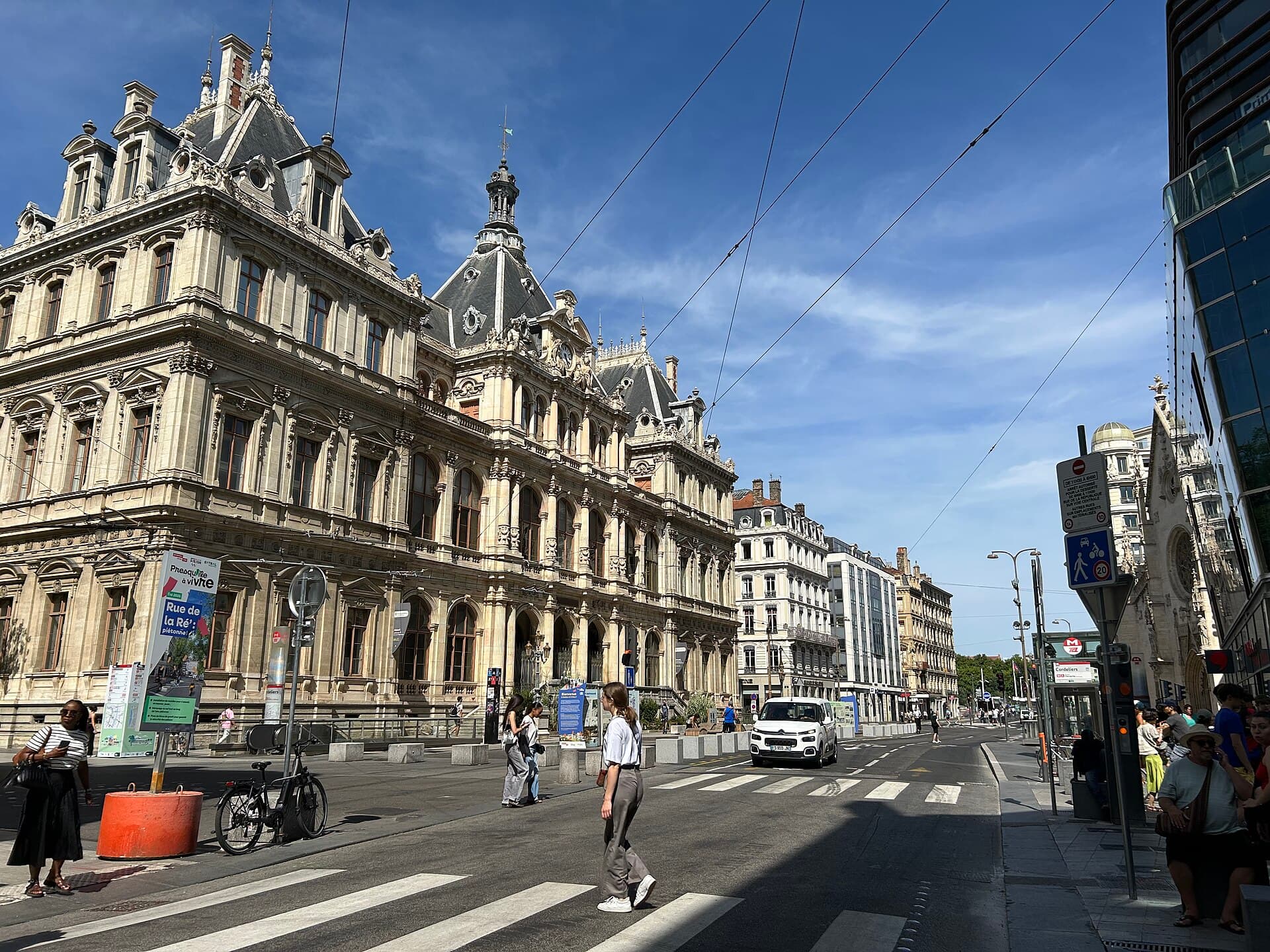 Place des CordeliersA square in the heart of the Presqu'île, one of the main meeting points in Lyon'1 minute walk4.6
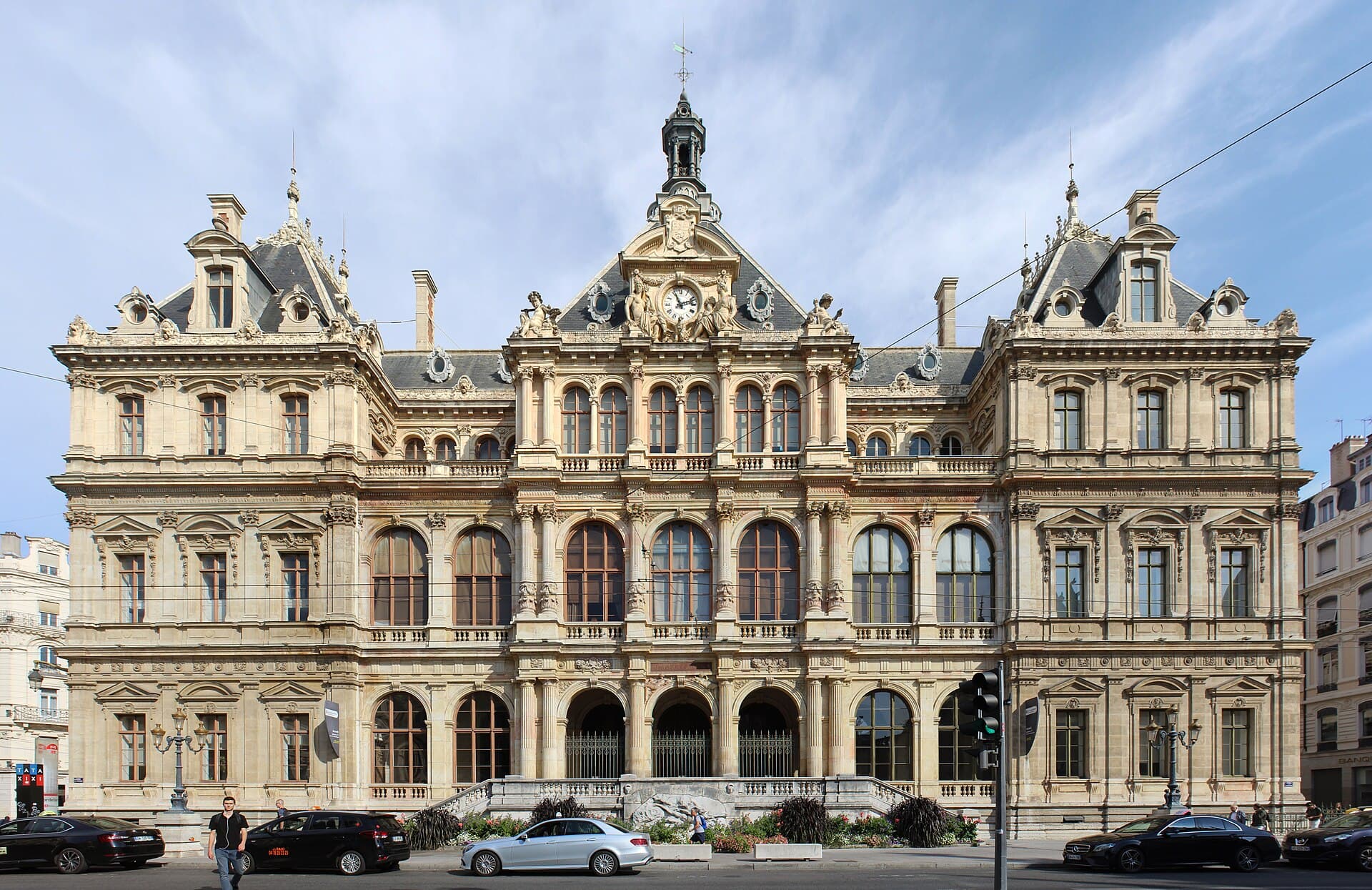 The Palais de la BourseA mid-nineteenth-century building in the heart of Lyon, built as the city's stoc1 minute walk4.8
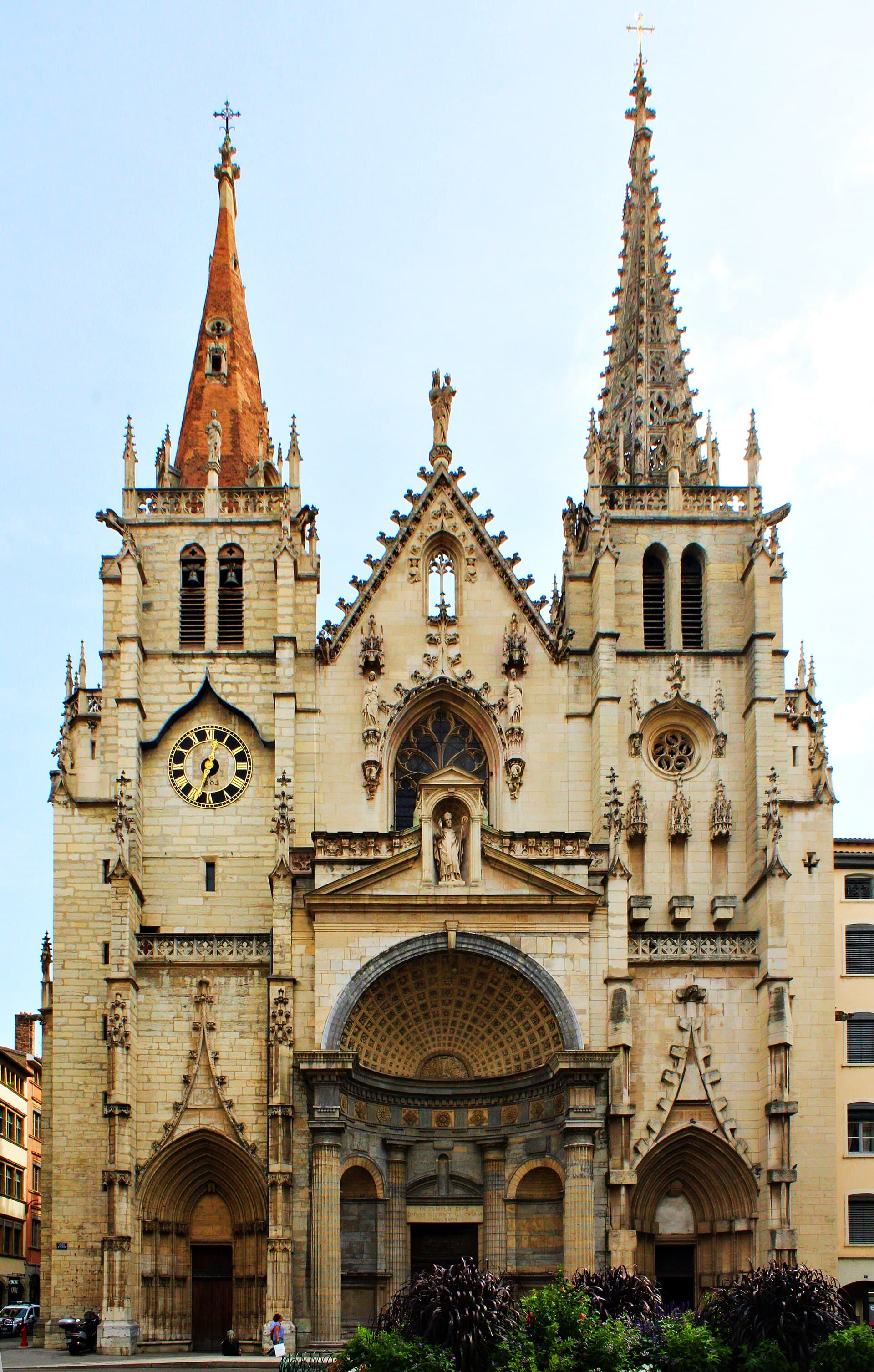 Church of Saint-NizierA Gothic church in the middle of the Presqu'île, among the most prominent religi4 minutes walk4.6
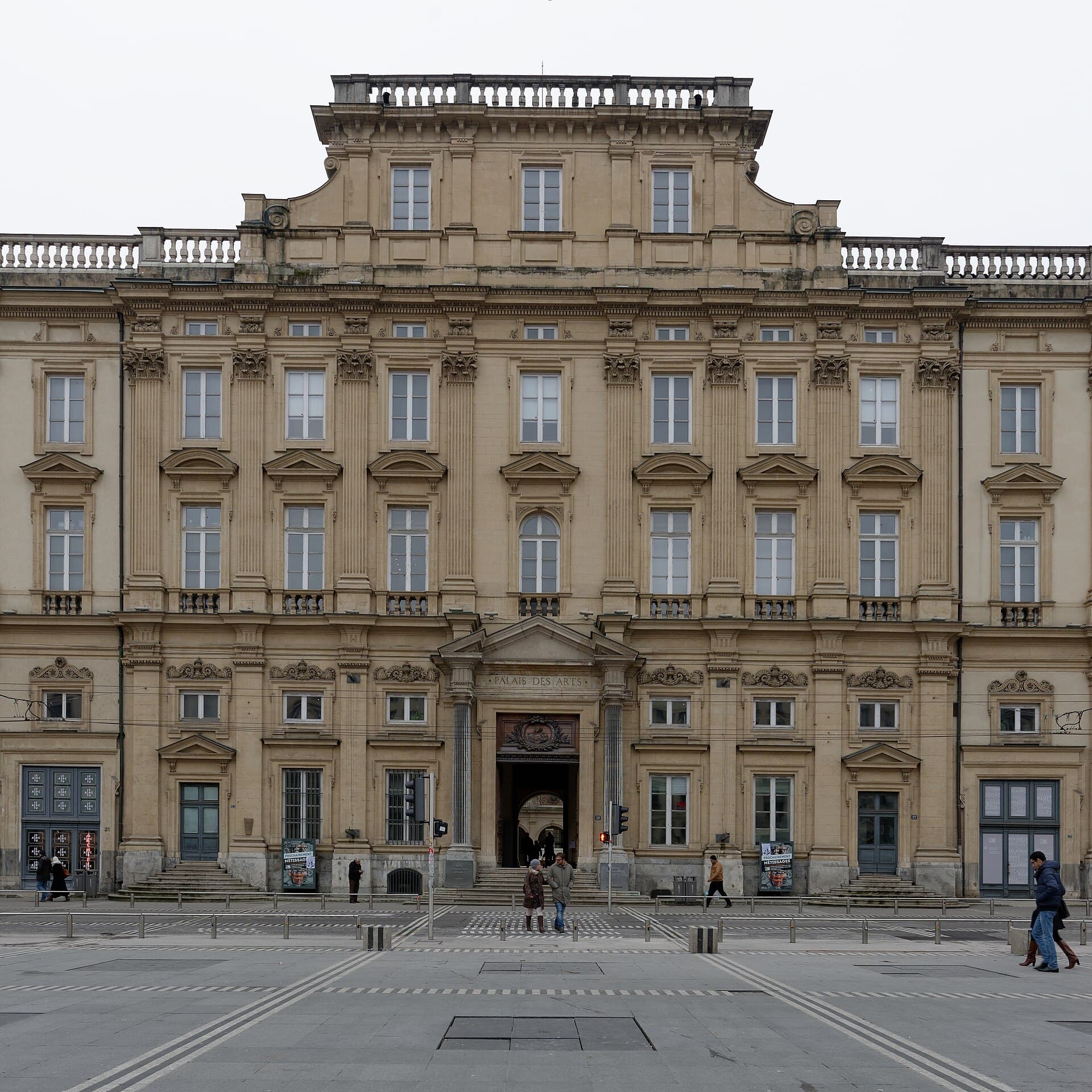 Museum of Fine Arts, LyonOne of the most important art museums in France outside Paris, occupying a seven6 minutes walk4.4
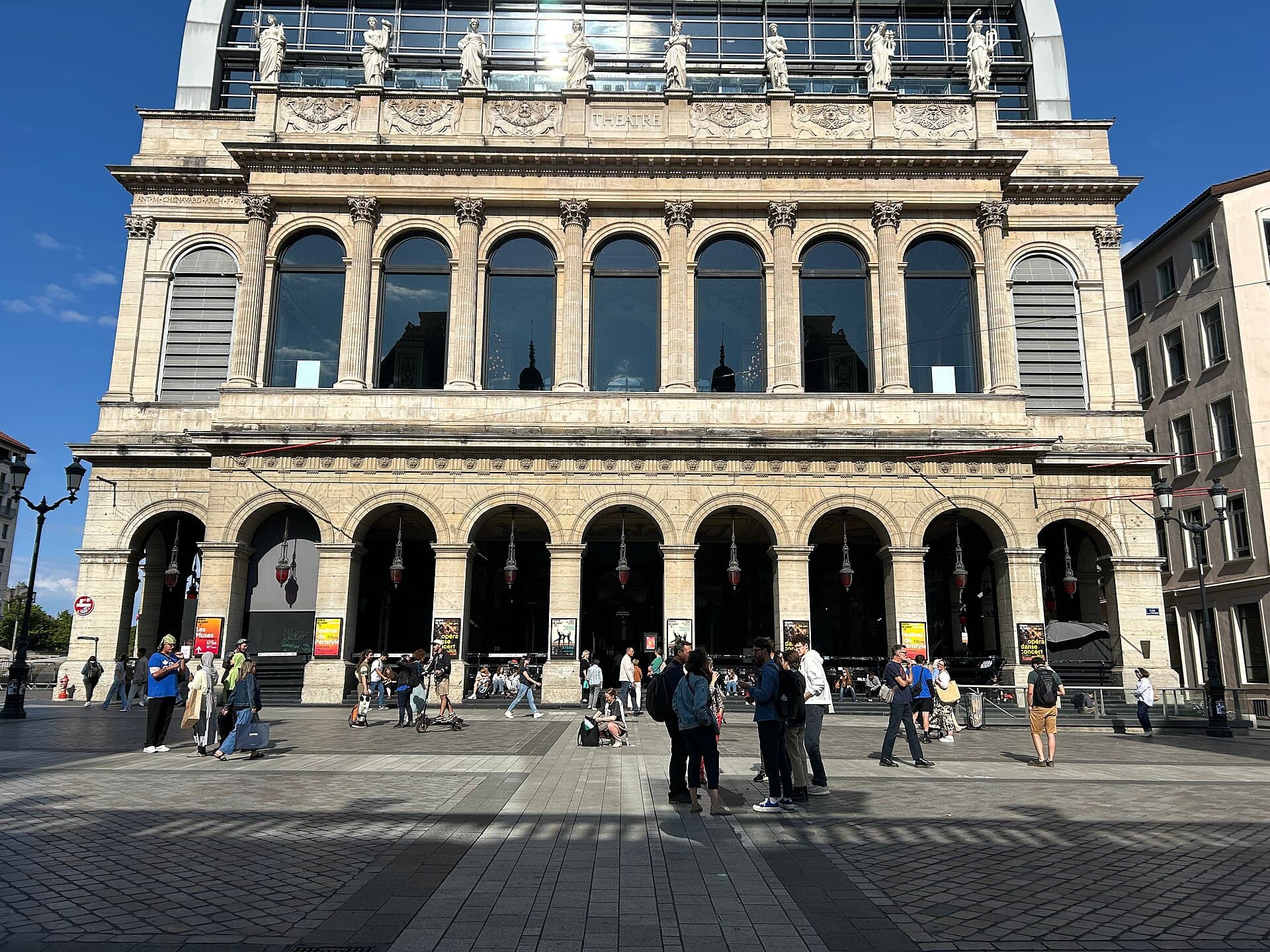 Opéra Nouvel, LyonLyon's national opera house, and one of Europe's boldest examples of fusing a co6 minutes walk4.4
The peninsula between the Rhône and the Saône, and Lyon's commercial and administrative heart. It holds the great squares — Bellecour, Terreaux and Jacobins — the theatre, the opera, the city hall and the fine arts museum, and the main shopping streets. It differs from Vieux Lyon on the west bank with its narrow streets and secret passages, and from the Croix-Rousse hill to the north where the silk weavers worked.
Covered passages running through buildings and linking one street to another by way of courtyards and stairs. They were built in Vieux Lyon and Croix-Rousse to move silk cloth between workshops and merchants without exposing it to rain. There are hundreds, most in private buildings, but about forty are open to the public by arrangement with the residents. Walking them is among the best things to do in Lyon, and finding them needs a map or a guided walk.