
The Moorish-Gothic front
Small turrets and two-coloured stone.
Gitanes232 — CC BY-SA 4.0 · Sf2000 — CC BY-SA 4.0 · SebastianSpells — CC BY-SA 4.0 · Mark Ahsmann — CC BY-SA 4.0
Brașov's synagogue stands in a side lane near the Șchei Gate, and its front is among the handsomest in the town: a Moorish-Gothic composition of small turrets, pointed arches and two-coloured stone, built in 1901 to the design of the architect Lipót Baumhorn. Baumhorn is the name that matters here — a Hungarian architect who designed more than twenty synagogues across the Austro-Hungarian empire, and this is his characteristic manner: Moorish mixed with Gothic and elements of Art Nouveau, producing buildings that read as both eastern and European. The interior is wide, with a painted ceiling, a women's gallery and stained glass. The synagogue serves a very small community today; Brașov had thousands of Jews before the war and has a few hundred now. **Visiting hours are limited, there is a nominal charge and there are security procedures**, and men are required to cover their heads. Ask at the door.
Small turrets and two-coloured stone.
Coloured ornament over a wide hall.
Strada Poarta Schei 27, Brașov
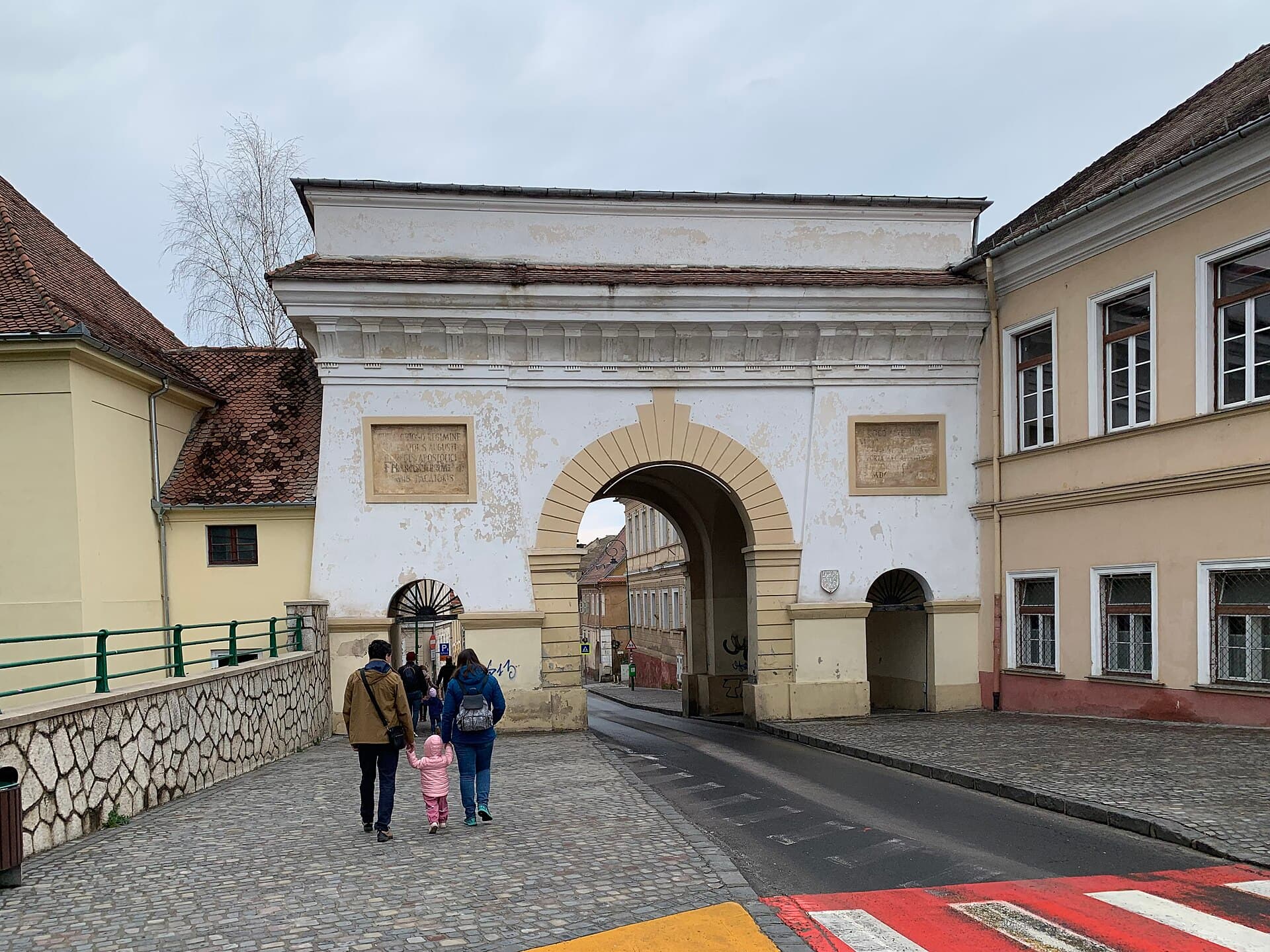 The Șchei GateThe Șchei Gate is a stone triumphal arch of three openings at the southern end o1 minute walk4.6
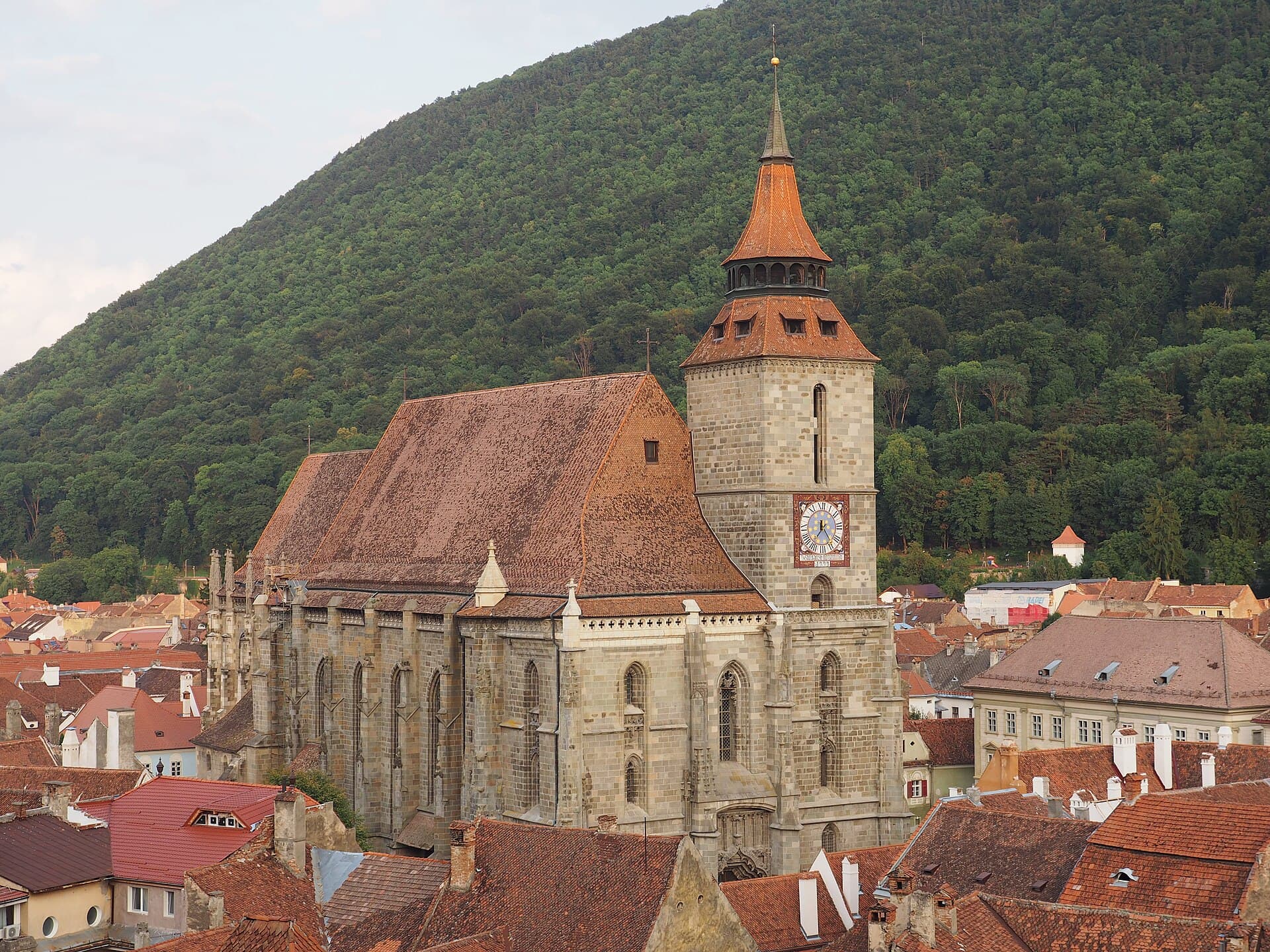 The Black ChurchThe largest Gothic church between Vienna and Istanbul: the Black Church has fill2 minutes walk4.4
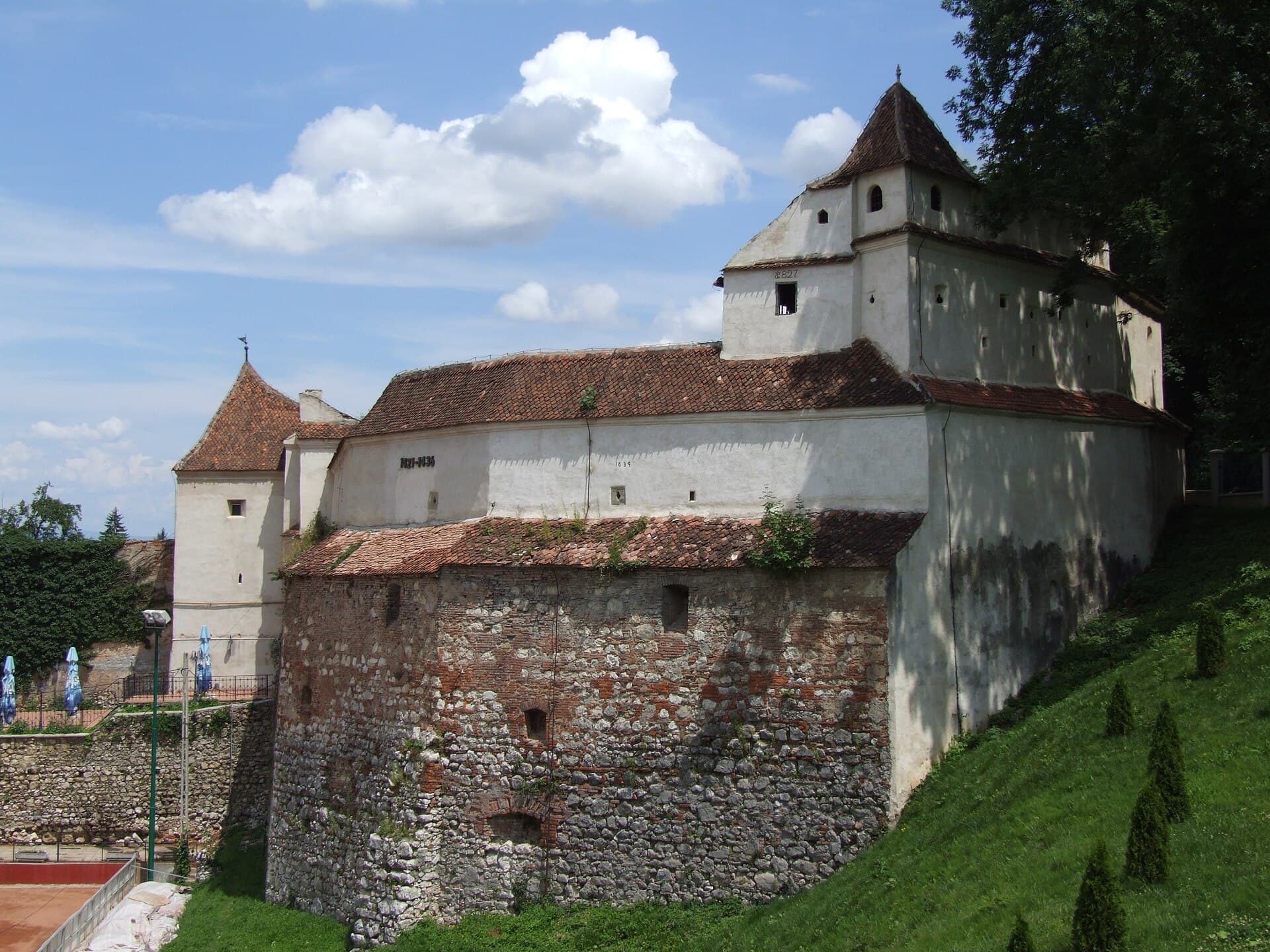 Weavers' BastionThe most complete survivor of Brașov's walls: the Weavers' Bastion at the south-4 minutes walk4.5
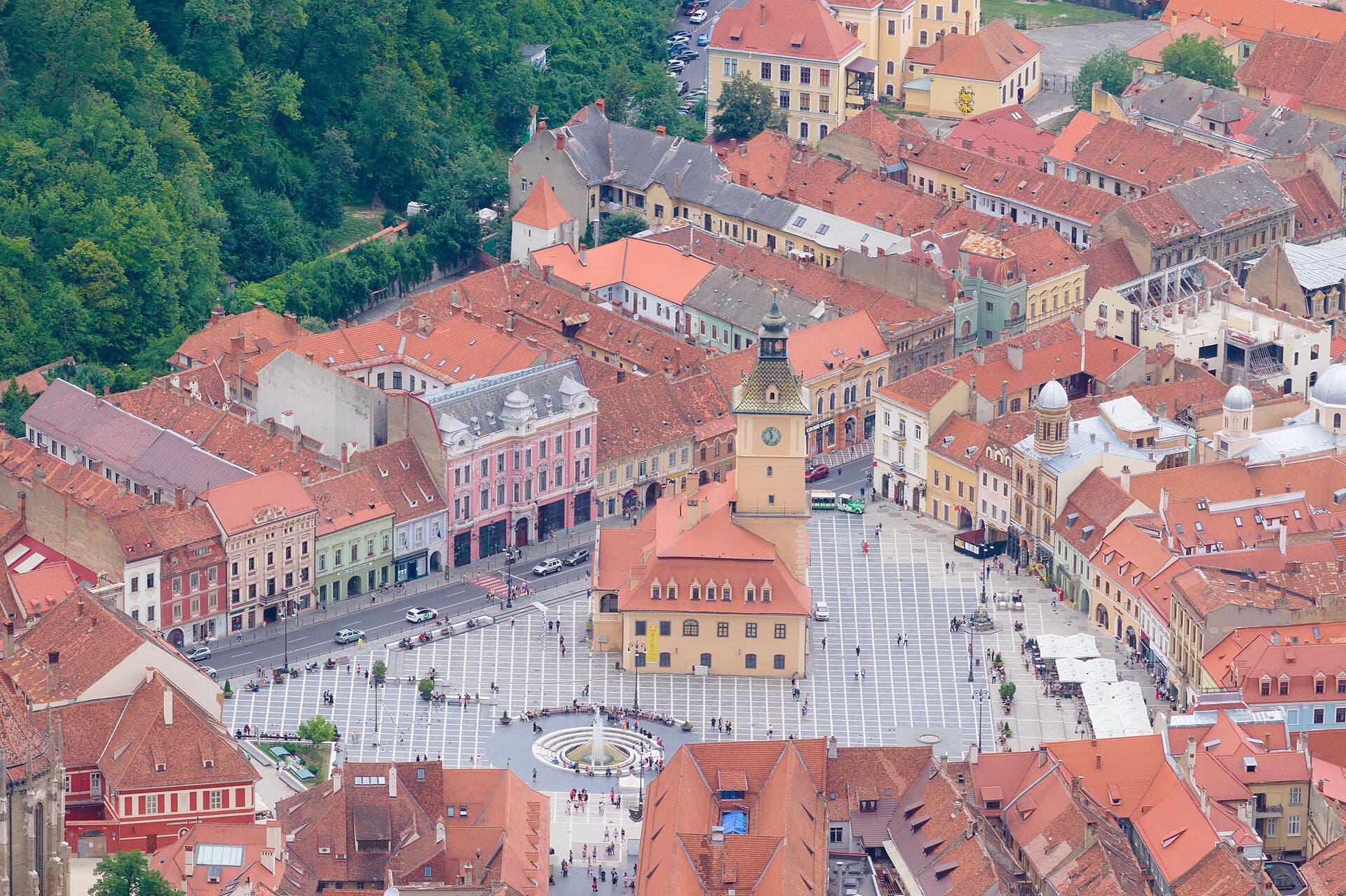 Piața SfatuluiBrașov's main square and the heart of its old town, among the widest and most co4 minutes walk4.7
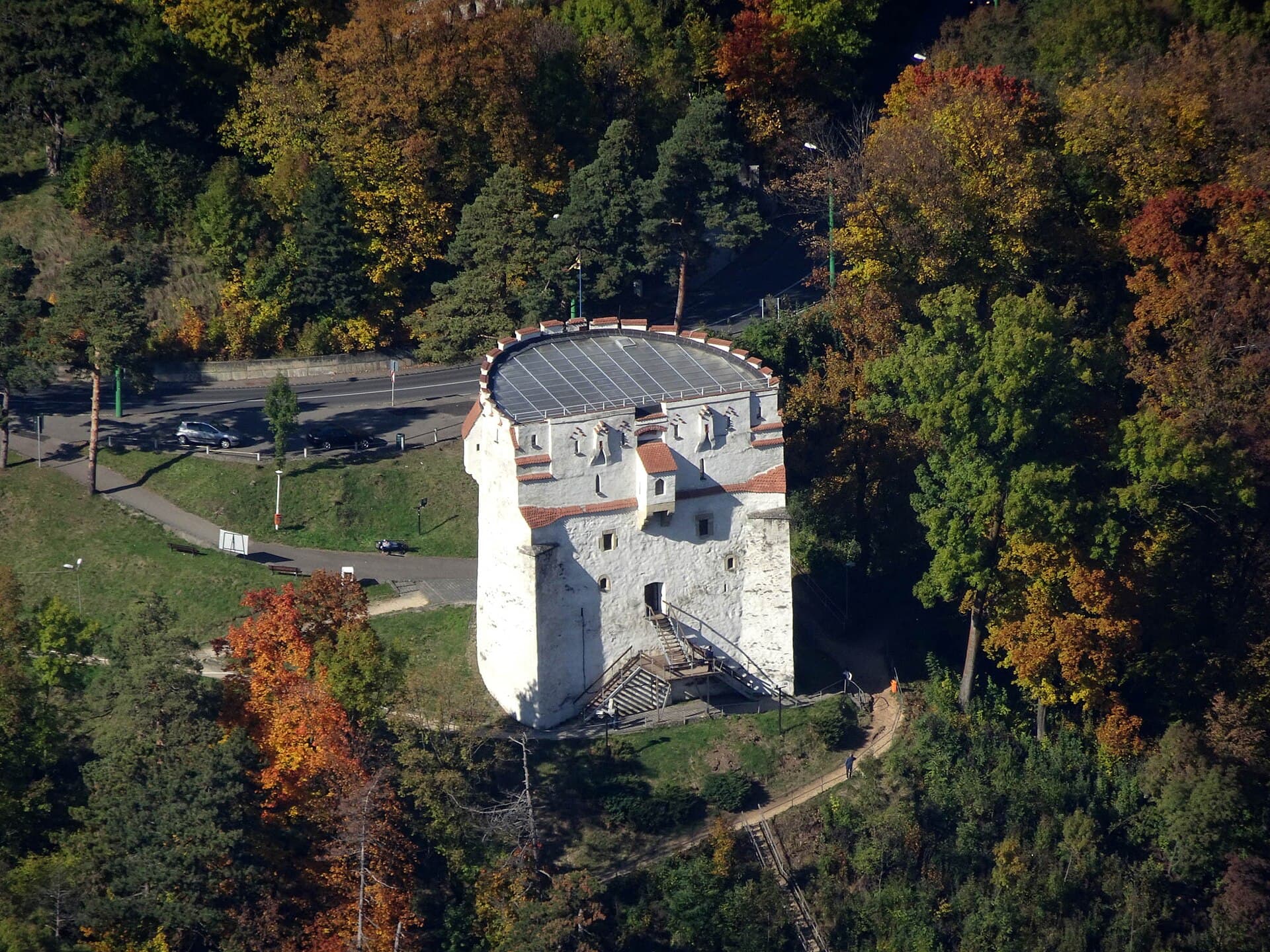 The White TowerThe best free view of Brașov: the White Tower is a stone half-circle built in 145 minutes walk4.5
A nineteenth-century style borrowing from the architecture of Andalusia and North Africa: horseshoe and pointed arches, banded two-coloured stone, geometric ornament and onion domes. Jewish communities in Central Europe chose it deliberately: they wanted an architectural identity of their own that imitated neither the Gothic church nor the classical palace, and borrowed from the Islamic world as the setting in which Andalusian Jewry had had its golden age. The result is that Europe's finest synagogues — in Brașov, Budapest, Berlin and Florence — look unexpectedly familiar to an Arab visitor.