
A Saxon town
Founded by German settlers in the 1200s — its shape is central European, not Romanian.
Andrei Stroe — CC BY-SA 4.0 · Pudelek (Marcin Szala) — CC BY-SA 3.0 · This image is a work by Mercy. When reusing, please credit me as: Mercy from Wikimedia Commons. I would appreciate being notified if you use my work outside Wikimedia. Do not copy this image illegally — CC BY-SA 3.0 · XeresNelro — CC BY-SA 4.0
Brașov's main square and the heart of its old town, among the widest and most complete historic squares in Romania. It is ringed by coloured seventeenth- and eighteenth-century façades of German merchants' houses — Brașov was a Saxon town, founded by German settlers in the thirteenth century, which explains a shape closer to central Europe than to the rest of Romania. At its centre stands the Council House, a fifteenth-century building with a clock tower that was the seat of the town's administration and gave the square its name. Today it holds the Brașov history museum. From the square you see the Black Church a few steps away — the largest Gothic church between Vienna and Istanbul, named after a fire in 1689 that blackened its walls. The square is open and free, hosts seasonal markets and festivals, and a Christmas market in December. It is the natural starting point for any walk in Brașov: the streets branch from it to the Black Church, the narrow Strada Sforii and the Tâmpa hill.
Founded by German settlers in the 1200s — its shape is central European, not Romanian.
The fifteenth-century clock-tower building at the centre, holding the city museum.
The largest Gothic church between Vienna and Istanbul, a few steps away.
Piața Sfatului, Brașov
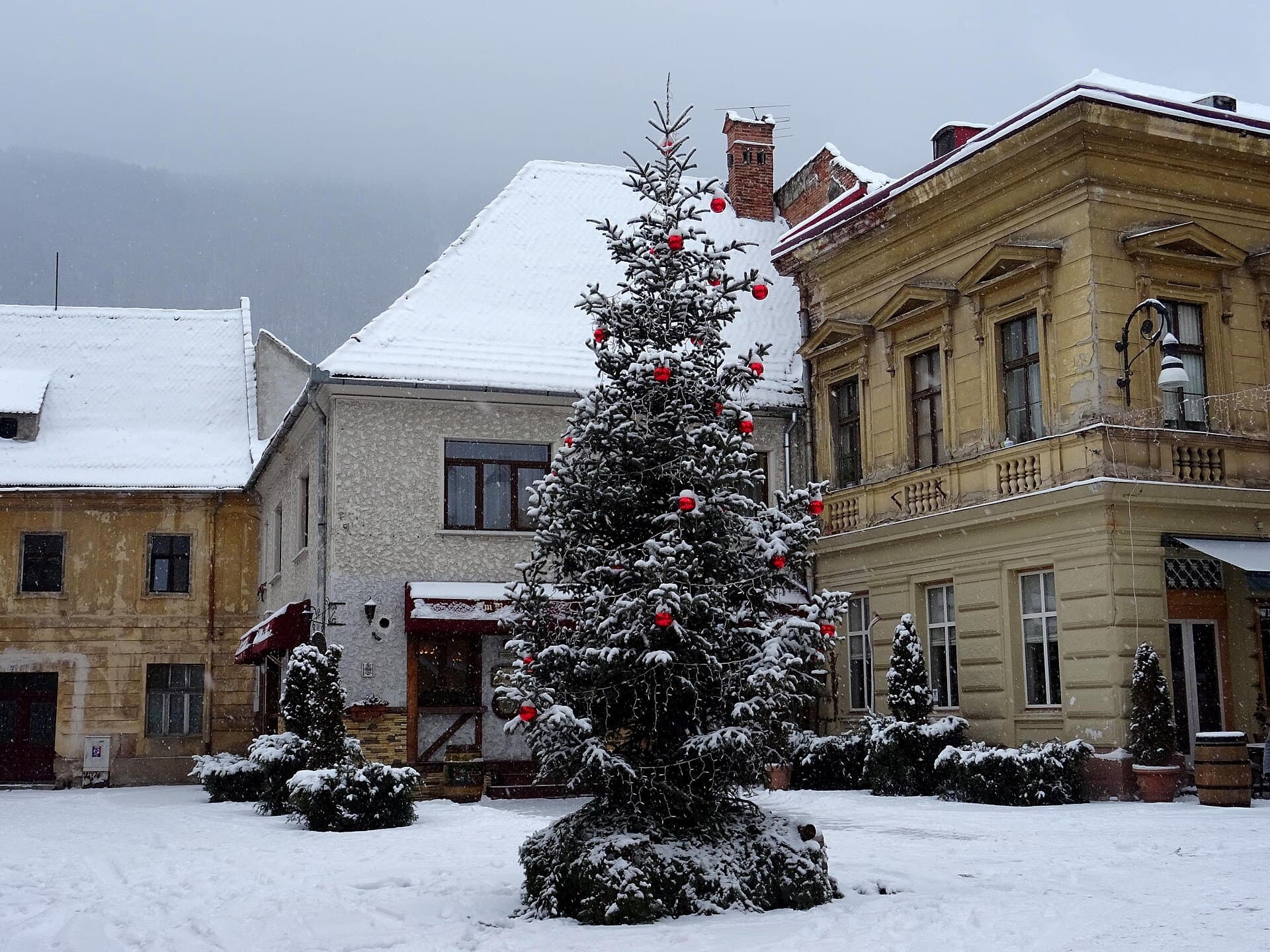 George Enescu SquareA small square in central Brasov named after George Enescu, the most important c2 minutes walk4.6
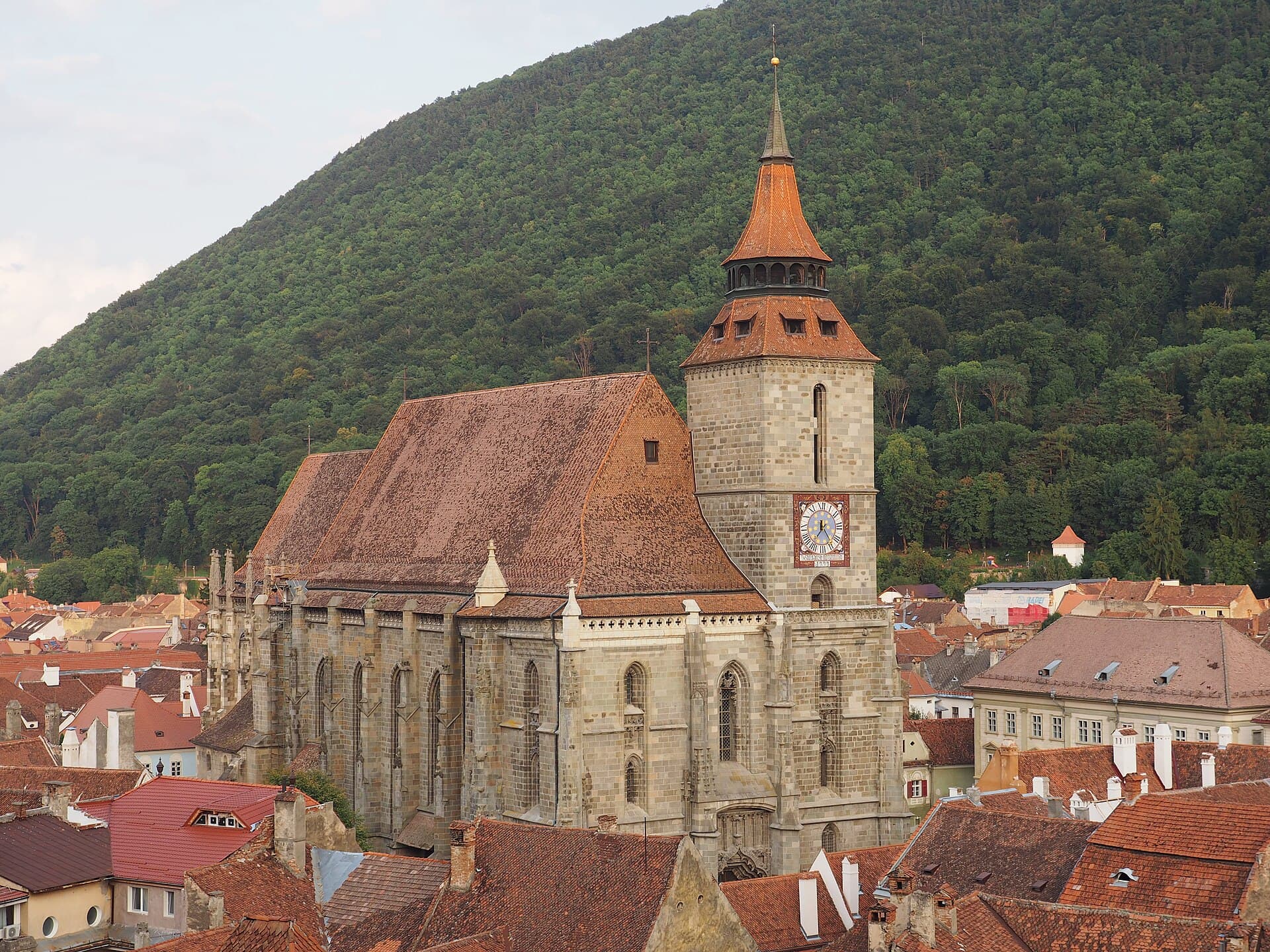 The Black ChurchThe largest Gothic church between Vienna and Istanbul: the Black Church has fill2 minutes walk4.4
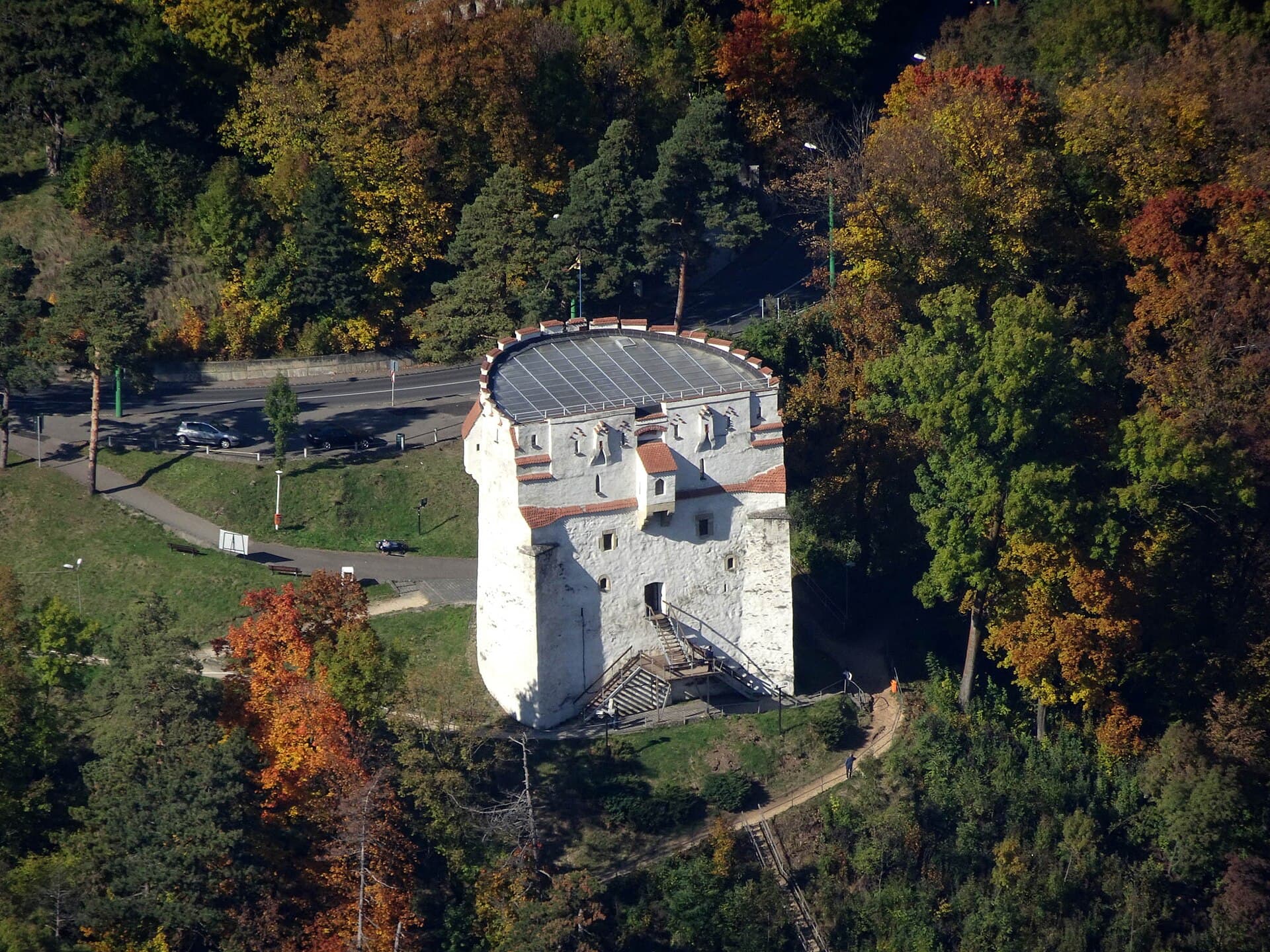 The White TowerThe best free view of Brașov: the White Tower is a stone half-circle built in 143 minutes walk4.5
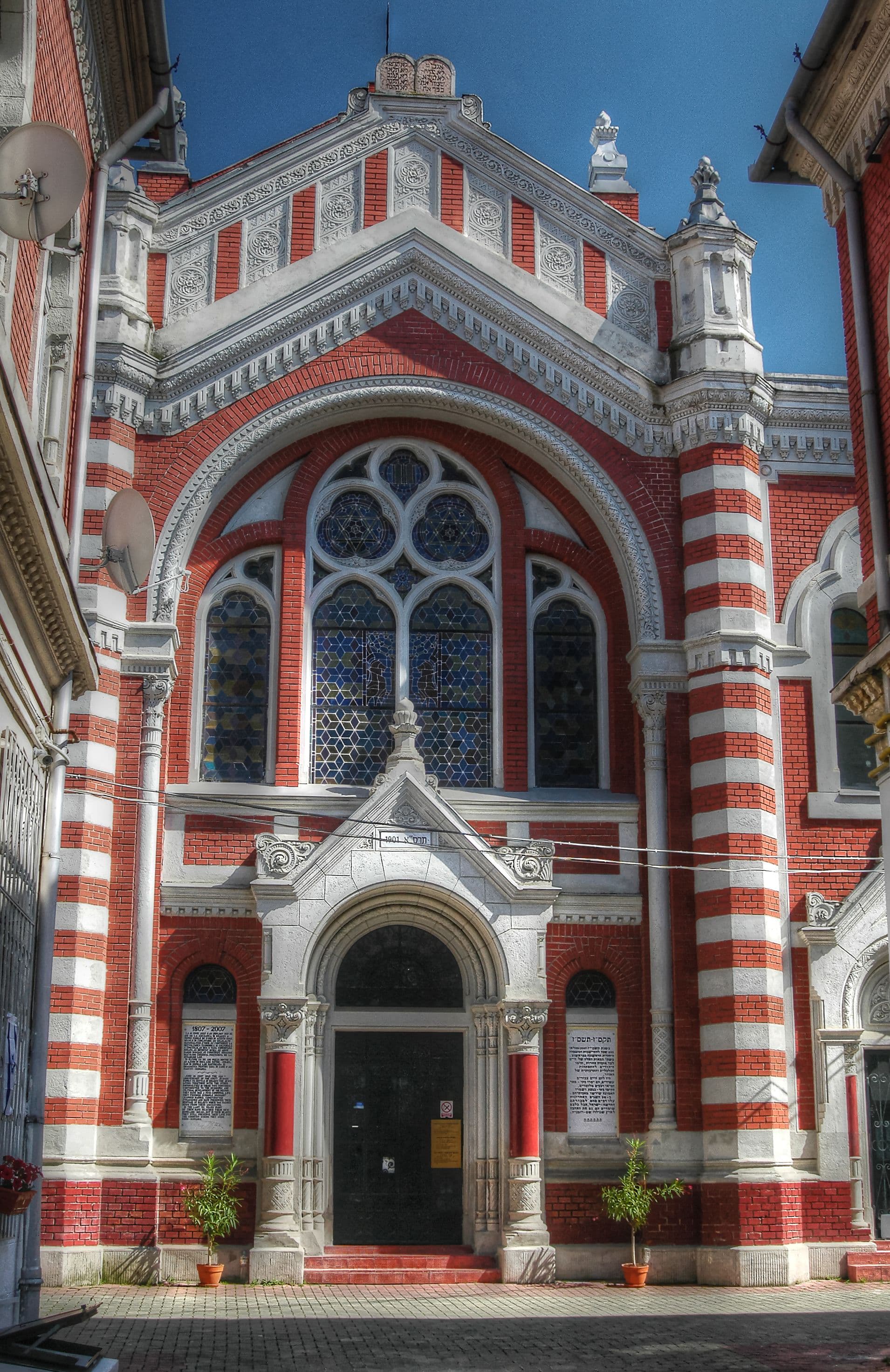 The Beth Israel SynagogueBrașov's synagogue stands in a side lane near the Șchei Gate, and its front is a4 minutes walk4.5
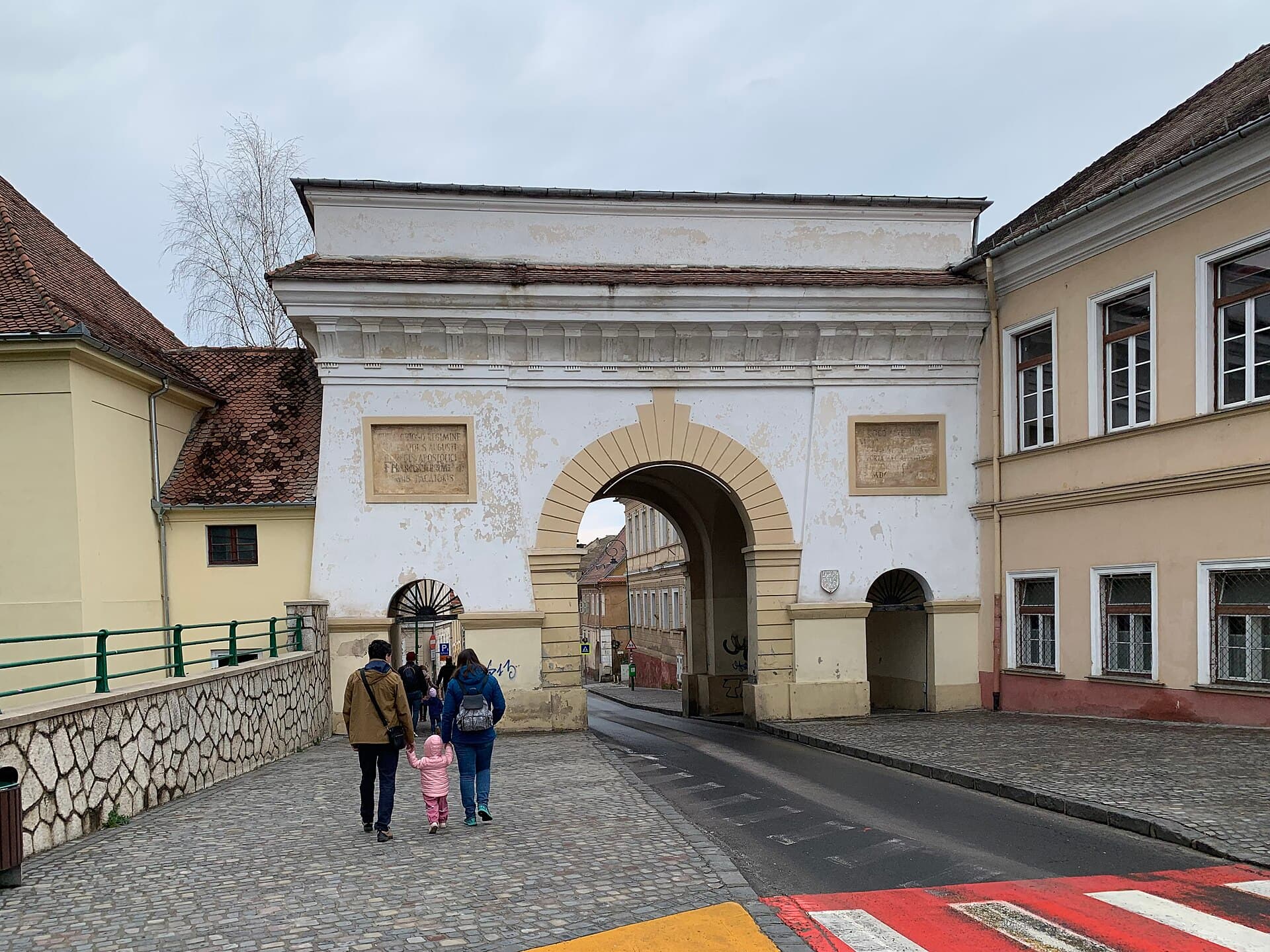 The Șchei GateThe Șchei Gate is a stone triumphal arch of three openings at the southern end o5 minutes walk4.6
Because a great fire swept Brașov in 1689 and blackened its outer walls, and the name stuck. It was restored afterwards but the name remained. It is a Lutheran church built in the fourteenth century, holding a large organ and a collection of Anatolian carpets given by merchants — among the largest collections of Turkish carpets outside Turkey.
The Black Church, Strada Sforii — among the narrowest streets in Europe — the Catherine Gate and the town walls, and the Tâmpa hill with its cable car and the city-name sign. Brașov is also the base for Bran Castle and Râșnov fortress, both under an hour away.