
The triple arch
Neoclassical, on the line of the walls.
Chainwit. — CC BY 4.0 · Chainwit. — CC BY 4.0 · Antimuonium — CC BY-SA 4.0 · Vislupus — CC BY-SA 4.0
The Șchei Gate is a stone triumphal arch of three openings at the southern end of Brașov's old town, built between 1827 and 1828 in the neoclassical manner — but what makes it worth stopping at is what passing through it used to mean. Medieval Brașov was a fortified German Saxon town, and Romanians were not permitted to live inside its walls. They lived outside them in the **Șchei** quarter to the south, entered the town only at this point, paid a toll to do so, and were barred from owning property within the walls. The present gate replaced a much older one that served the same function. So the elegant arch you see today was originally an ethnic checkpoint. The town tower stands beside it and the Șchei quarter lies behind, with its Orthodox church of St Nicholas and the first Romanian school in the country. **Free and always open**, and the natural start of a walk into Șchei.
Neoclassical, on the line of the walls.
The Romanian district outside the walls behind it.
Piața Unirii, Brașov
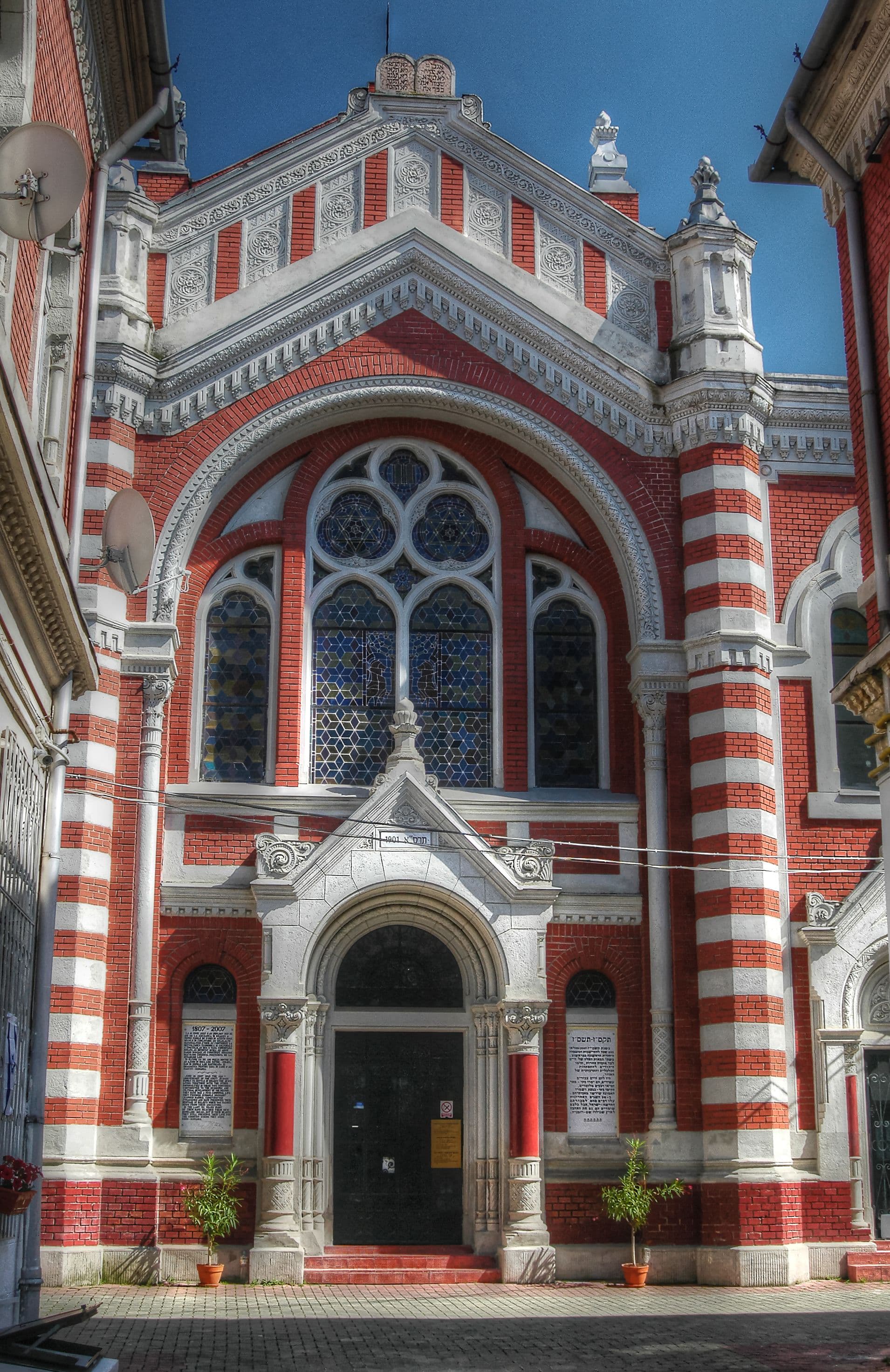 The Beth Israel SynagogueBrașov's synagogue stands in a side lane near the Șchei Gate, and its front is a1 minute walk4.5
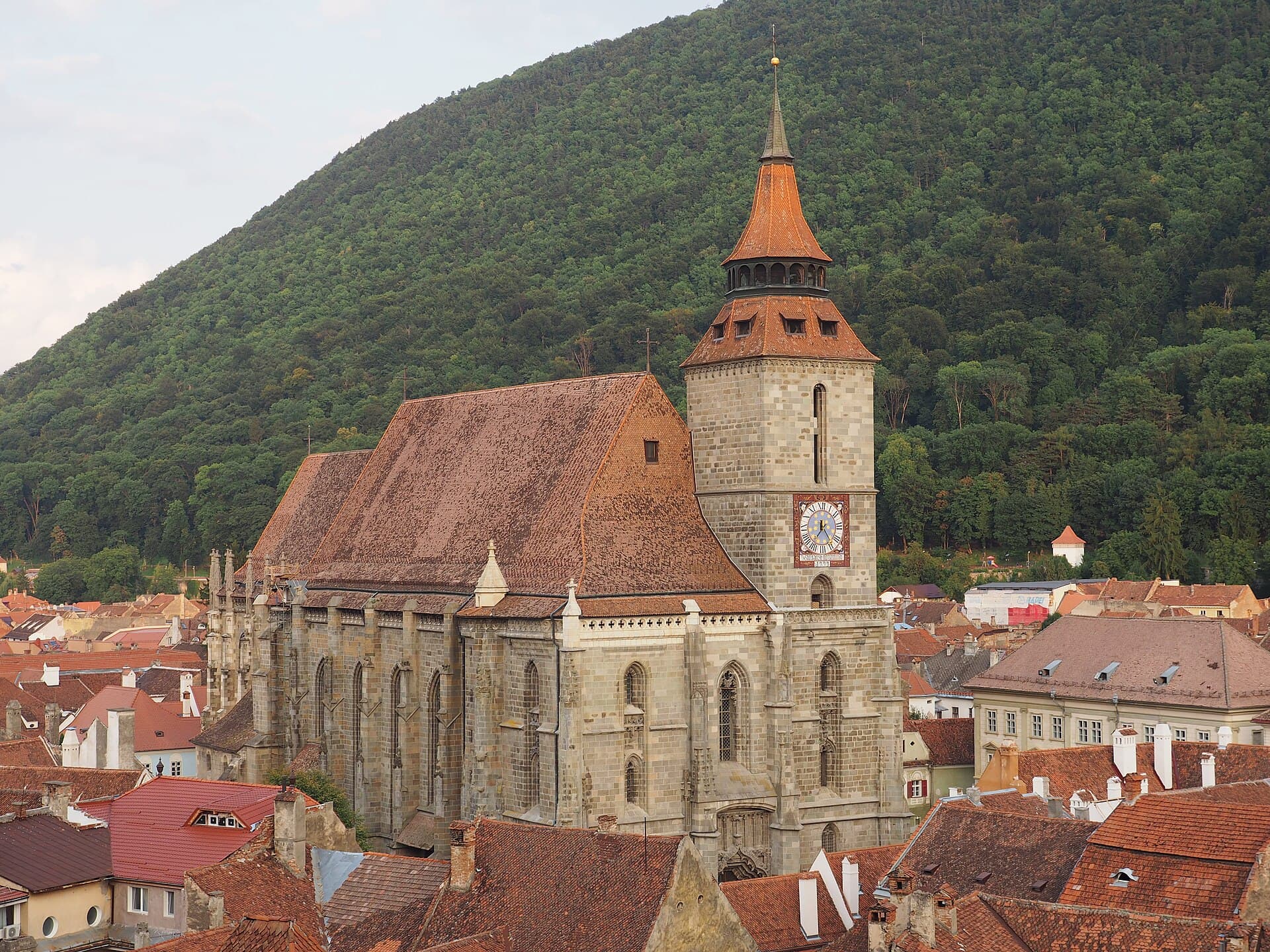 The Black ChurchThe largest Gothic church between Vienna and Istanbul: the Black Church has fill3 minutes walk4.4
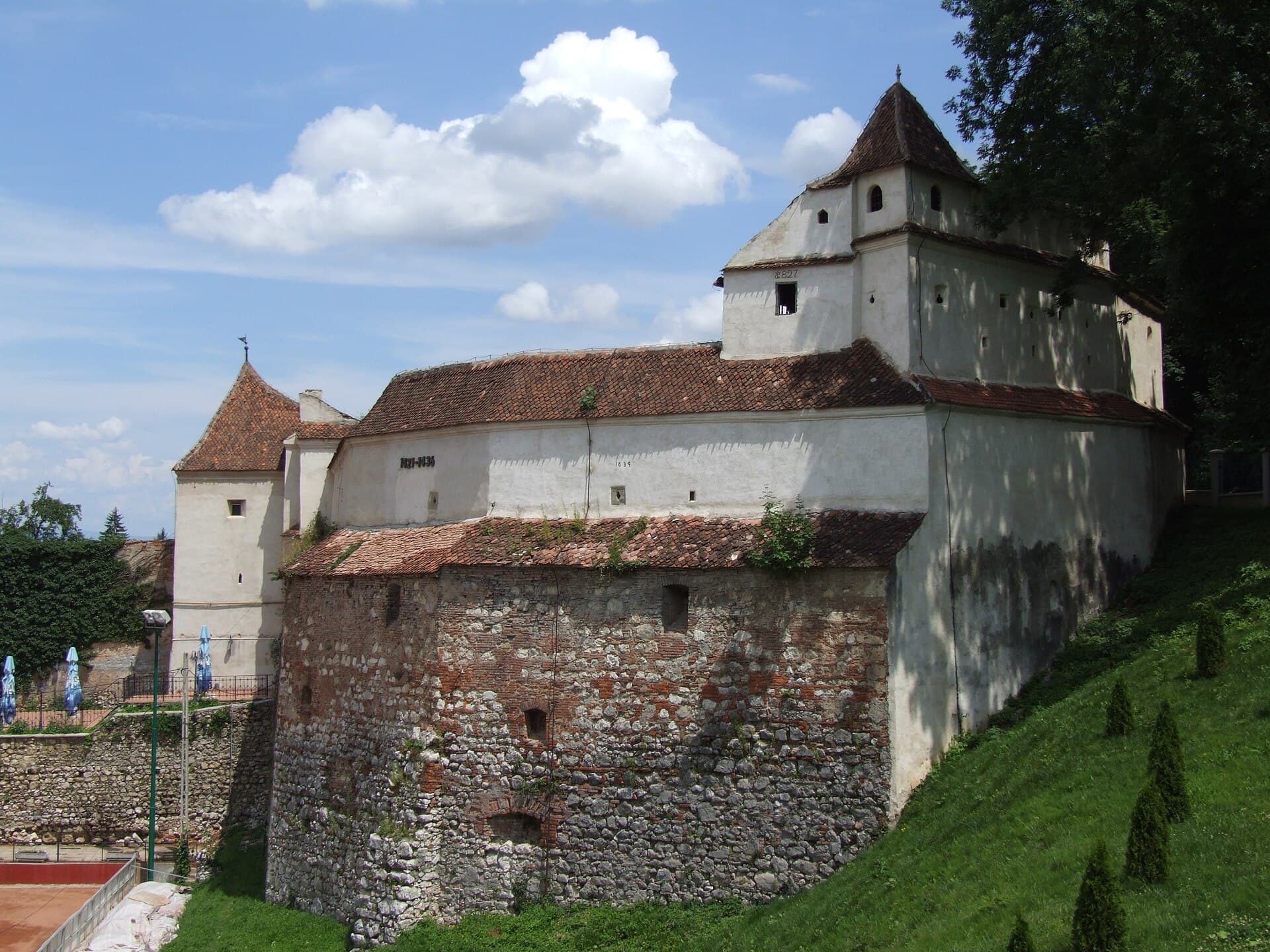 Weavers' BastionThe most complete survivor of Brașov's walls: the Weavers' Bastion at the south-4 minutes walk4.5
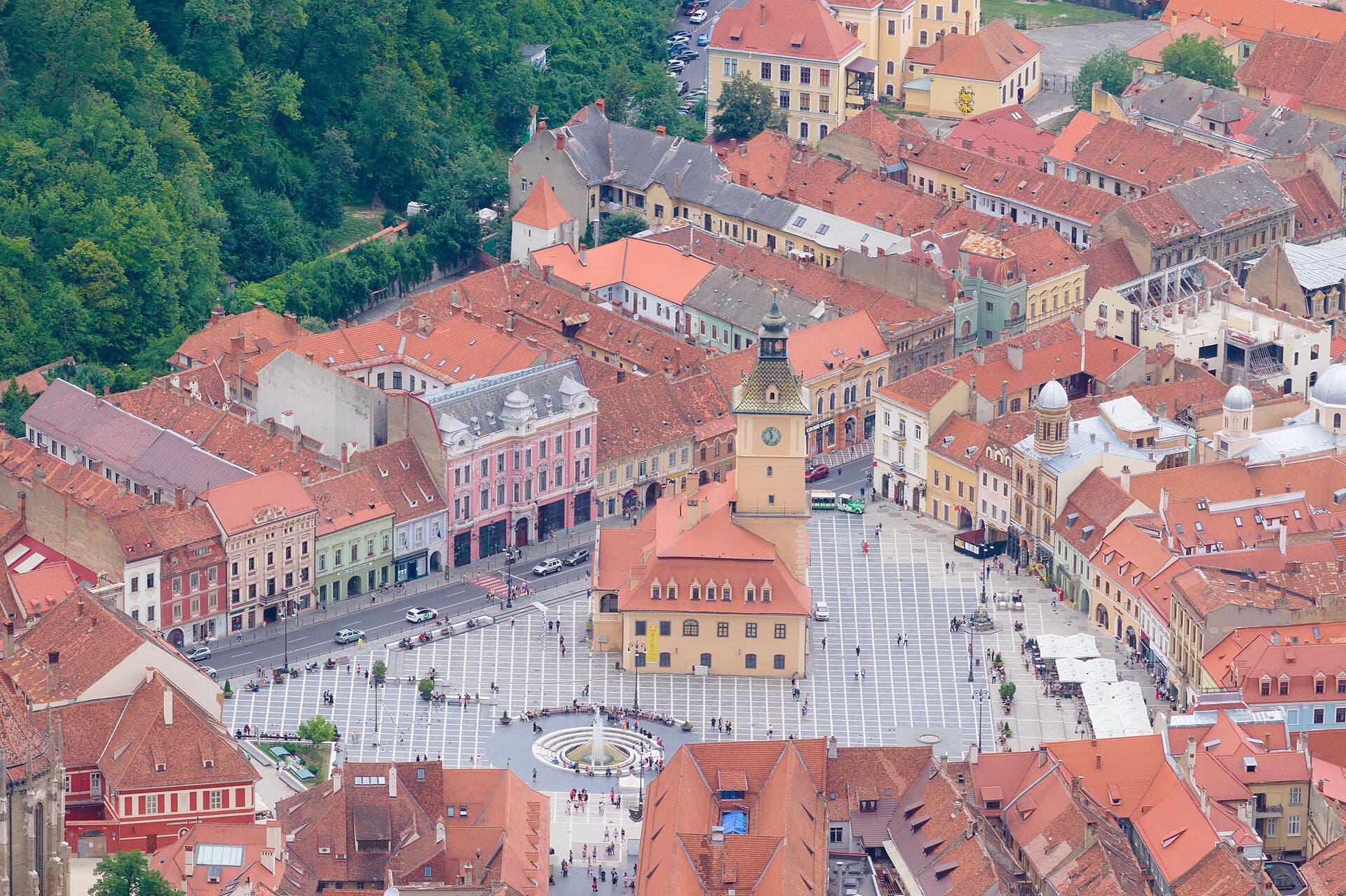 Piața SfatuluiBrașov's main square and the heart of its old town, among the widest and most co5 minutes walk4.7
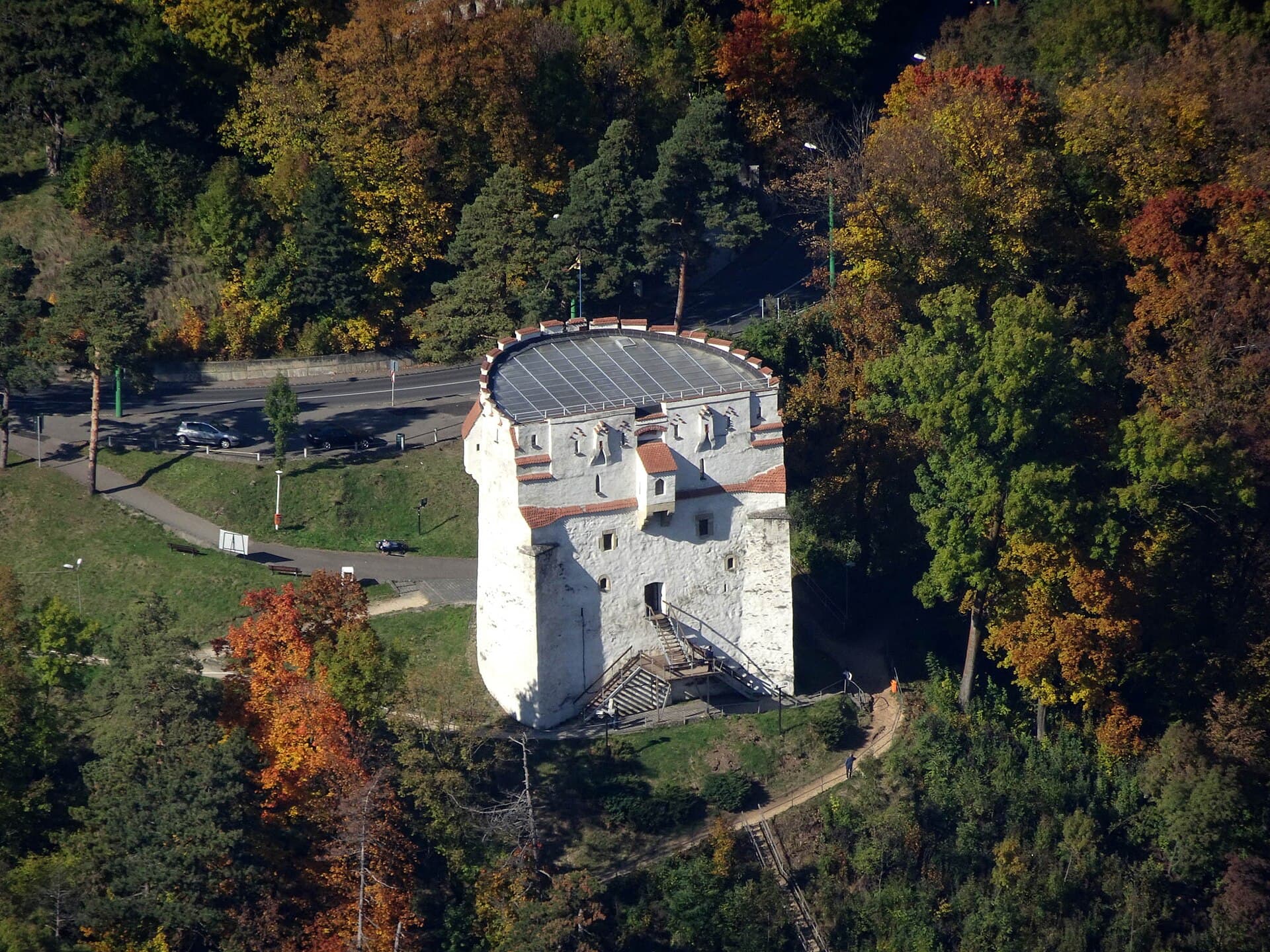 The White TowerThe best free view of Brașov: the White Tower is a stone half-circle built in 145 minutes walk4.5
Because the kings of Hungary brought German settlers into Transylvania from the twelfth century to hold and populate the eastern frontier, granting them wide privileges and self-government. They were known as Saxons, though most came from the Rhine and Moselle rather than Saxony. They built seven fortified towns — hence the German name for Transylvania, Siebenbürgen, the seven citadels — chief among them Brașov, Sibiu and Sighișoara, and fortified churches in hundreds of villages. They stayed eight centuries, and then most emigrated to Germany between 1970 and 1990, leaving their towns without the people who made them.