
Havara stone houses
Lanes of soft yellow limestone with carved doors and arched windows, many houses sitting on rock-cut cellars.
Dosseman — CC BY-SA 4.0 · Dosseman — CC BY-SA 4.0 · Dosseman — CC BY-SA 4.0 · Dosseman — CC BY-SA 4.0
When Atatürk visited Gaziantep in January 1933, the provincial council made him an honorary resident of the city, and the quarter it entered in his registration was this one; it was no random pick: Bey Mahallesi was one of the wealthiest neighbourhoods of old Antep and the one where its stonemasons did their finest work. A few minutes' walk south-west of the castle and the covered bazaar, the lanes suddenly narrow into walls of soft yellow 'havara' limestone, pierced by arched windows and carved timber doors that open onto courtyards a passer-by never sees. Many of the houses sit on a cellar cut into the bedrock, where families stored provisions and hid from the summer heat, the same heat that still makes these shaded alleys the best walking in the old city. The quarter lost many of its families over recent decades and was in poor shape when the municipality began a street-rehabilitation programme in 2007; even since then its population has slipped from about 1,500 to under a thousand. The restored houses now lead different lives: some are museums, some cafés and small hotels, some are still simply homes. Nobody pretends the February 2023 earthquakes passed it by, either; walls came down here, so expect the odd scaffold or shuttered house along the way. The one interior worth paying for is the Hasan Süzer house on Hanifioğlu Sokak, a nineteenth-century mansion of three storeys over a cave cut into the rock. The businessman Hasan Süzer bought it derelict in 1985 and it opened in 1989, under the Ministry of Culture, as the city's ethnography museum; after years closed for renovation, and a spell as a television film set, it reopened in May 2026, run by the Metropolitan Municipality with the Süzer family, as the Hasan Süzer Marriage and Life Culture Museum. Its rooms now walk you through an Antep marriage, from the matchmaking visit and the kitchen to the coffee room, the bride's room with its henna-night film, the domestic hammam and the trousseau. Children usually prefer the Toy Museum a street away, some seven hundred toys from the 1700s to the 1990s in another restored Antep house. Around other corners are the Papirüs café, in an 1856 mansion built for the Nazaretyan family of Armenian soap manufacturers, and the Atatürk Memorial Museum, opened in 2013 in the house that commemorates his registration. Give it an hour of unhurried wandering and one museum, no more; the quarter is small and its charm lies in the stone and the doorways rather than in display cases. The paving is uneven and a pushchair grumbles over it, but there are no long stairs outside the museums. Spring and autumn are ideal; in August go before ten or after the afternoon heat, and end in the shade of one of the restored-mansion cafés.
Lanes of soft yellow limestone with carved doors and arched windows, many houses sitting on rock-cut cellars.
A three-storey nineteenth-century mansion over a rock cave, reopened in 2026 as a museum of Antep marriage and home life.
Some seven hundred toys from the 1700s to the 1990s in a restored Antep house, open daily.
Hanifioğlu Sokak, Bey Mahallesi, Şahinbey
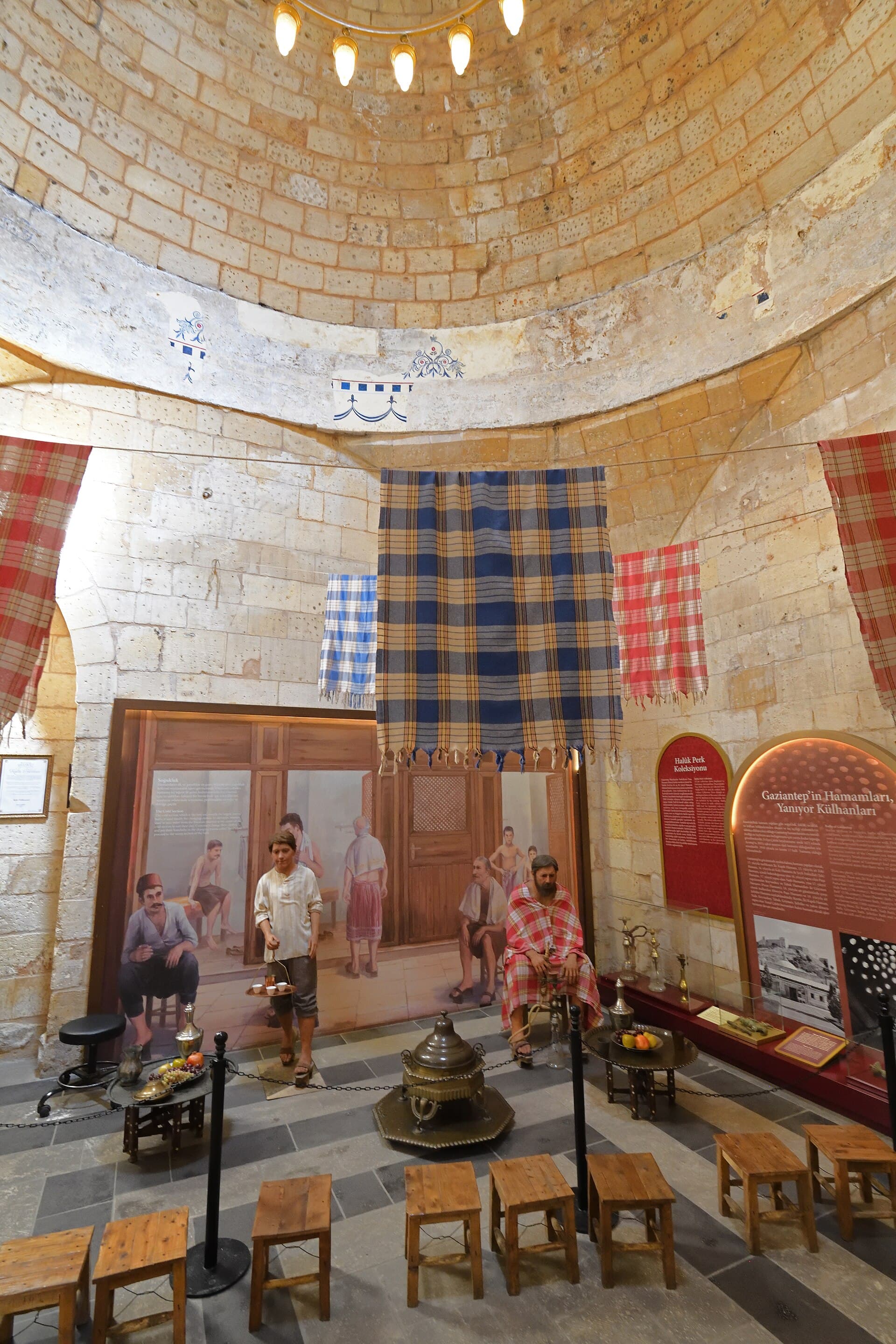 Gaziantep Hamam MuseumNobody undresses in this hamam and no water runs: the brides, the boys and the n7 minutes walk
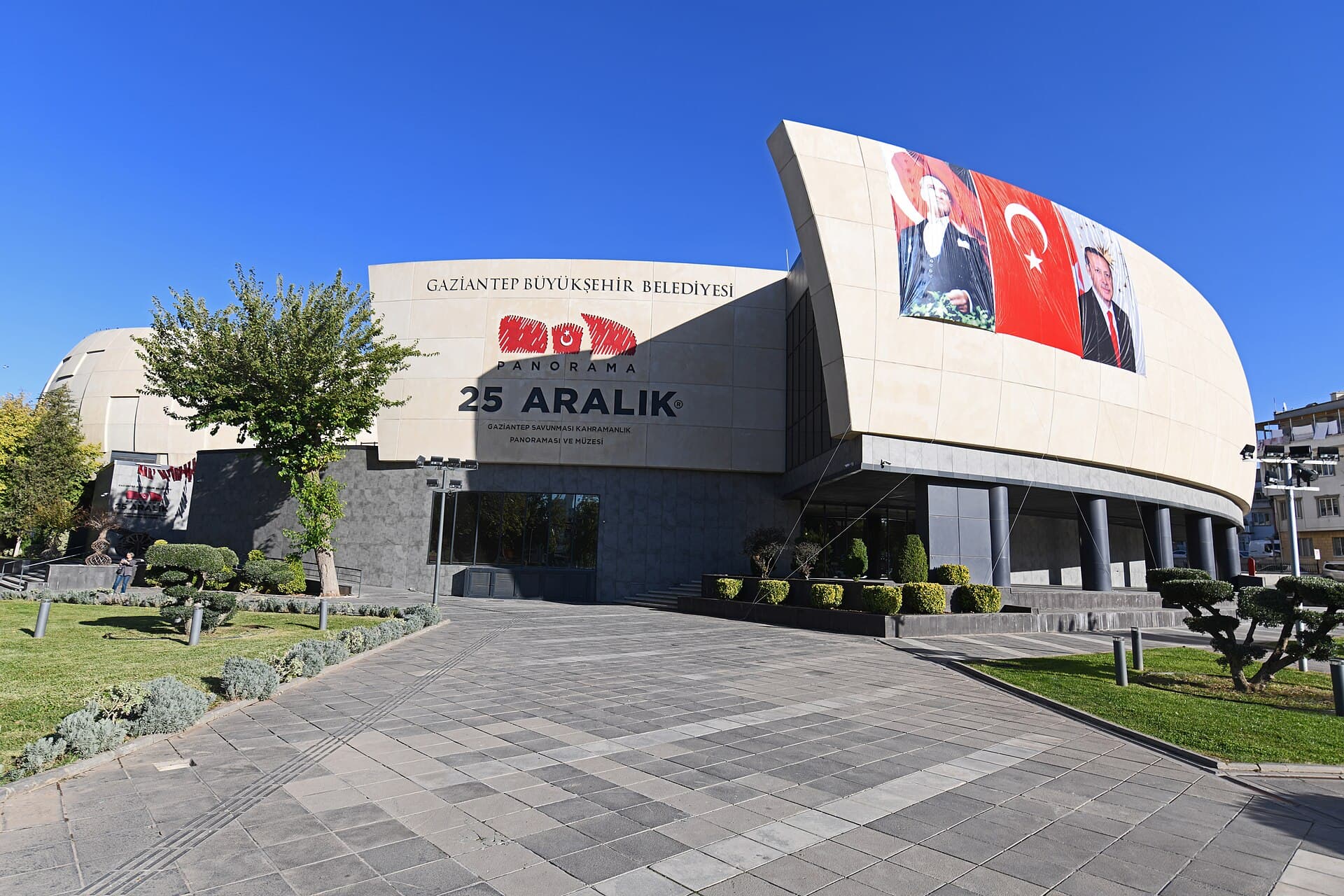 Panorama 25 Aralık MuseumOne oil painting, 120 metres long and roughly 13 metres high, wraps around you i7 minutes walk
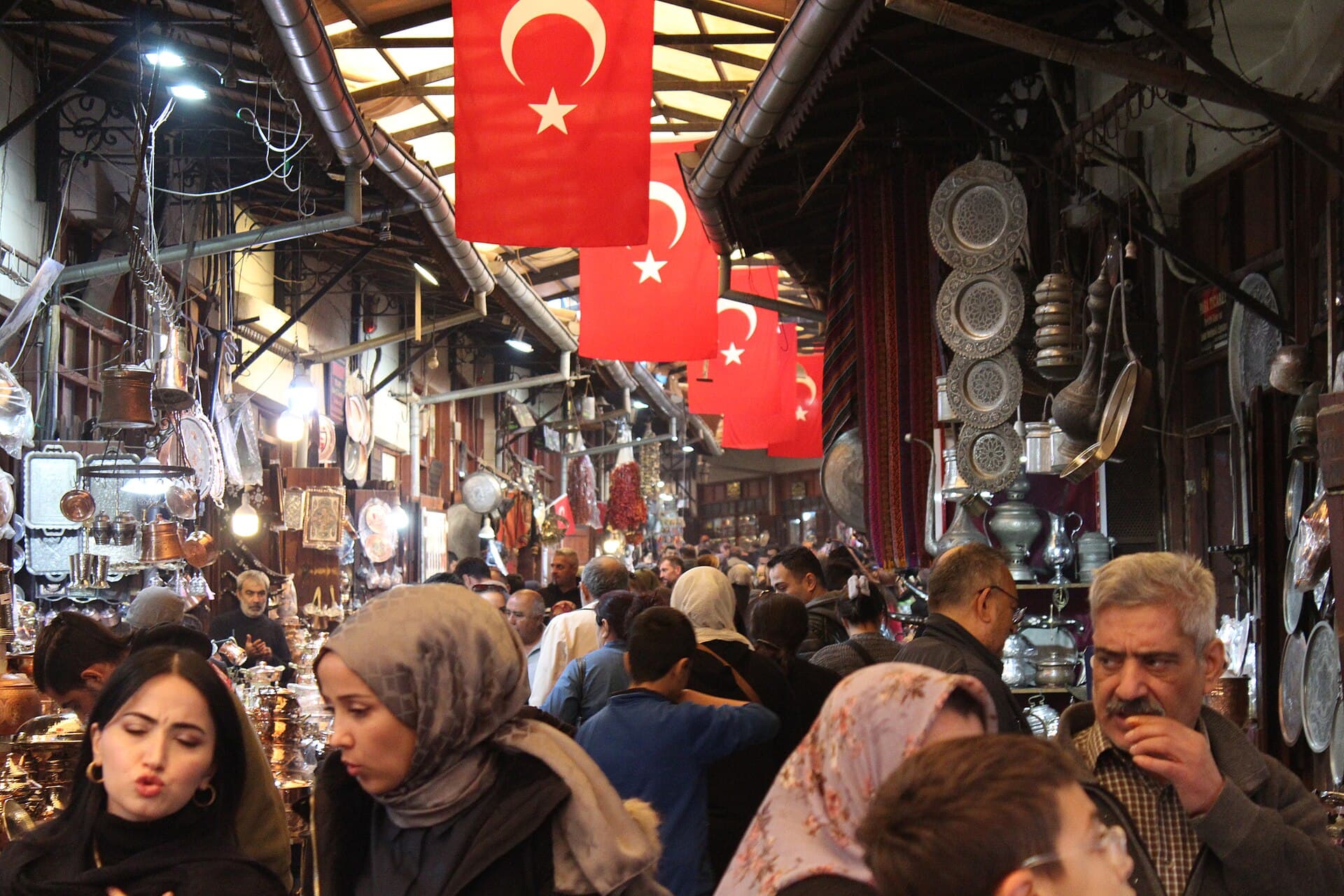 Coppersmiths' Bazaar (Bakırcılar Çarşısı)You hear this bazaar two streets before you see it. Copper-beating has been prac10 minutes walk
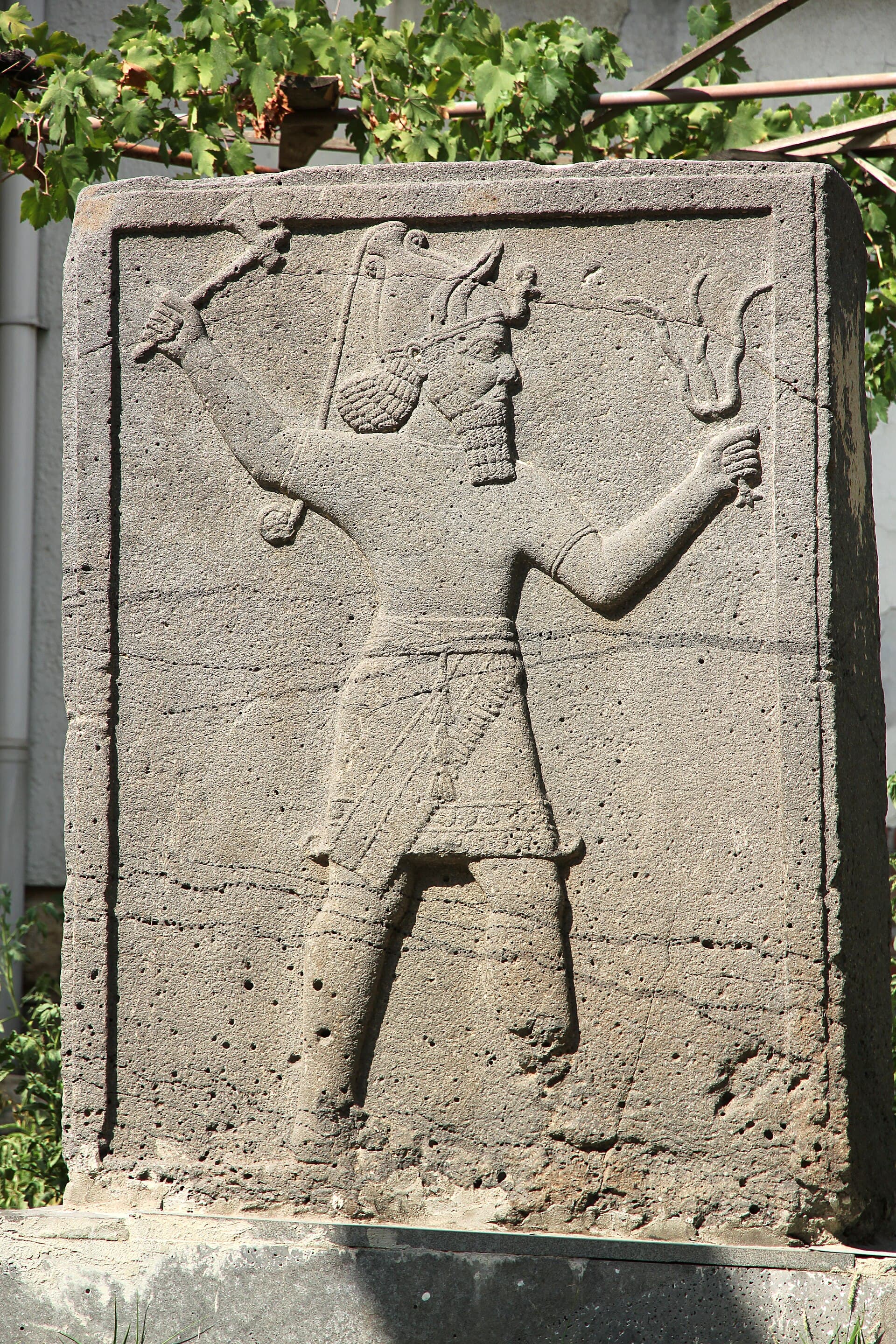 Gaziantep Archaeology MuseumThe skeleton of an extinct elephant stood in a locked hall for three and a half 11 minutes walk
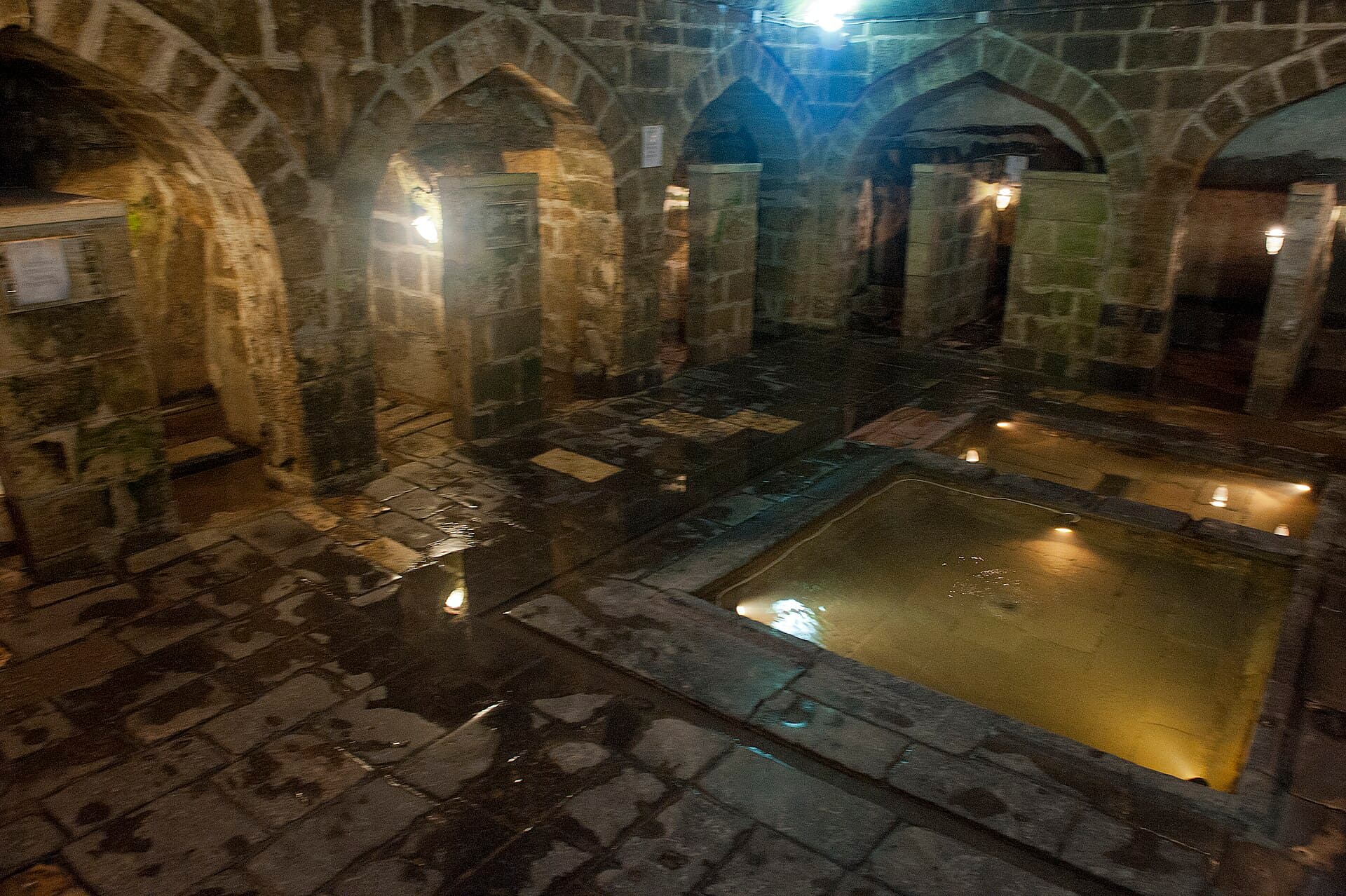 Pişirici Kastel and MescitSome seven metres beneath the lanes of Gaziantep's old bazaar sits a small mosqu13 minutes walk
Fold it into your old-city walk rather than making it a destination: it is minutes on foot from the castle and covered bazaar, and an hour of wandering covers the best lanes. Add time only if you are going into the Hasan Süzer Museum or have children set on the Toy Museum.
Children enjoy the Toy Museum more than anything else here. The paving is uneven, so a pushchair is workable but bumpy; the only stairs are inside the museums, not in the lanes themselves.