
Turquoise dome
Over the mihrab.
Francisco Anzola — CC BY 3.0 · Nassima Chahboun — CC BY-SA 4.0 · Nassima Chahboun — CC BY-SA 4.0 · Nassima Chahboun — CC BY-SA 4.0 · Nassima Chahboun — CC BY-SA 4.0 · Nassima Chahboun — CC BY-SA 4.0 · Nassima Chahboun — CC BY-SA 4.0 · Hasan Tohirov — CC BY-SA 4.0
One of Samarkand's most important monuments and, in the 15th century, one of the largest and most magnificent mosques in the Islamic world, a masterpiece of the Timurid Renaissance. Timur ordered it after his Indian campaign of 1399 as the congregational mosque of his new capital. When Timur returned from campaign in 1404 the building was nearly finished, but, unhappy with its progress, he ordered changes, especially to the main dome. Structural problems appeared from the start, as its scale pushed the building techniques of the time beyond their limit, and within a few years bricks began falling from the huge dome over the mihrab. By the mid-20th century only a grand ruin survived; major parts were restored in the Soviet period. Today visitors see the towering portal, the great turquoise dome and the broad courtyard, with a huge carved marble Quran stand at its centre. Entry to the courtyard is by ticket, per visitor guides. It stands next to Siyob Bazaar, so the two combine easily, about 10 minutes' walk from the Registan.
Over the mihrab.
In marble.
Into the courtyard.
Tashkent Street, by Siyob Bazaar, Samarkand
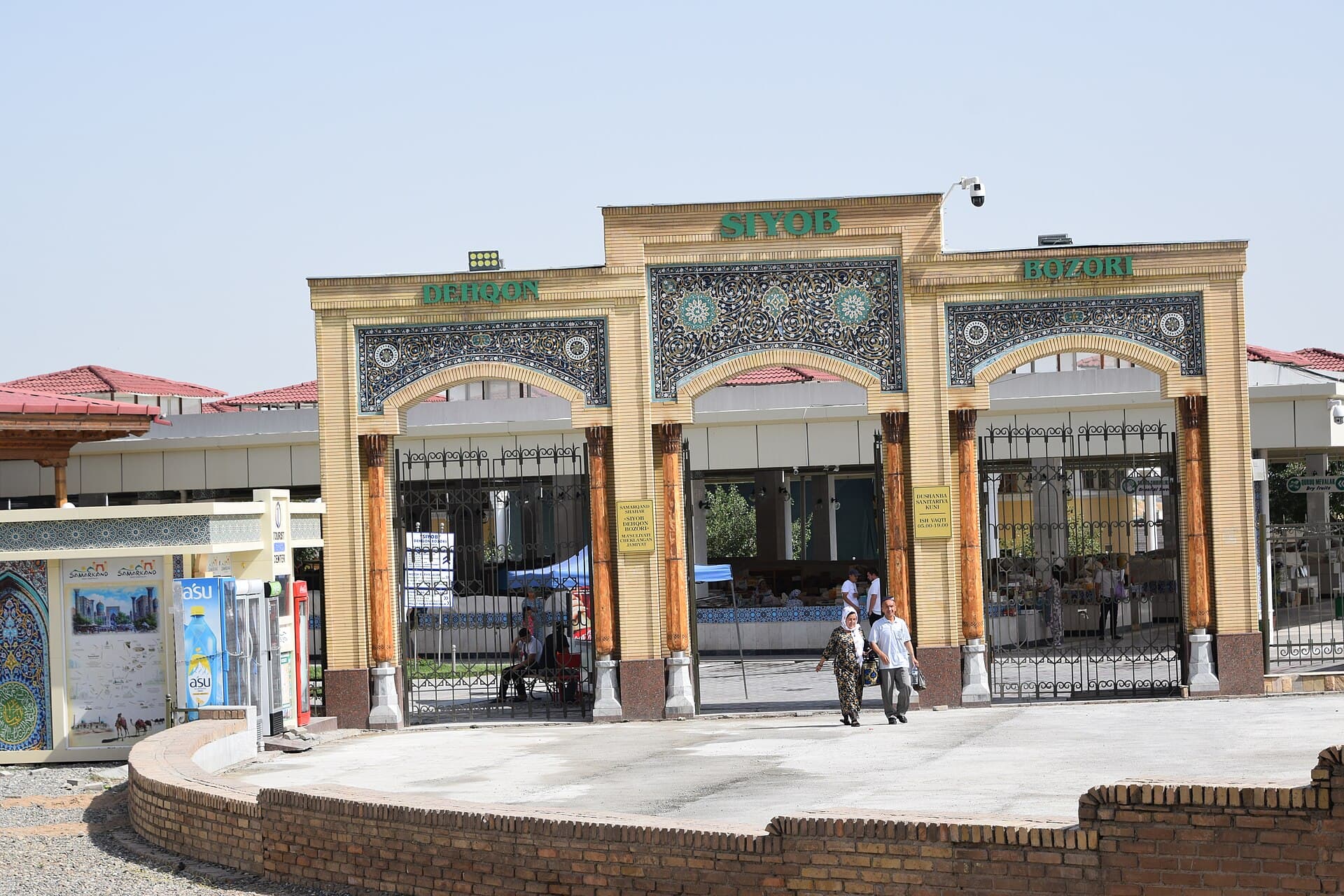 Siyob Bazaar, SamarkandSamarkand's largest bazaar, spreading over more than seven hectares in the old c2 minutes walk4.6
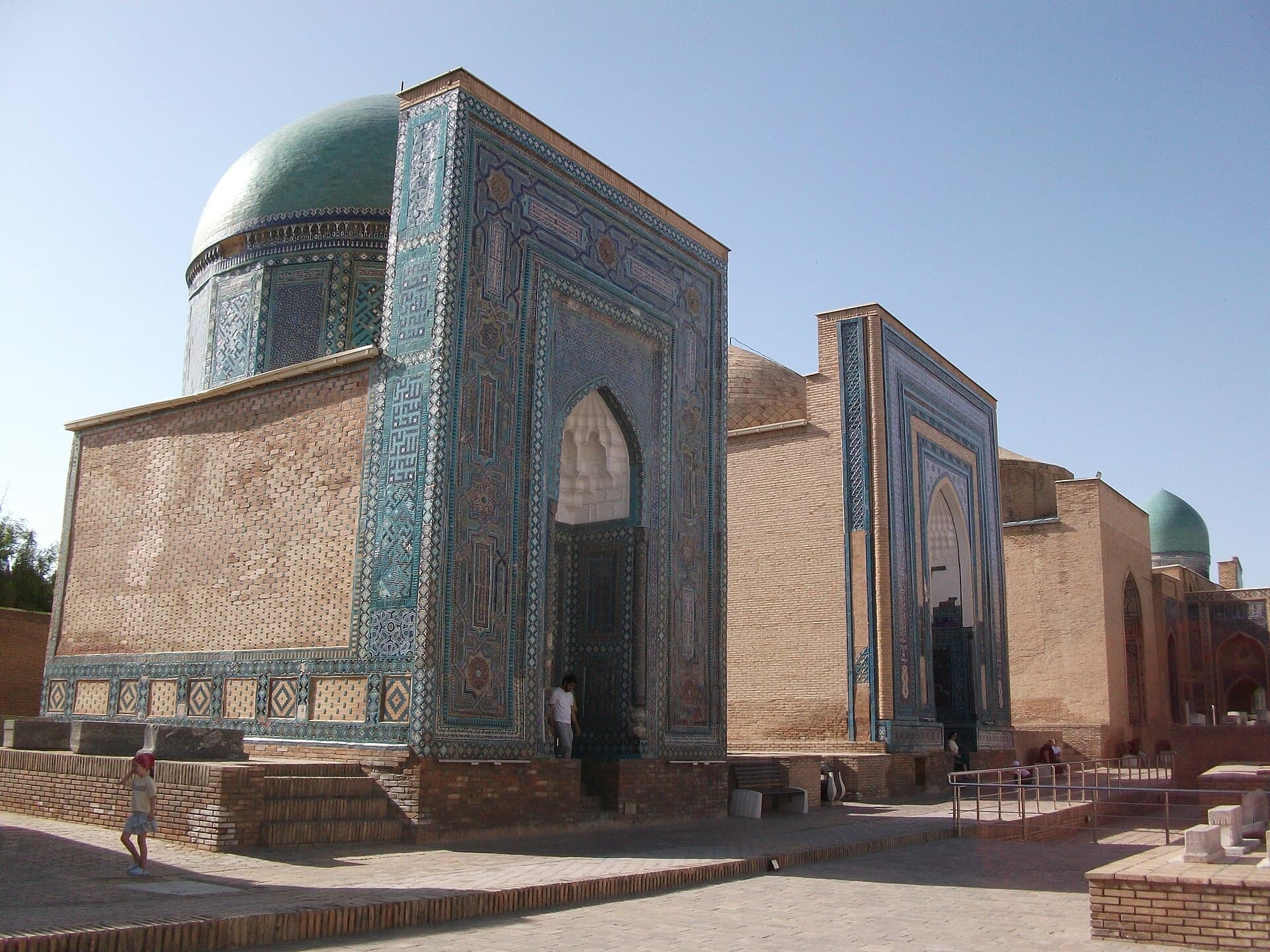 Shah-i-Zinda necropolisA complex of mausoleums and religious buildings in northeast Samarkand whose Per8 minutes walk4.7
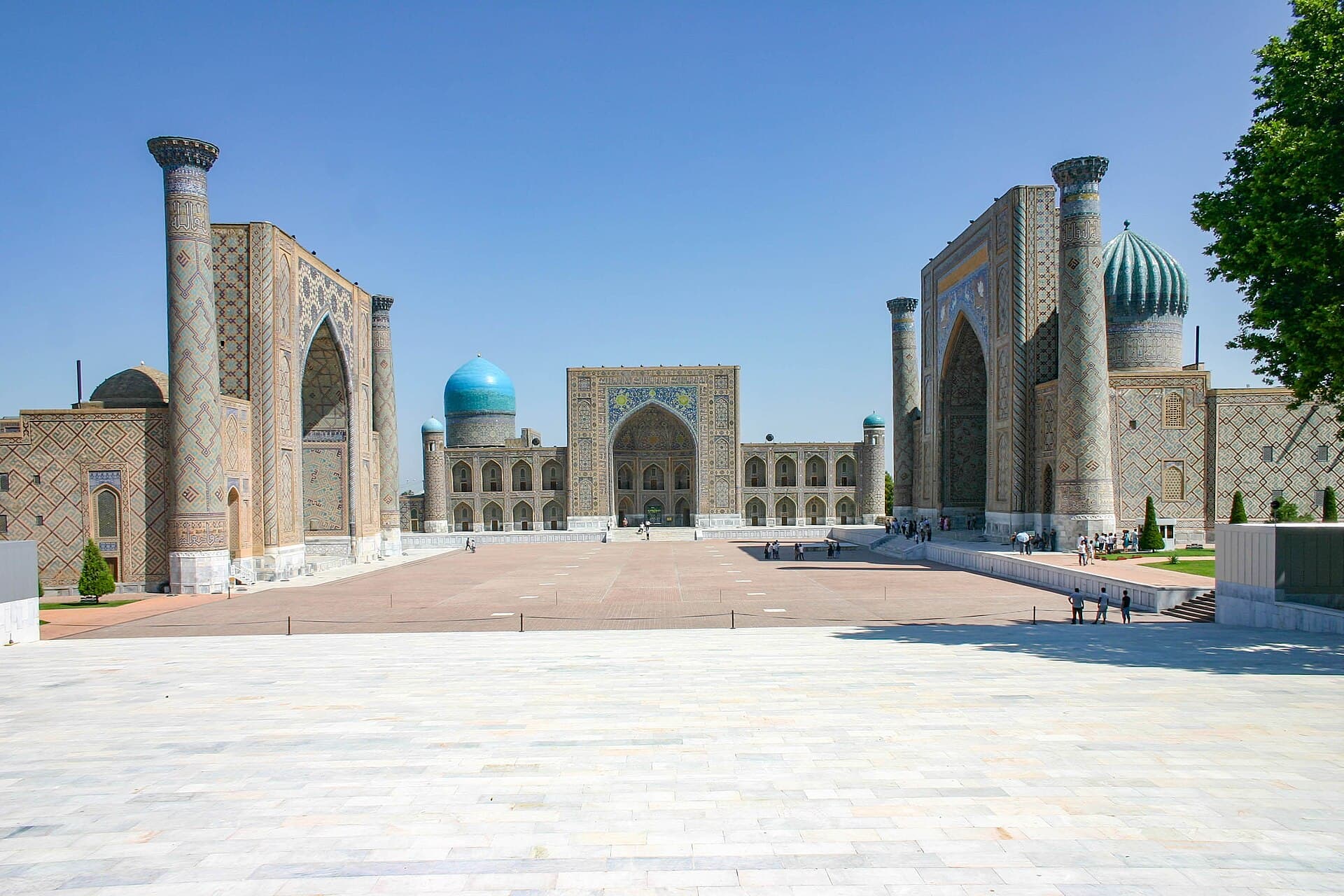 Registan SquareThe historic square at the heart of Samarkand, centre of the Timurid Empire and 10 minutes walk4.7
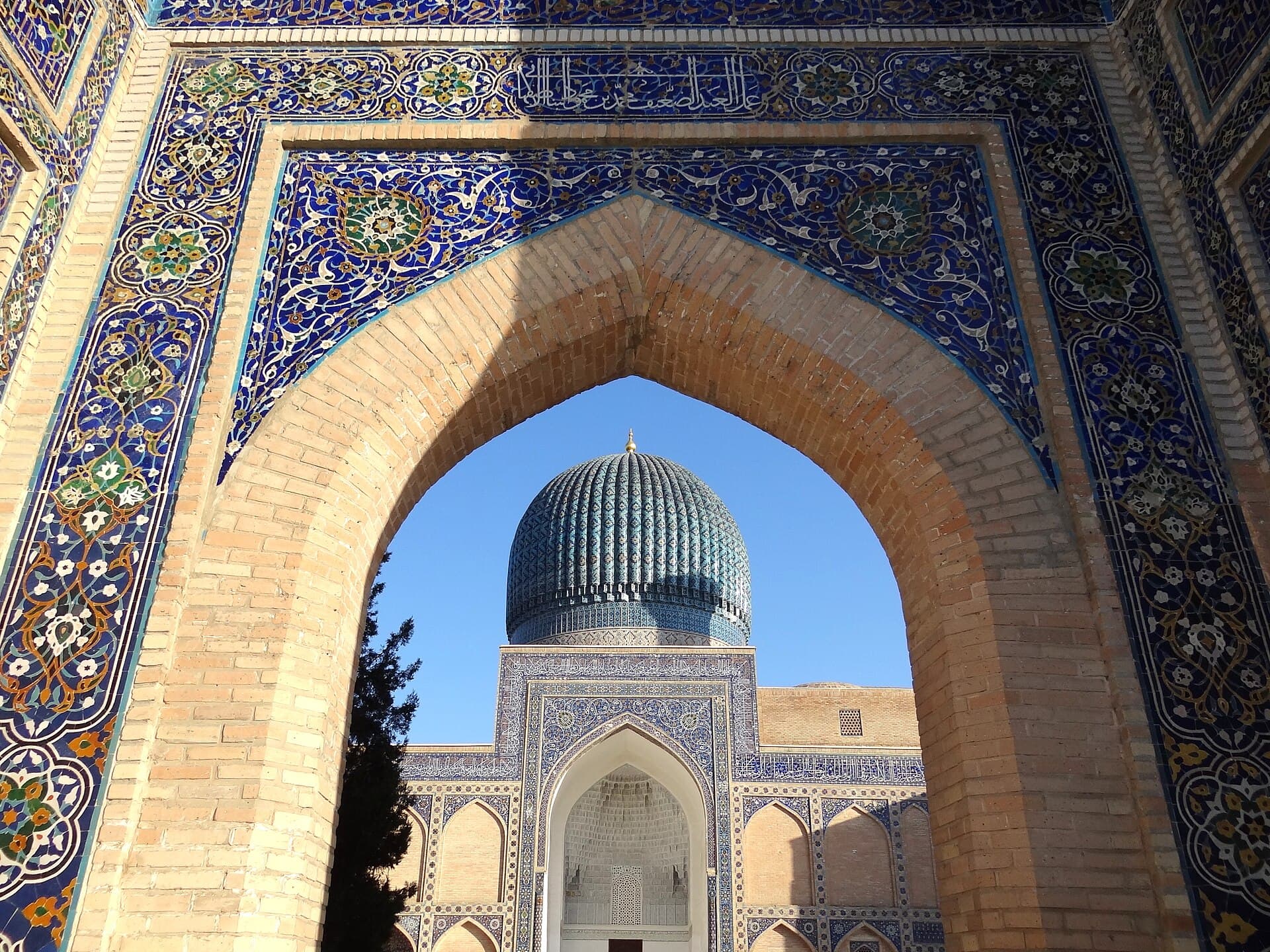 Gur-e Amir, Timur's MausoleumThe mausoleum of the Turco-Mongol conqueror Timur (Tamerlane) in Samarkand, whos21 minutes walk4.8
Its scale pushed the building techniques of its time beyond their limit, so bricks began falling from its dome within a few years; major parts were restored in the Soviet era.