
The Crane
Brick towers and treadwheels since 1444.
XEvansGambitx — CC BY-SA 4.0 · Andrzej Otrębski — CC BY-SA 4.0 · Andrzej Otrębski — CC BY-SA 4.0 · Andrzej Otrębski — CC BY-SA 4.0
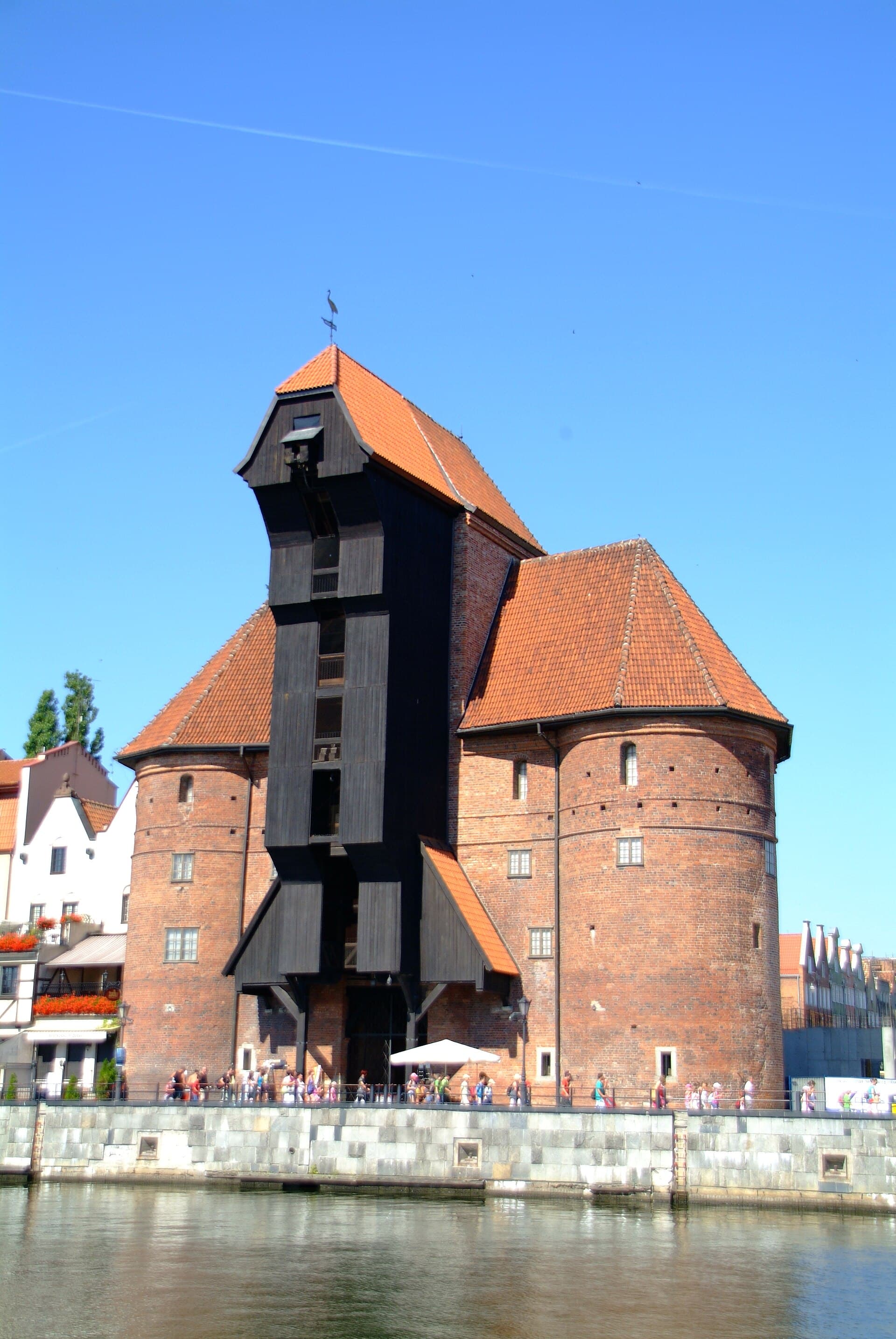
The Motława embankment is Gdansk's mother harbour: the long quay (Długie Pobrzeże) where Hansa ships moored with grain and amber — above it the Crane (Żuraw): medieval Europe's largest port crane (1444), twin brick towers around two giant treadwheels workers walked inside like squirrels — the city's absolute maritime emblem and its Maritime Museum today. The facing bank (Granary Island) has turned the new century's front: hotels, restaurants, modern marinas and the AmberSky wheel — bridges joining both banks into a doubled scene: the ancient facing the new over one water. From it run the boat cruises (the pirate galleon to Westerplatte most famous) and the museum ship Sołdek, Poland's first post-war steamer — and evening turns both quays into a lit riverside whose reflection is, uncontested, the Polish Baltic's loveliest night.
Brick towers and treadwheels since 1444.
The new century facing the Hansa.
A river hour to Westerplatte.
Długie Pobrzeże, 80-888 Gdansk
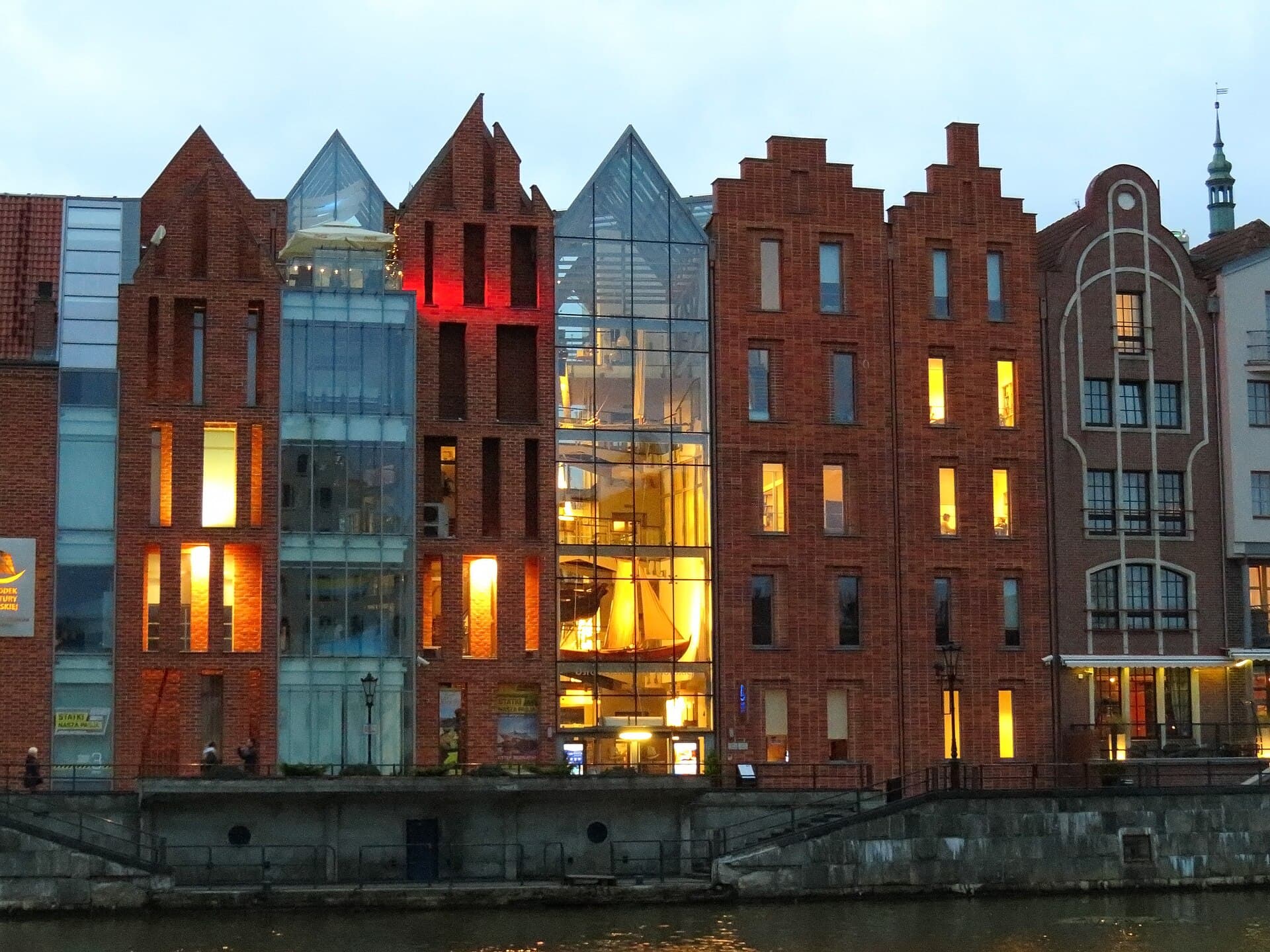 The Maritime Culture CentreA modern maritime museum on the bank of the Motława in Gdansk, a branch of the N1 minute walk4.6
 National Maritime MuseumA maritime museum spread across several buildings on both banks of the Motława i1 minute walk4.5
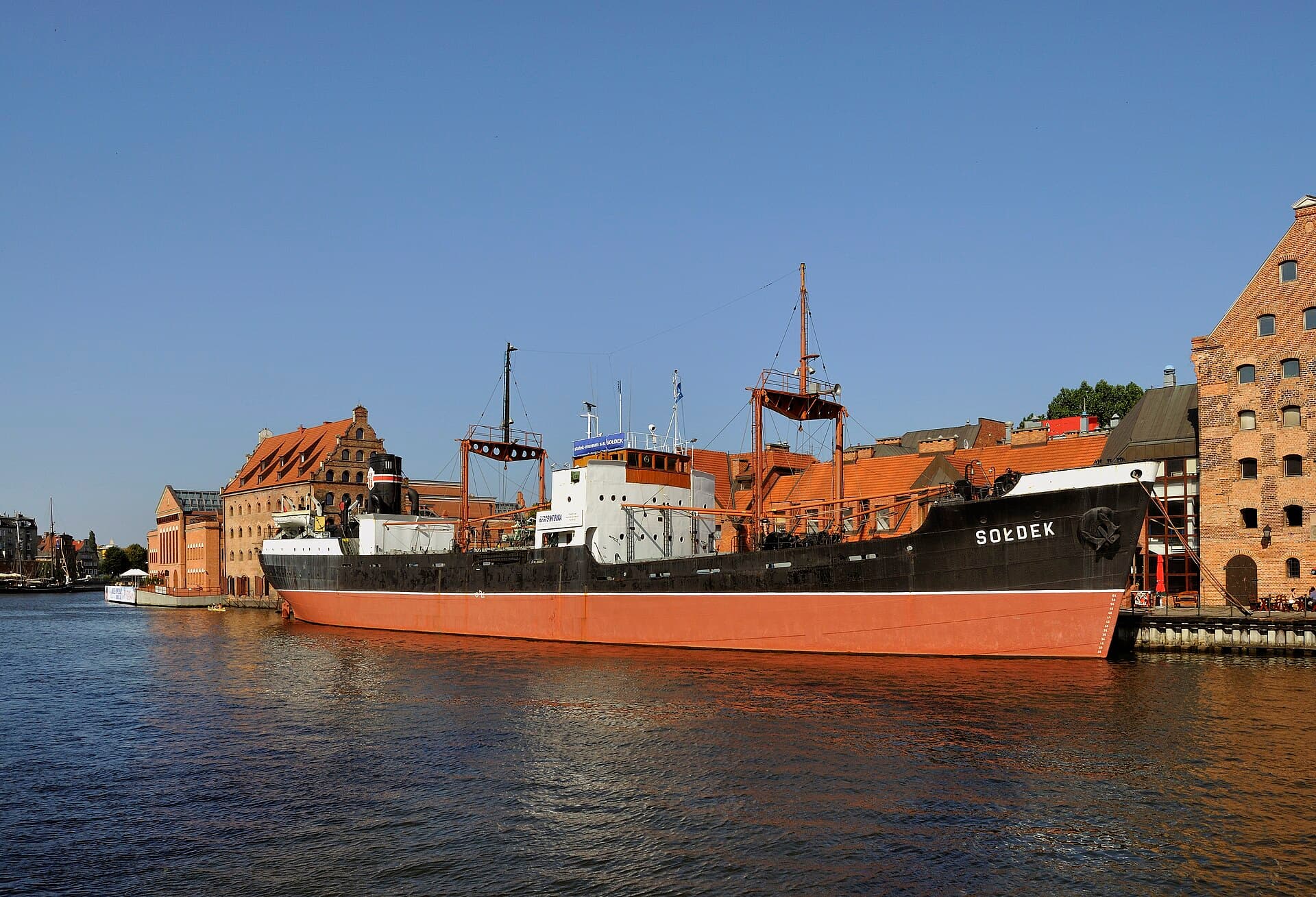 The Museum Ship SołdekA steam cargo ship moored on the Motława in the heart of Gdańsk, and the first s2 minutes walk4.8
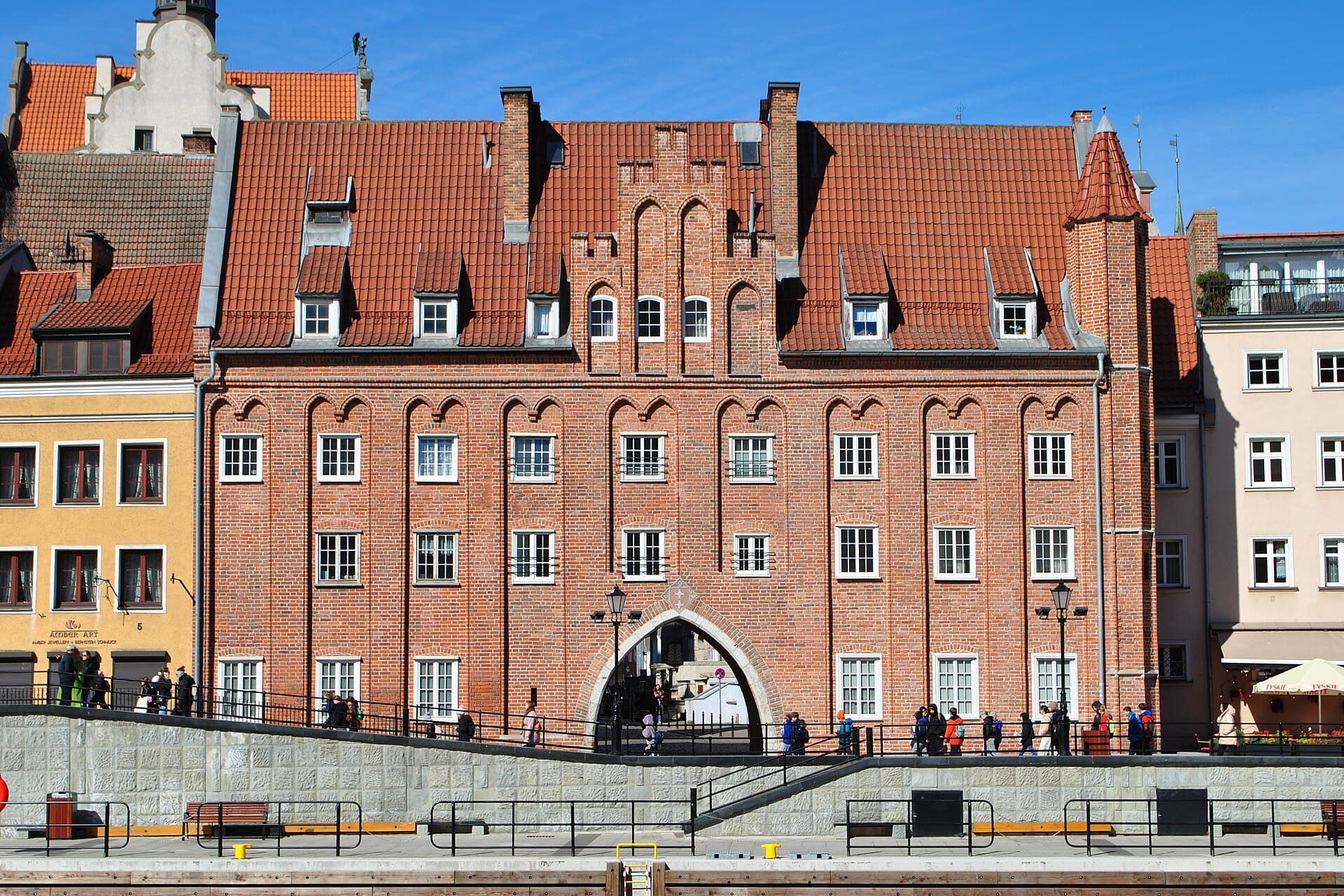 The Bread GateA mid-fifteenth-century Gothic water gate on the Gdańsk waterfront, one of the g3 minutes walk4.6
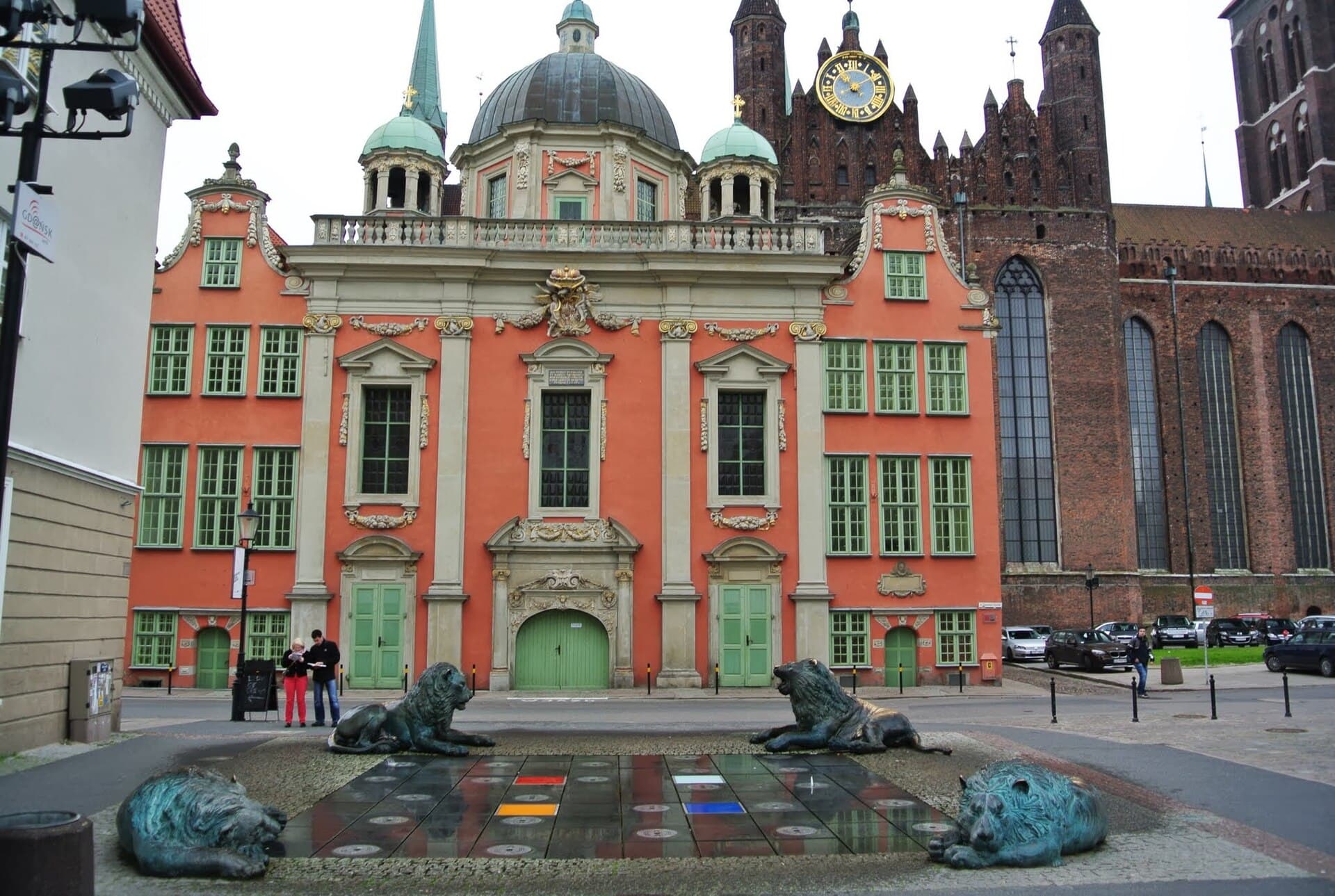 The Four Quarters FountainA contemporary fountain on the Coal Market in Gdansk's Main Town, installed in 23 minutes walk4.6
Yes, as a maritime half-day: the Baltic's elegant resort with Europe's longest wooden pier (511m), pulsing Monte Cassino street and the Crooked House — the commuter train reaches it in twenty minutes. Family summers love its beach — and the Gdansk-Sopot-Gdynia trio rides one train ticket as the Tricity.