
A satyr spraying a boy
The boy raises a hand to fend it off — a gesture that gives the piece life.
Richard Huber — CC BY-SA 3.0 · Chris Light — CC BY-SA 4.0 · Pedro J Pacheco — CC BY-SA 3.0 · Donald Judge — CC BY 2.0
A small bronze fountain on the pedestrian Neuhauser Straße in central Munich, from 1895, by the sculptor Mathias Gasteiger. It shows a naked boy being sprayed by a satyr — the half-human, half-goat creature of Greek myth — with water from its mouth, the boy raising a hand to fend off the spray. The fountain caused a scandal when unveiled: the boy's nudity was thought improper on a public street, and conservative associations demanded it be removed or covered. A metal leaf was added for a period and later taken off. Today thousands pass it daily without anyone noticing the controversy it caused. This is a pattern worth noticing: much that looks like ordinary ornament in European cities today was, in its time, the subject of public argument. The fountain stands on one of Munich's busiest streets, between Marienplatz and the Karlstor. A two-minute stop as you walk, not a destination.
The boy raises a hand to fend it off — a gesture that gives the piece life.
What looks like ordinary ornament today was publicly contested in its time.
On a busy shopping street, and few notice it.
Neuhauser Straße, central Munich
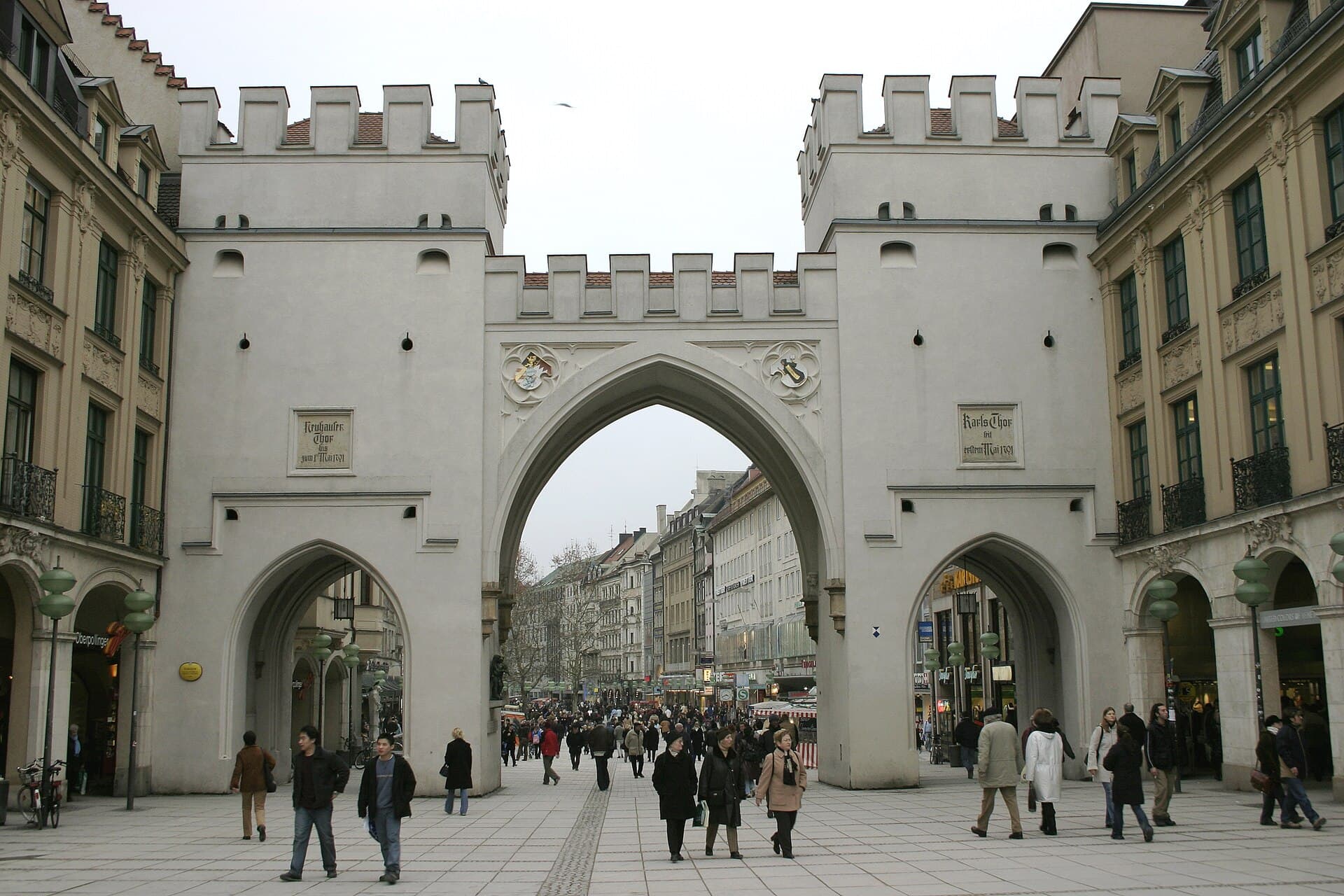 KarlstorThe Karlstor is one of three surviving gates from the second medieval wall that 1 minute walk4.5
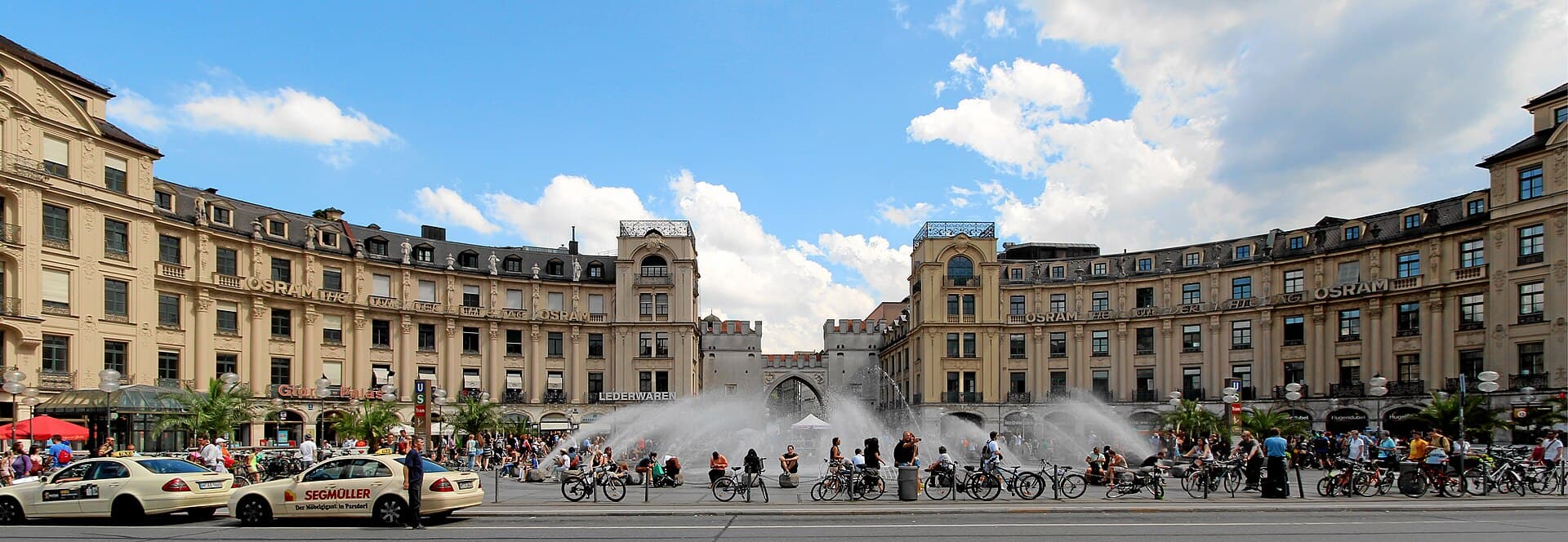 Karlsplatz (Stachus)Karlsplatz — which Munich locals call "Stachus" and nothing else — is the wester1 minute walk4.6
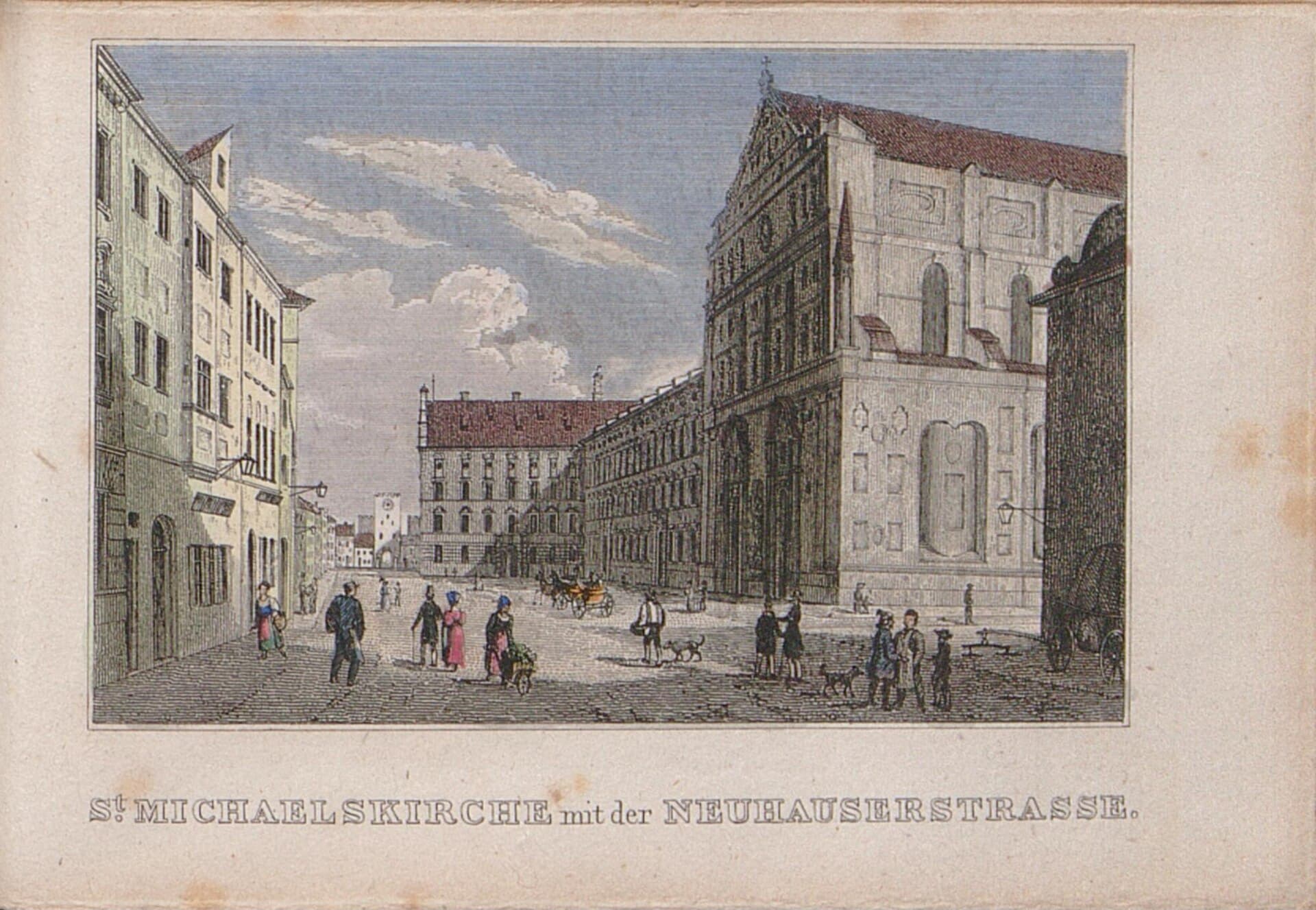 St Michael's ChurchSt Michael's is the Jesuit church in central Munich, built by Duke Wilhelm V bet3 minutes walk4.8
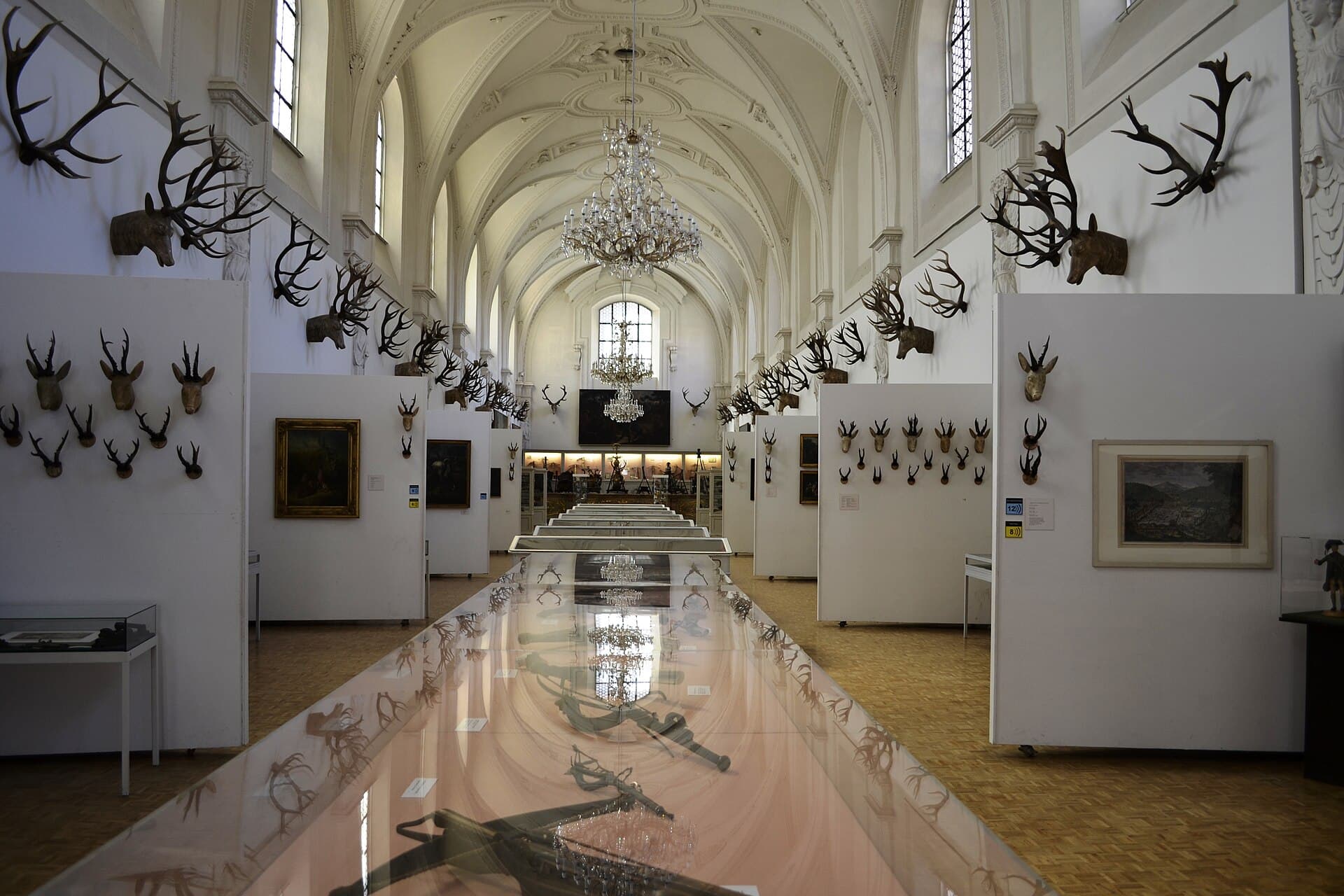 German Hunting and Fishing MuseumThe German Hunting and Fishing Museum occupies a fifteenth-century Augustinian c4 minutes walk4.5
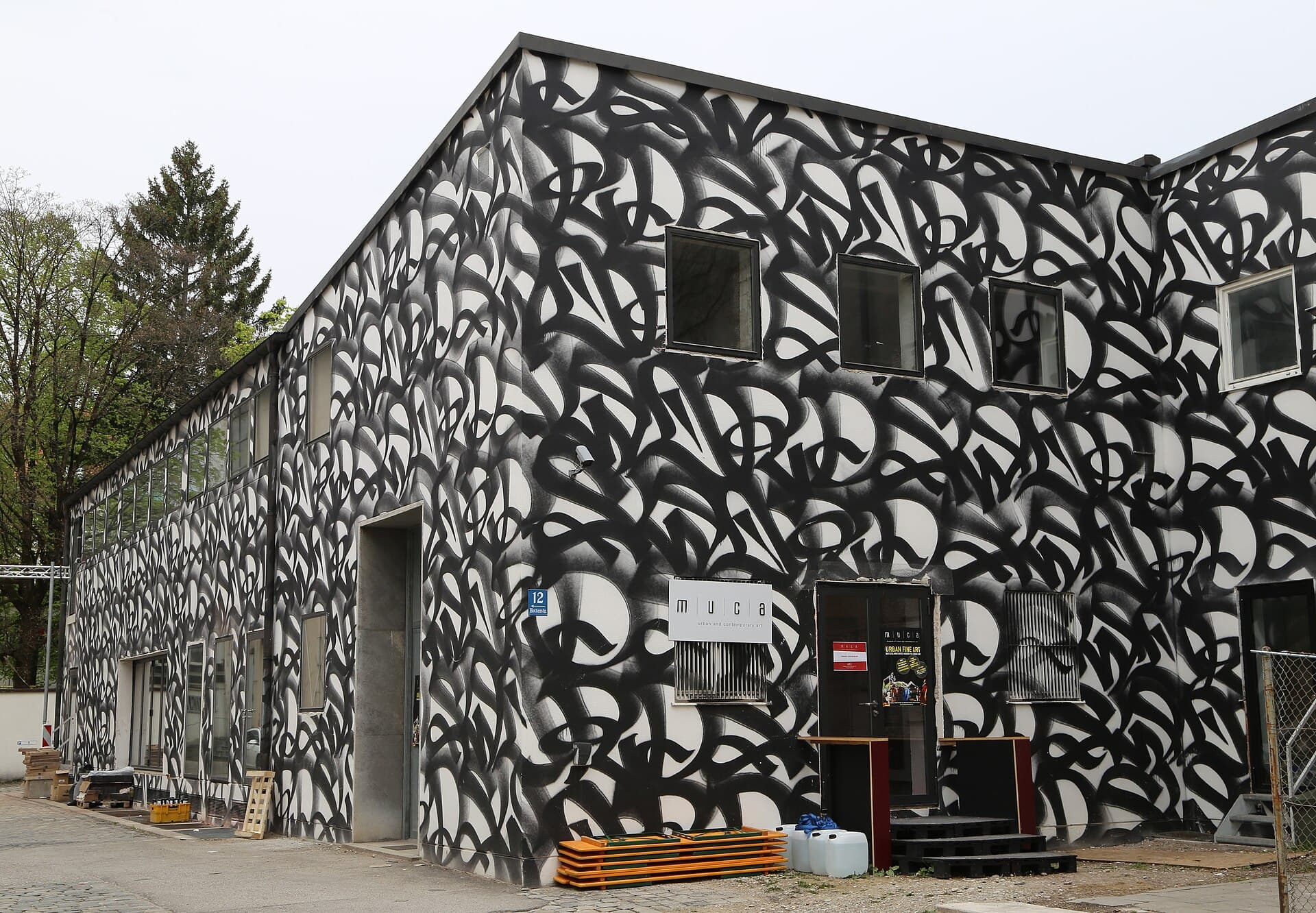 MUCA - Museum of Urban and Contemporary ArtMUCA is Germany's first museum devoted to street art and contemporary urban art,4 minutes walk4.2
The fish fountain on Marienplatz, the large Wittelsbach fountain at Lenbachplatz, and dozens of public fountains across the city, many of which provide drinkable water in summer.
Munich's main pedestrian shopping street, running west from Marienplatz to the Karlstor, and among the busiest shopping streets in Germany. It holds large stores, St Michael's church and the hunting and fishing museum. Walking it is part of any visit to Munich, since it links the two main points of the centre.