
The 14th-century face
Triangular coloured houses surviving repeated fires.
CC BY-SA 2.5 · Maarten Heerlien from Voorschoten, The Netherlands — CC BY 2.0 · Maarten Heerlien from Voorschoten, The Netherlands — CC BY 2.0 · Maarten Heerlien from Voorschoten, The Netherlands — CC BY 2.0
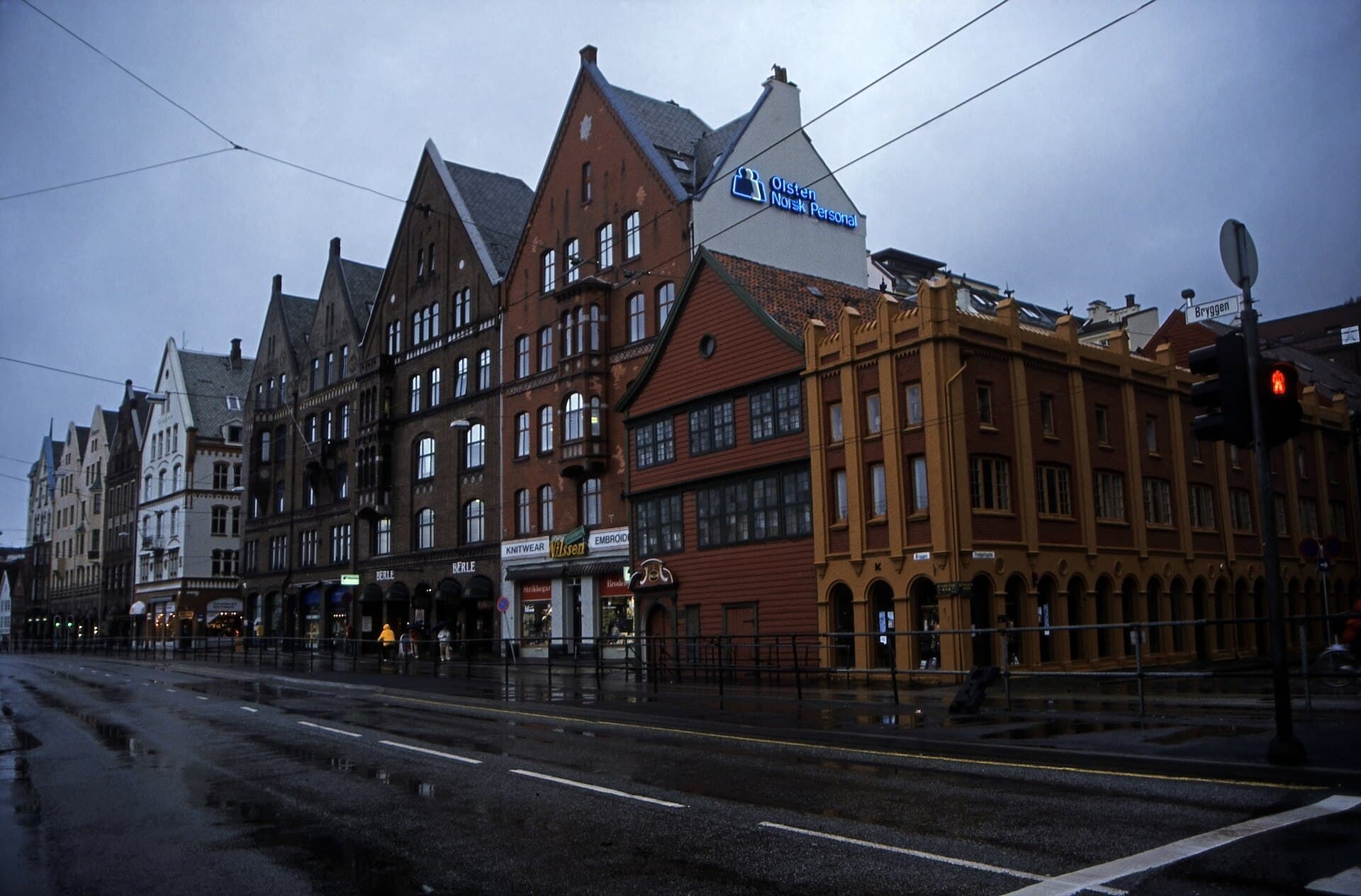
Bryggen is the entire remaining commercial face of the Hanseatic trading league: a row of coloured triangular-roofed timber houses lining Bergen's wharf since the 14th century — raised by German merchants who dominated dried Norwegian cod (stockfish) trade for centuries, repeated fires rebuilding it in the same wooden design until it became Europe's longest-surviving wooden commercial quarter — UNESCO, 1979. The narrow passages (smug) between houses hide craftsmen's workshops, sloping roofs and hanging storerooms used literally for storage and trade into the twentieth century — and the Bryggens Museum below displays complete medieval excavations (the original buildings' footings and merchants' daily life). The façade itself — Norway's most famous postcard after the fjords — photographs best from the facing quay across the harbour, especially morning before crowds or lit evening. Its shops today deal crafts, gifts and wool bags — still commercially alive as they were born.
Triangular coloured houses surviving repeated fires.
Narrow lanes hiding craftsmen's workshops.
Bryggen, 5003 Bergen
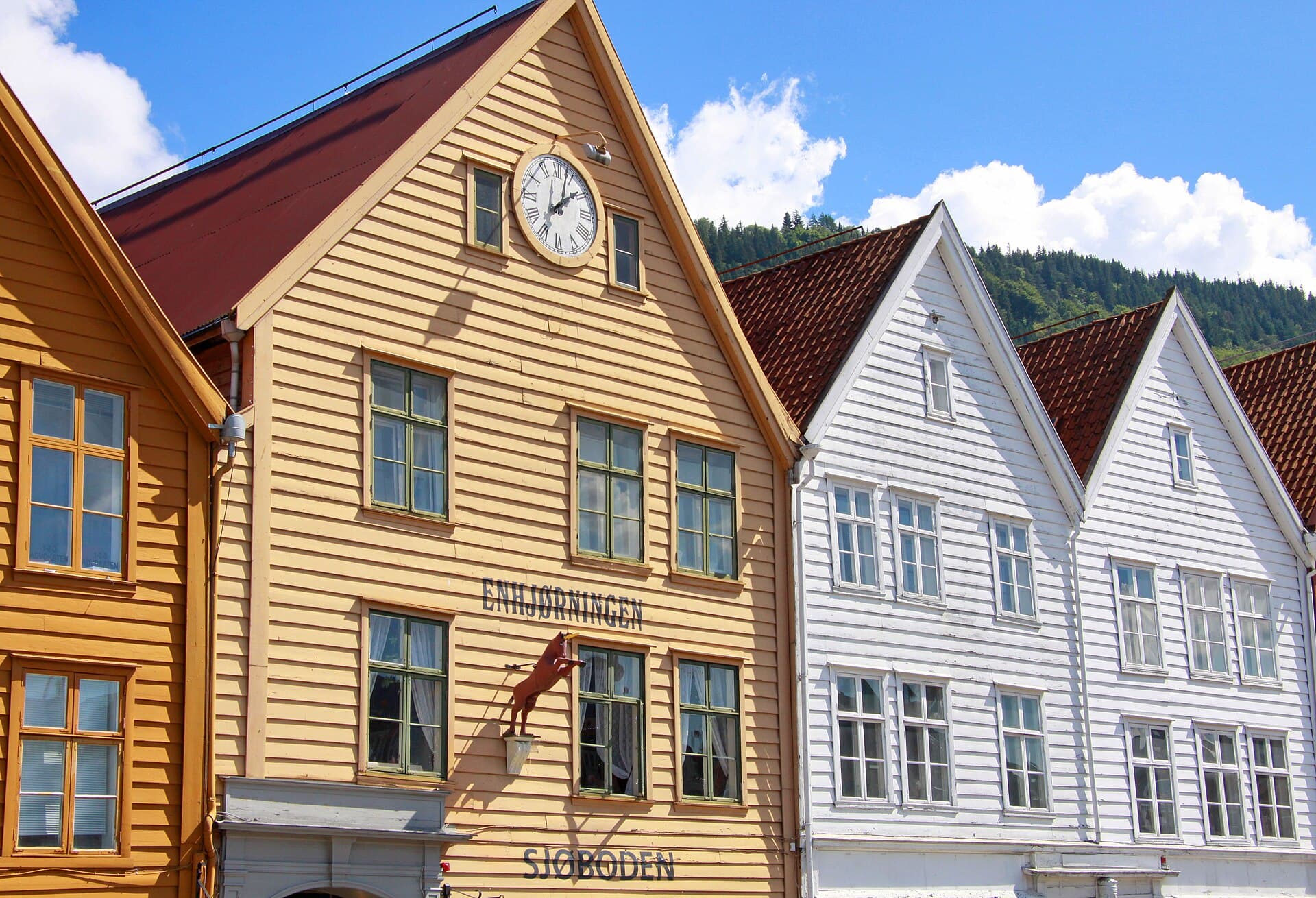 The Theta MuseumThe Theta Museum is a single room in the attic of a wooden building in Bryggen, 1 minute walk4.5
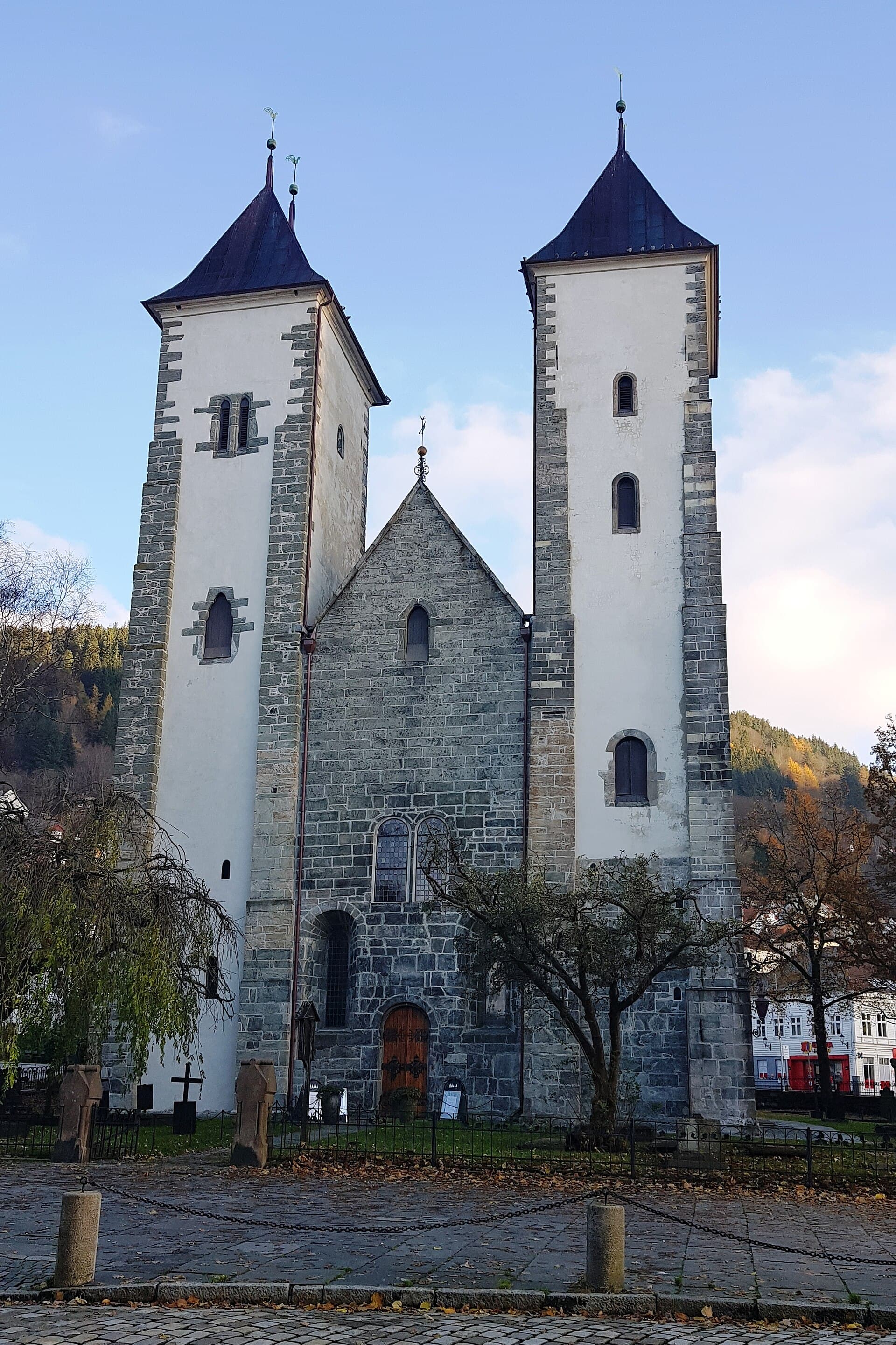 St Mary's ChurchMariakirken is the oldest surviving building in Bergen: built between about 11302 minutes walk4.3
 The Hanseatic Museum & SchøtstueneThe Hanseatic Museum is the sole chance to enter a real German merchant's house 3 minutes walk4.4
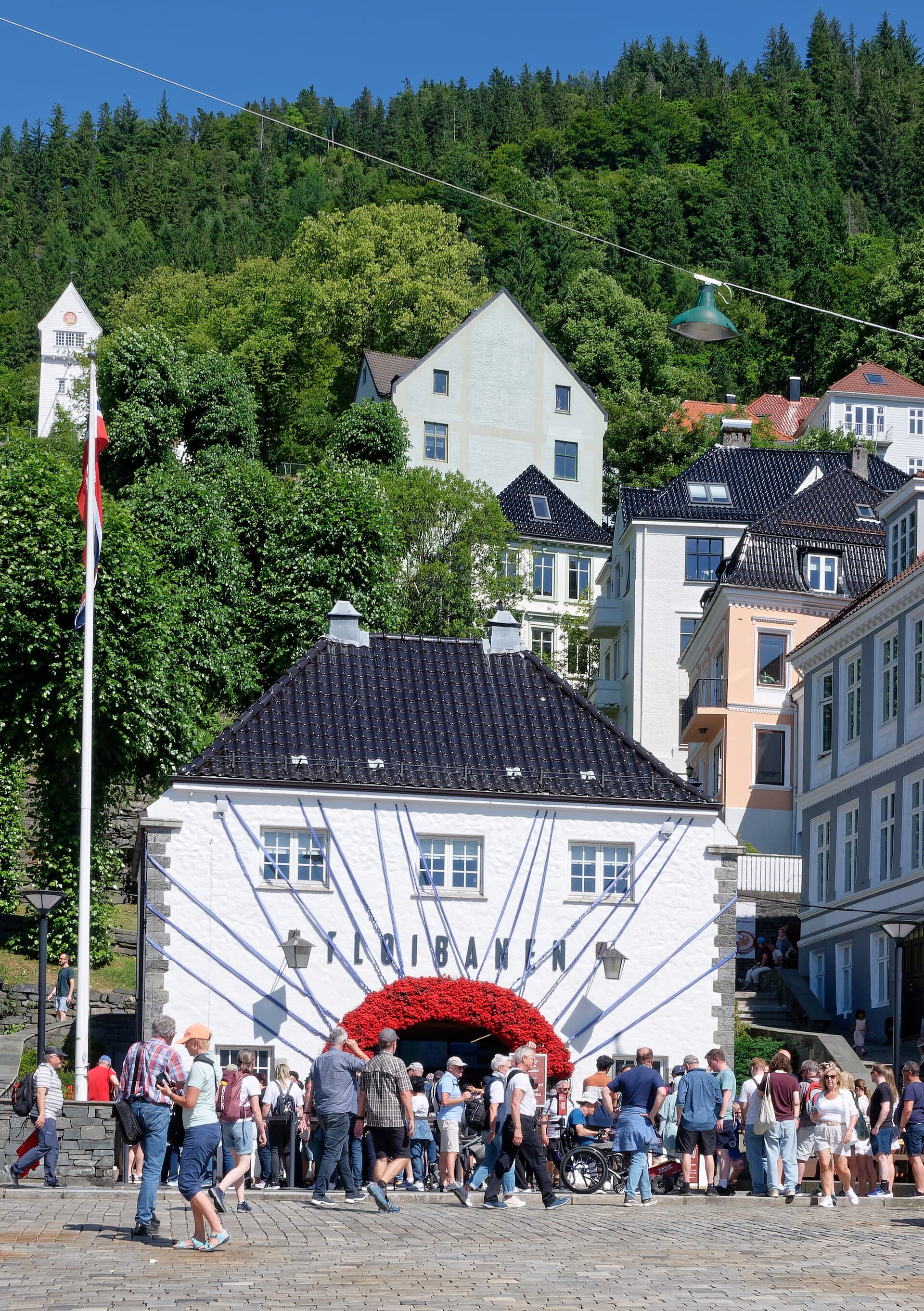 Fløibanen — the Mount Fløyen FunicularFløibanen is Bergen's most famous elevator to the sky: a venerable funicular (194 minutes walk4.8
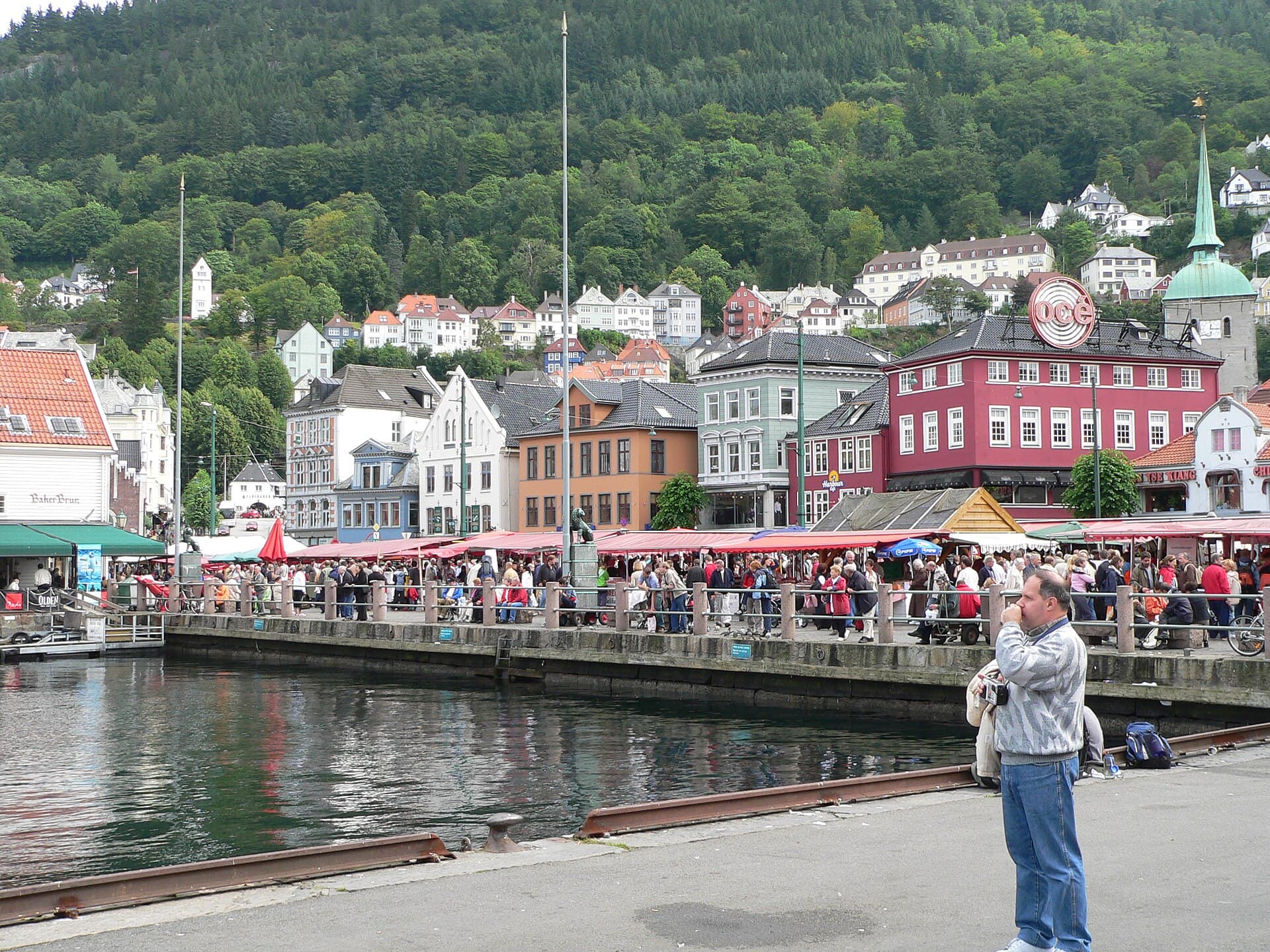 The Bergen Fish MarketThe fish market stands at the head of Vågen, the harbour inlet where the boats t4 minutes walk3.9
A medieval German trading alliance uniting hundreds of Baltic and North Sea cities — dominating fish, fur and grain trade with no formal army, by pure economic monopoly. Bergen was one of four main outposts beyond Germany (with London, Novgorod and Bruges) — German merchants lived here segregated from local Norwegians until the 18th century, explaining Bryggen's style so foreign to the rest of Norway.