
The Mozart monument
White marble with a treble clef of flowers on the slope before it — the garden's signature photograph.
Antonio Morales García from Granada, España — CC BY-SA 2.0 · Hubertl — CC BY 3.0 at · Geolina163 — CC BY-SA 4.0 · Geolina163 — CC BY-SA 4.0
The palace's private garden: Emperor Franz I laid it out for himself after Napoleon's troops destroyed part of the fortifications here, and it stayed closed to all but the imperial family until it opened to the public in 1919 with the monarchy's fall. It is relatively small but among the most restful spots in central Vienna: lawns people actually sit on (not permitted in many other gardens), a small pond, and an art nouveau glasshouse now half café and half butterfly house. It also holds the famous Mozart monument: a marble figure with a giant treble clef planted in seasonal flowers on the slope in front of it — the garden's most photographed corner. The location is ideal: directly behind the Hofburg, between the Opera and the Albertina, so you reach it without leaving your route.
White marble with a treble clef of flowers on the slope before it — the garden's signature photograph.
A 1901 art nouveau glasshouse now café and butterfly house — the finest glass building in central Vienna.
A rare central spot where you can actually sit on the grass — a free break between sights.
Burgring, Vienna
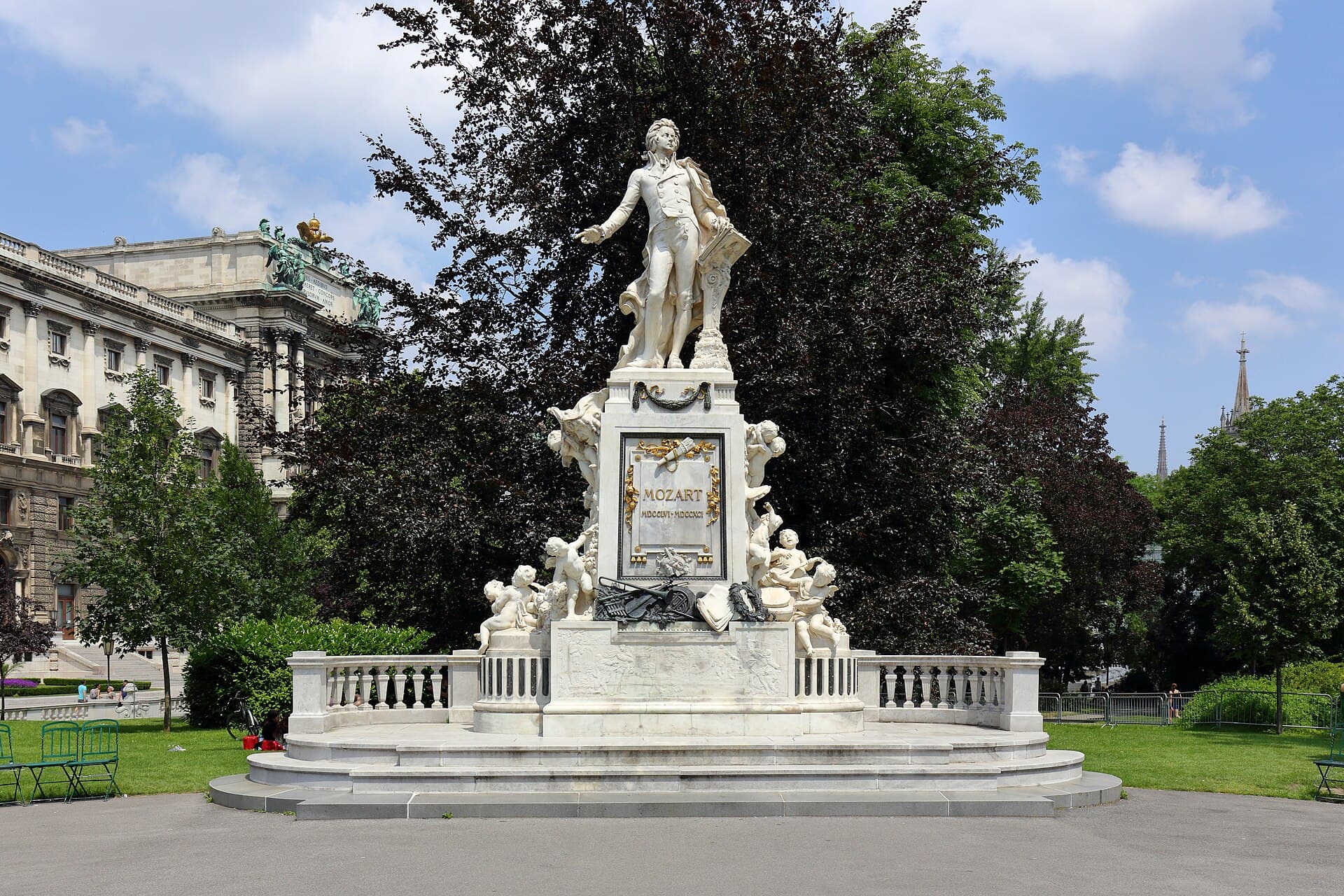 Mozart Monument, ViennaMozart's marble monument in the Burggarten: the composer standing on a tall plin1 minute walk4.8
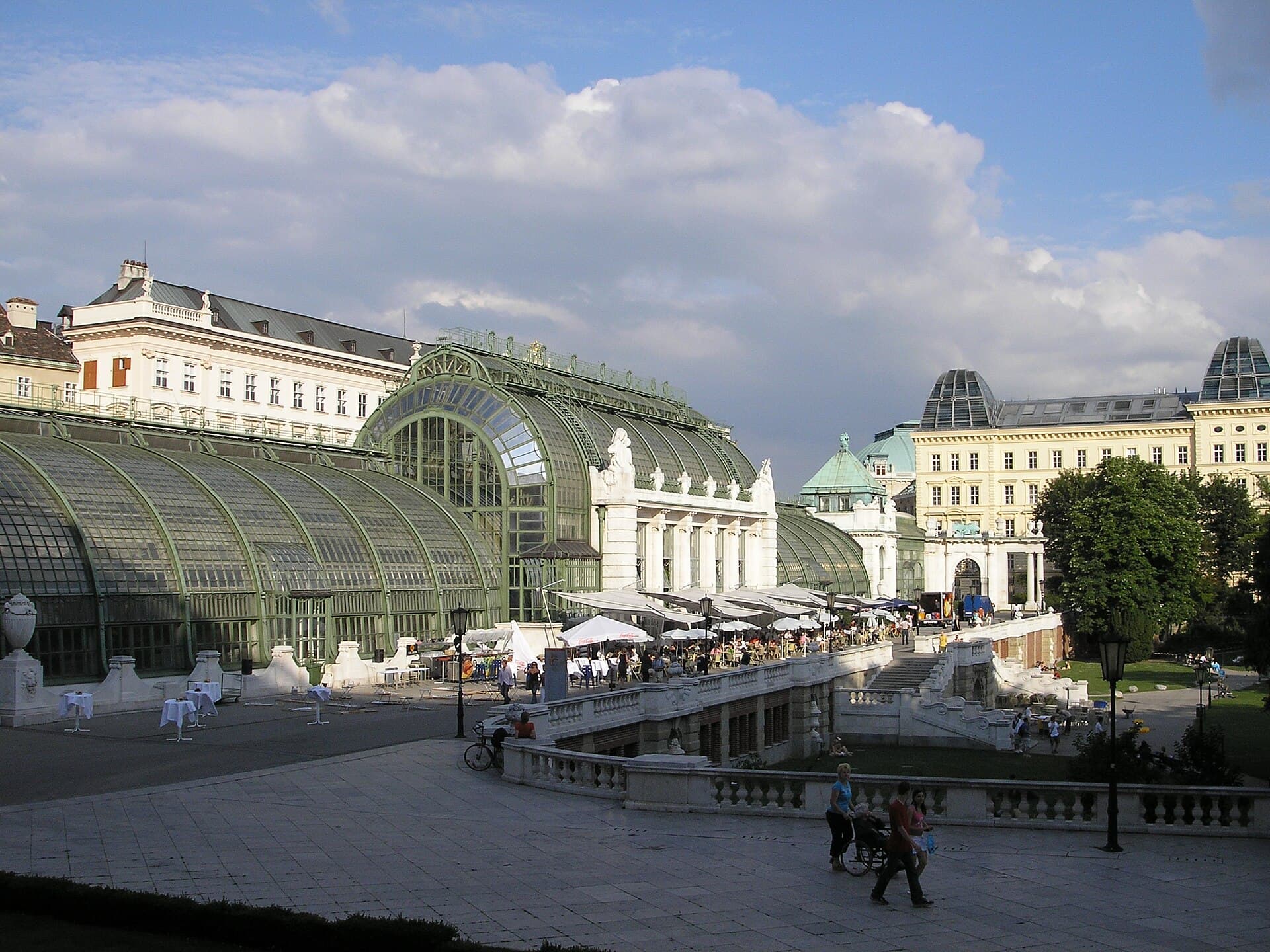 SchmetterlinghausAn art nouveau glasshouse built in 1901 in the palace garden, and among Europe's2 minutes walk4.3
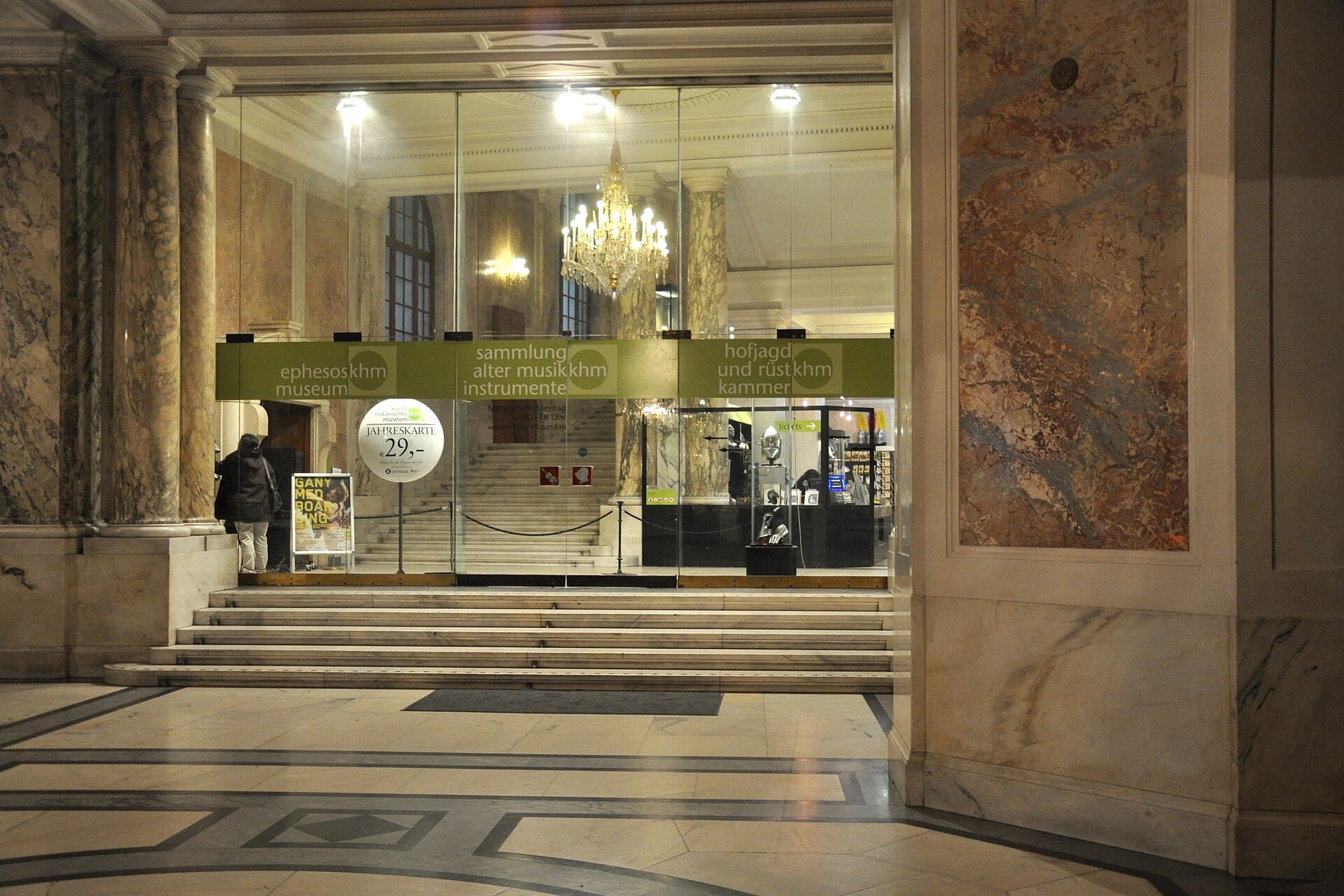 Collection of Historic Musical InstrumentsOne of the world's most important collections of historic musical instruments, i2 minutes walk4.5
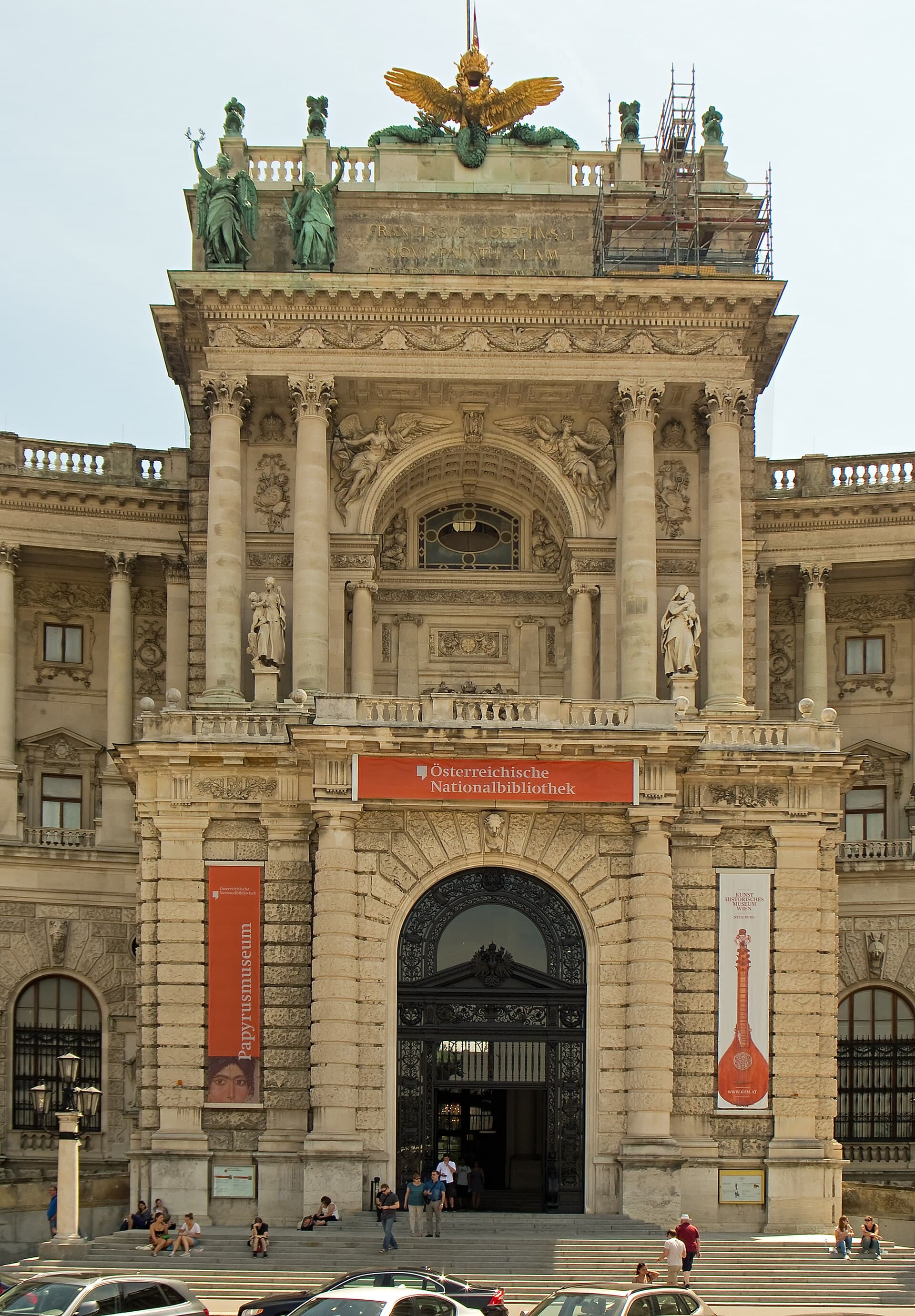 House of Austrian HistoryA museum opened in 2018 inside the Neue Burg wing of the Hofburg palace, coverin2 minutes walk4.4
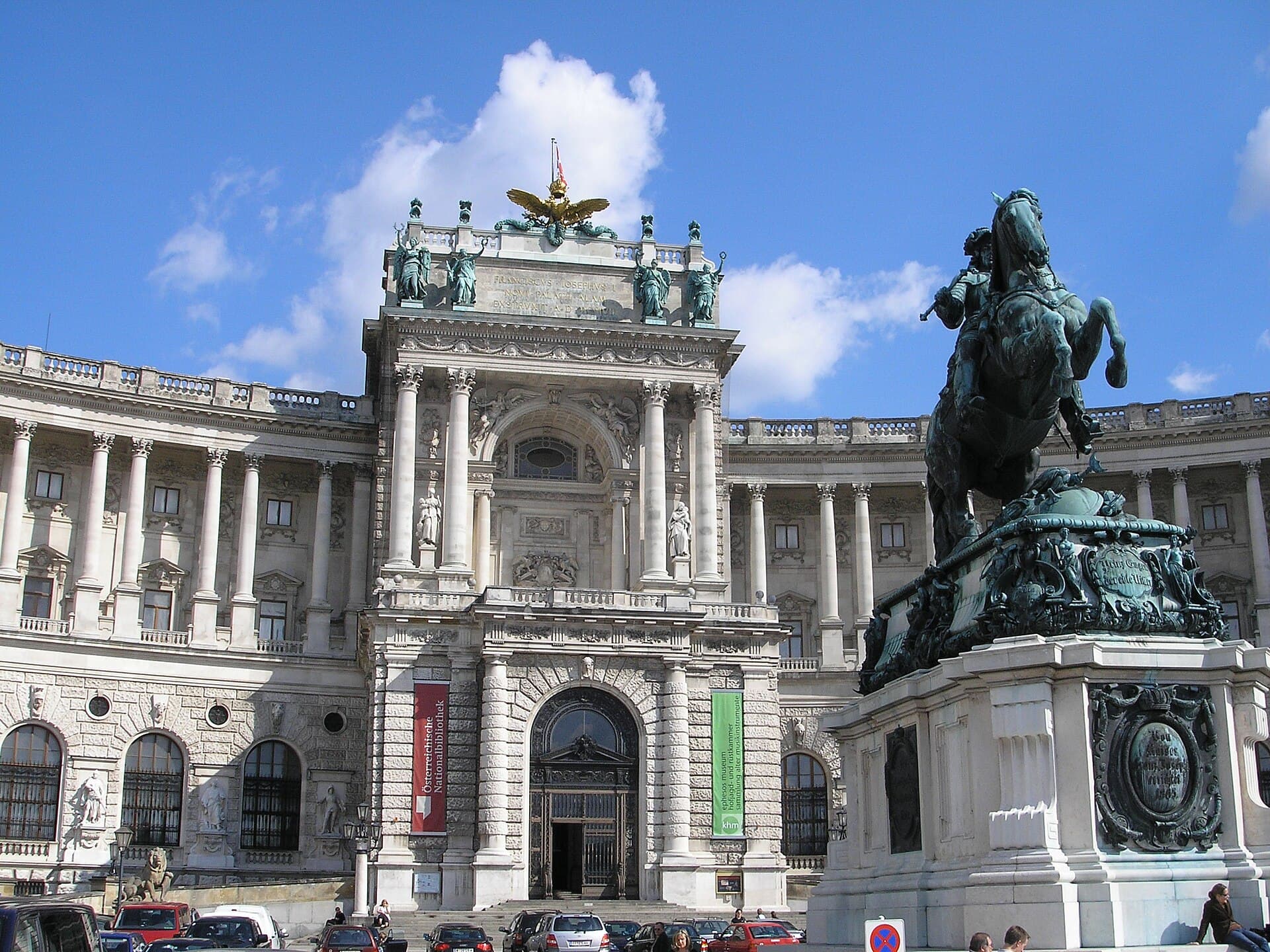 Ephesos MuseumA small museum inside the Hofburg's Neue Burg showing what Austrian expeditions 2 minutes walk4.5
The Burggarten is quieter and smaller with the Mozart statue and glasshouse; the neighbouring Volksgarten is larger and known for its rose garden. They adjoin, both are free, and one walk covers both.