
The conical dome
Khwarazm style.
Umid1108 — CC BY-SA 4.0 · Ymblanter — CC BY-SA 4.0 · Faqscl — CC BY-SA 3.0 · Ziegler175 — CC BY-SA 4.0 · BeshevI — CC BY-SA 4.0 · Faqscl — CC BY-SA 3.0 · Faqscl — CC BY-SA 3.0 · Jean Housen — CC BY-SA 4.0
A building near the Samanid Mausoleum whose name, Chashma-Ayub, means «Job's well», after a legend that the Prophet Job struck the ground here with his staff and water gushed out. People still consider the well's water pure and healing. Its oldest parts date from the 12th century, and a stone inscription is dated 1380. It was built by craftsmen from Khwarazm after Timur's campaign there, which explains its conical Khwarazm-style dome, rare in Bukhara; the complex was renovated under Abdullah Khan II in the 16th century. Several graves lie inside, the oldest that of the hadith scholar Khwaja Hafiz Gunjari, buried here in 1022. Today the building houses a small museum on the region's water history, with maps of the shrinking Aral Sea, per visitor guides. Tickets are about 20,000 som, per visitor guides. It stands in the Samanid park with the Samanid Mausoleum, near Bukhara's central market.
Khwarazm style.
Water held healing.
Aral Sea maps.
Near the Samanid Mausoleum, Bukhara
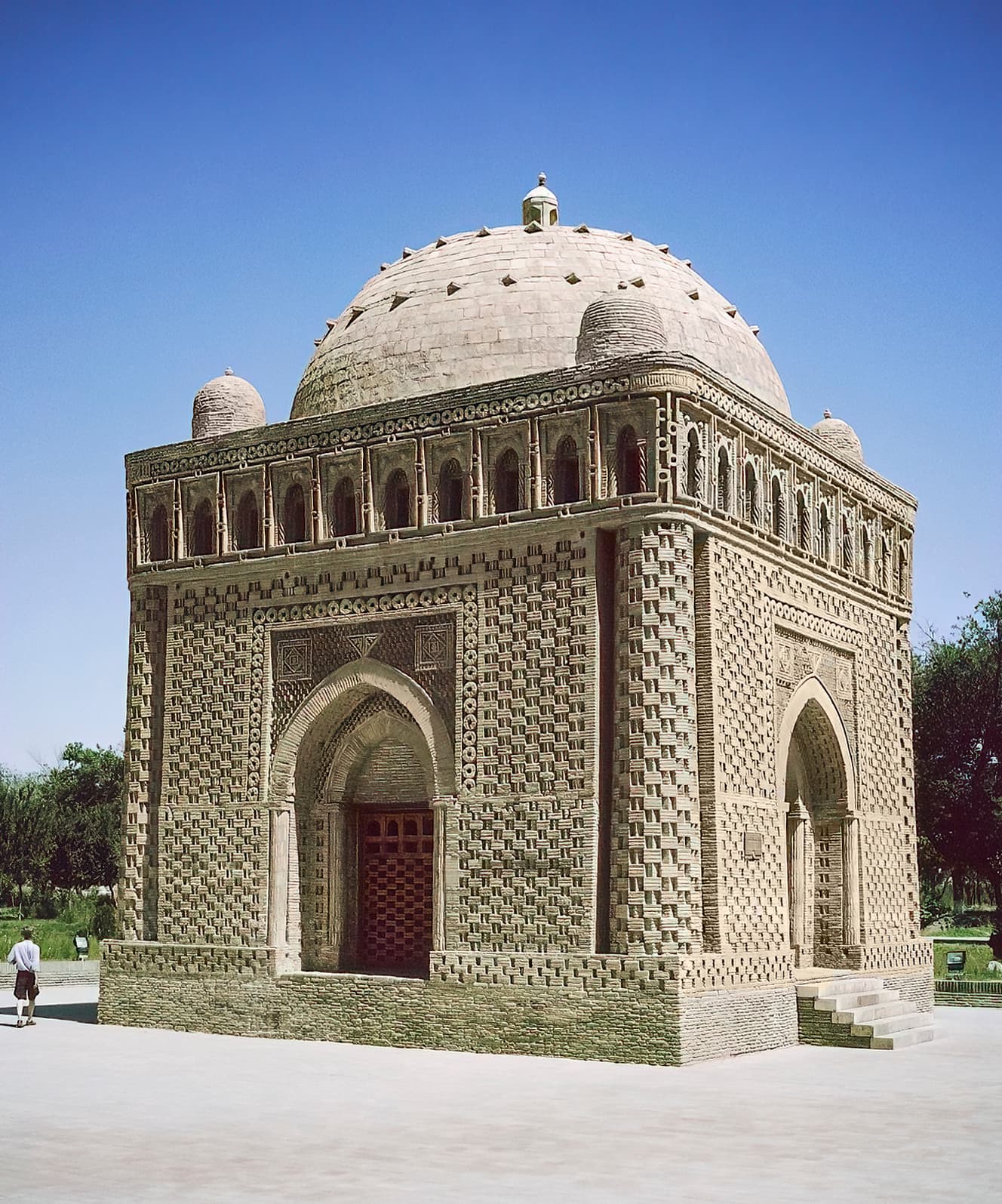 Samanid Mausoleum (Ismail Samani)A 10th-century mausoleum in northwest Bukhara, resting place of the powerful Sam3 minutes walk4.6
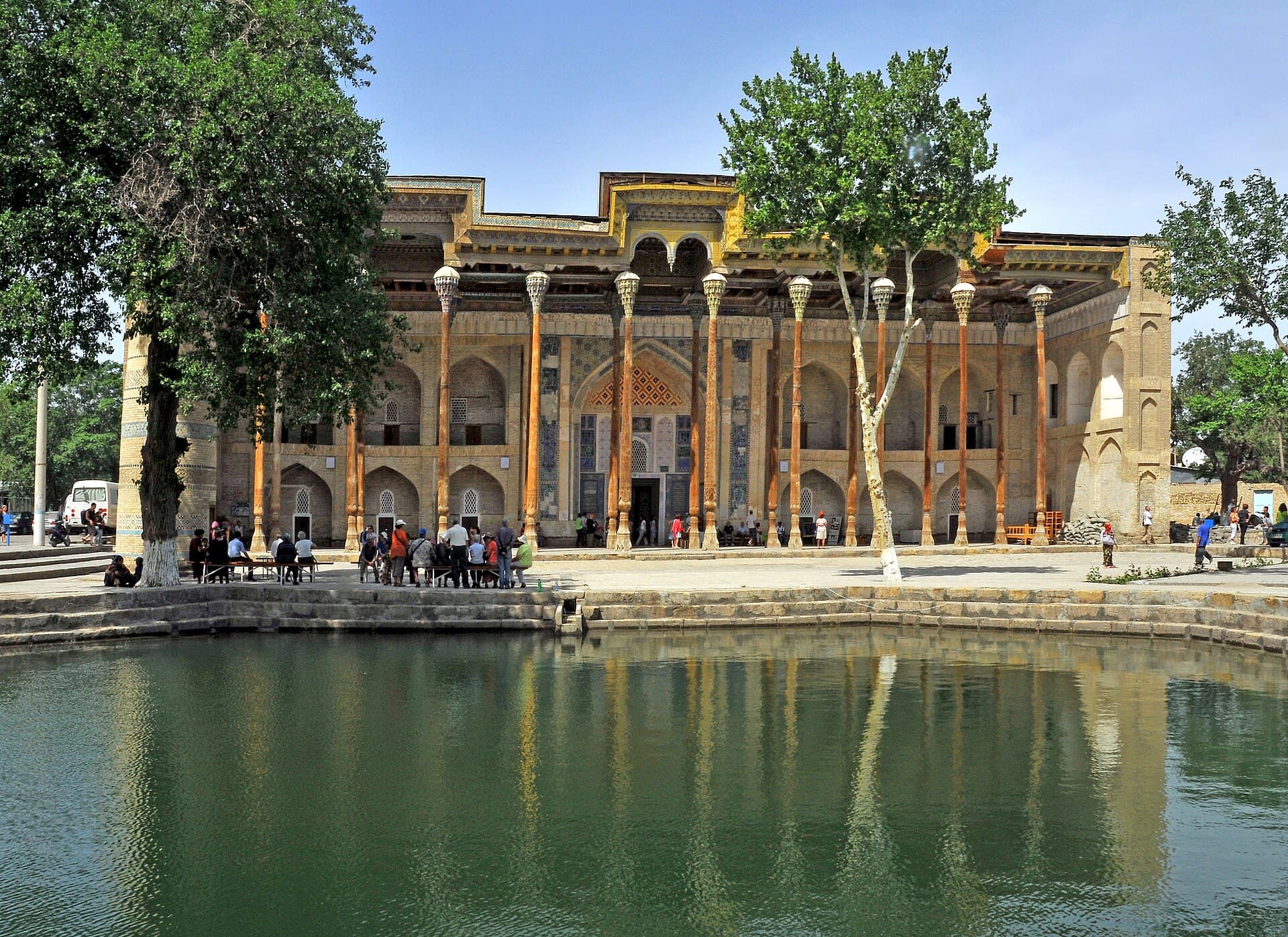 Bolo Hauz MosqueA historic mosque in Bukhara, built in 1712 opposite the Ark fortress on the squ5 minutes walk4.7
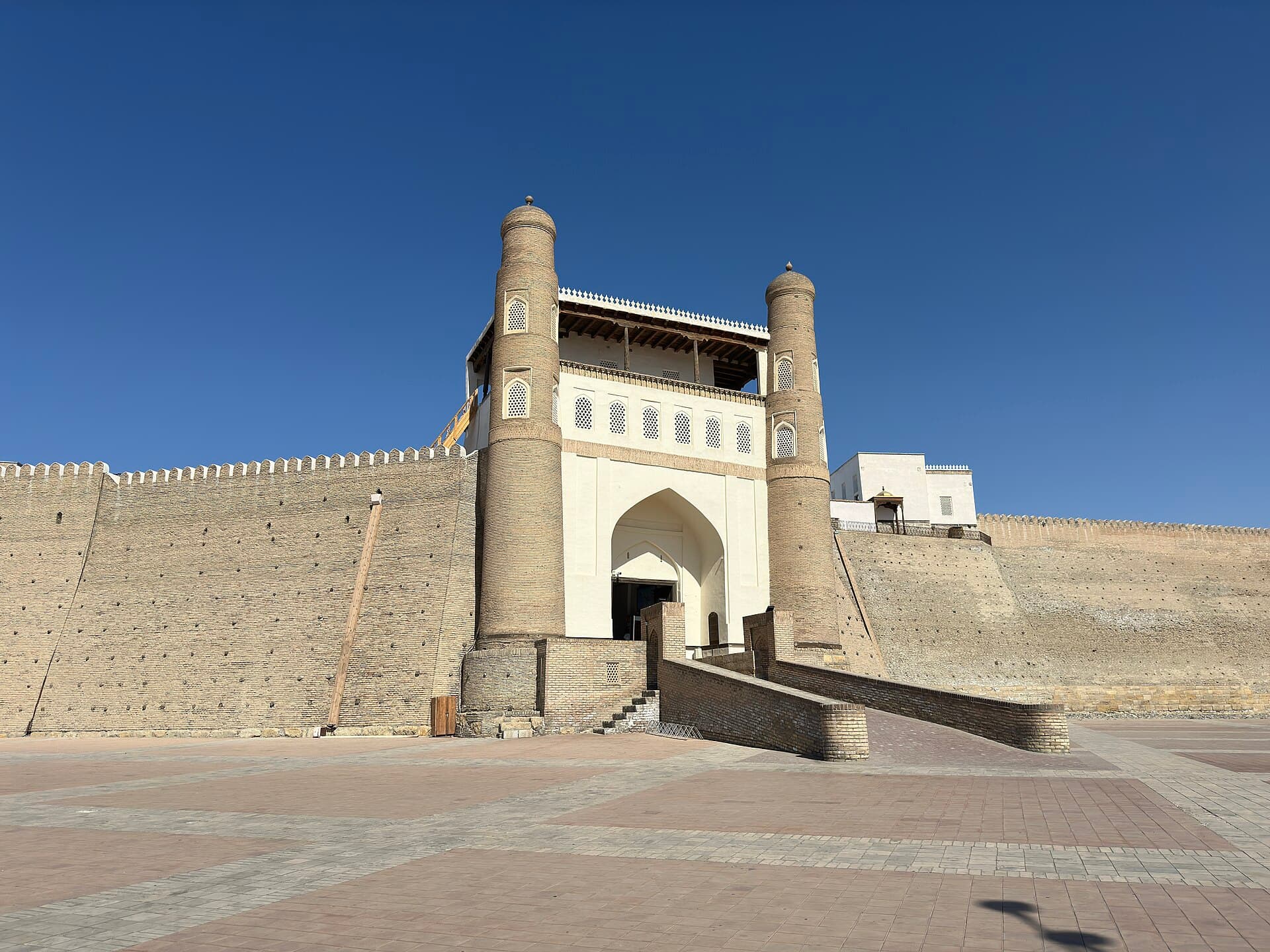 Ark of BukharaA massive fortress in Bukhara, first built around the 5th century AD; its presen8 minutes walk4.5
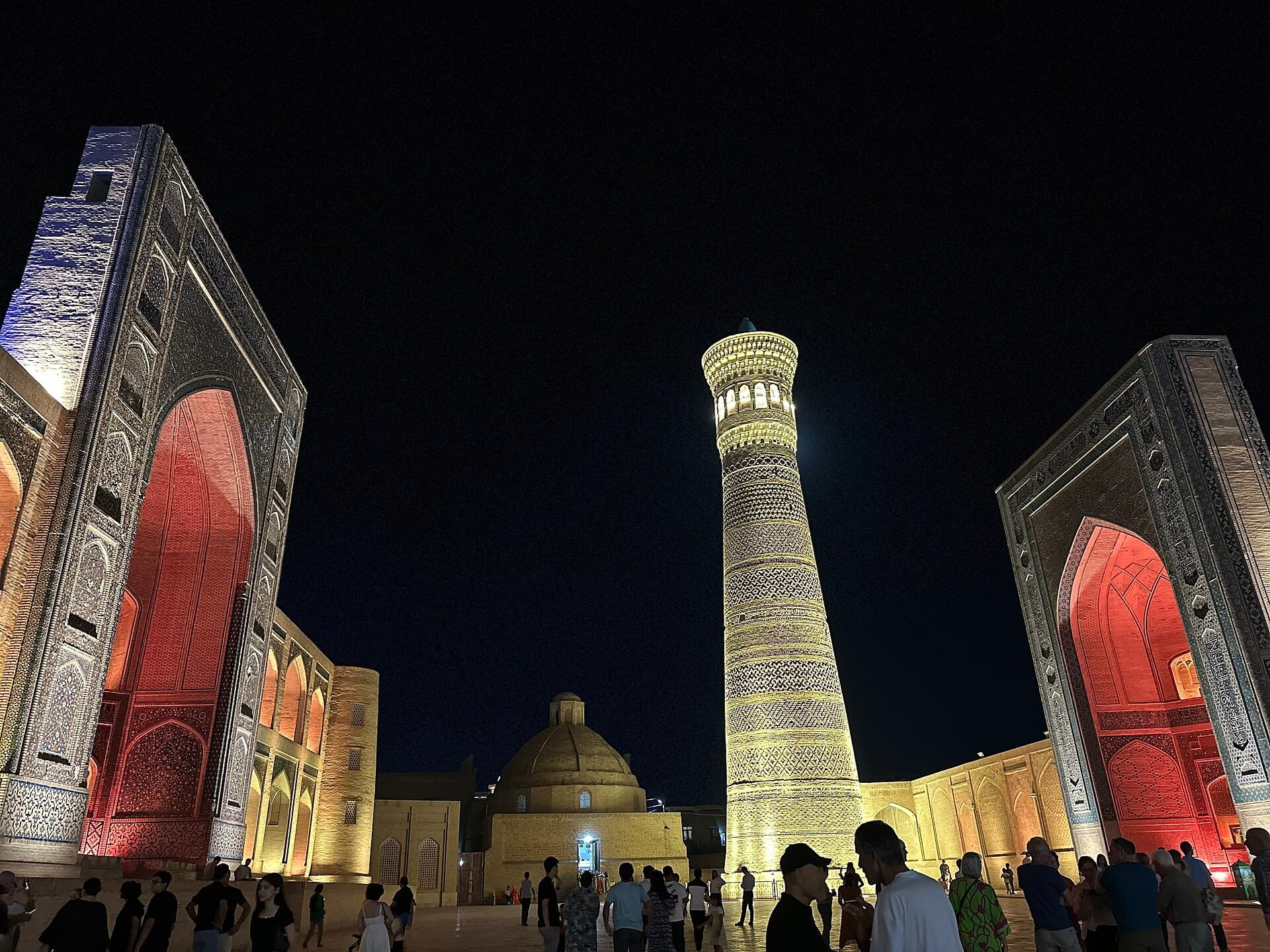 Po-i-Kalyan and the Kalyan MinaretBukhara's best-known religious complex, whose name means «at the foot of the gre14 minutes walk4.9
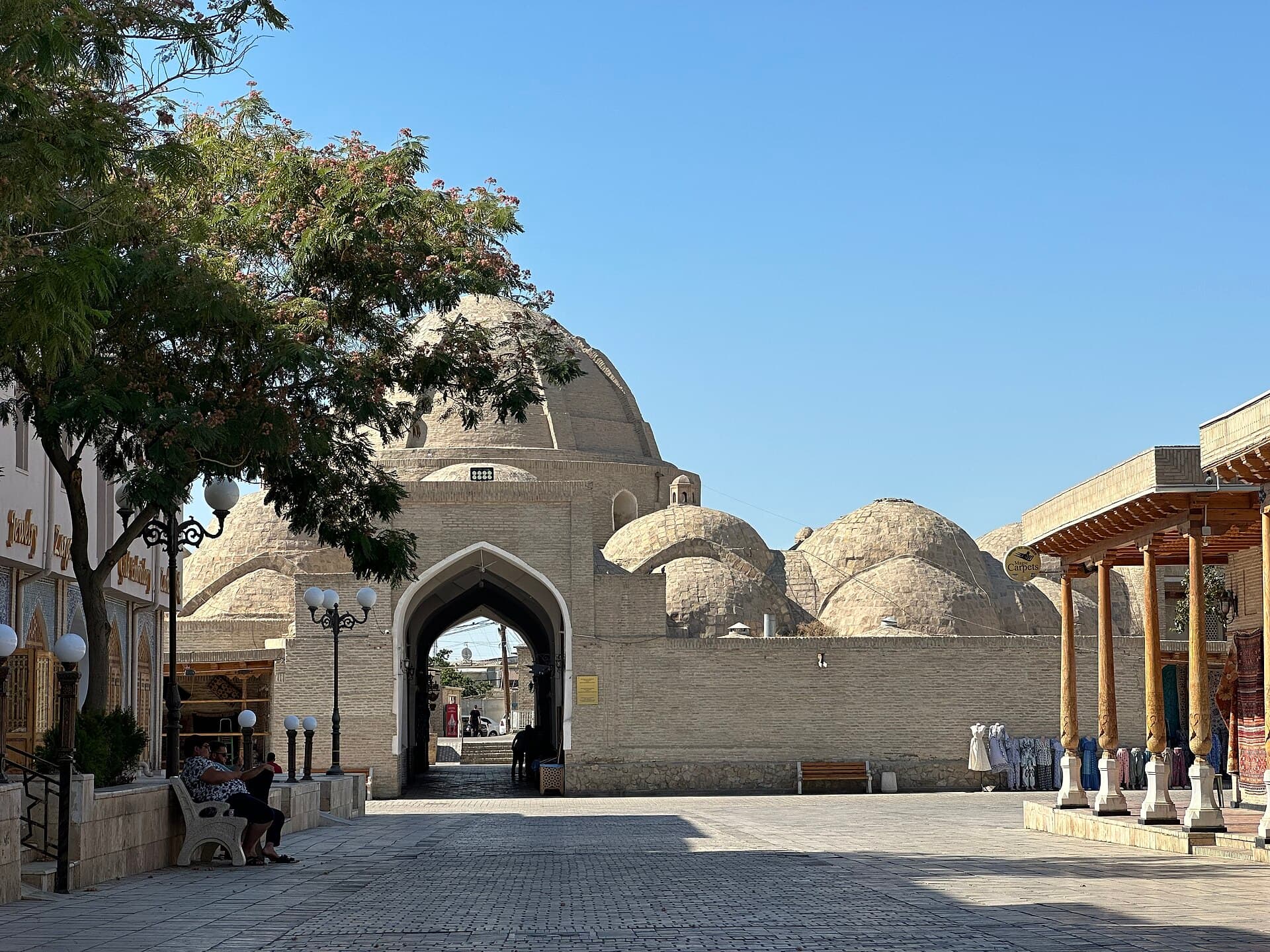 Bukhara Trading DomesDomed covered markets at the crossroads of old Bukhara's streets, known locally 15 minutes walk4.7
«Job's well», after a legend that the Prophet Job struck the ground and water flowed; tickets are about 20,000 som, per visitor guides.