
Brick weave
Raised patterns.
Nikolaus, edit by Petar Milošević — CC BY 3.0 · Apfel51 — Public domain · Panpanchik — CC BY-SA 4.0 · Adam Harangozó — CC BY-SA 4.0 · Jean-Pierre Dalbéra from Paris, France — CC BY 2.0 · SAKRI — CC BY-SA 4.0 · Ymblanter — CC BY-SA 4.0
A 10th-century mausoleum in northwest Bukhara, resting place of the powerful Samanid dynasty that ruled from about 900 to 1000; it holds three burials, one known to be that of Nasr II. It is an iconic example of early Islamic architecture and the oldest funerary building in Central Asian architecture. It is the only surviving monument of the Samanid era, and the American art historian Arthur Upham Pope called it «one of the finest in Persia». Silt buried it some centuries after it was built, and it was uncovered by archaeological excavation in the 20th century. The building is a small, perfectly symmetrical cube under a dome, its walls entirely of brick laid in raised geometric patterns like woven cloth, blending Sogdian, Sassanian, Persian and Islamic traditions. The brickwork changes with the sun, as the shadows on the walls shift from hour to hour. It stands in the public Samanid Park; the park is free. Early morning and just before sunset are the best times.
Raised patterns.
Shifting with the sun.
Cube and dome.
Samanid Park, northwest Bukhara
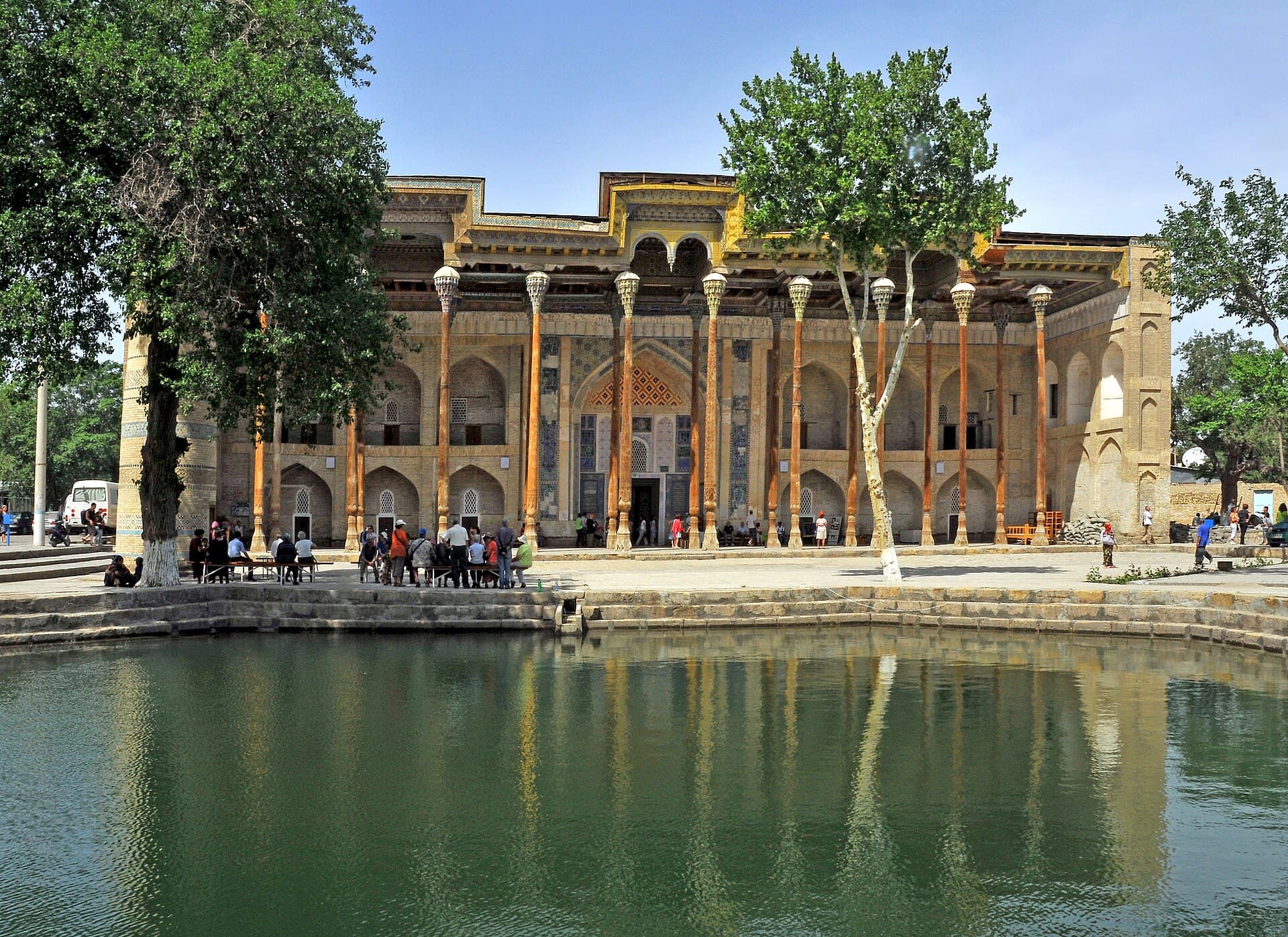 Bolo Hauz MosqueA historic mosque in Bukhara, built in 1712 opposite the Ark fortress on the squ7 minutes walk4.7
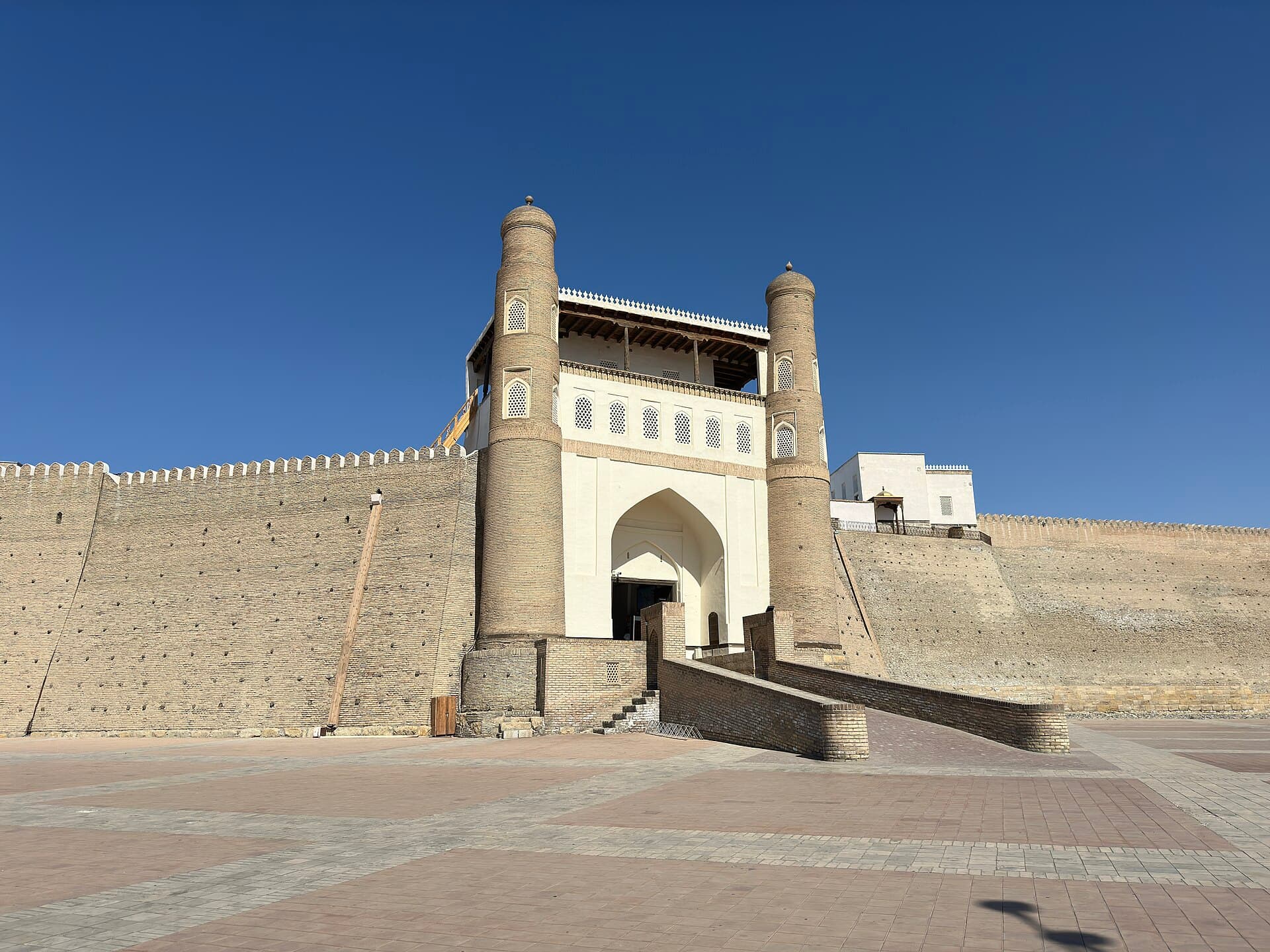 Ark of BukharaA massive fortress in Bukhara, first built around the 5th century AD; its presen10 minutes walk4.5
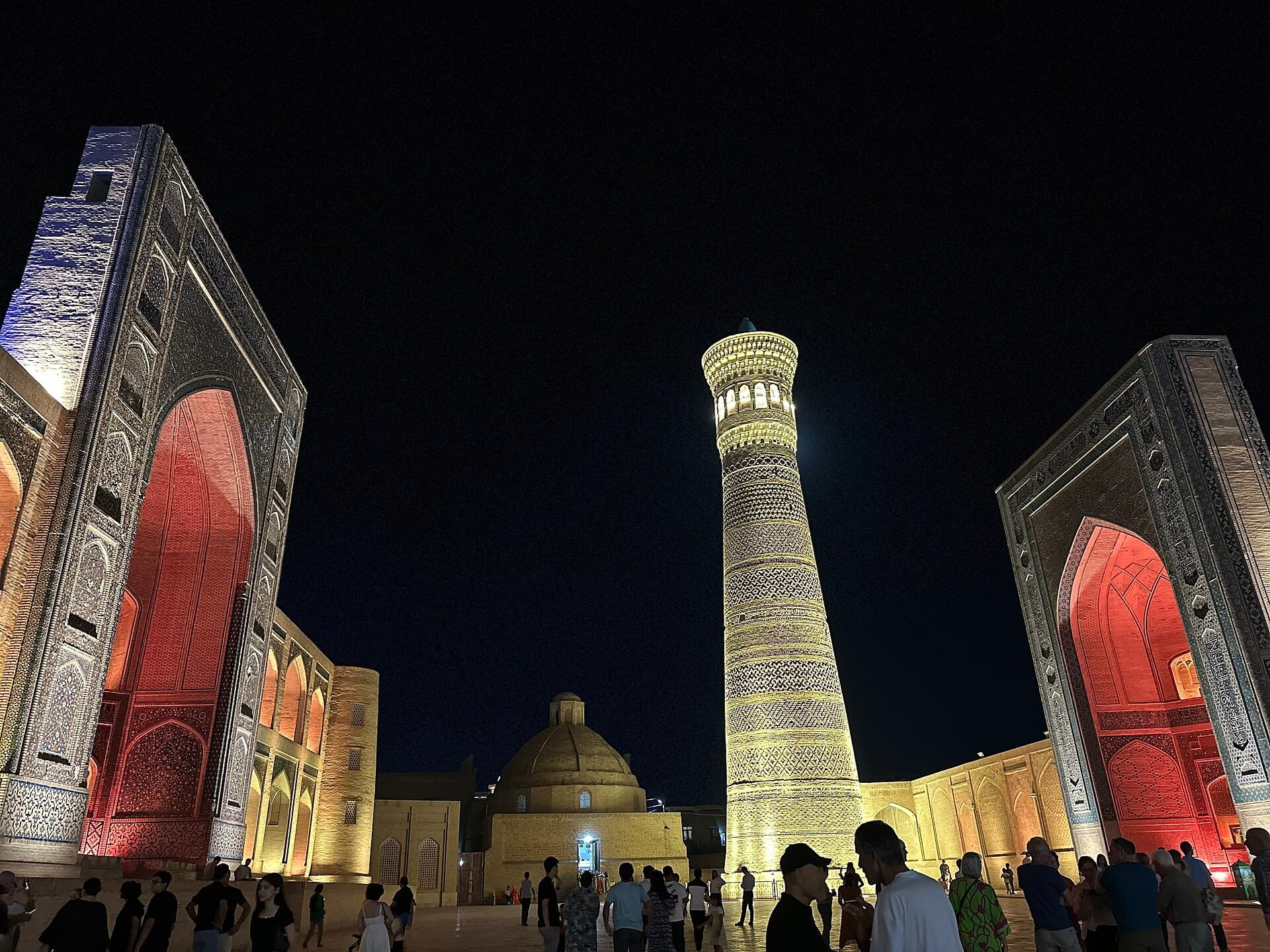 Po-i-Kalyan and the Kalyan MinaretBukhara's best-known religious complex, whose name means «at the foot of the gre16 minutes walk4.9
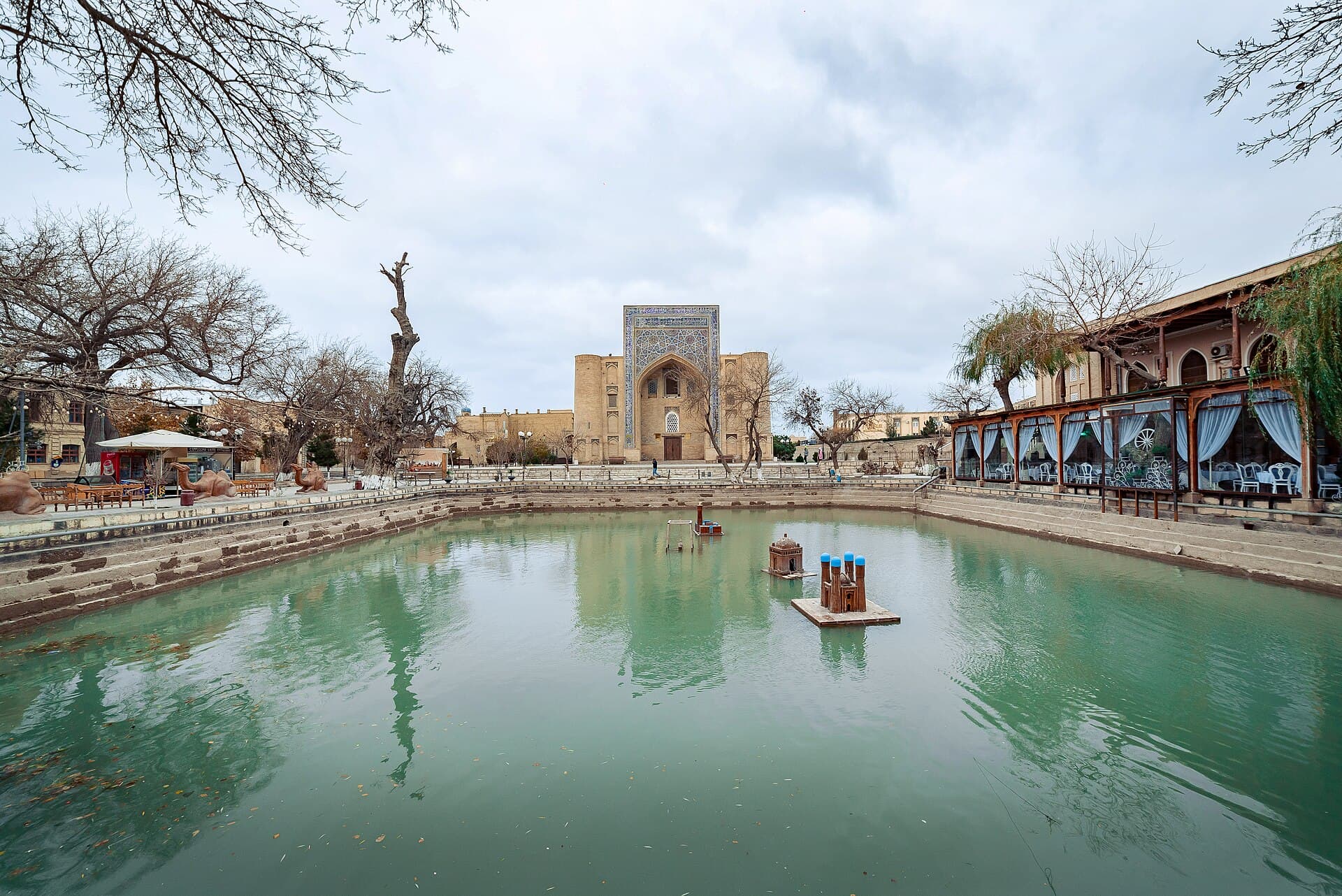 Lyabi-Hauz squareThe square around one of Bukhara's few surviving pools, whose name means «by the22 minutes walk4.5
It is the oldest funerary building in Central Asian architecture and the only surviving Samanid monument, known for brickwork whose shadows shift with the sun.