
Eastgate Clock
The gilded clock on the east gate is the classic starting point and the best photograph on the whole circuit.
Tilman2007 — CC BY-SA 4.0 · Tilman2007 — CC BY-SA 4.0 · Tilman2007 — CC BY-SA 4.0 · Tilman2007 — CC BY-SA 4.0
No other city in Britain has kept so complete a ring of walls. Nearly three kilometres of raised walkway loop the heart of Chester almost without a break, begun by the Romans in the 70s CE as the defence of the legionary fortress of Deva Victrix, rebuilt in red sandstone from about 100 CE, pushed west and south by the Normans by the middle of the twelfth century to take in the castle, and shored up again before the Civil War siege of 1645. It is free, open at every hour of the day and needs no ticket or booking. The full circuit is an unhurried hour and the best way to understand the town before you drop into its streets. Start at the gilded Eastgate Clock, pass beside the cathedral, reach the Phoenix Tower, also called King Charles' Tower, at the north-east corner where Charles I is said to have watched his army lose at Rowton Moor, then swing west towards the Water Tower and the Roodee racecourse, a river harbour in Roman times, and come back east above the castle and the Wishing Steps to the Newgate, which looks straight down on the remains of the largest Roman amphitheatre so far uncovered in Britain. What families should know: you climb onto the wall by stone stairs at nearly every gate, the path is narrow in places and there are almost no ramps, so a pushchair is out of the question, and older relatives who dislike steps will be content with the short stretch between Eastgate and the cathedral. Children of six and up love it, because walking at rooftop height and peering into gardens feels like an adventure. The sandstone is fragile: a section beside the Eastgate Clock collapsed in 2020 and is still being repaired, with a temporary walkway threaded through the scaffolding, other stretches stand propped, and a brief street-level diversion should not surprise you. In the summer holidays there are no queues, since this is not a gated attraction, but the stretches nearest Eastgate get busy after lunch, so early morning is loveliest. In winter the daylight is short and the stone turns slippery in rain, so wet steps call for proper soles; the wall stays open all the same, and the low light on red sandstone before four in the afternoon has a charm of its own.
The gilded clock on the east gate is the classic starting point and the best photograph on the whole circuit.
The north-east corner where Charles I is said to have watched his army beaten at Rowton Moor in 1645.
From the gate you look straight down on the remains of the largest Roman amphitheatre so far uncovered in Britain, without paying a penny.
Eastgate Street, Chester city centre (a handy start is the Eastgate Clock)
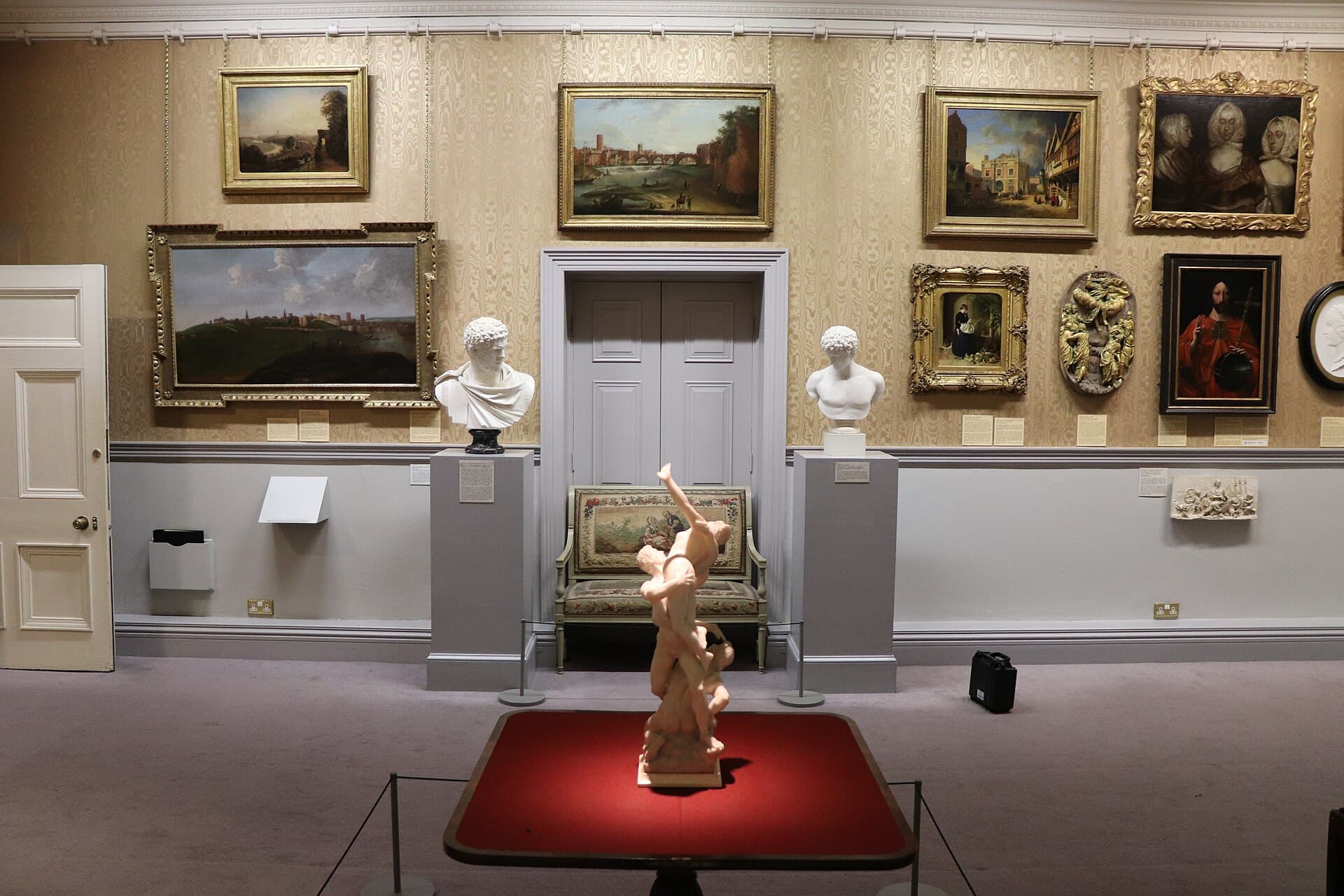 Grosvenor MuseumWhen Victorian workmen opened up a stretch of Chester's north wall in the late n3 minutes walk4.3
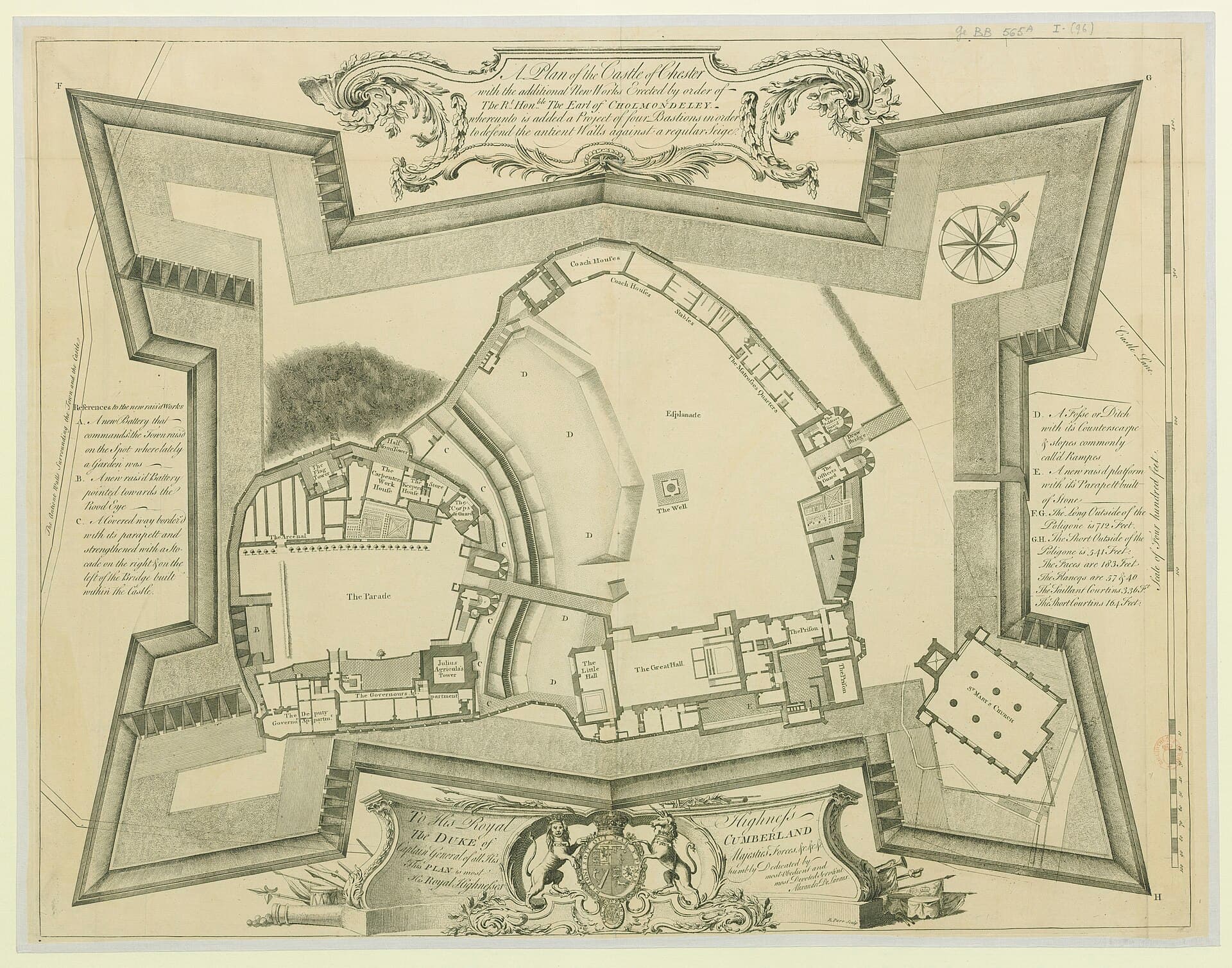 Chester CastleWhat survives of Chester's Norman castle comes down to one tower and one wall, a3 minutes walk4.2
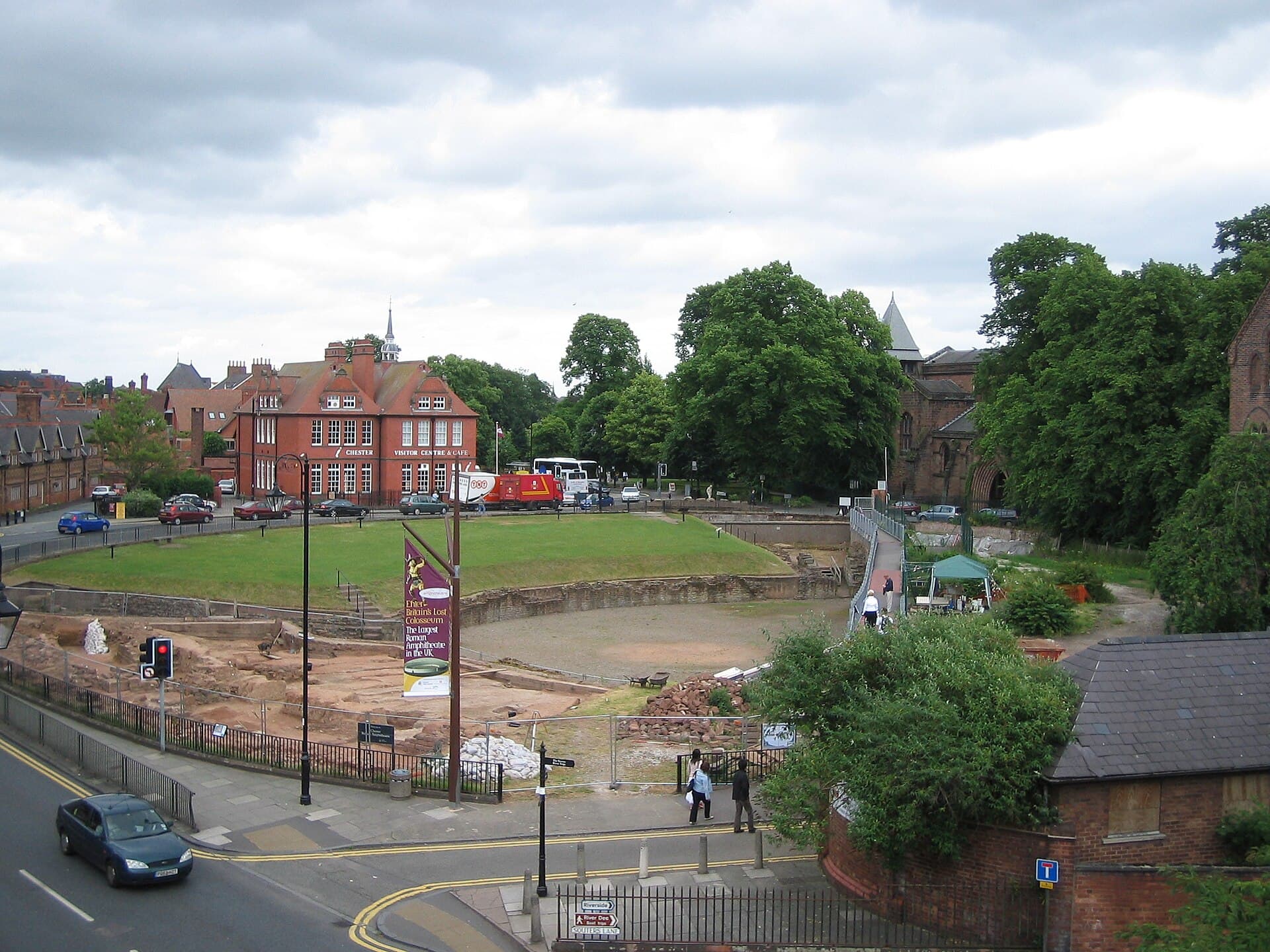 Chester Roman AmphitheatreThe largest Roman amphitheatre yet found in Britain sits just outside the south-4 minutes walk4.4
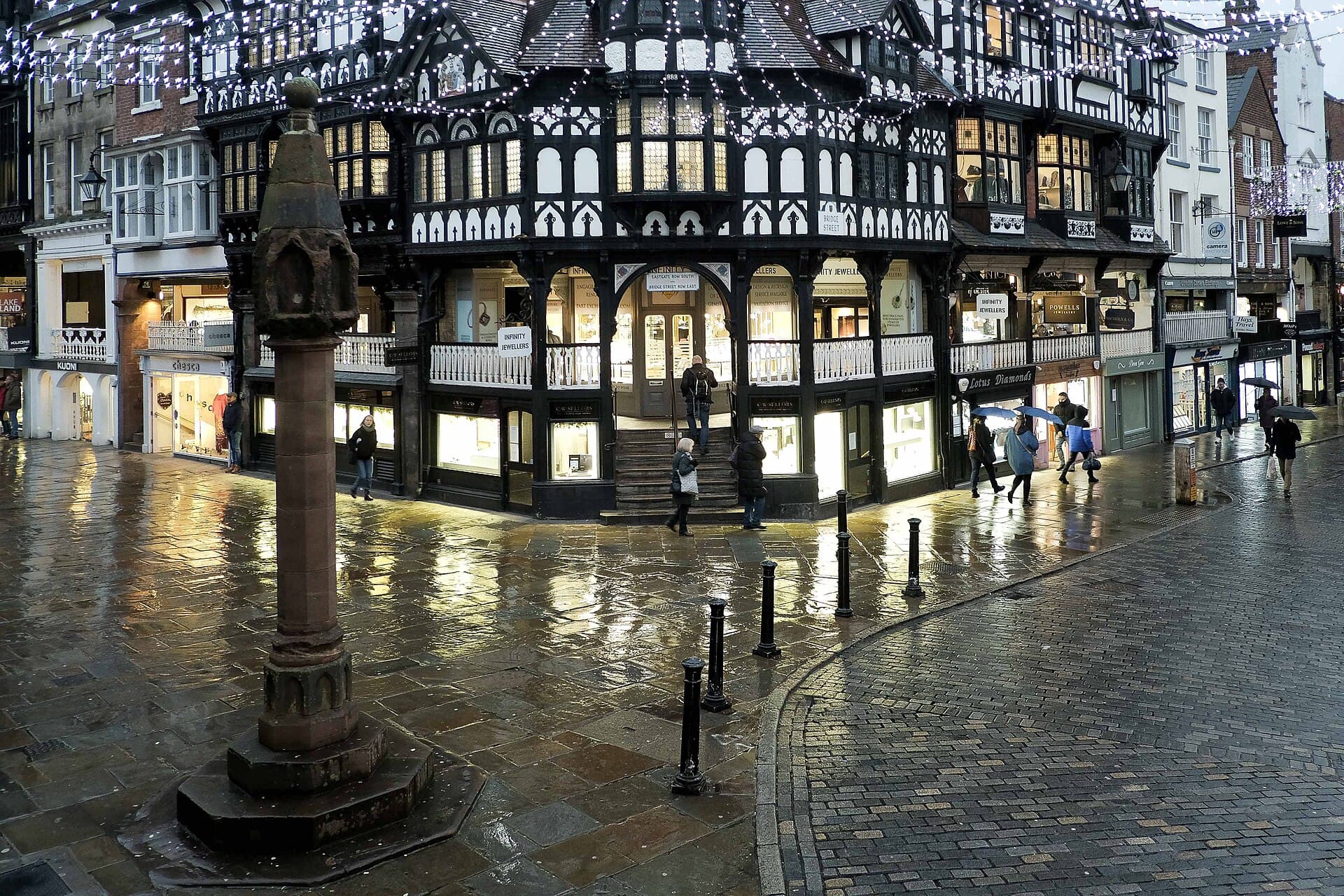 Chester CrossThe four streets that meet here were laid out by Roman soldiers roughly two thou6 minutes walk4.4
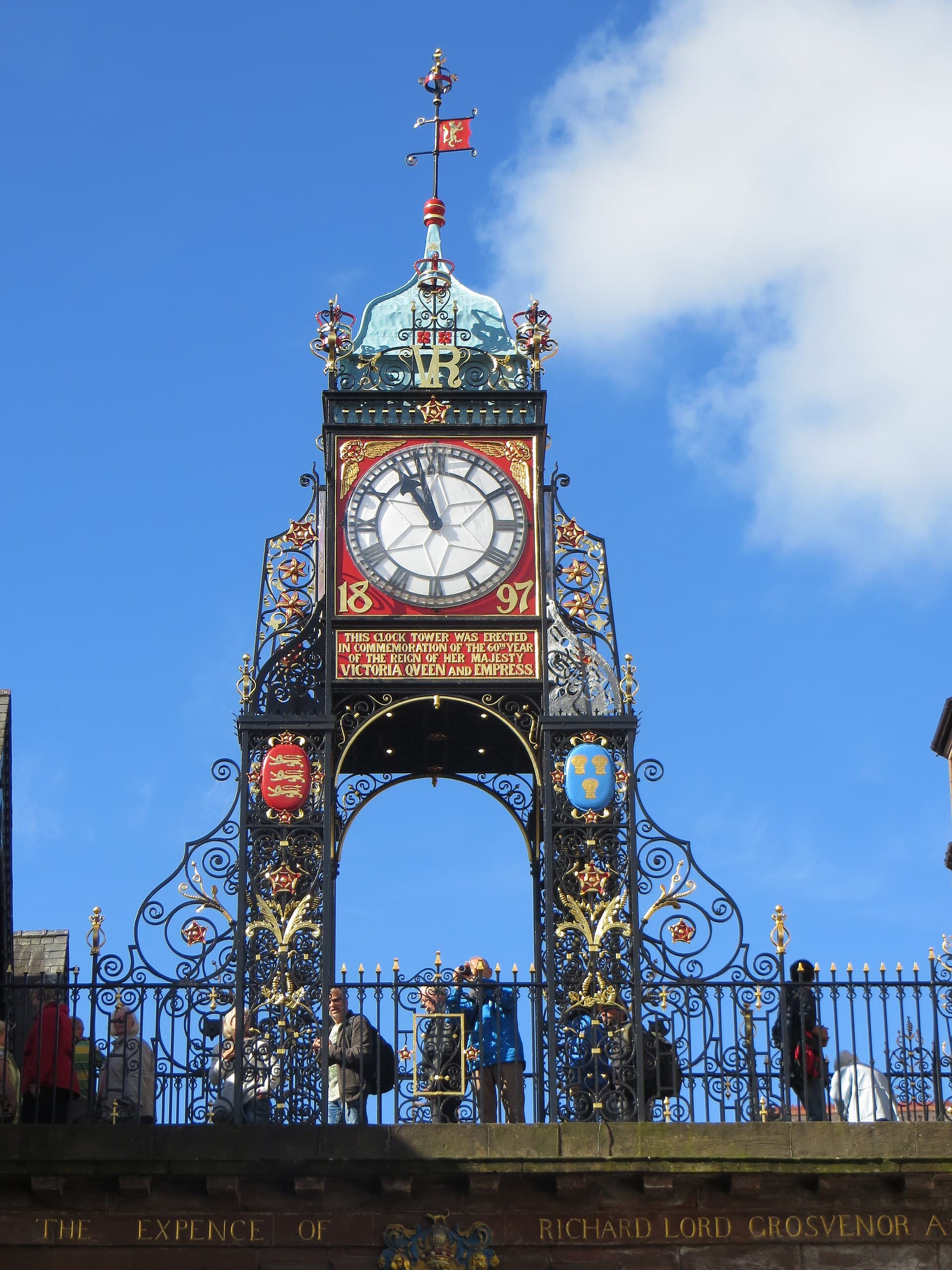 Eastgate ClockIt is said to be the most photographed clock in England after Big Ben, and the c6 minutes walk4.7
Honestly, no. You climb stone stairs at nearly every gate and the walkway is narrow with no ramps, so leave the pushchair behind and do just the short Eastgate-to-cathedral stretch with a single flight of steps, or enjoy the wall from below on Eastgate Street.
With an hour to spare, do the whole loop: it costs nothing and the views shift from cathedral to racecourse to amphitheatre. If time is tight, the eastern half from the Eastgate Clock to the Phoenix Tower and down to Newgate is the richest and can be done in half an hour.