
Stories in Stone
Tombstones of Deva's people, reused in the north wall, with translations that give names and homelands.
Furius — CC BY-SA 4.0 · Rock drum — CC BY-SA 3.0 · Furius — CC BY-SA 4.0 · Furius — CC BY-SA 4.0
When Victorian workmen opened up a stretch of Chester's north wall in the late nineteenth century, they found the late Romans had patched it with their own dead: gravestones of soldiers, wives and children from the legionary fortress of Deva, reused as rubble. Those stones are the heart of the Grosvenor Museum, whose Stories in Stone gallery ranks among the largest Roman tombstone collections anywhere in Britain. Do not treat them as lumps of red sandstone; read the translations alongside. You will meet a Sarmatian horseman who rode in from beyond the Danube, an optio of the Twentieth Legion, and the children of a garrison a long way from home. The museum is small, free and needs no booking. It opened in 1886 in a red-brick building on Grosvenor Street a few steps from the castle, and takes its name from the Grosvenors, Dukes of Westminster and the county's great landowners, the first of whom gave part of the site and part of the cost. The ground floor is entirely Roman; upstairs come paintings of Chester and Cheshire, a silver gallery and the Natural Cheshire room, whose taxidermy children enjoy more than adults care to admit. The surprise is out the back: 20 Castle Street, a real townhouse arranged room by room from the 1600s to the 1920s, kitchen, dining room, bedroom and bathroom, as though the family had stepped out a moment ago. It is no longer listed with the permanent galleries on the museum's own site, so ask at the desk whether it is open that day. Be honest with your timing: an hour covers it, ninety minutes if you stop at every label. There is no lift, so only the ground floor works for pushchairs and wheelchairs; the upper galleries mean old staircases. No cafe inside, though there is a shop for books and gifts, the city centre is minutes away, the Little Roodee car park on Castle Drive is a five-minute walk, and the railway station roughly twenty minutes on foot. Its real value is that it explains what you will see afterwards: the walls, the amphitheatre and the grid of straight streets all make sense after half an hour here. Make it the first stop on a wet day, or a cool refuge on a hot July afternoon. Open Tuesday to Saturday 10:30 to 17:00 and Sunday 13:00 to 16:00 only; closed Mondays except bank holidays.
Tombstones of Deva's people, reused in the north wall, with translations that give names and homelands.
A real townhouse laid out room by room from the 1600s to the 1920s, kitchen to bedroom; ask if it is open.
Cheshire taxidermy and old paintings of Chester on the first floor, the children's favourite.
27 Grosvenor Street, Chester CH1 2DD
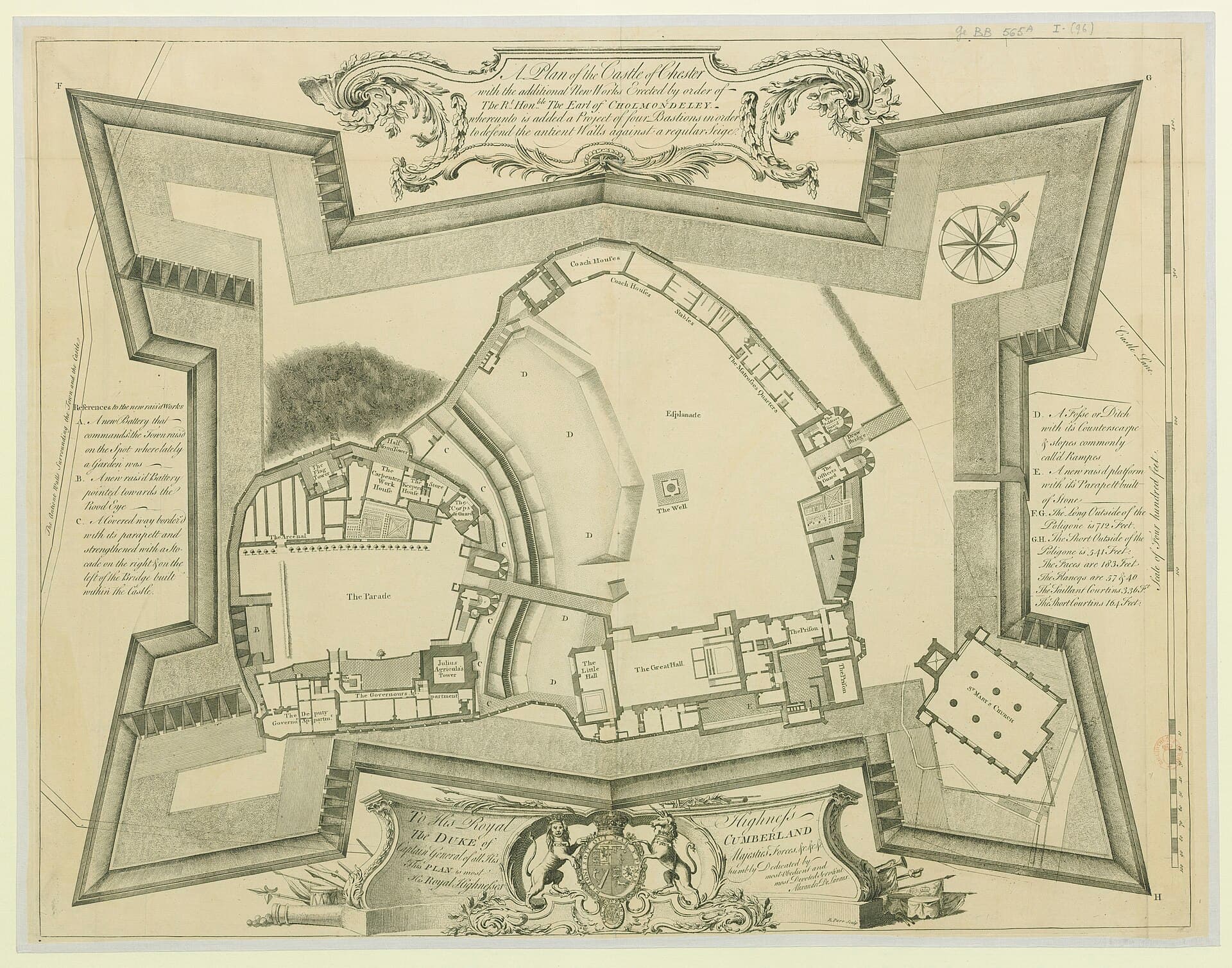 Chester CastleWhat survives of Chester's Norman castle comes down to one tower and one wall, a3 minutes walk4.2
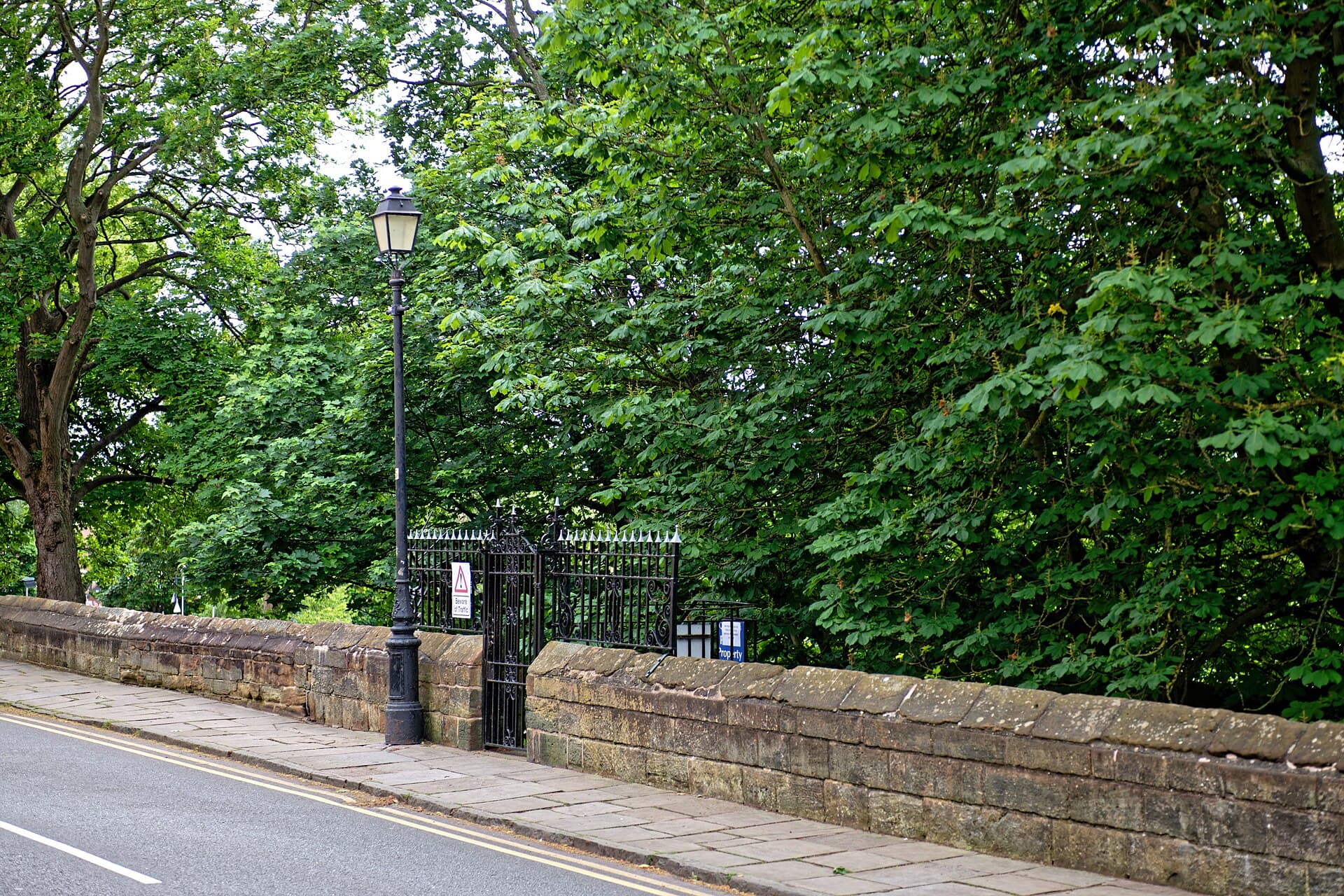 Chester City WallsNo other city in Britain has kept so complete a ring of walls. Nearly three kilo3 minutes walk4.6
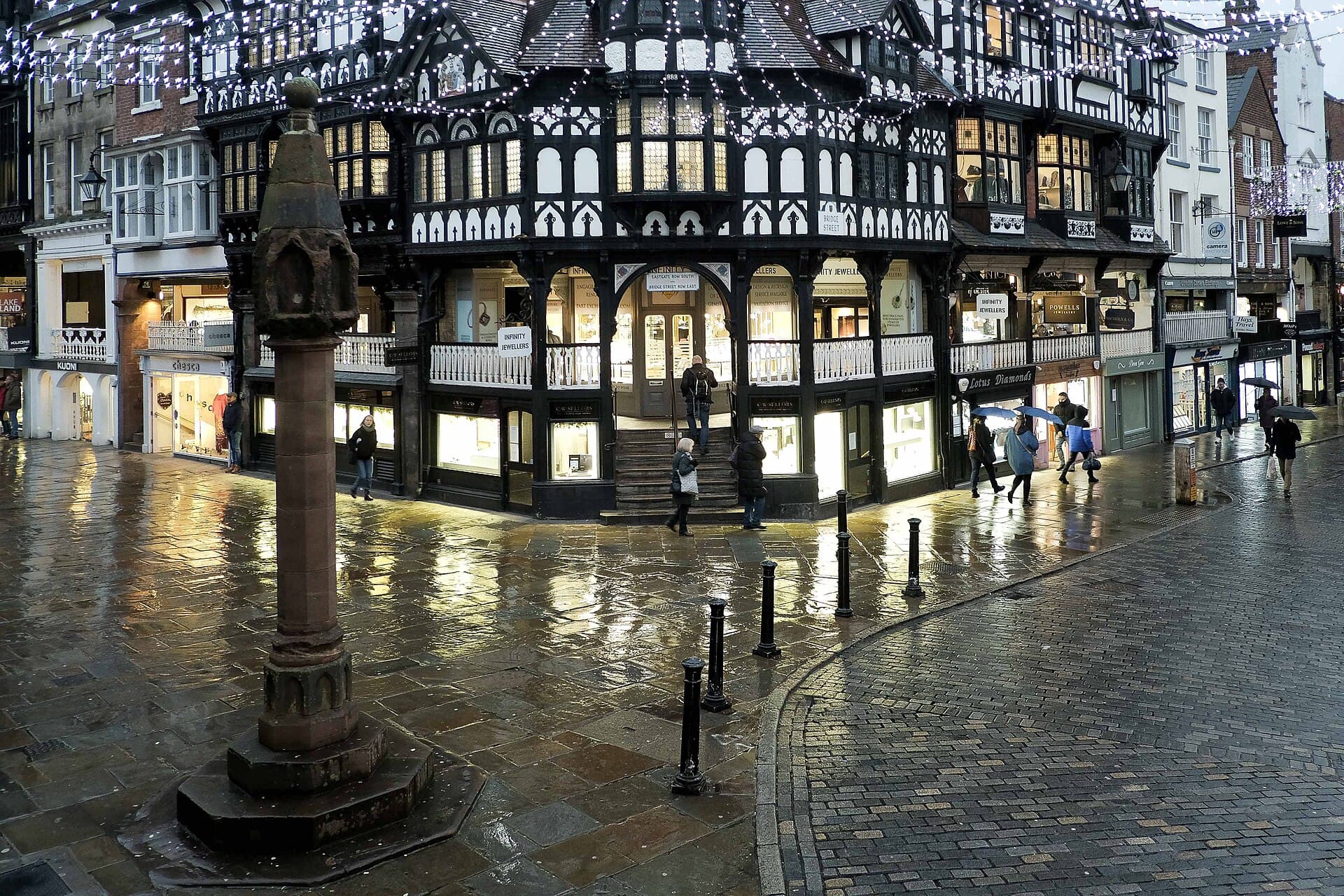 Chester CrossThe four streets that meet here were laid out by Roman soldiers roughly two thou4 minutes walk4.4
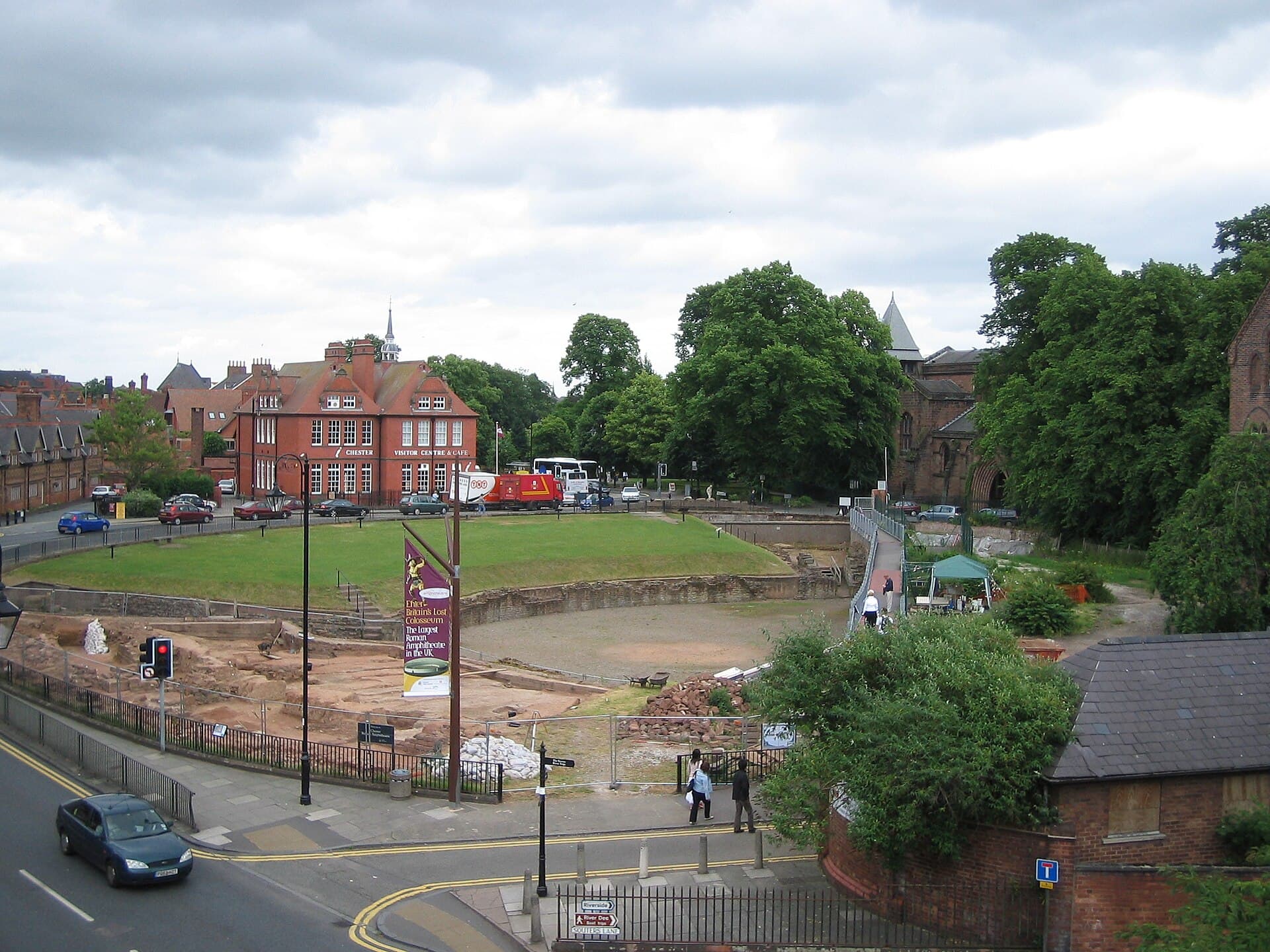 Chester Roman AmphitheatreThe largest Roman amphitheatre yet found in Britain sits just outside the south-5 minutes walk4.4
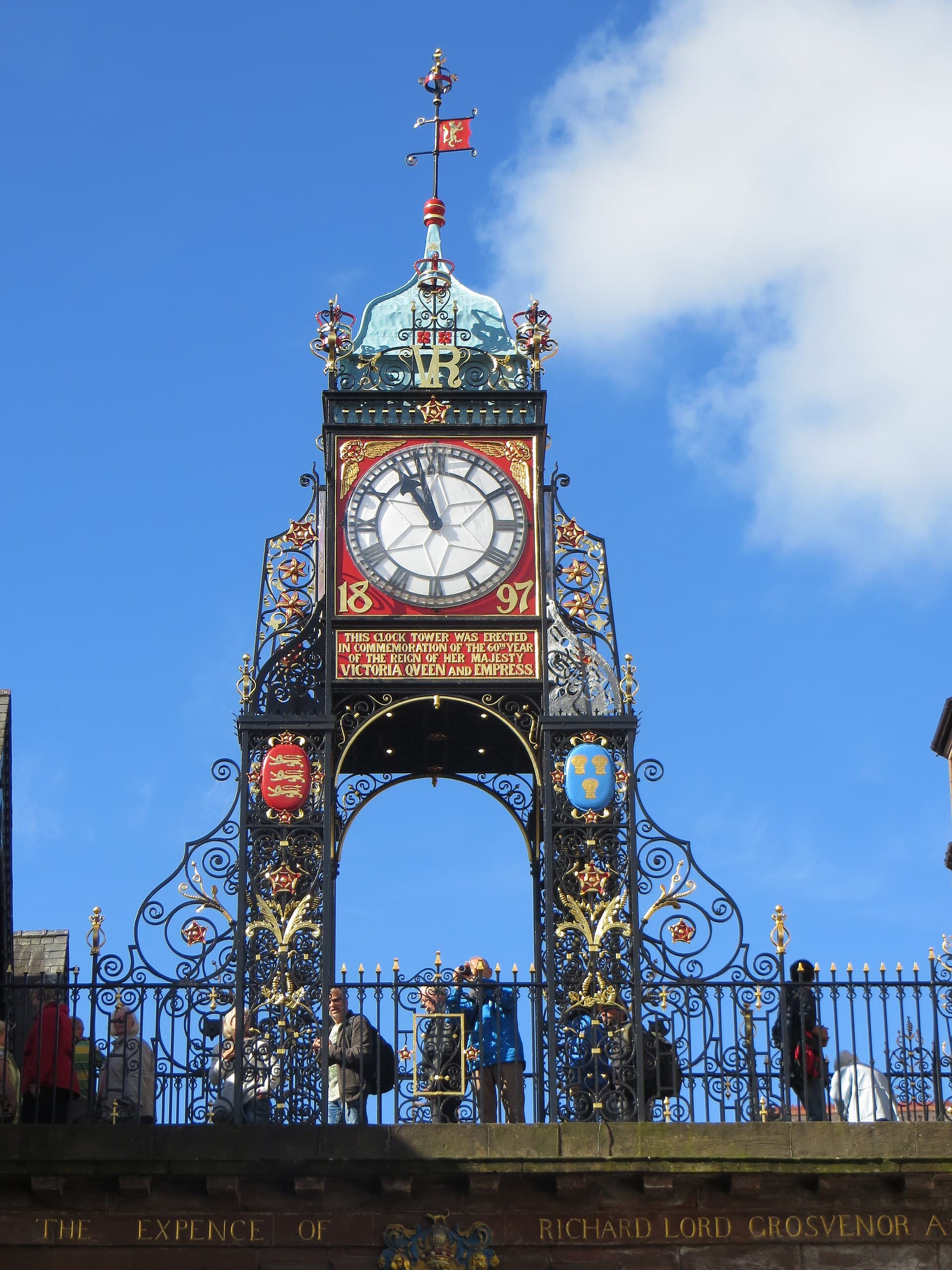 Eastgate ClockIt is said to be the most photographed clock in England after Big Ben, and the c6 minutes walk4.7
With only two hours in Chester, stick to the walls and the Rows. With half a day or more, thirty minutes here before the walls turns the stones outside into a story, and children like the taxidermy and the period house when it is open. Just remember there is no lift, so the pushchair stays downstairs.
Sunday yes, but afternoons only, 13:00 to 16:00, which is plenty. Monday it is shut entirely unless it falls on a UK bank holiday.