
The Chester Rows
Covered first-floor galleries above the street-level shops fan out from the Cross in four directions, with nothing quite like them elsewhere, and partly thirteenth-century.
Jeff Buck — CC BY-SA 2.0 · Jeff Buck — CC BY-SA 2.0 · Jeff Buck — CC BY-SA 2.0 · Jeff Buck — CC BY-SA 2.0
The four streets that meet here were laid out by Roman soldiers roughly two thousand years ago, and Chester still walks along them every day without giving it a thought. Chester Cross is not a building or a museum but the junction of Eastgate Street, Watergate Street, Bridge Street and Northgate Street in front of St Peter's Church: the point where the legionary fortress had its heart, and where the medieval city grew up on top of the ruins. Everything in Chester starts here, and the four streets with their galleries fan out from this one spot. In the middle stands a red sandstone High Cross whose story is longer than it is tall. The original dated from the fourteenth century and was replaced by a new cross in 1476; that one was smashed by Parliamentary troops after the city fell in the Civil War in 1646. Its base and shaft sat on a country estate for centuries, the surviving pieces were re-erected near the Newgate in 1949, and only in 1975 did the cross come back to this junction, close to where it originally stood. Do not expect a grand monument. It is small, hemmed in by shoppers and shopfronts, but it is the landmark the whole city arranges to meet at. The real reason to stand here is what fans out from the junction: the Chester Rows, two-storey streets with nothing quite like them anywhere else, where covered first-floor galleries run above the ground-floor shops and lead into a second tier of shops, some of them dating back to the thirteenth century. From the Cross you can see the galleries stretching away in all four directions, a mix of genuine timber-framed houses and Victorian black-and-white revival imitations, and a few steps down Bridge Street the Three Old Arches is probably the oldest surviving shopfront in England. In summer, from roughly late spring until the end of August, the Town Crier in full historic dress climbs the steps of the Cross at midday, Tuesday to Saturday, and bellows a proclamation. It lasts a few minutes, delights children, and the city bills it as Britain's only daily crying through the peak season. The Cross is free and always open, pushchair-friendly at street level, though the upper Rows are reached by short flights of stone steps. The famous Eastgate Clock is about 150 metres east, the railway station is around a fifteen-minute walk, and in winter the shops close early and it is dark before five, so come before midday.
Covered first-floor galleries above the street-level shops fan out from the Cross in four directions, with nothing quite like them elsewhere, and partly thirteenth-century.
A sandstone cross smashed by Parliamentary troops in 1646 and back at this junction since 1975, small in stature but the city's meeting point.
In summer the crier in historic dress climbs the Cross at midday, Tuesday to Saturday, and bellows a proclamation that keeps children amused for a few minutes.
The Cross, Chester CH1 2LA
 Chester CathedralIn a city known for its Roman walls and timber-fronted shopping galleries, the c2 minutes walk
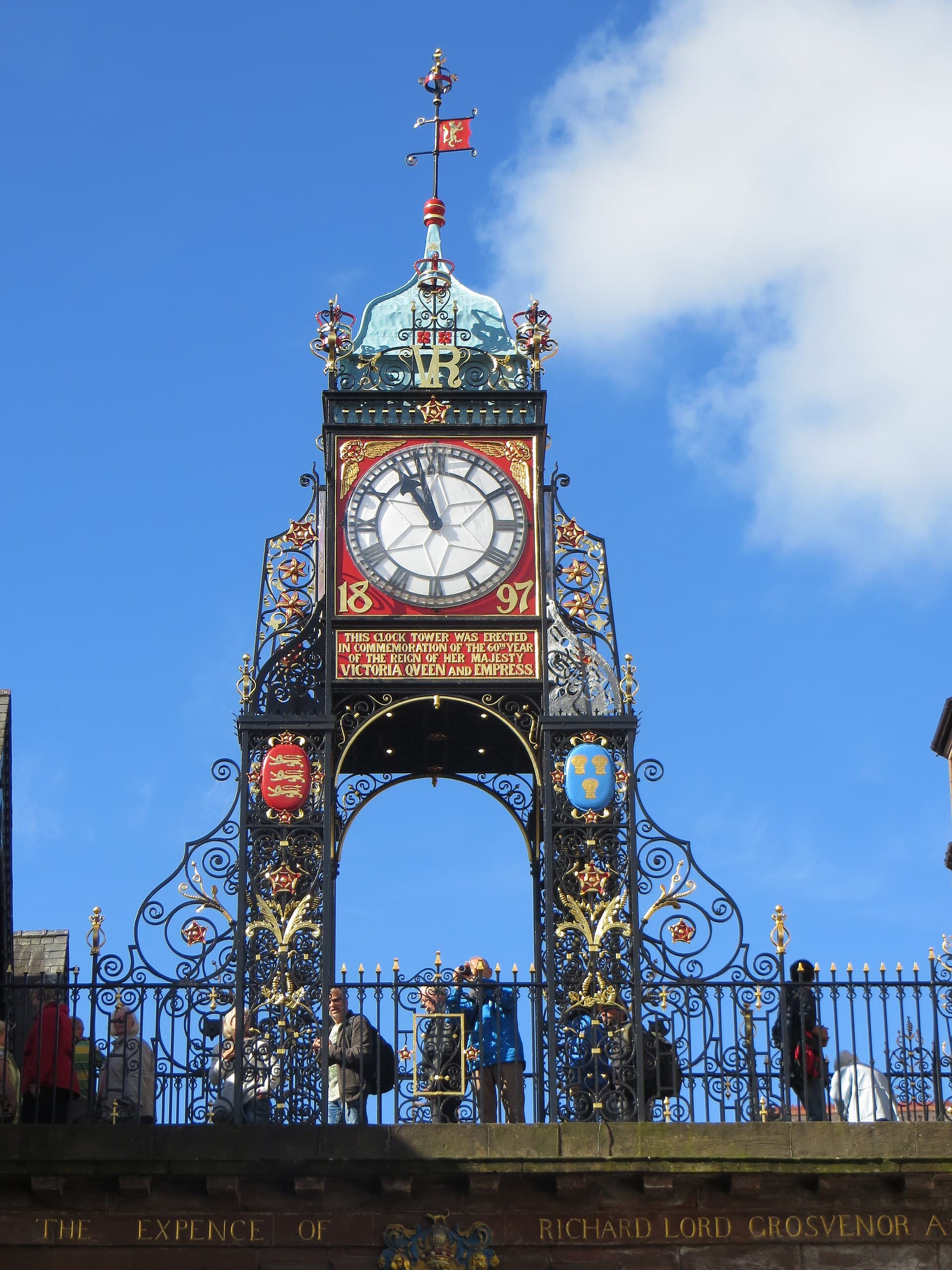 Eastgate ClockIt is said to be the most photographed clock in England after Big Ben, and the c2 minutes walk
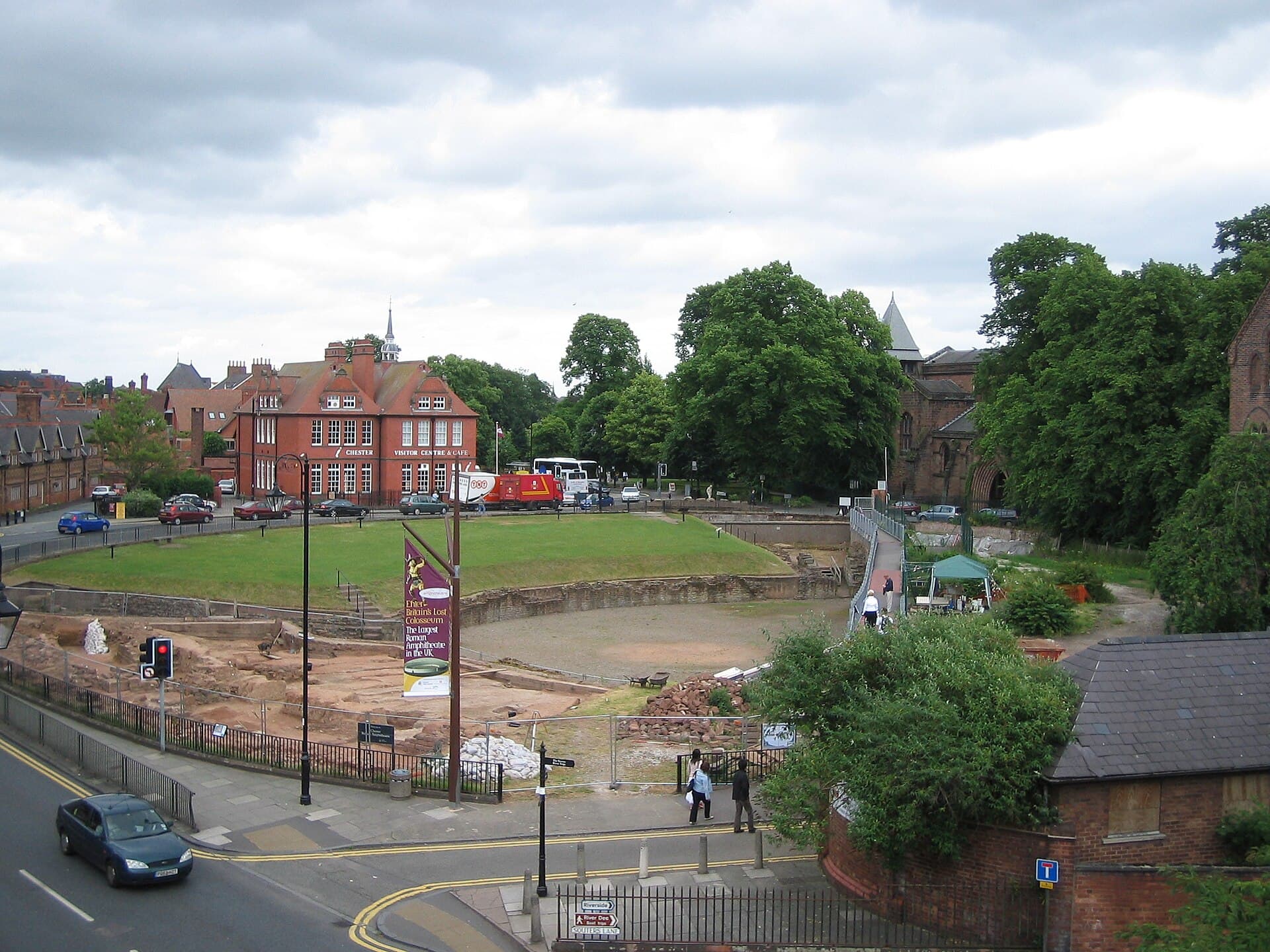 Chester Roman AmphitheatreThe largest Roman amphitheatre yet found in Britain sits just outside the south-4 minutes walk
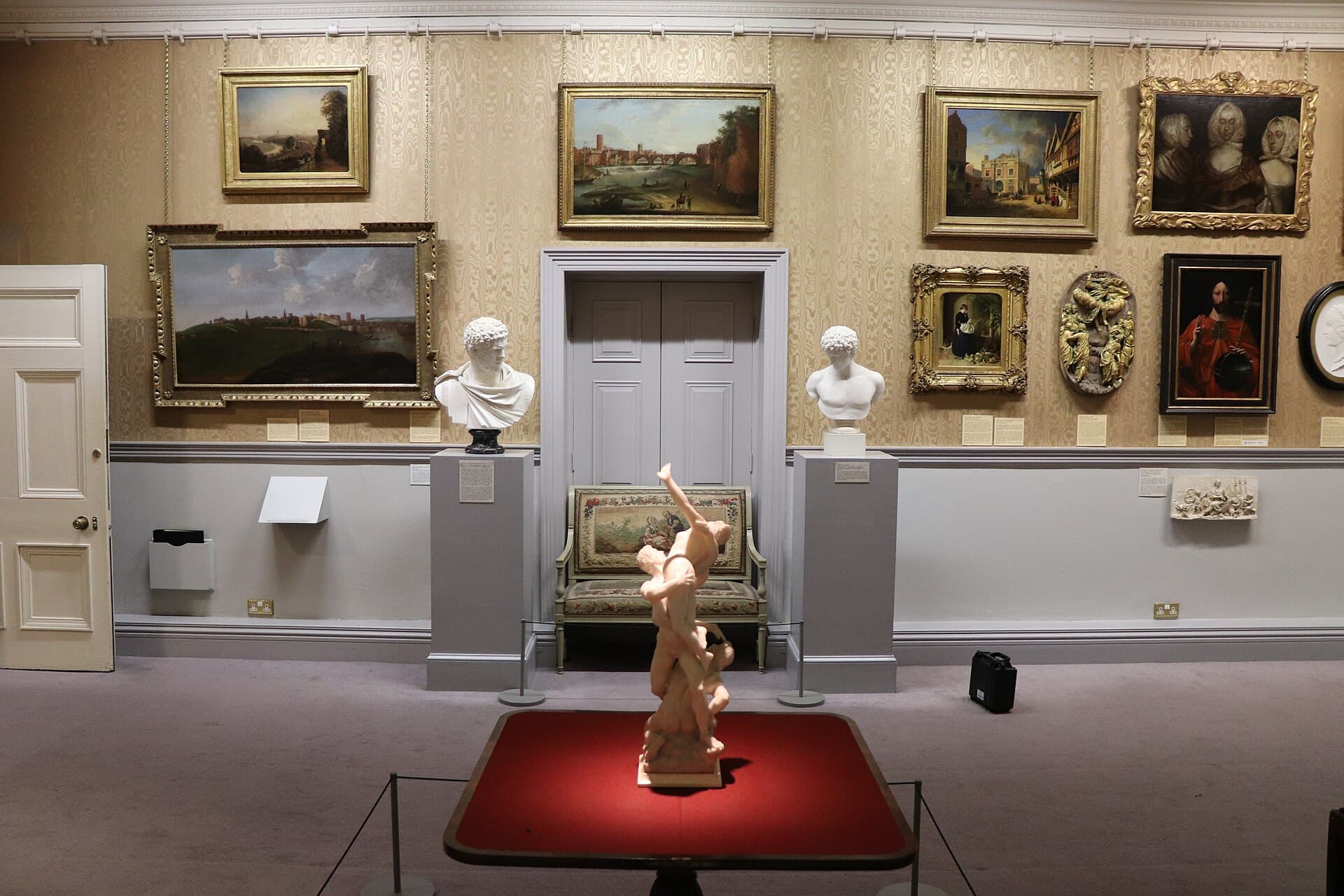 Grosvenor MuseumWhen Victorian workmen opened up a stretch of Chester's north wall in the late n4 minutes walk
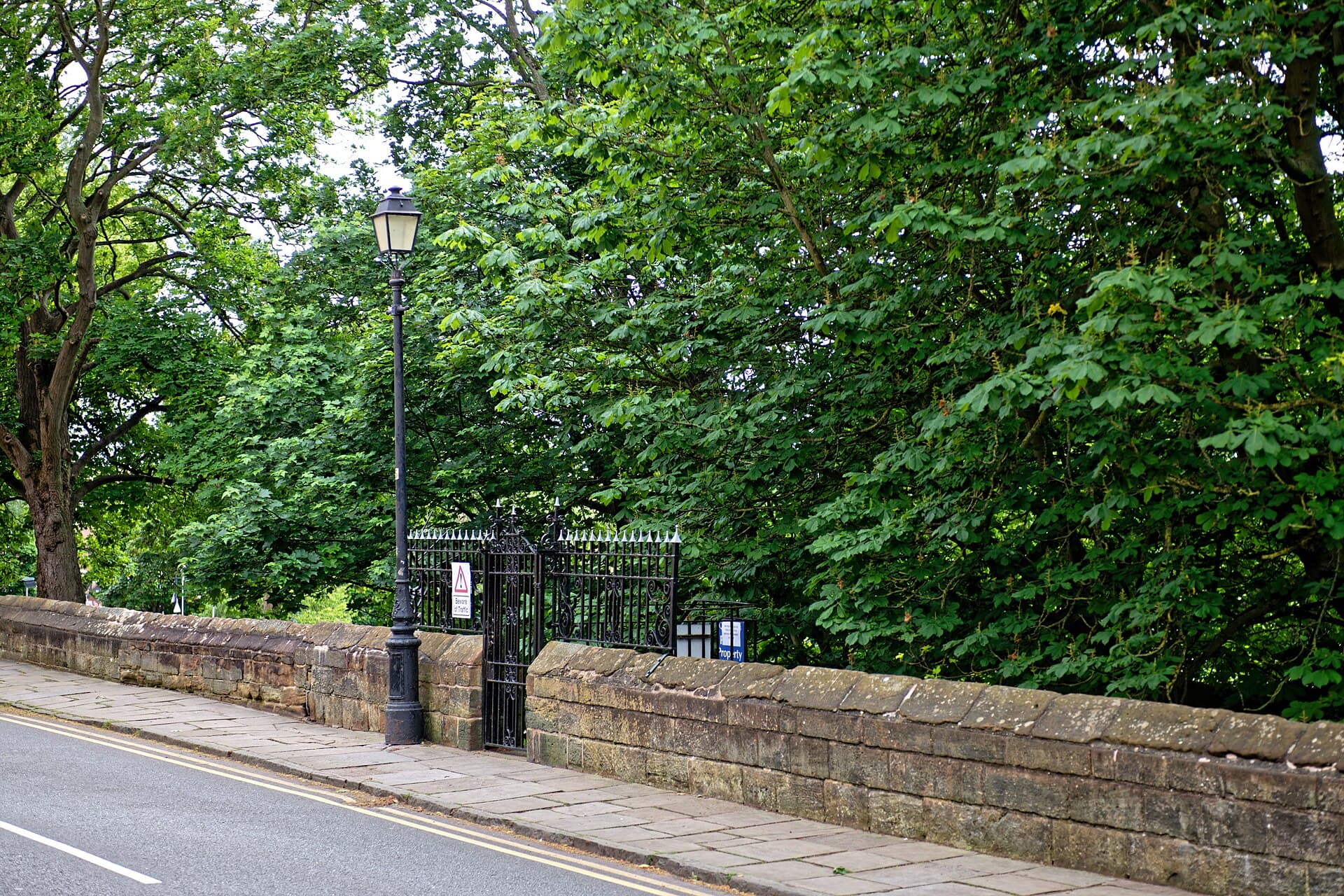 Chester City WallsNo other city in Britain has kept so complete a ring of walls. Nearly three kilo6 minutes walk
On its own, no: it is a small monument in the middle of the shopping crowds and a minute for a photo covers it. The value is the spot. Stand at it and look up at the first-floor galleries on all four streets, then climb into the Rows on Bridge Street or Watergate Street and walk them, because that is what you will not find in any other city. If you are in Chester in summer, time your pass for midday, Tuesday to Saturday, to catch the Town Crier.
Yes at street level: the pavements are wide and the area is largely pedestrianised by day. The upper Rows are reached by short flights of stone steps, so a pushchair has to be carried up or one parent waits below. The galleries are roofed and shaded, which is a blessing in Chester's frequent rain.