
Four domes
In turquoise.
26D — CC BY-SA 4.0 · Spartak22 — CC BY-SA 4.0 · Spartak22 — CC BY-SA 4.0 · Bernard Gagnon — CC0 · BeshevI — CC BY-SA 4.0 · Chris Shervey from Northampton, UK — CC BY 2.0 · David Holt — CC BY-SA 3.0 · LBM1948 — CC BY-SA 4.0
A small, unique building in Bukhara whose Persian name means «four minarets», after its four towers, each capped with a turquoise dome. It is what remains of a demolished madrasa complex, in a lane northeast of Lyabi-Hauz, and part of the Historic Centre of Bukhara World Heritage Site. It was built in 1807, under the Manghit dynasty, by Khalif Niyaz-kul, a wealthy Bukharan of Turkmen origin. Many take it for the gate of the madrasa that stood behind it, but it was in fact a building with two functions, worship and shelter. The main building is a small mosque, with an interior typical of Central Asian mosques despite its unusual exterior, and its dome gives it good acoustics. It resembles nothing else in Bukhara's architecture, and its builder's reasons for the design are unknown. Viewing it from outside is free. It is about five minutes' walk from Lyabi-Hauz.
In turquoise.
Away from the crowds.
Nothing like it in Bukhara.
A lane northeast of Lyabi-Hauz, Bukhara
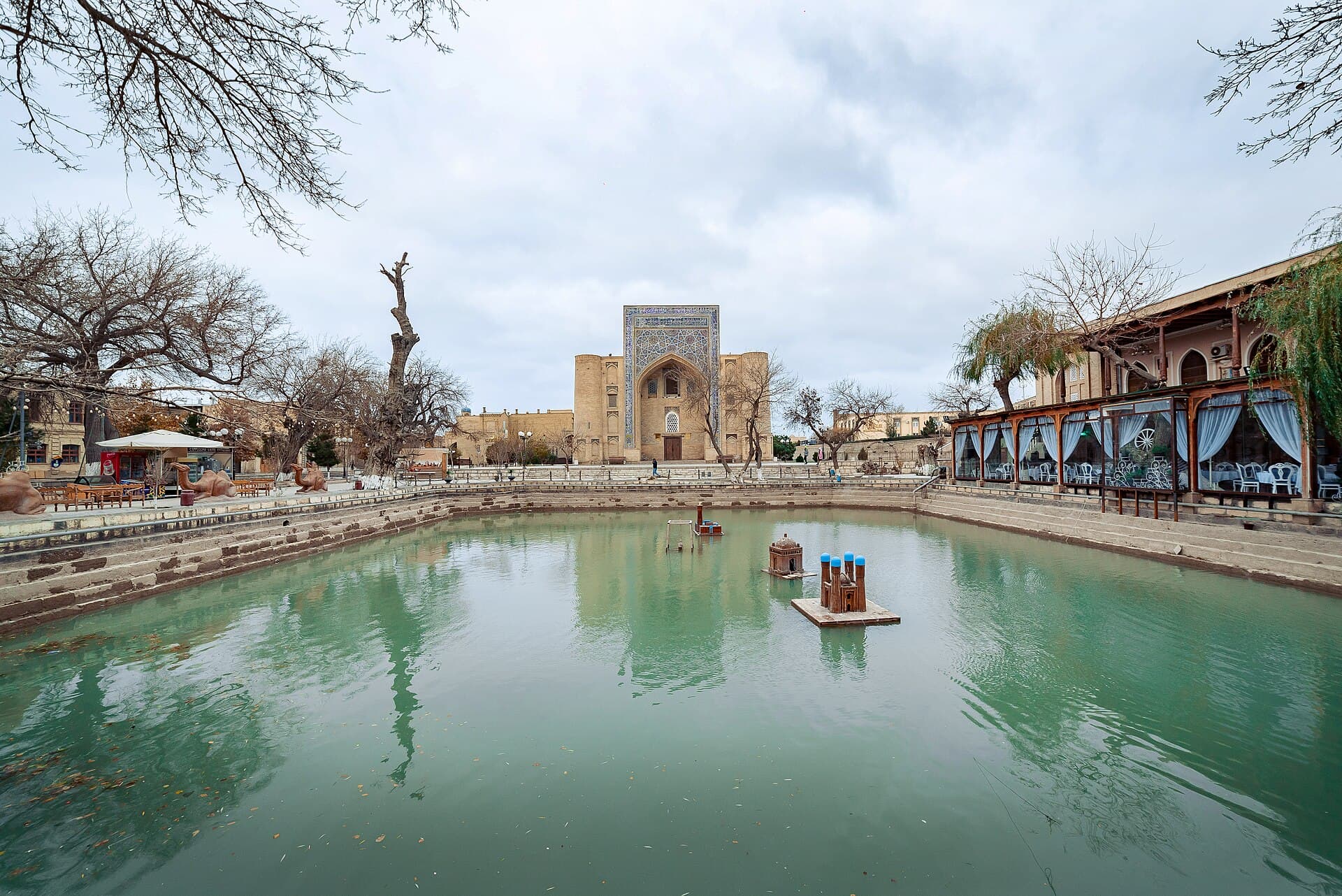 Lyabi-Hauz squareThe square around one of Bukhara's few surviving pools, whose name means «by the8 minutes walk4.5
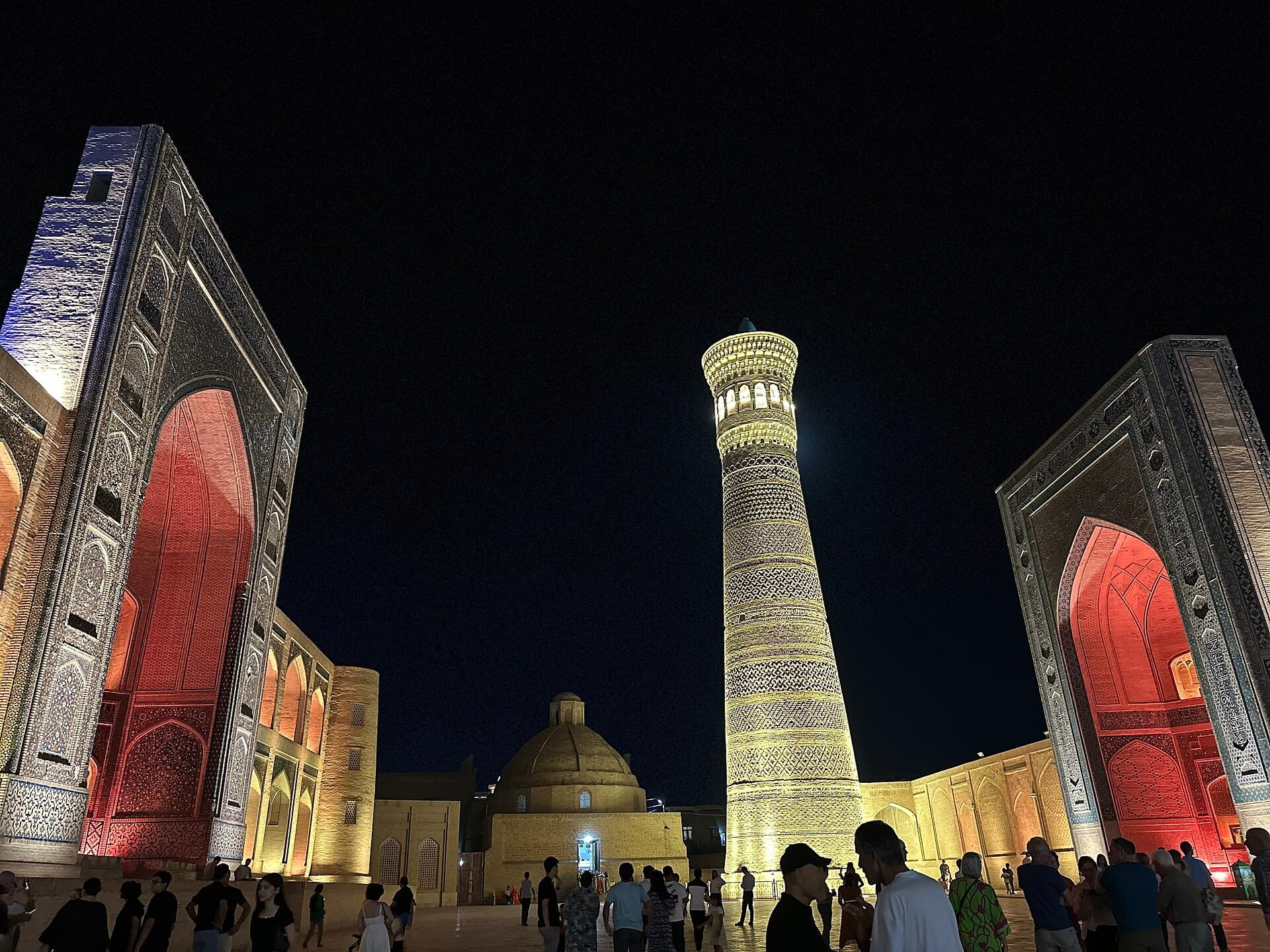 Po-i-Kalyan and the Kalyan MinaretBukhara's best-known religious complex, whose name means «at the foot of the gre13 minutes walk4.9
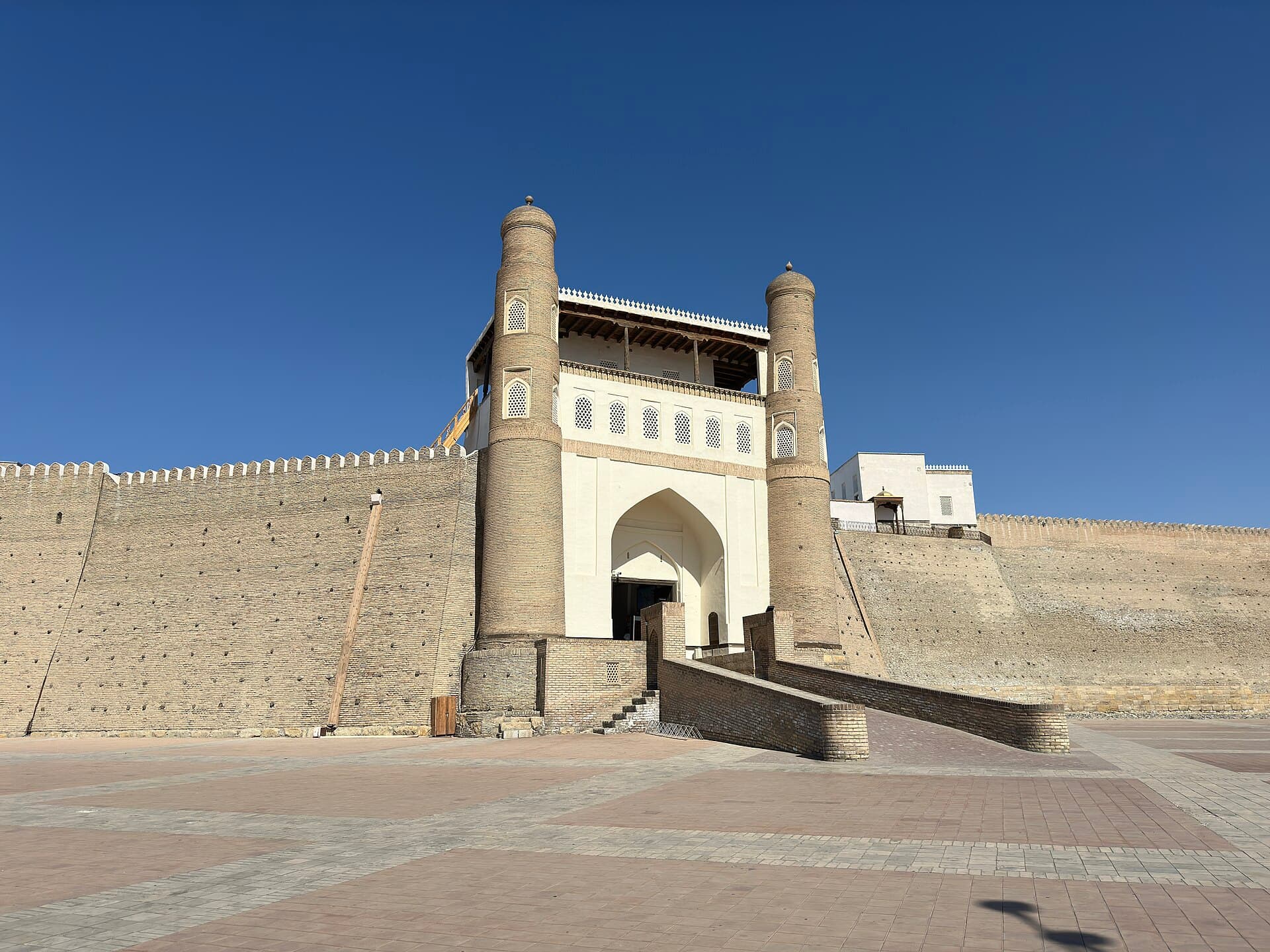 Ark of BukharaA massive fortress in Bukhara, first built around the 5th century AD; its presen19 minutes walk4.5
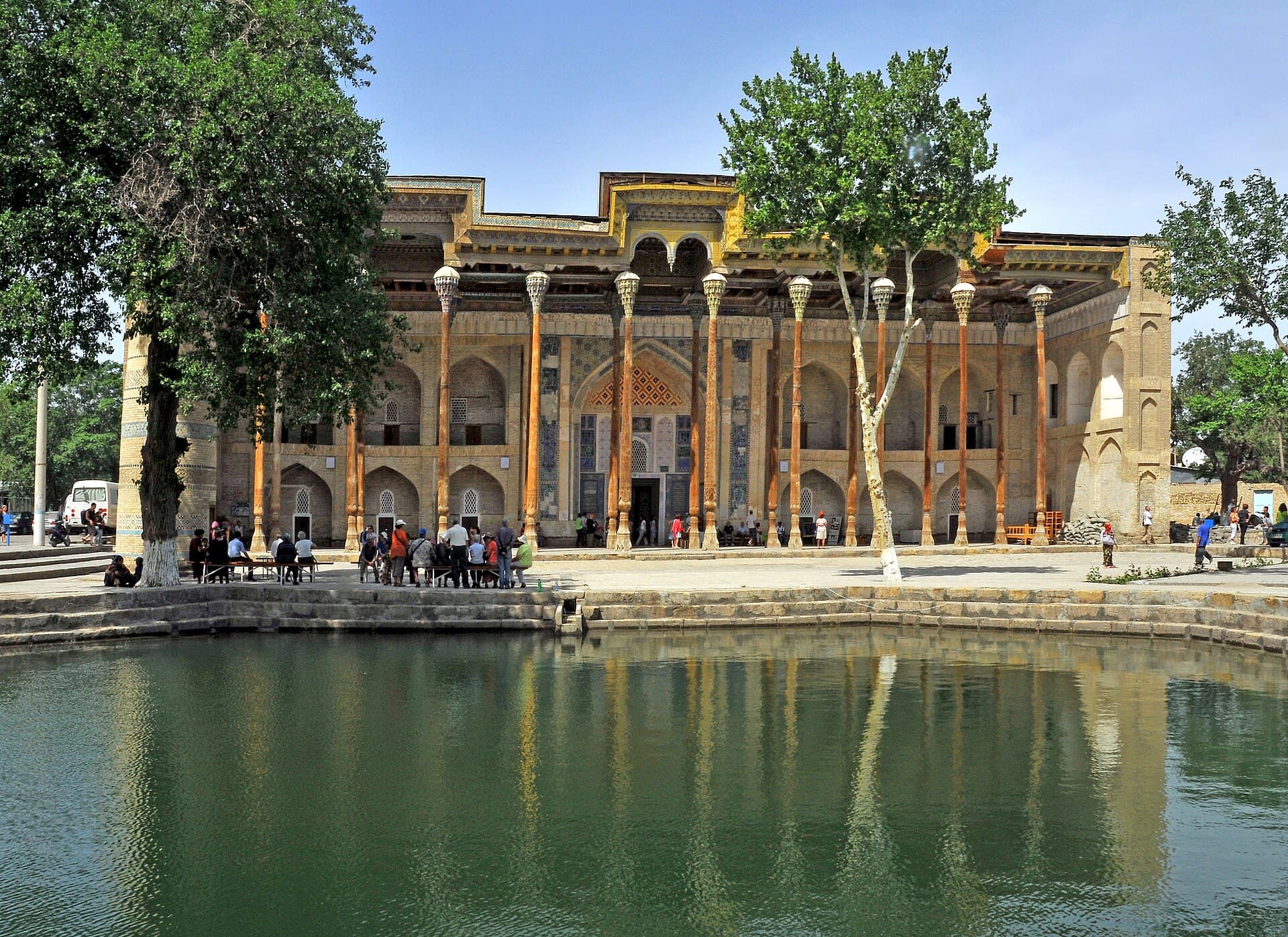 Bolo Hauz MosqueA historic mosque in Bukhara, built in 1712 opposite the Ark fortress on the squ22 minutes walk4.7
No, the four towers are decorative; the building is a small mosque that was part of a demolished madrasa complex, built in 1807.