
The Moorish front
Pointed arches, banded colour and geometric ornament.
Ștefan Jurcă from Munich, Germany — CC BY 2.0 · Andrzej Otrębski — CC BY-SA 4.0 · Radueduard — CC BY-SA 3.0 ro · Joe Mabel — CC BY-SA 3.0
The Choral Temple is Bucharest's principal synagogue, built between 1857 and 1866 on the model of the great temple in Vienna, with a Moorish-Byzantine front: pointed arches, banded colour and geometric ornament. The interior is the surprise: a high hall whose walls and ceiling are covered entirely in dense coloured and gilded ornament, closer in feel to Ottoman mosques than to the churches of Europe. The building has been restored repeatedly, most recently in a major campaign that returned the colours to their original state. The place carries historical weight. Before the Second World War Bucharest had a Jewish community of tens of thousands and dozens of synagogues; what remains today is a very small community and a handful of buildings. A memorial to the Romanian victims of the Holocaust stands in the courtyard. **It is a working synagogue** — visiting hours are limited, there are security procedures and identification may be asked for, and men are required to cover their heads.
Pointed arches, banded colour and geometric ornament.
In the courtyard, for Romania's victims.
Strada Sfânta Vineri 9, Bucharest
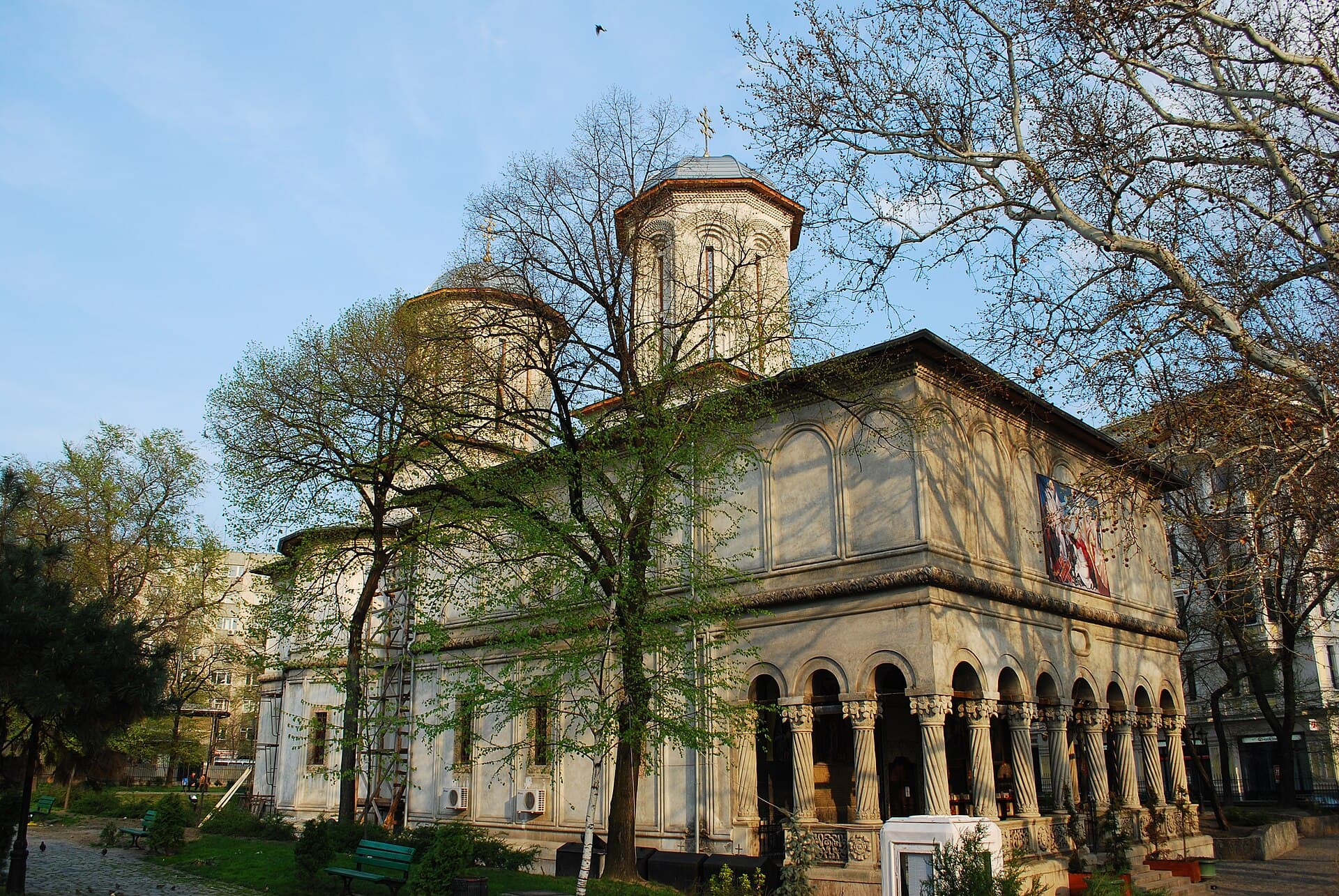 St George's New ChurchSt George's New Church stands at the edge of Lipscani, and holds two places in R3 minutes walk4.7
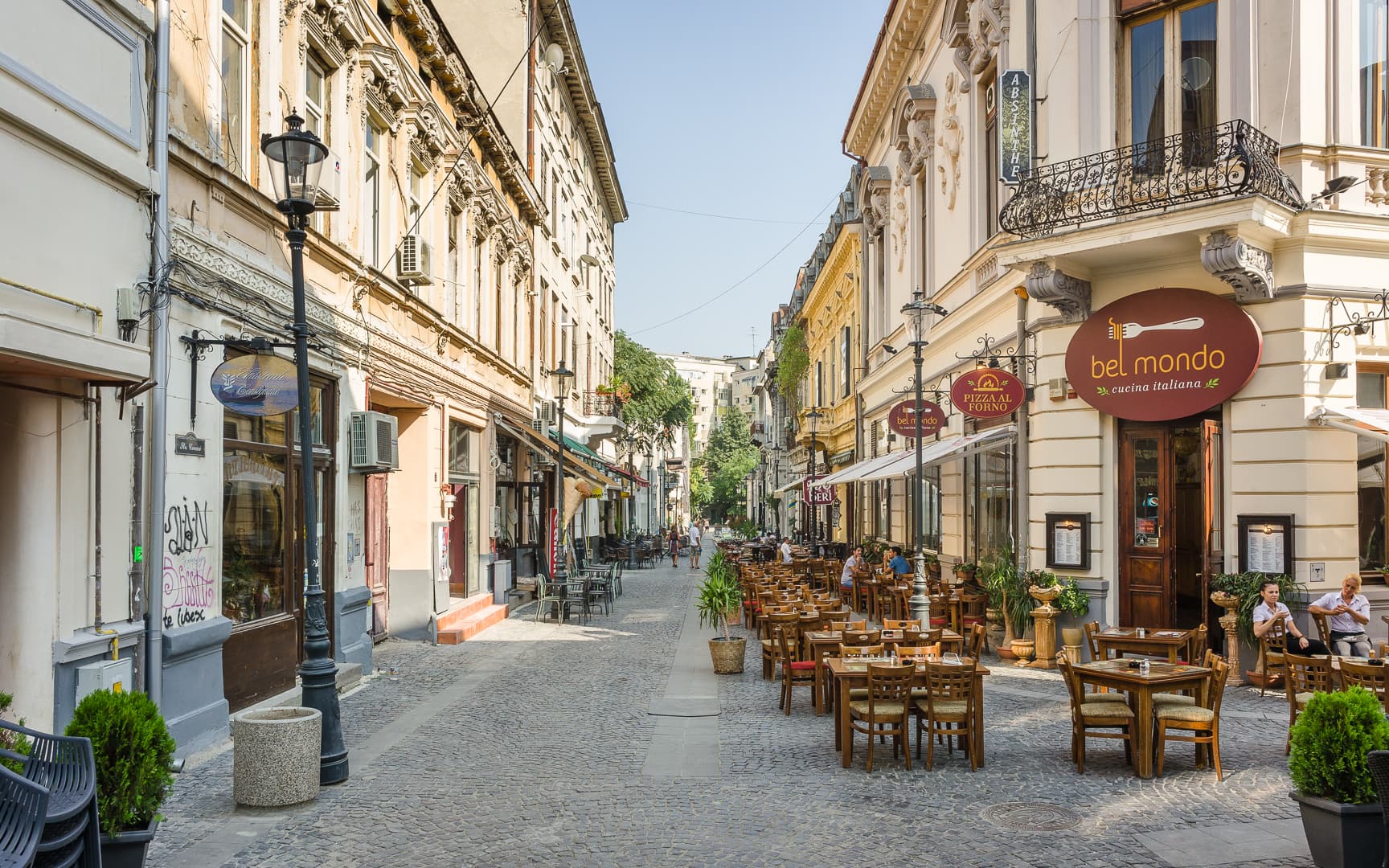 Lipscani — the Old TownLipscani is what remains of old Bucharest: a grid of narrow pedestrian streets b5 minutes walk4.7
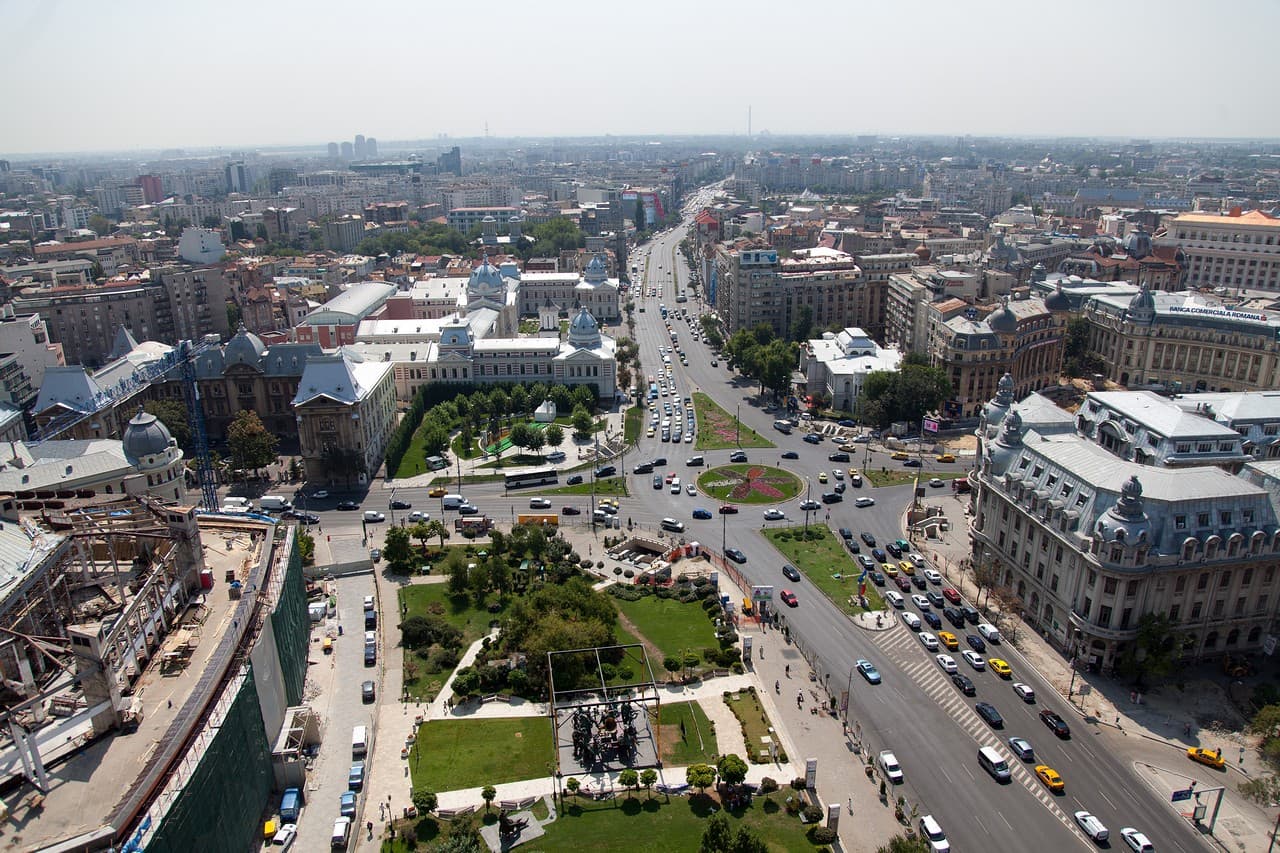 University SquareUniversity Square is where modern Romania happened. A wide junction ringed by th8 minutes walk4.4
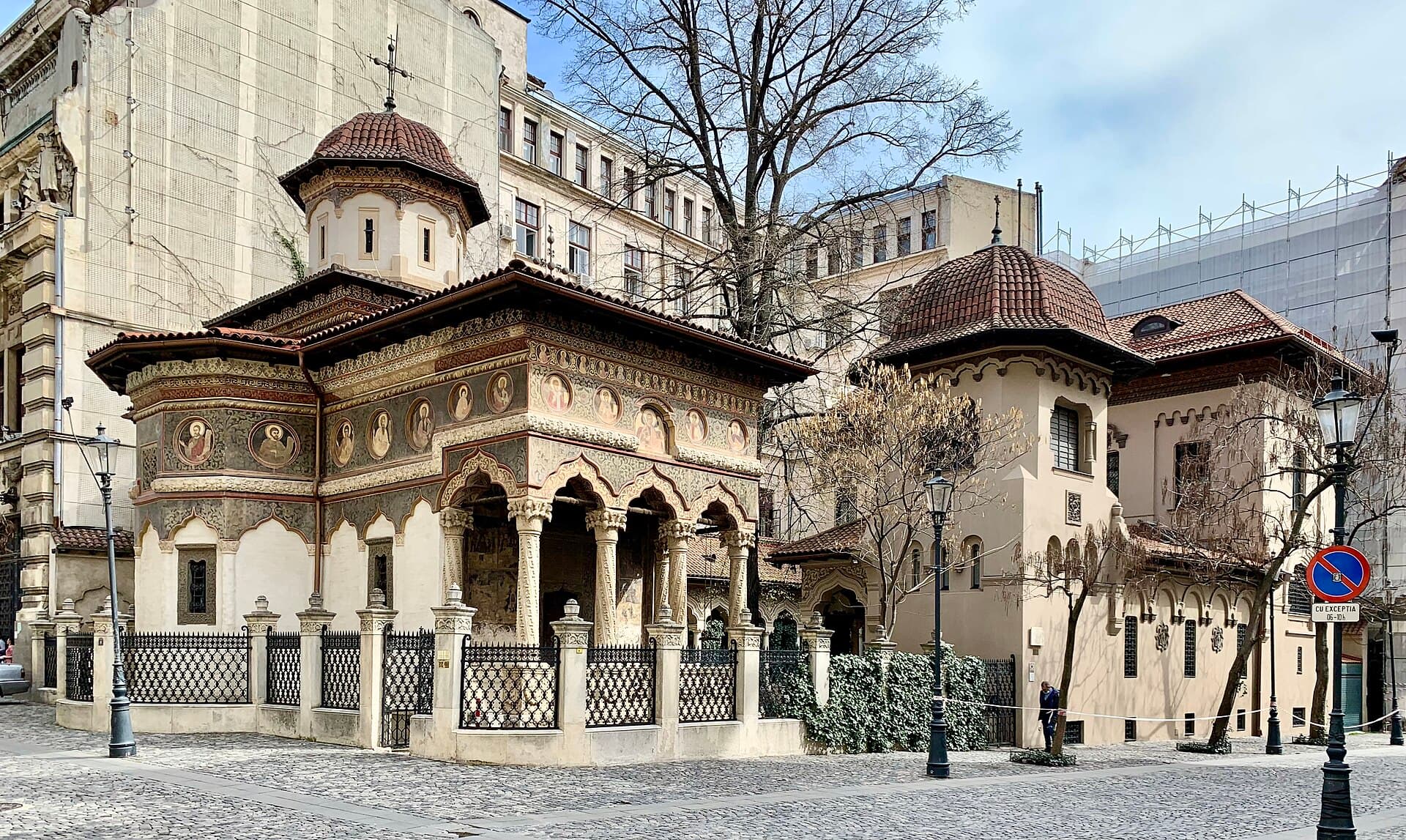 Stavropoleos MonasteryIn a narrow lane behind the noise of Lipscani stands the most beautiful small ch8 minutes walk4.9
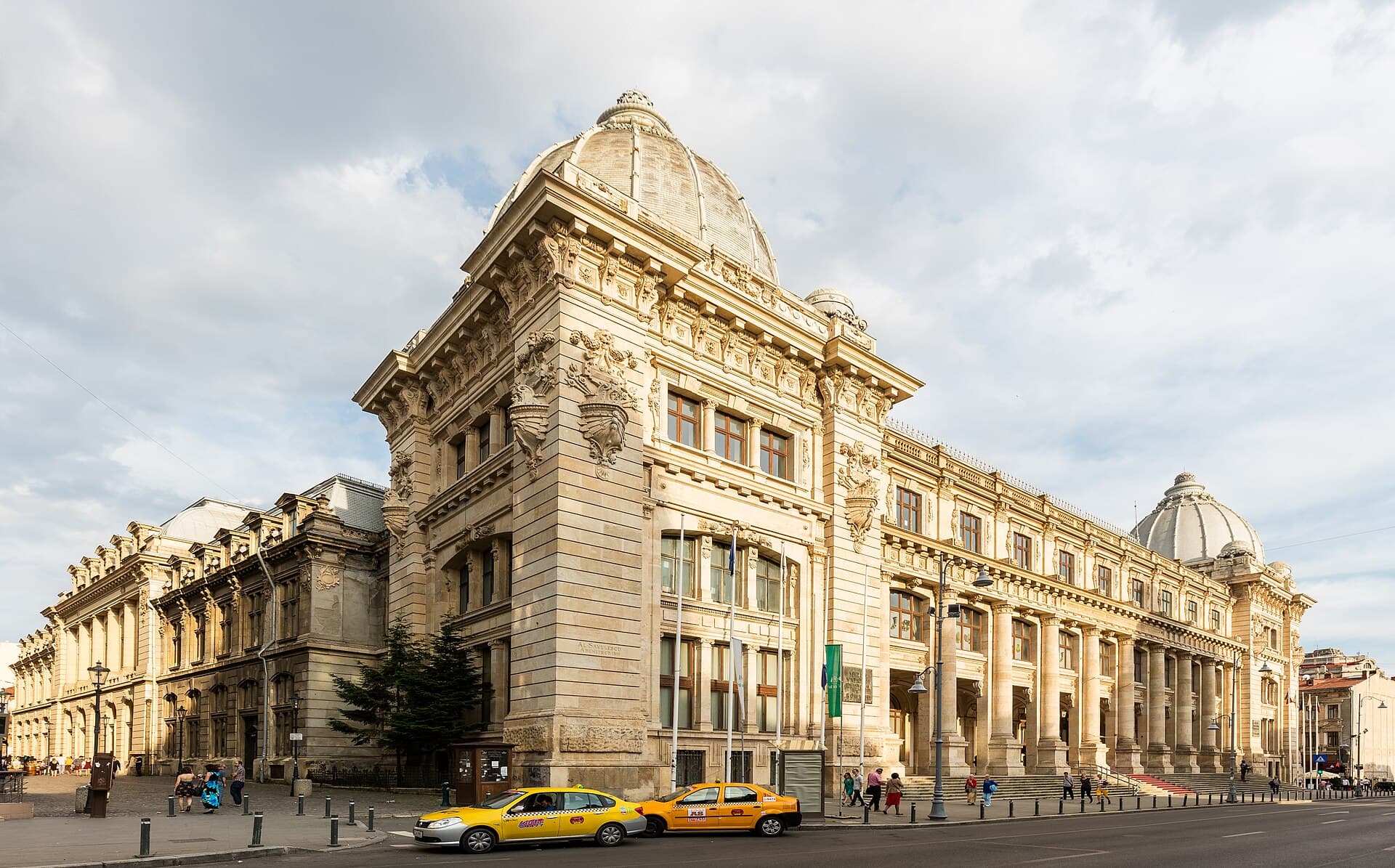 National Museum of Romanian HistoryThe old Postal Palace on Calea Victoriei keeps the country's memory from the Sto9 minutes walk4.3
It was among the largest in Eastern Europe: roughly a hundred thousand Jews in Bucharest alone before the Second World War, with whole districts, schools, Hebrew and Yiddish newspapers and more than seventy synagogues. It suffered a pogrom in Bucharest in 1941, and mass killings and deportations in the territories under Romanian administration. After the war those who remained emigrated gradually, most to Israel under emigration agreements with the communist government. A few thousand remain in all Romania today, and three working synagogues in Bucharest — this is the principal one, and the museum of Jewish history is nearby.