
Brâncoveanu's tomb
Buried nameless, and unidentified until 1914.
Andrei Stroe — CC BY-SA 3.0 · Korinna — CC BY-SA 3.0 ro · Korinna — CC BY-SA 3.0 ro · Korinna — CC BY-SA 3.0 ro
St George's New Church stands at the edge of Lipscani, and holds two places in Romanian history that nothing else in Bucharest matches. The first is that **Constantin Brâncoveanu is buried here**. The prince of Wallachia who ruled twenty-six years and gave his name to the Romanian architectural style was taken to Istanbul in 1714 with his four sons, and all were executed after refusing to convert to Islam. His widow brought his remains back in secret and he was buried here with no name on the tomb, out of fear; the place was only identified in 1914, when a lamp bearing an inscription was found. The church is his own foundation, completed in 1707. The second is that in front of the church stands **Kilometre Zero** — the point from which all distances in Romania are measured, a stone disc set in the pavement carrying a map of the country with its regions and their emblems. **Entry is free**, and the church is working.
Buried nameless, and unidentified until 1914.
A map of Romania and its regions set in the pavement.
Bulevardul Ion C. Brătianu, Bucharest
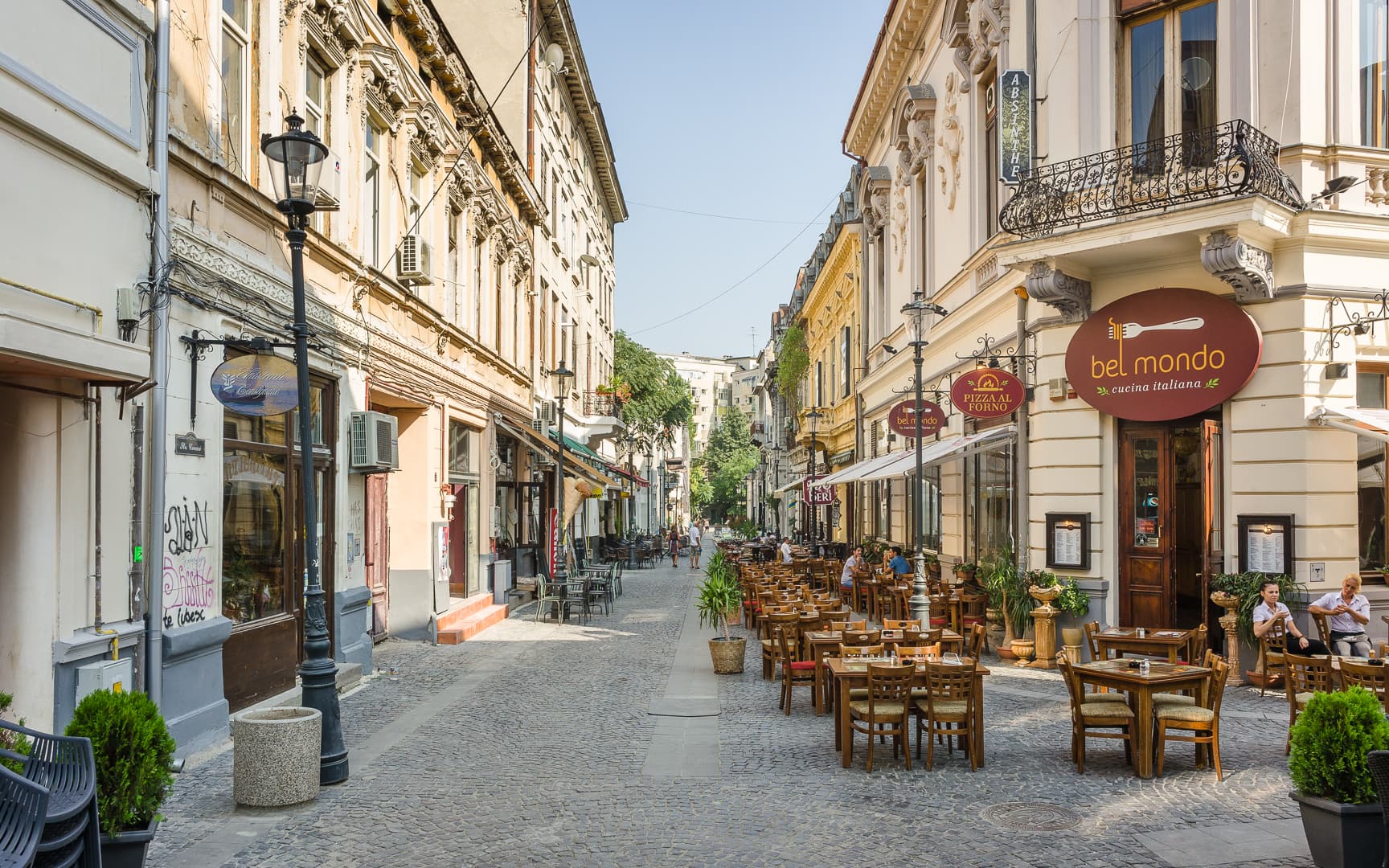 Lipscani — the Old TownLipscani is what remains of old Bucharest: a grid of narrow pedestrian streets b3 minutes walk4.7
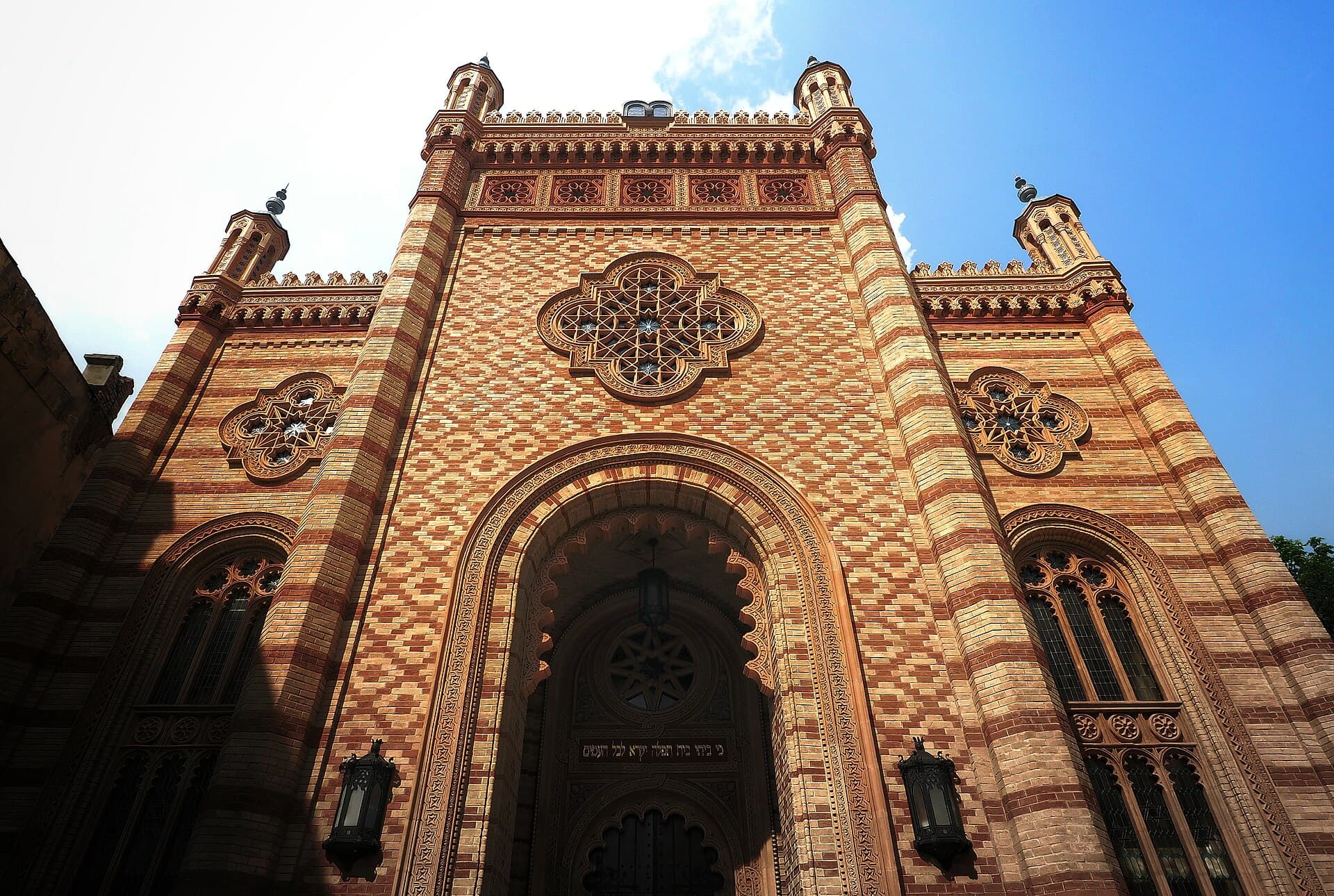 The Choral TempleThe Choral Temple is Bucharest's principal synagogue, built between 1857 and 1863 minutes walk4.5
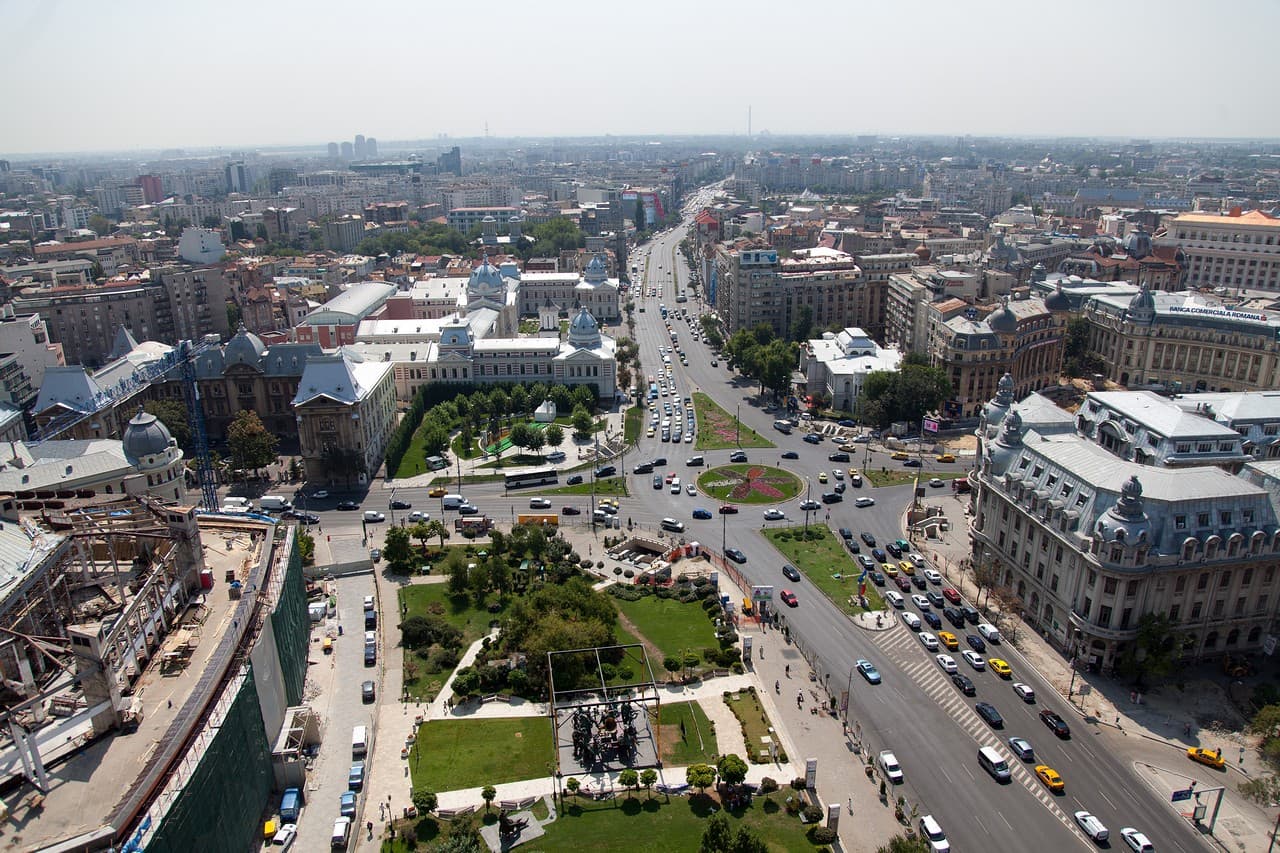 University SquareUniversity Square is where modern Romania happened. A wide junction ringed by th5 minutes walk4.4
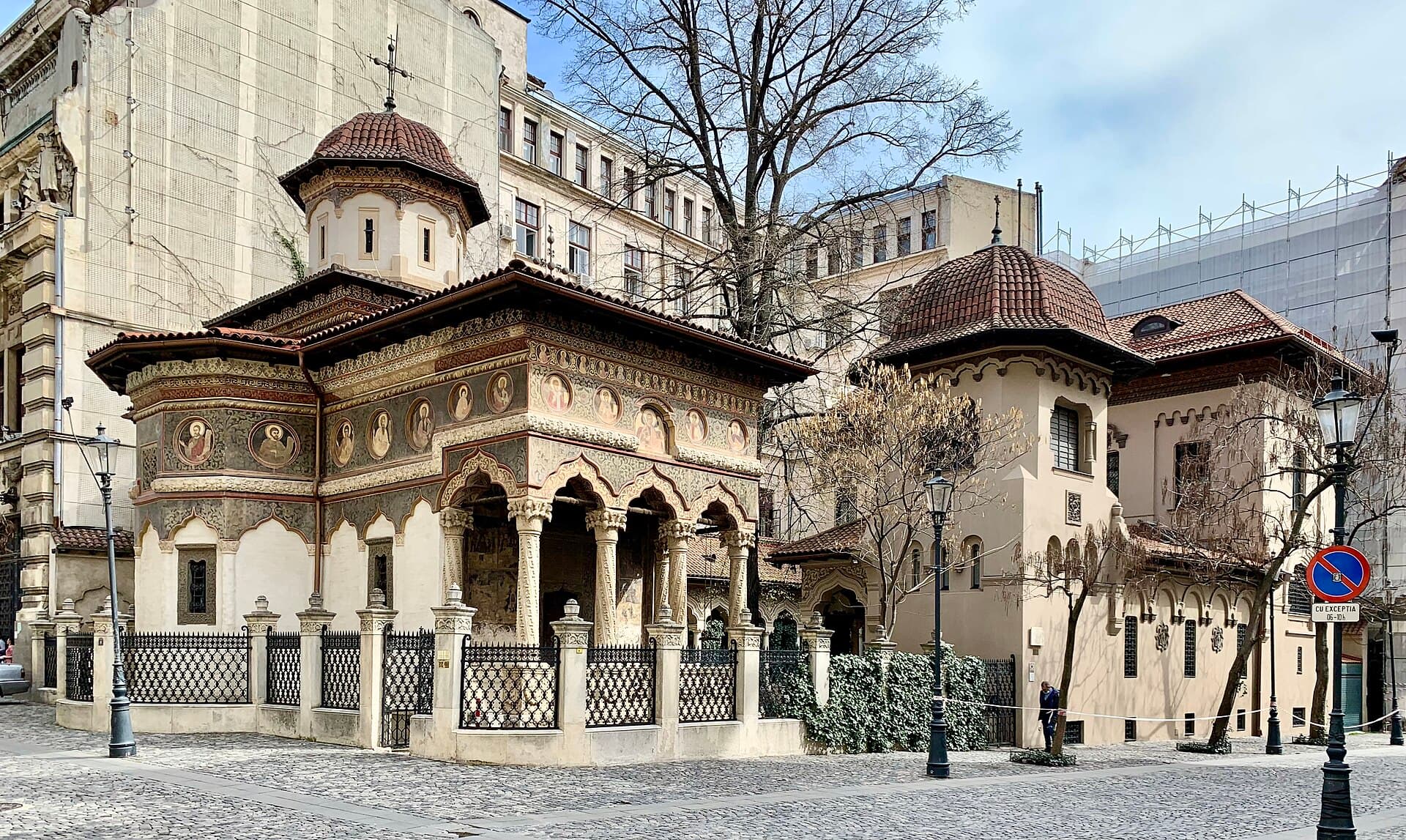 Stavropoleos MonasteryIn a narrow lane behind the noise of Lipscani stands the most beautiful small ch6 minutes walk4.9
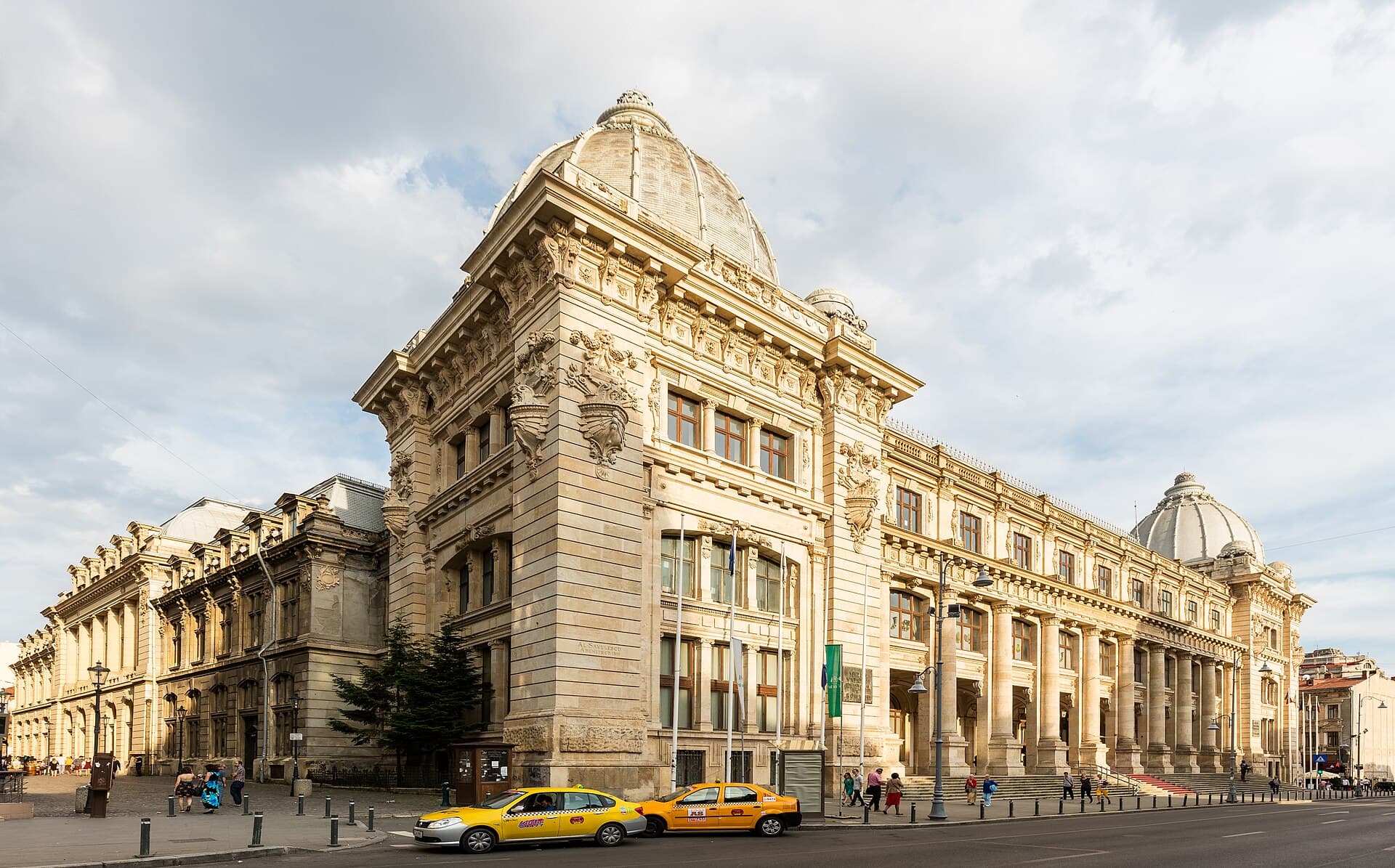 National Museum of Romanian HistoryThe old Postal Palace on Calea Victoriei keeps the country's memory from the Sto7 minutes walk4.3
Prince of Wallachia from 1688 to 1714, and its longest-reigning ruler of that period. His years were a rare flourishing: he built palaces, churches and schools, founded a printing house that printed in Arabic and Georgian as well as Romanian, and produced the architectural style that carries his name. Politically he balanced between the Ottomans, Austria and Russia, and when his correspondence came to light he was treated as a traitor. He was taken to Istanbul and executed with his four sons on the day he turned fifty-six. The Romanian Orthodox Church regards him as a martyr and saint, and his name is on hospitals, streets and universities across Romania today.