
The porch columns
Stone twisted like rope, with vine leaves and birds.
Neoclassicism Enthusiast — Public domain · Bybbisch94, Christian Gebhardt — CC BY-SA 4.0 · Bybbisch94, Christian Gebhardt — CC BY-SA 4.0 · Bybbisch94, Christian Gebhardt — CC BY-SA 4.0
In a narrow lane behind the noise of Lipscani stands the most beautiful small church in Bucharest: Stavropoleos, built in 1724 and the purest survival of the Brâncovenesc style — the Romanian manner that combines Ottoman stone carving with Byzantine ornament and Italian proportion. The church is very small, but every centimetre of it is carved: the columns of the front porch twist like stone rope, their frames crowded with vine leaves and birds, and the timber door is worked over its whole surface. The interior is covered in Byzantine wall painting and the light inside is dim. The courtyard behind is what a visitor does not expect: a quiet cloister around a small garden, holding gravestones, cornices and icons gathered from the Bucharest churches that Ceaușescu demolished in the 1980s — a graveyard of architecture rather than a garden. The monastery is working, with nuns in residence, and its library is among the most important collections of church music in Romania. **Entry is free**; dress modestly and be respectful.
Stone twisted like rope, with vine leaves and birds.
Fragments of churches Ceaușescu demolished, gathered in one arcade.
Strada Stavropoleos 4, central Bucharest
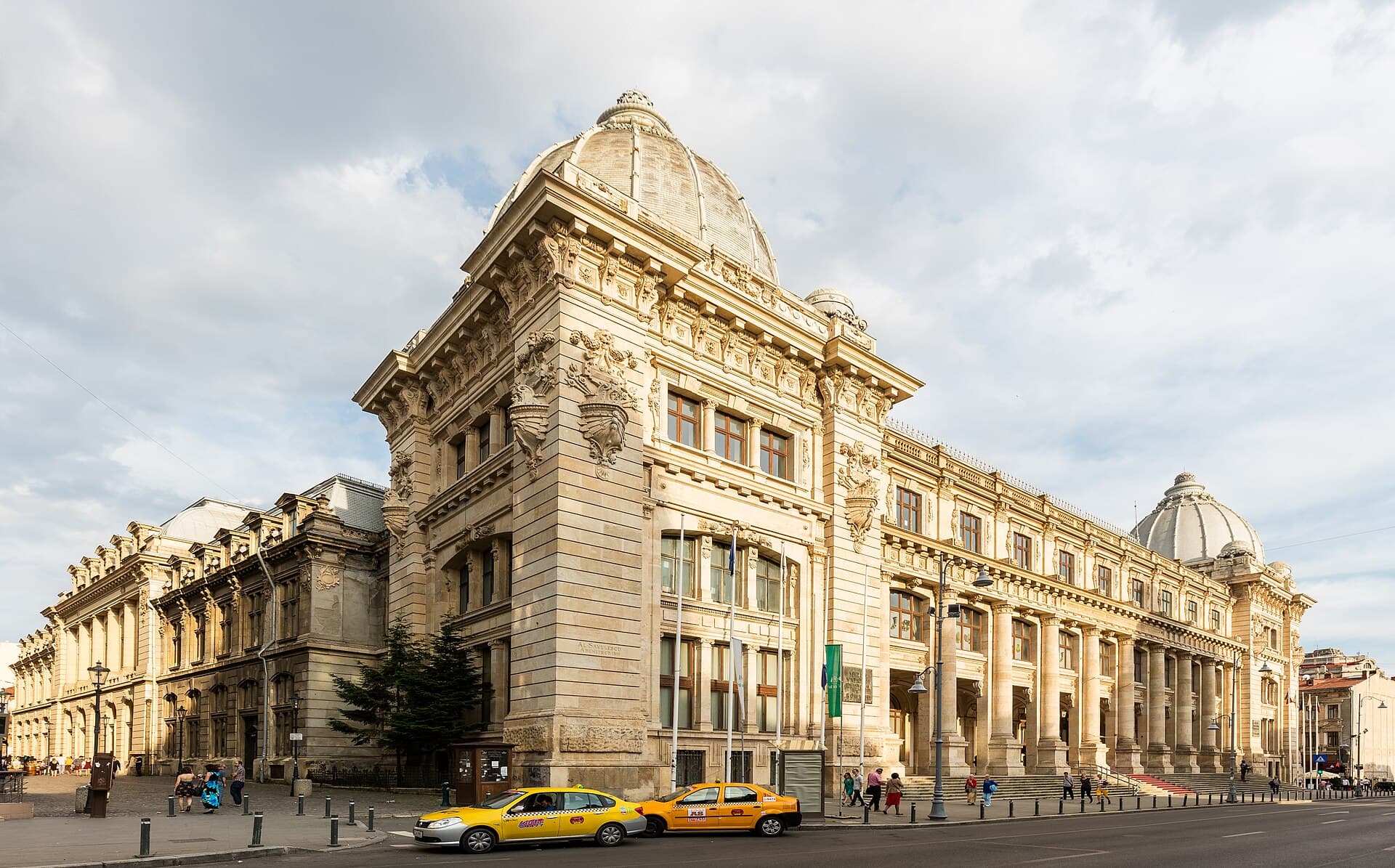 National Museum of Romanian HistoryThe old Postal Palace on Calea Victoriei keeps the country's memory from the Sto2 minutes walk4.3
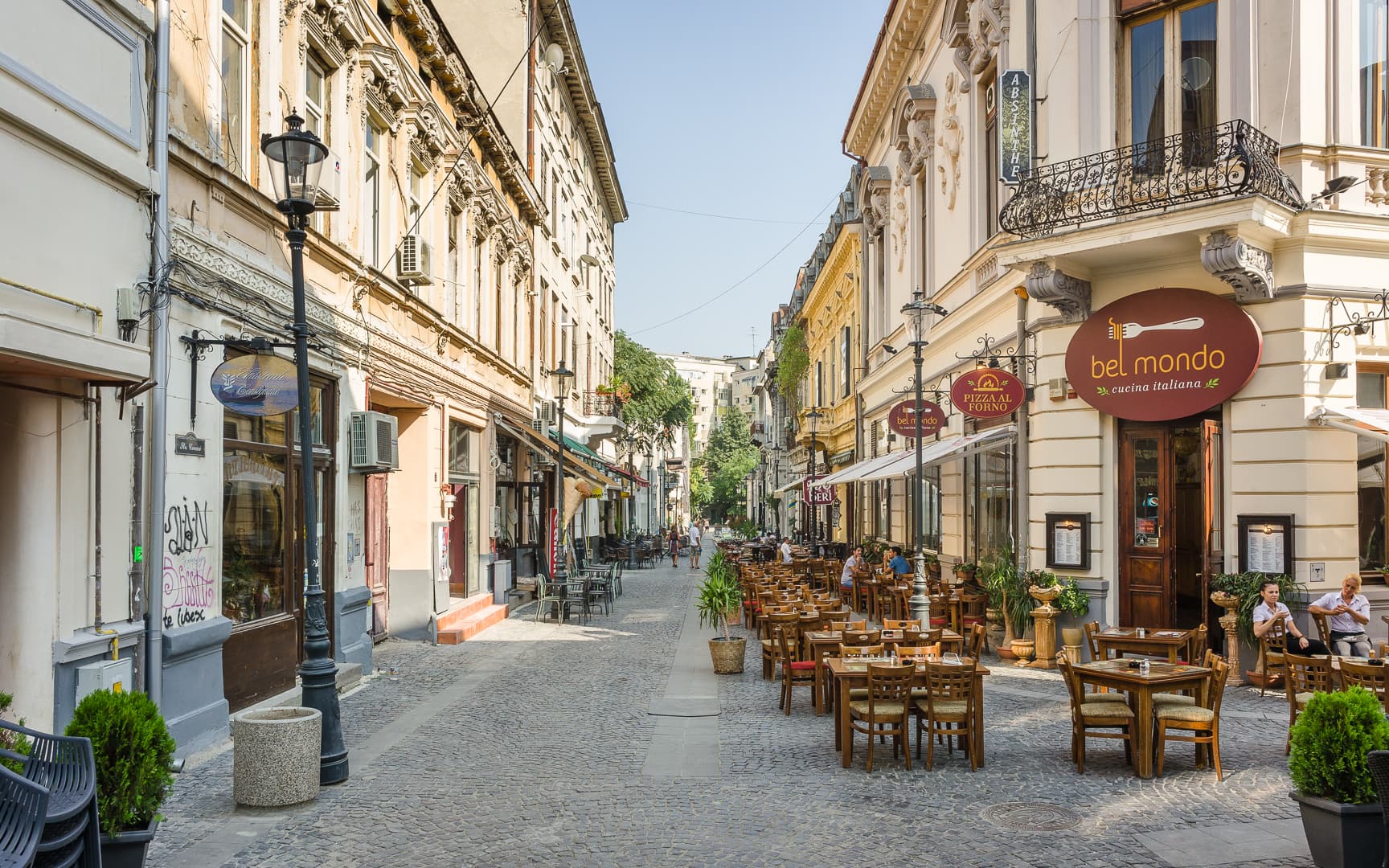 Lipscani — the Old TownLipscani is what remains of old Bucharest: a grid of narrow pedestrian streets b3 minutes walk4.7
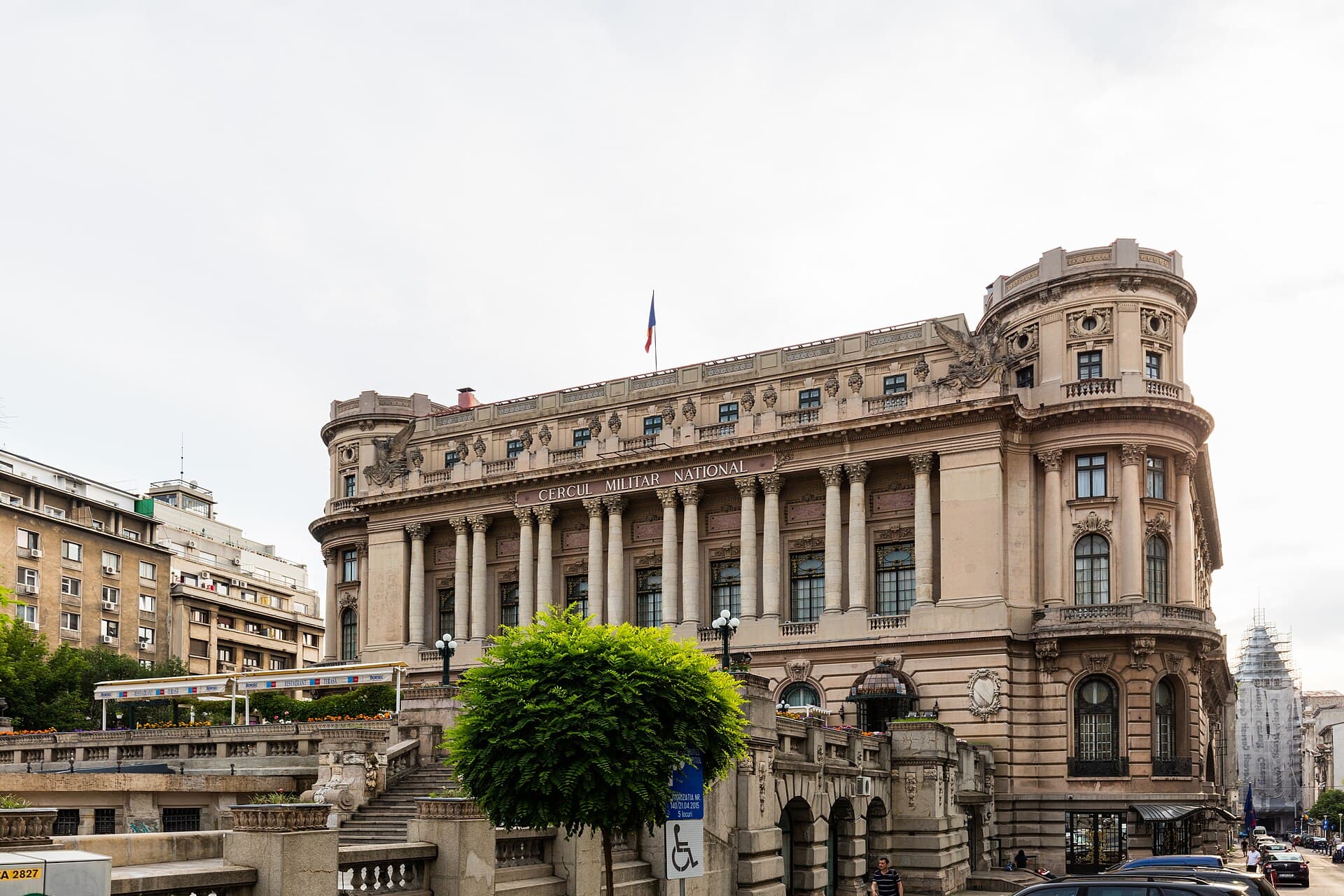 The National Military ClubThe Cercul Militar Național stands at a junction on Calea Victoriei, and is one 5 minutes walk4.4
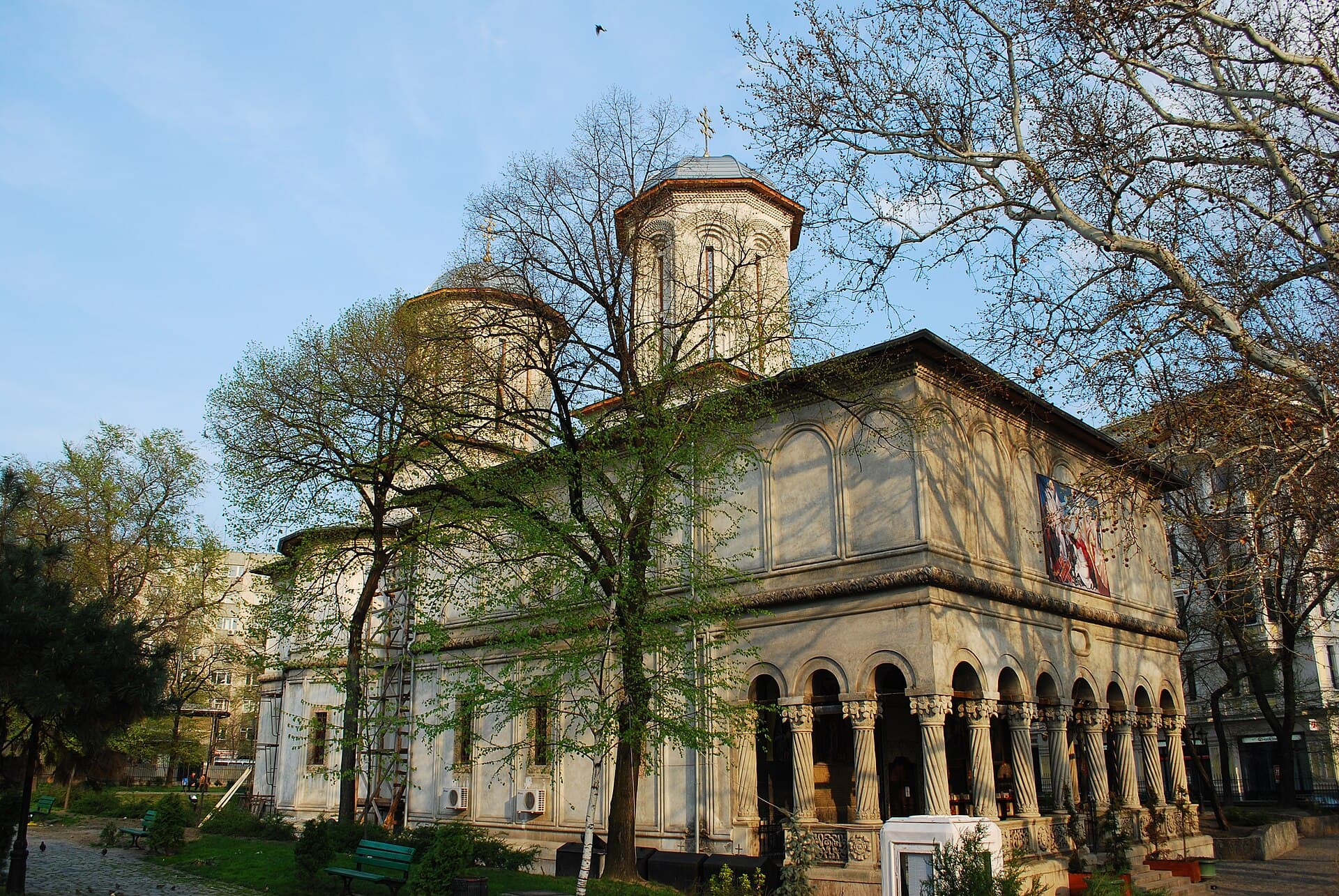 St George's New ChurchSt George's New Church stands at the edge of Lipscani, and holds two places in R6 minutes walk4.7
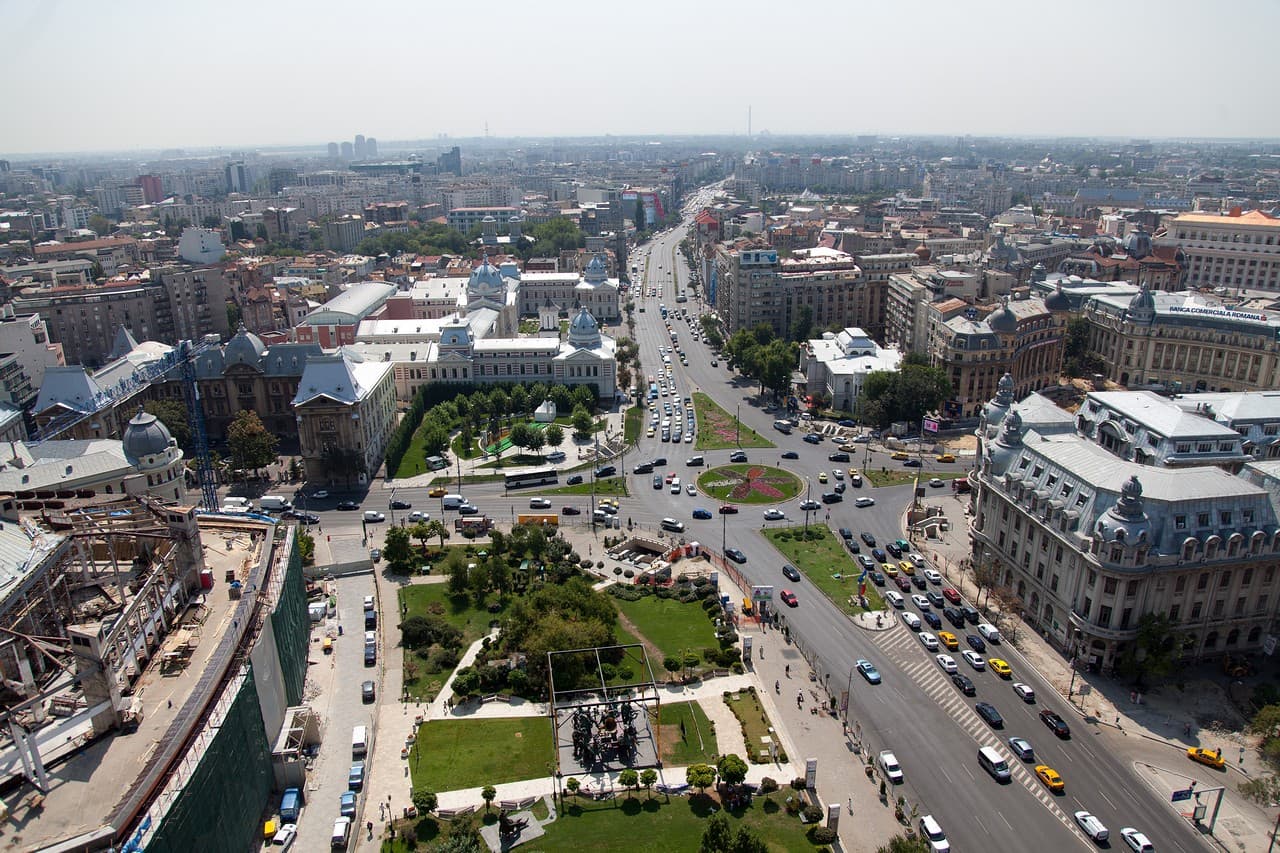 University SquareUniversity Square is where modern Romania happened. A wide junction ringed by th6 minutes walk4.4
An architectural manner that appeared in Wallachia around 1700 under Prince Constantin Brâncoveanu, and is regarded as Romania's national style. Its essence is combination: proportions and arches from the Italian Renaissance, stone carving and plant ornament from the Ottoman tradition, and a Byzantine church plan — a logical mixture for a country caught between the two empires. Its marks are an open front porch on carved columns, and friezes of acanthus leaves and grape clusters. You see it at Stavropoleos, at Mogoșoaia Palace, and at St George's New Church where Brâncoveanu himself is buried.