
The revolution markers
Names of the dead on the pavement where they fell.
Aleksandr Osipov from Ukraine — CC BY-SA 2.0 · Chainwit. — CC BY-SA 4.0 · Gutza — CC BY-SA 4.0 · Stefan Jurca from Munich, Germany — CC BY-SA 2.0
University Square is where modern Romania happened. A wide junction ringed by the University of Bucharest, its National Theatre, the city museum and the InterContinental hotel — and most people crossing it do not know what took place there. In December 1989 the first dead of the revolution that brought down Ceaușescu fell here, shot while demonstrating unarmed. Six months later thousands returned and occupied the square for weeks in a sit-in against the new government, ended in June 1990 when miners were brought to the capital to break it up with clubs — the episode known as the Mineriad, and still an open wound in Romanian politics. The evidence is on the pavements: small crosses and plaques carrying the names of those killed, and a sign declaring the square a zone free of communism. Below ground a pedestrian underpass runs through, with archaeological remains exposed behind glass. **A free public space**, and the most important thing about it is what you cannot see without knowing it.
Names of the dead on the pavement where they fell.
Excavations exposed behind glass in the underpass.
Piața Universității, central Bucharest
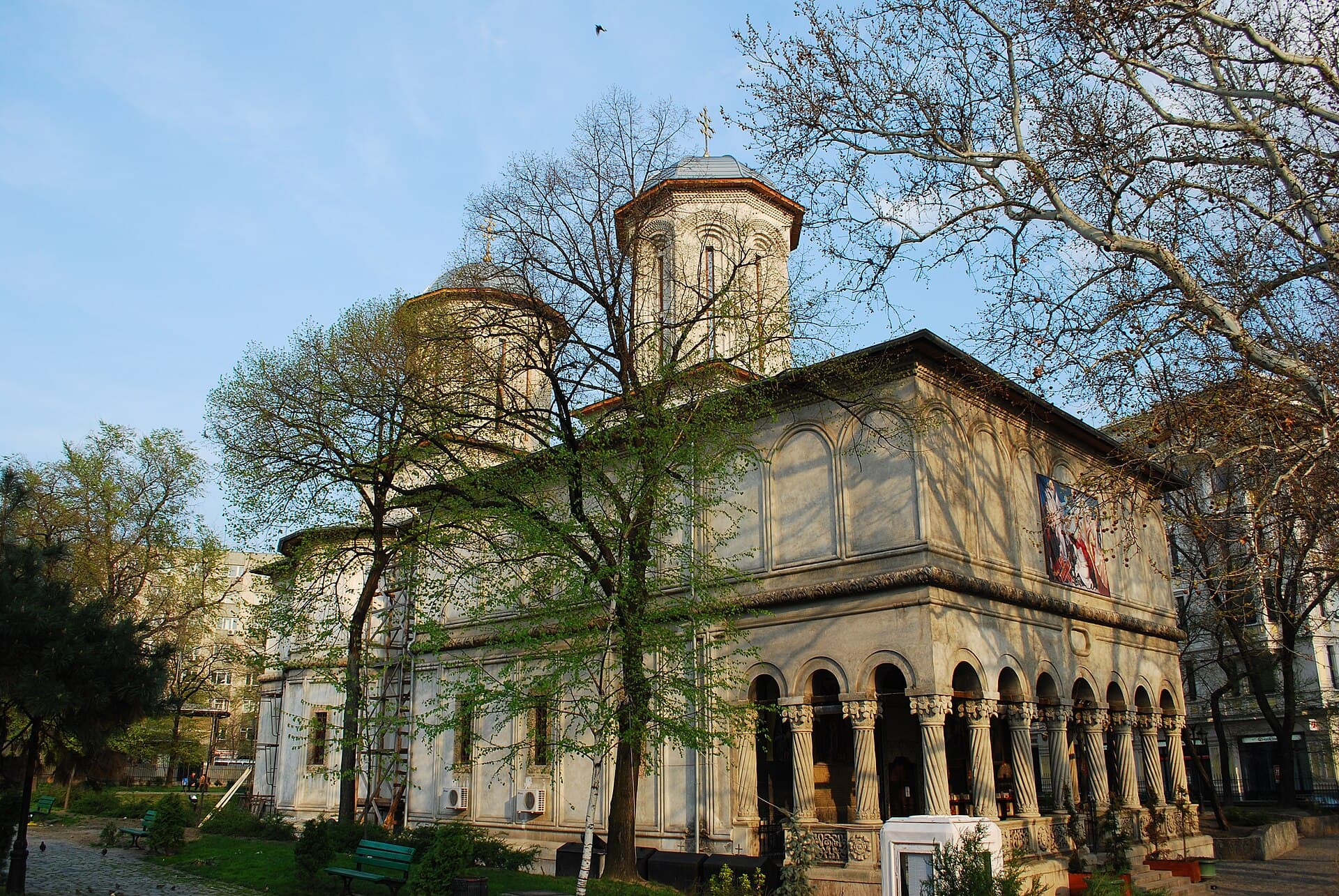 St George's New ChurchSt George's New Church stands at the edge of Lipscani, and holds two places in R5 minutes walk4.7
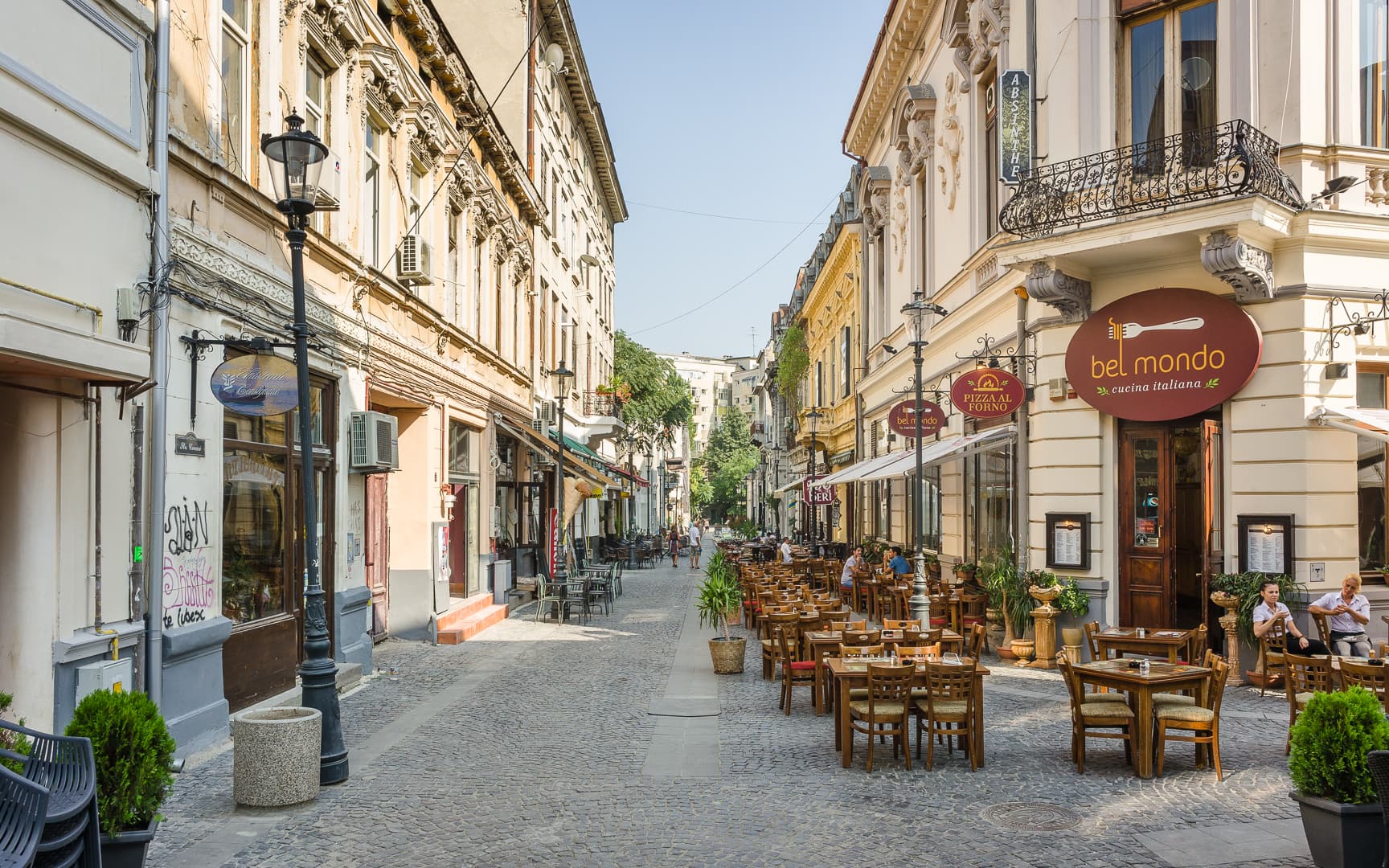 Lipscani — the Old TownLipscani is what remains of old Bucharest: a grid of narrow pedestrian streets b5 minutes walk4.7
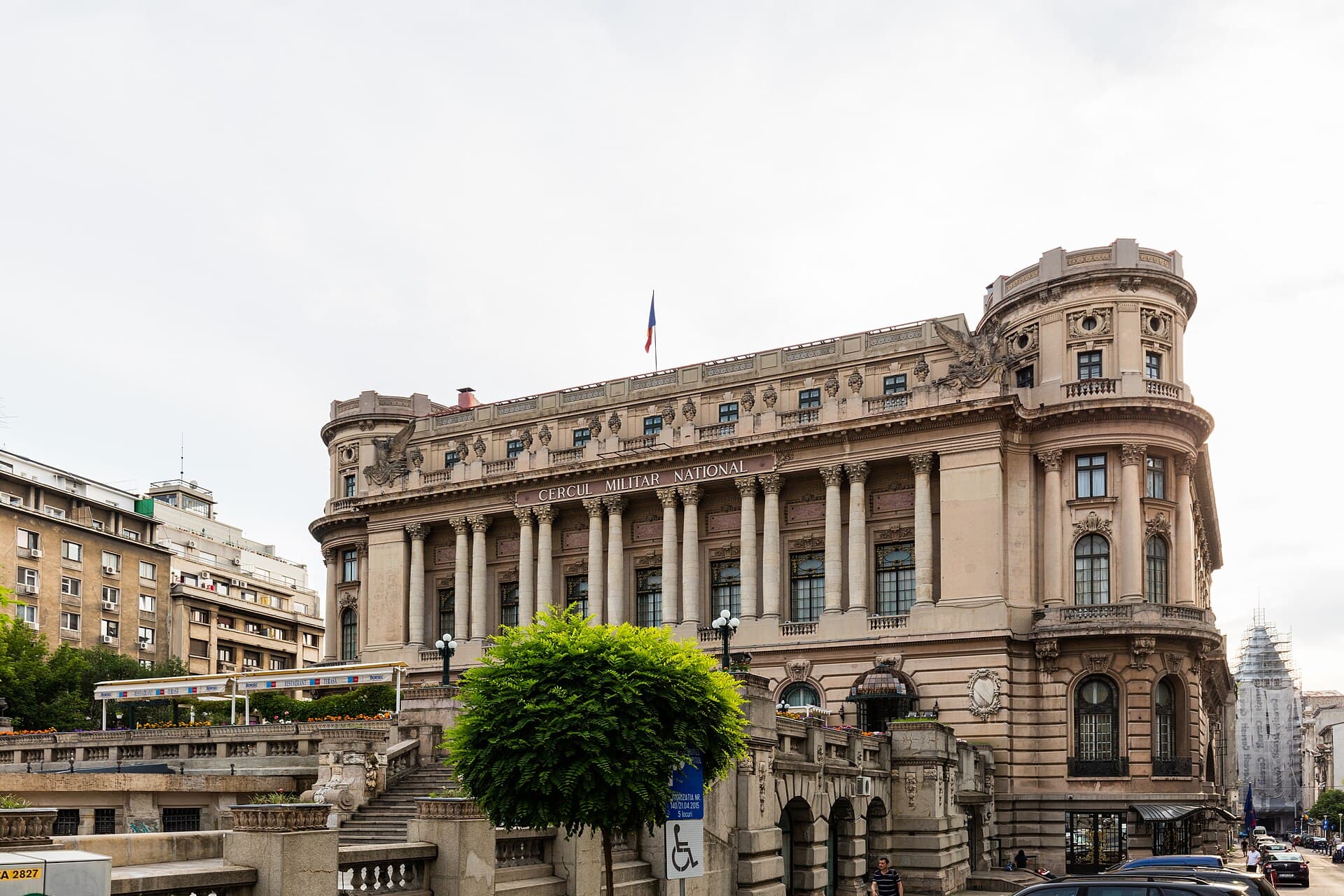 The National Military ClubThe Cercul Militar Național stands at a junction on Calea Victoriei, and is one 5 minutes walk4.4
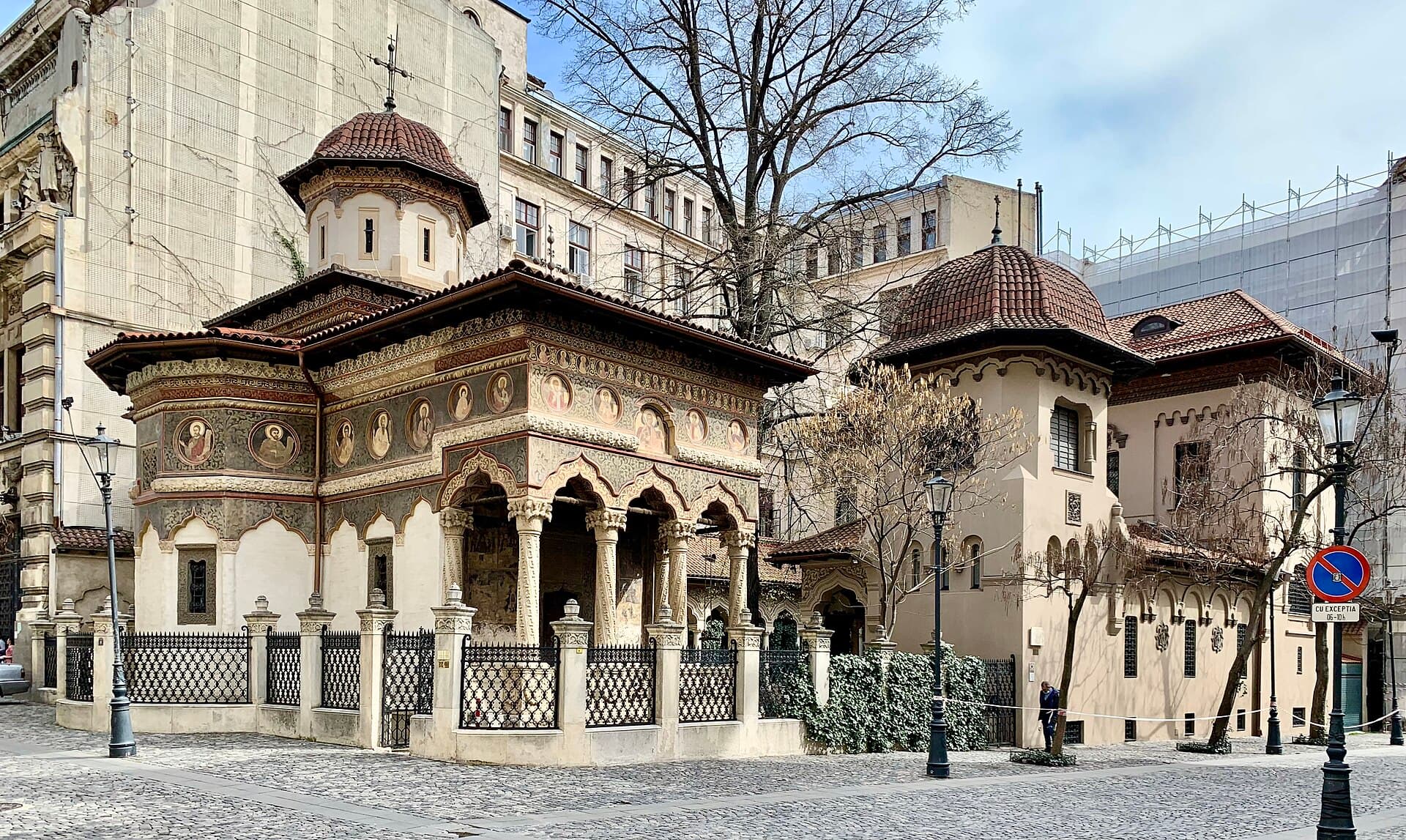 Stavropoleos MonasteryIn a narrow lane behind the noise of Lipscani stands the most beautiful small ch6 minutes walk4.9
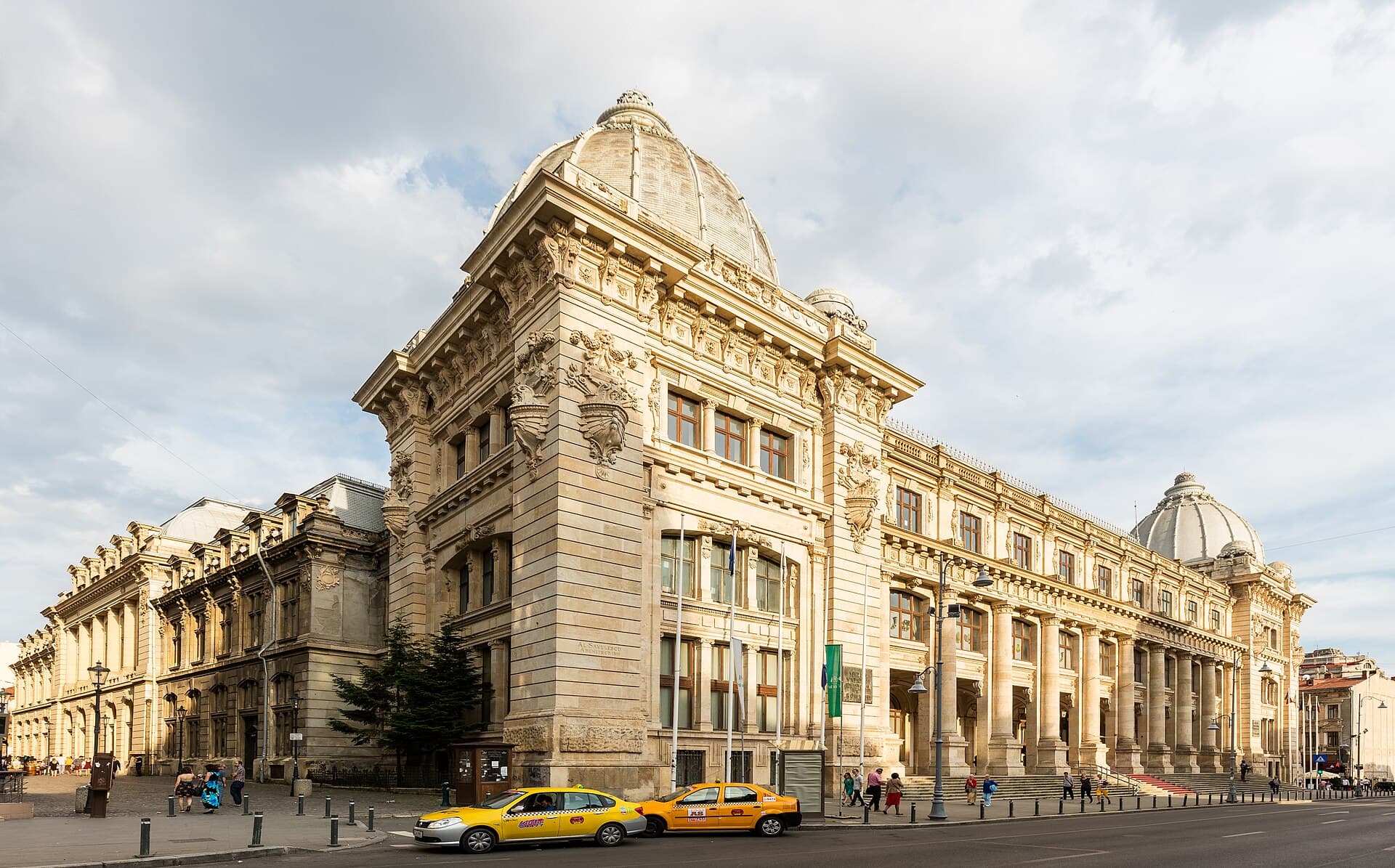 National Museum of Romanian HistoryThe old Postal Palace on Calea Victoriei keeps the country's memory from the Sto8 minutes walk4.3
It began in Timișoara in mid-December over the eviction of a pastor, and reached Bucharest on the 21st when the crowd interrupted Ceaușescu's speech from the Central Committee balcony — a moment broadcast live and seen by everyone. He fled by helicopter the next day, was caught, tried summarily by a military court and executed with his wife on 25 December. More than a thousand people were killed in those days. Romania was the only country in the Eastern bloc whose government fell violently rather than by negotiation, and many questions about who was doing the shooting have never been settled.