
The brick facade
Lace in brick, unchanged for five centuries.
Diliff — CC BY-SA 3.0 · Scotch Mist — CC BY-SA 4.0 · Scotch Mist — CC BY-SA 4.0 · Brian Toward from London, United Kingdom — CC0
The church Napoleon wanted to carry to Paris: St Anne's (1500) is the summit of brick Gothic in Eastern Europe — a facade of thirty-three different specially fired brick shapes interlocking into arches, turrets and stone flame so that hardly a form repeats. Tradition says Napoleon stood before it in 1812 and said he wished he could carry it home on the palm of his hand. Nothing around it compares: every other Gothic church in the region is stone, and this one is brick alone — a poor material worked into something like lace. Its exterior has not been altered in five centuries, not even by the great nineteenth-century restoration. Directly behind it stand the larger Bernardine church and its friary, and before it a small square opens to the Vilnia river and the Užupis quarter across the bridge. The interior is plain by comparison — the facade is the work, and it is finest in sunset light, when the brick reddens.
Lace in brick, unchanged for five centuries.
The larger one directly behind, with its friary.
Maironio g. 8, Vilnius
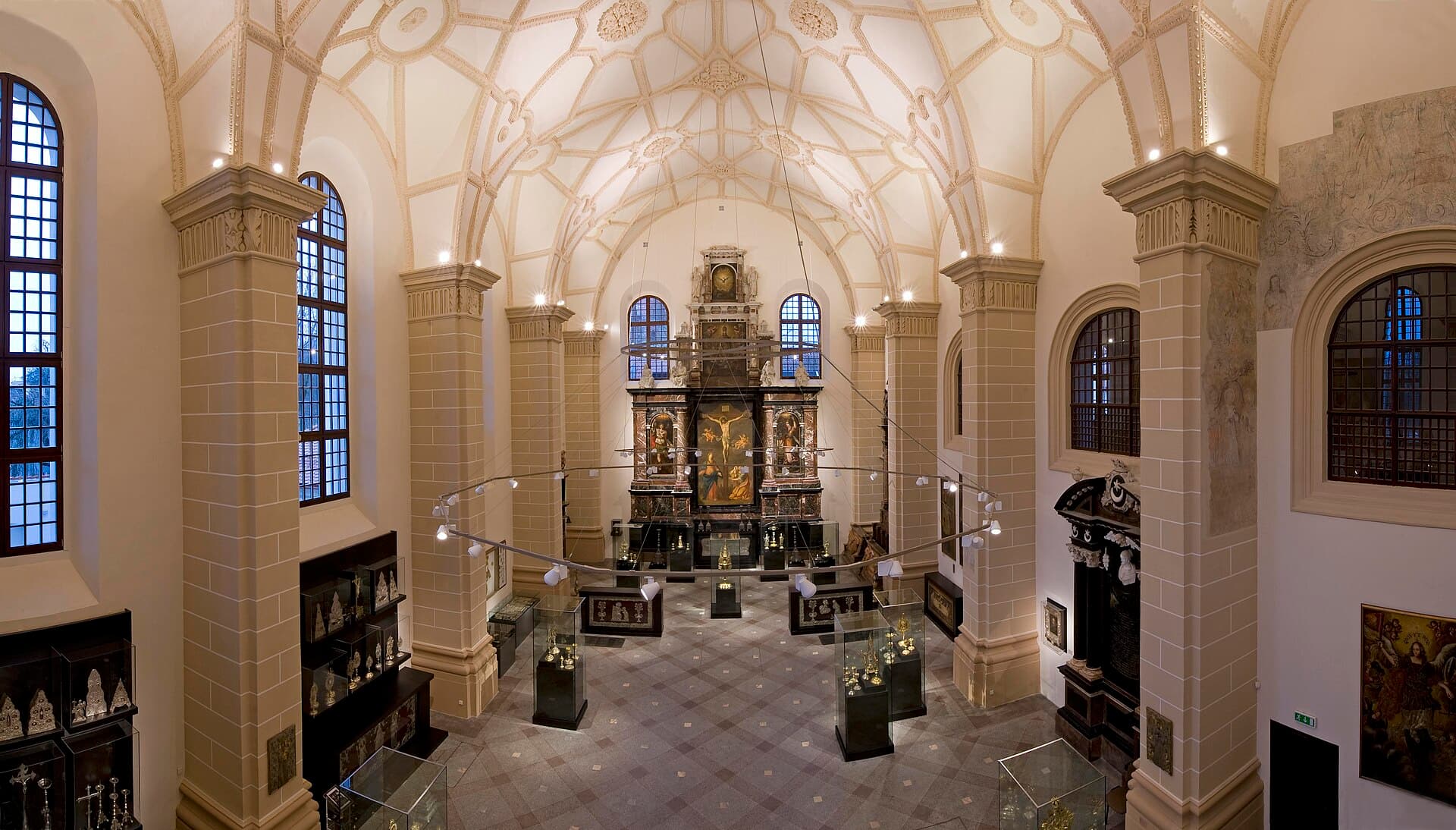 Church Heritage MuseumA museum in a former seventeenth-century church and convent, showing the treasur1 minute walk4.6
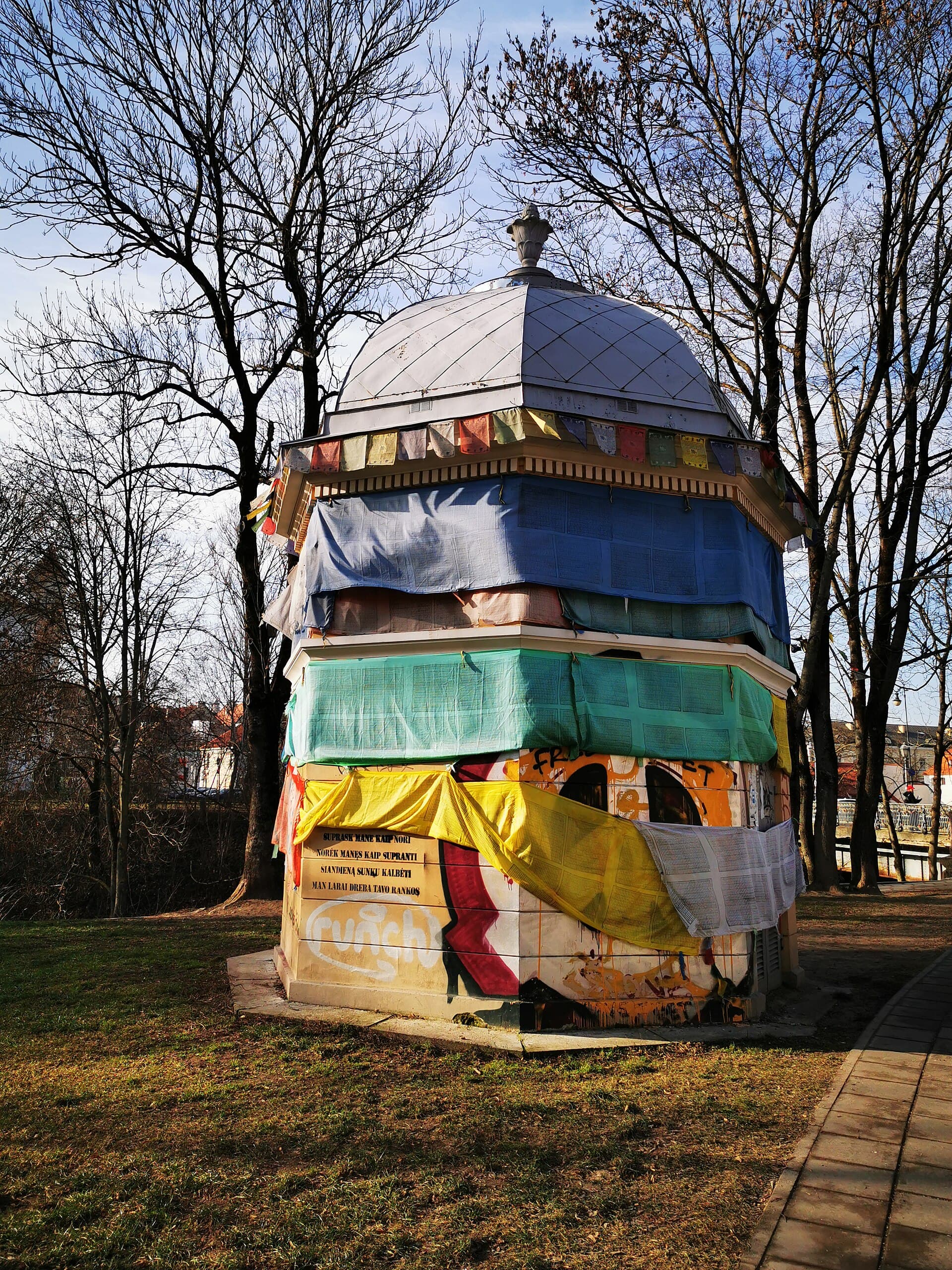 Tibet SquareA small square near the Užupis district of Vilnius, formally dedicated to Tibet 4 minutes walk4.6
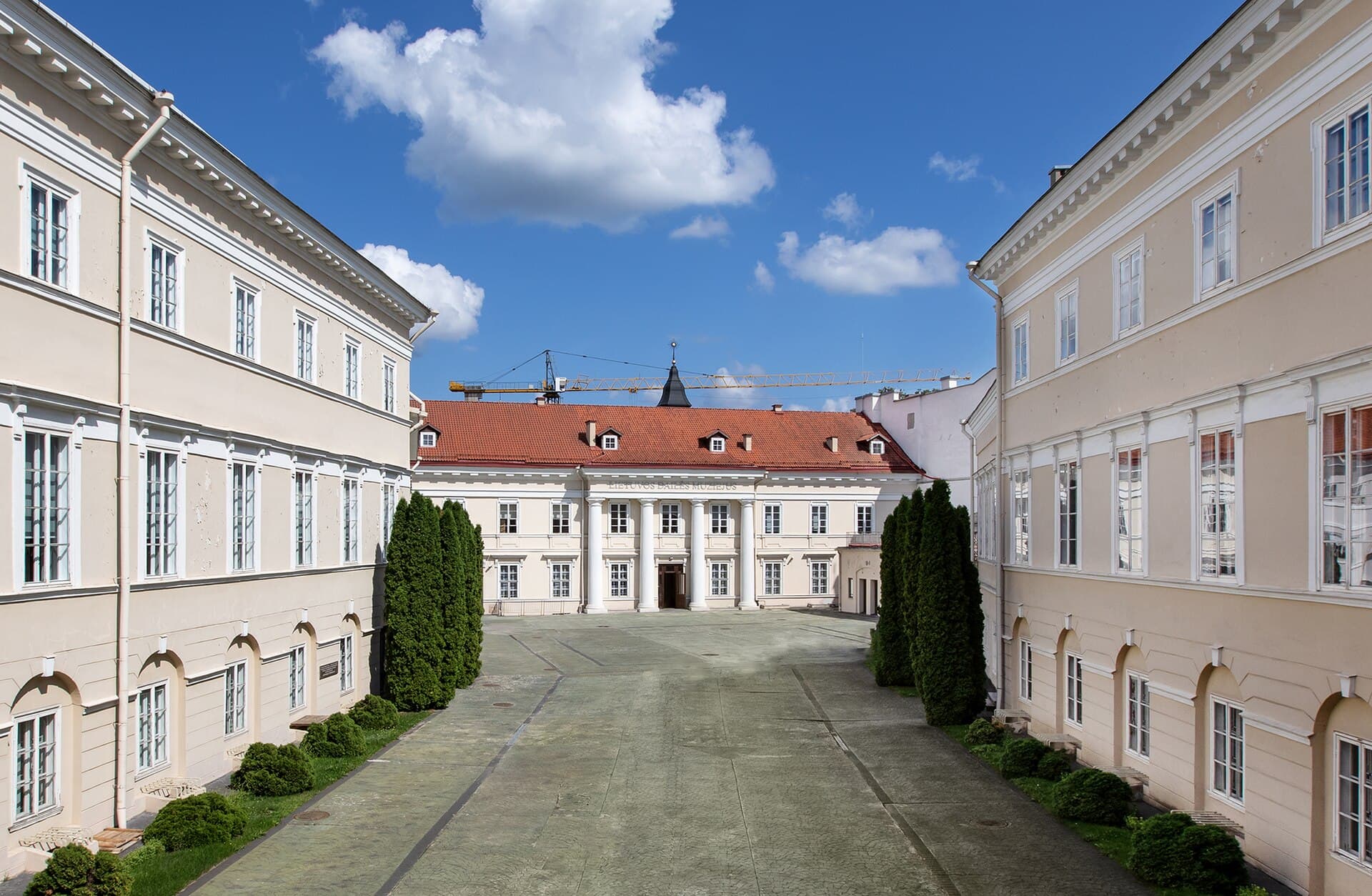 Lithuanian National Museum of ArtA network of museums rather than one building: the Lithuanian National Museum of4 minutes walk4.6
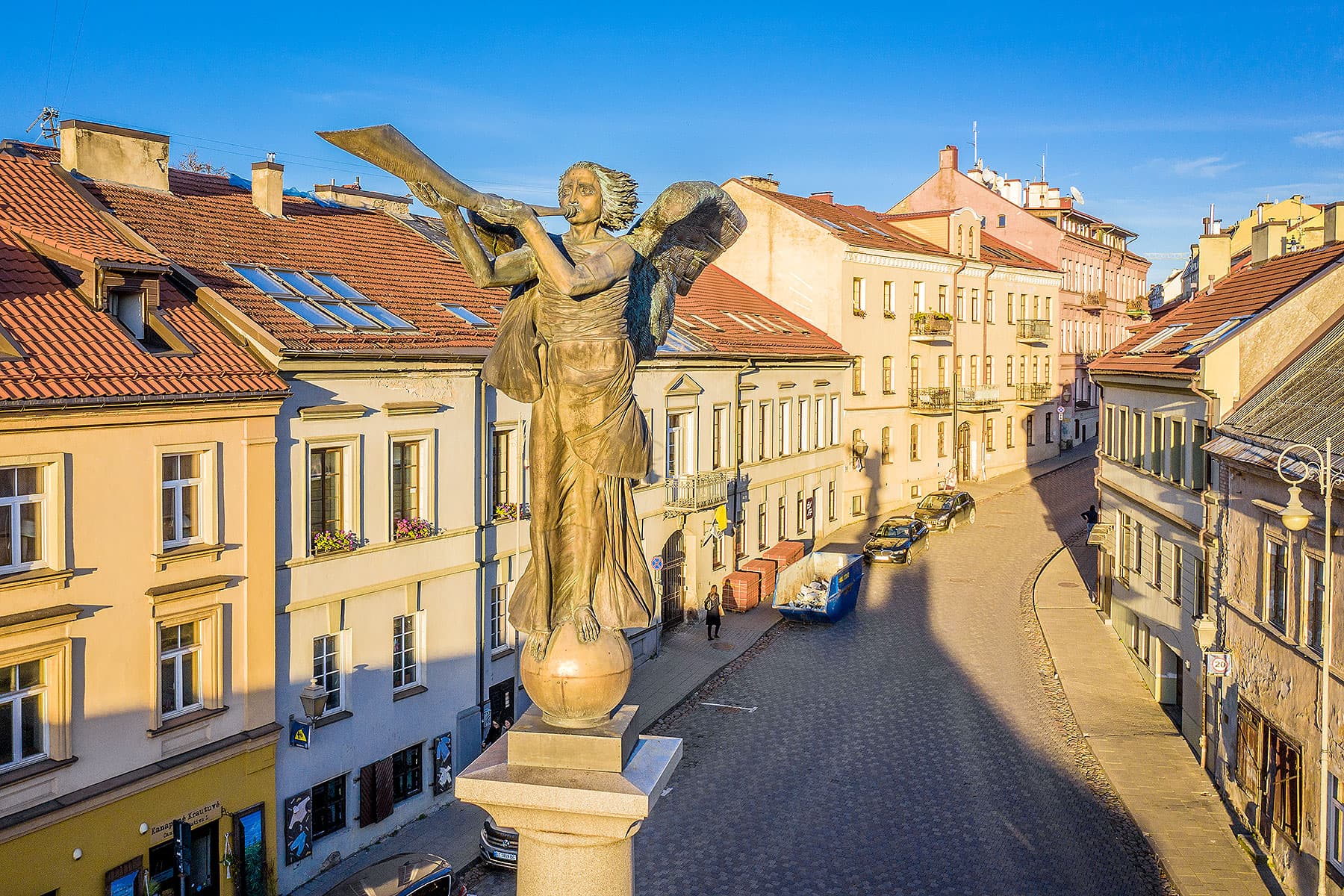 The Republic of UžupisA district that declared itself an independent republic as a joke — and the worl5 minutes walk4.7
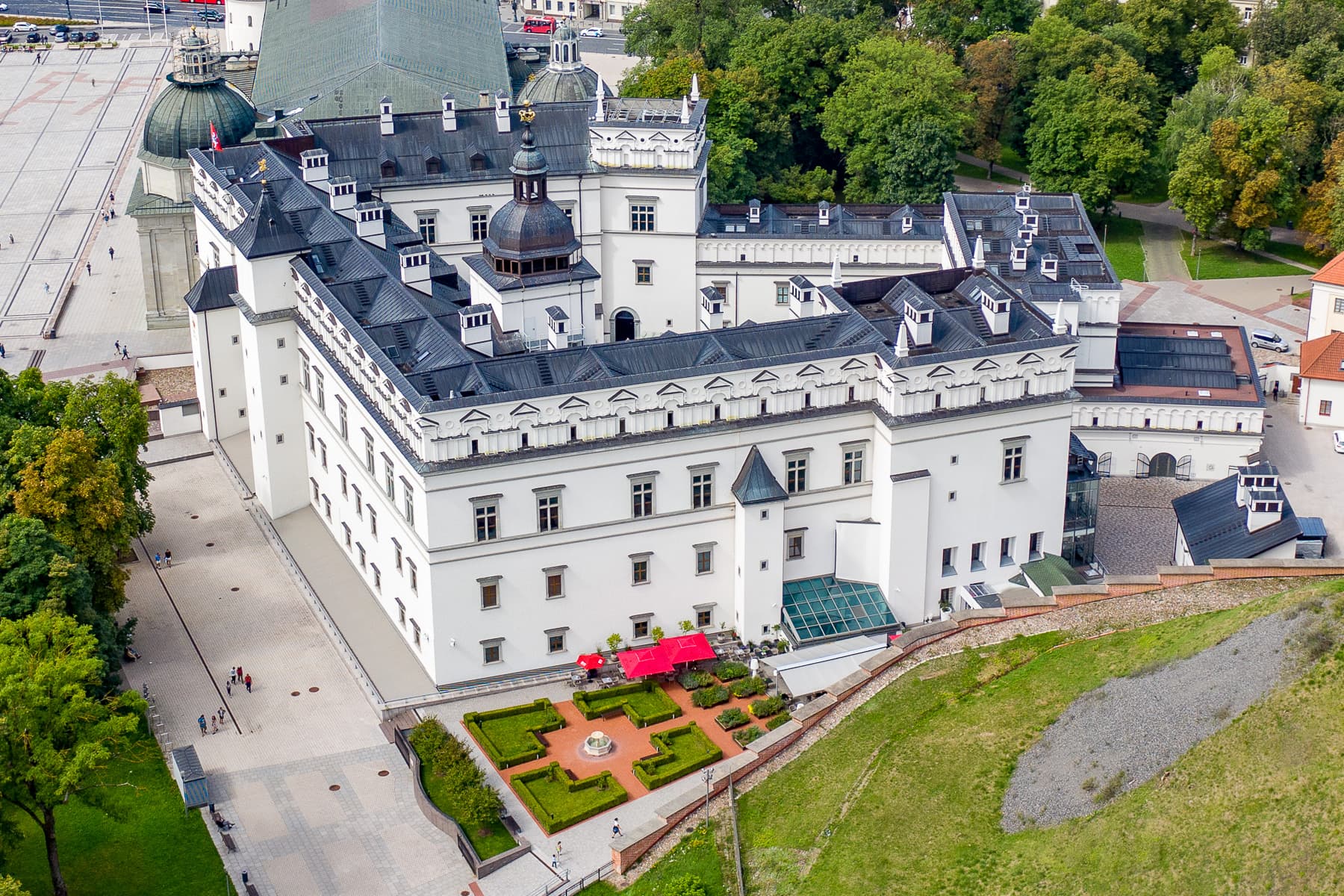 Palace of the Grand Dukes of LithuaniaA palace rebuilt from nothing to return a nation to its history: this was the se5 minutes walk4.8
A style that spread around the Baltic where good building stone was scarce, so architects built in fired brick and invented ornament from it to replace carved stone — this church, and the churches of Gdańsk and Lübeck, are its most famous examples.