
The cloister
Triple arches around a courtyard of palms and orange trees.
Bernard Gagnon — CC BY-SA 4.0 · Bernard Gagnon — CC BY-SA 4.0 · Bernard Gagnon — CC BY-SA 4.0 · Bernard Gagnon — CC BY-SA 4.0
At the **eastern** end of the old town near the Ploče Gate — the opposite end from the Franciscan friary — stands the Dominican monastery, far less crowded than its twin though no less valuable. Building began in the fourteenth century, and because it abutted the city wall the **Republic** helped fund it and counted it among the defences — which is why its frontage is blank and heavy, more fortress than church. Its heart is a fifteenth-century **Gothic-Renaissance cloister**: slender triple arches around a courtyard planted with palms and orange trees, one of the finest cloisters on the Adriatic and among the quietest places in the city. Its museum holds **the most important collection of paintings in Dubrovnik**: works of the fifteenth- and sixteenth-century Dubrovnik school — Nikola Božidarević and others — along with a fourteenth-century crucifix by Paolo Veneziano and a painting attributed to Titian, plus manuscripts, silver and goldwork. ⚠ Being off the usual crowd route, it is one of the best things to visit at peak hours.
Triple arches around a courtyard of palms and orange trees.
Local 15th- and 16th-century painting.
The Republic funded it and counted it among the wall's defences.
Ulica Svetog Dominika 4, 20000 Dubrovnik
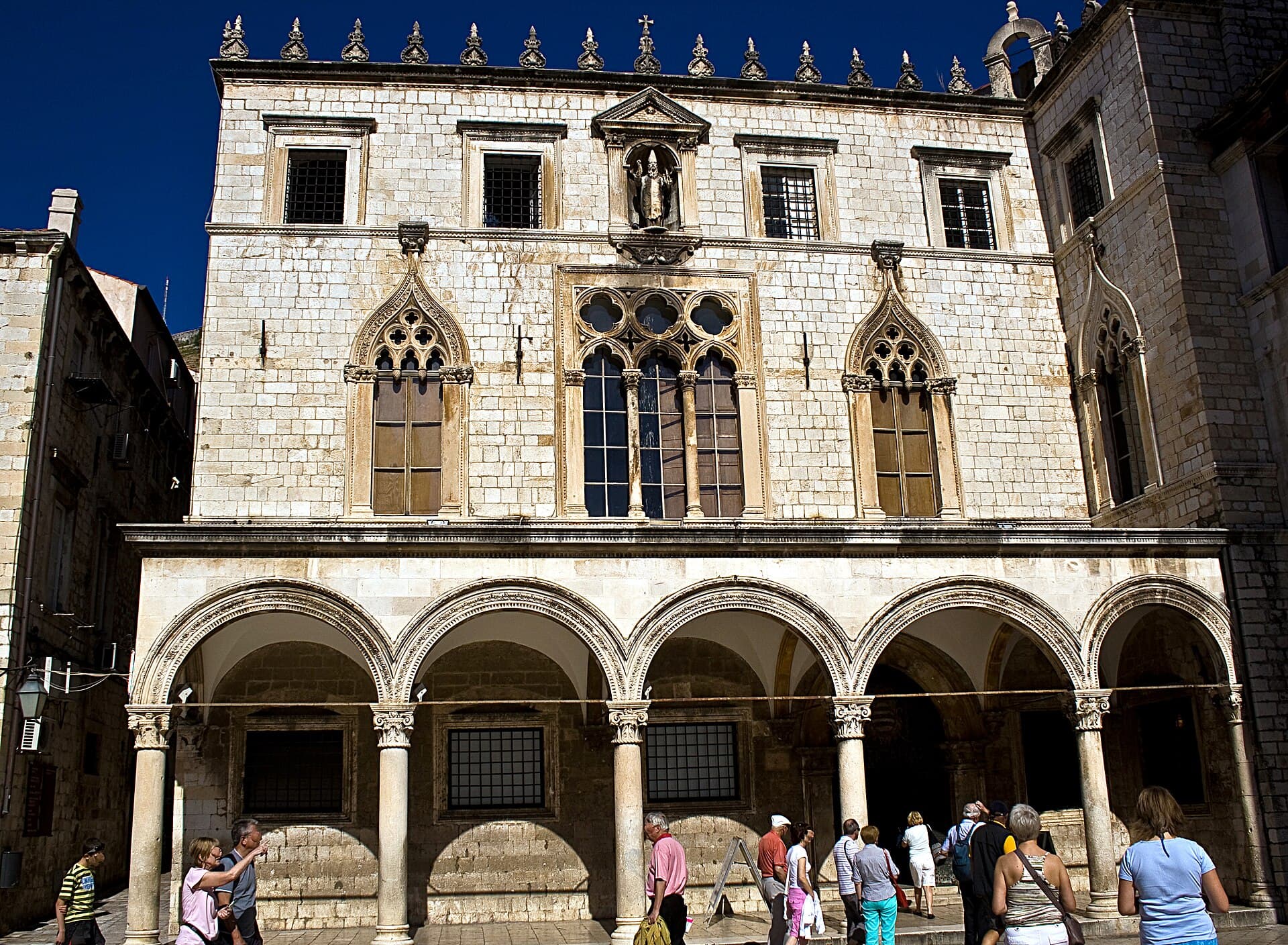 Sponza PalaceThe building that survived. When the **1667 earthquake** destroyed medieval Dubr1 minute walk4.4
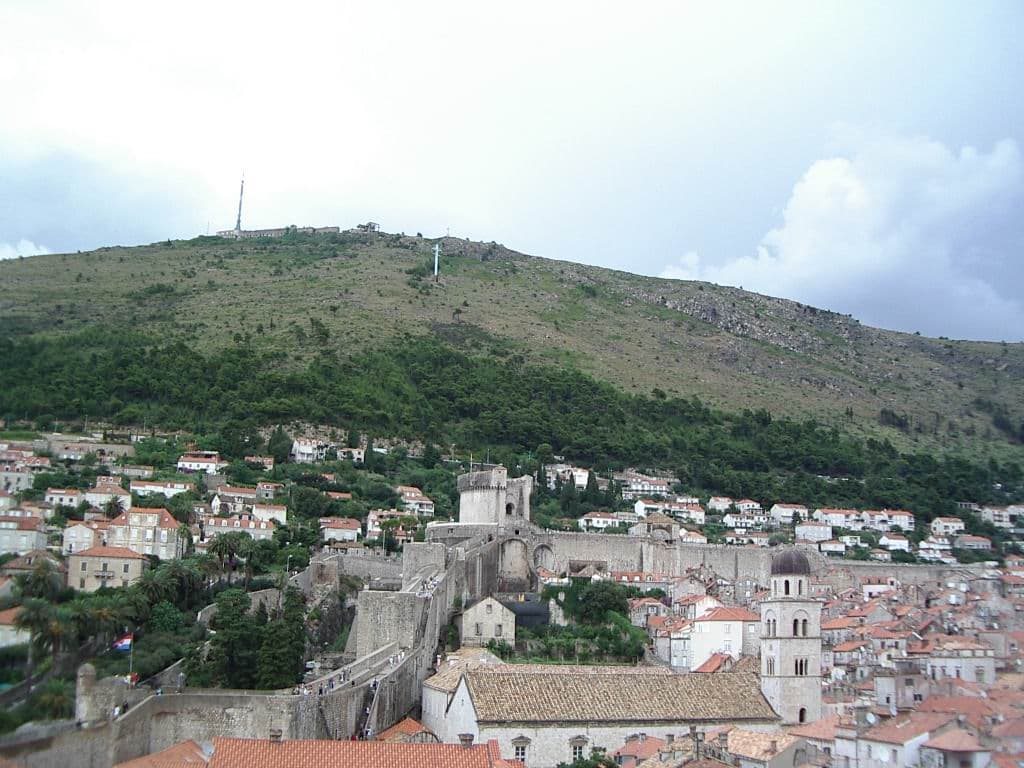 Mount Srđ & the Cable CarSrđ is Dubrovnik's sky balcony: the cable car lifts you from just above the wall1 minute walk4.2
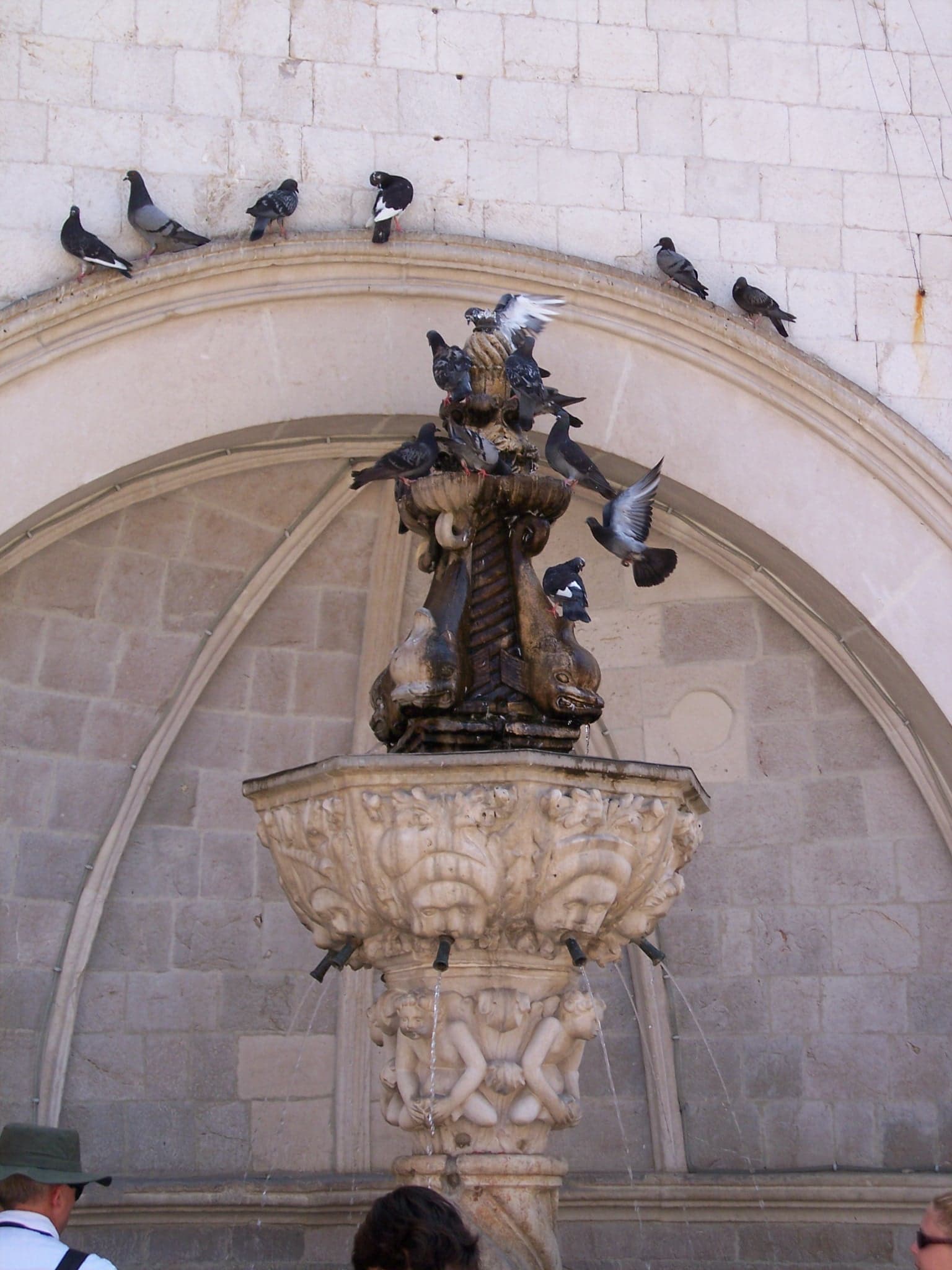 The Small Onofrio's FountainA small stone fountain at the eastern end of Dubrovnik's Stradun, from 1438, by 1 minute walk4.7
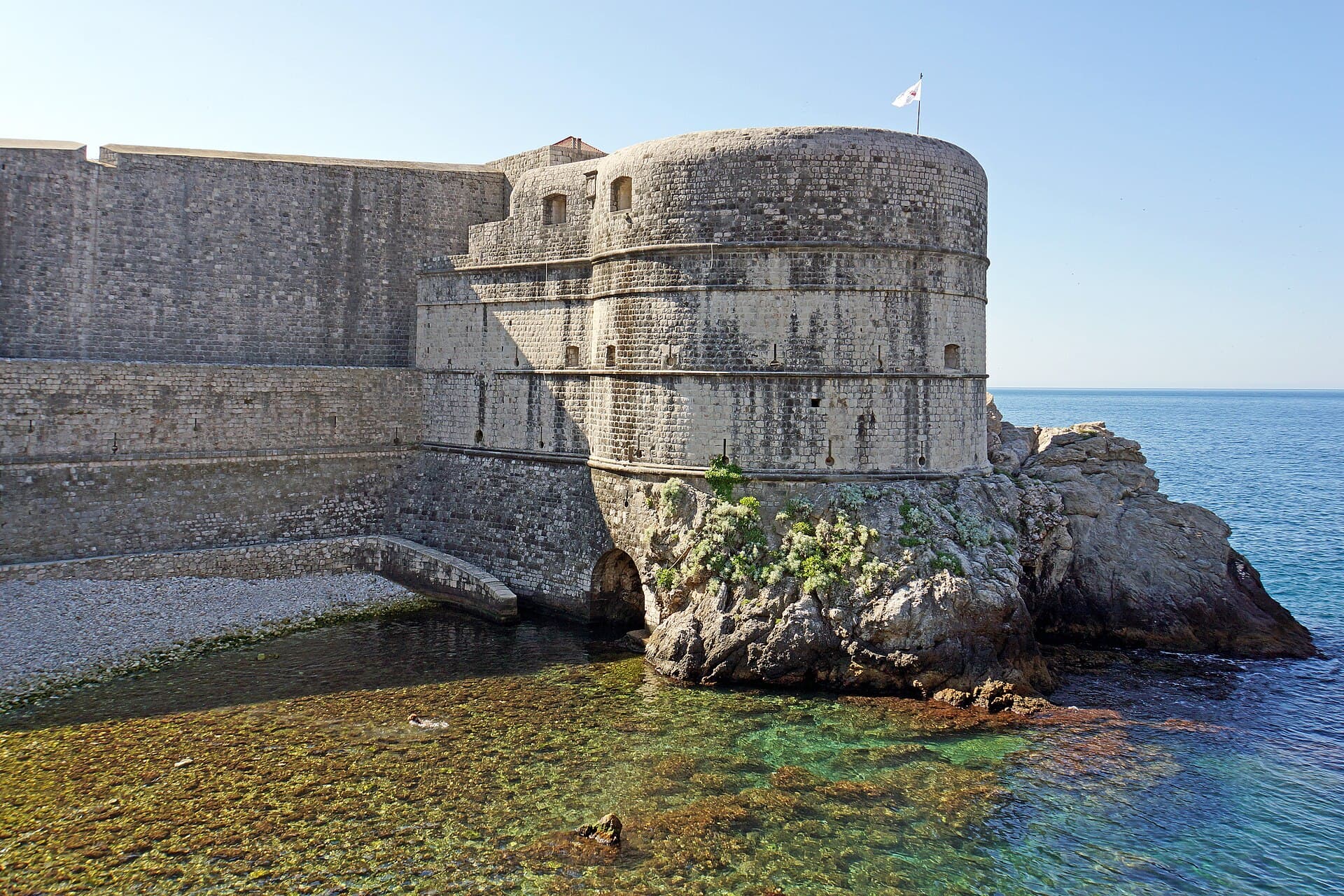 Bokar FortressA sea fortress at the western end of Dubrovnik's walls, standing on a rock proje2 minutes walk4.7
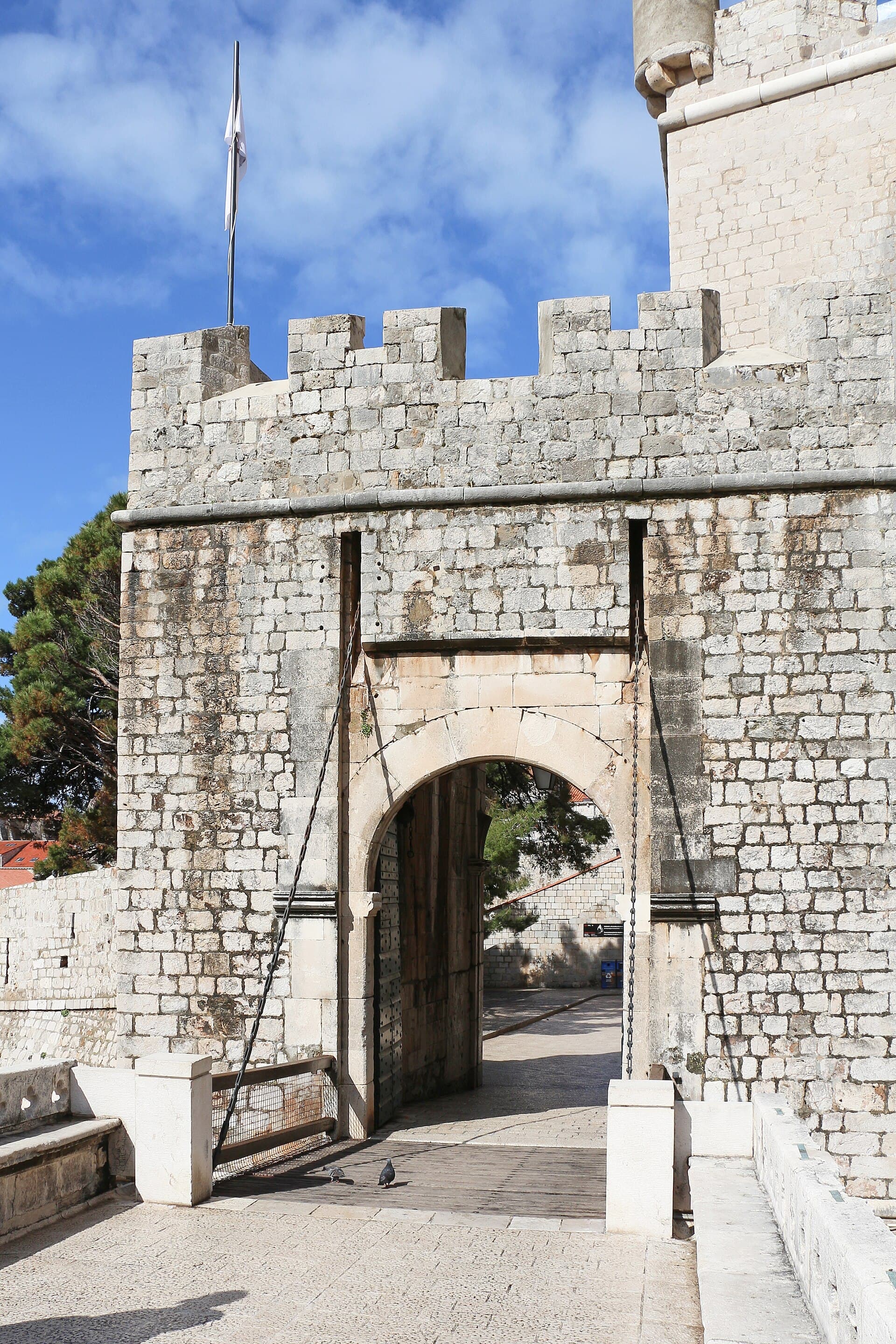 The Ploče GateThe eastern entrance to Dubrovnik's old town, less crowded than the famous Pile 2 minutes walk4.6
**The Dominican** if you are visiting at **peak hour**, because it sits at the eastern end away from the flow of cruise passengers, is far quieter, and has the stronger art collection. **The Franciscan** if what draws you is the **pharmacy working since 1317** — unique in the world with no equivalent. But the truth is that both are cheap and small and five minutes apart along the Stradun: **do both in an hour and a half**, and start with the Dominican in the morning.
Because it genuinely was part of the defences. The monastery was built **against the eastern wall** at the Ploče Gate, the side most exposed to attack by land. The **Republic of Ragusa** therefore helped fund it and required its outer walls to be blank and thick without large windows, so it would extend the wall rather than breach it. Hence the surprise on entering: from outside a military block of stone, inside a slender arcaded cloister with a courtyard of palms — one of the clearest illustrations of how this city always thought about defence first.