
A solution to an administrative fact
The army held both confessions, so one church served them without merging them.
User:Kolossos — CC BY-SA 3.0 · Jörg Blobelt — CC BY-SA 4.0 · Jörg Blobelt — CC BY-SA 4.0 · Jörg Blobelt — CC BY-SA 4.0
An early twentieth-century church in the Albertstadt district north of Dresden, built to serve the city's military garrison. What makes it unusual is its internal design: it was built to serve two confessions at once — Catholic and Protestant — in a single building. The Prussian army contained soldiers of both, so the church was designed with two wings, two altars and two halls sharing the tower and the entrance. This is a rare architectural solution reflecting an administrative reality. The Albertstadt district itself is unusual: it was built in the 1870s as a complete military city — barracks, hospitals, schools and a church — over a wide area north of Dresden, and was among the largest military complexes in Europe. After the Cold War most of it was converted to civilian use, becoming offices, housing and museums. The church today serves a working parish and is used for concerts. The site is entirely off the tourist route. Visit it if architecture or military history interests you, not on a short first visit.
The army held both confessions, so one church served them without merging them.
Albertstadt was among the largest military complexes in Europe.
Entirely off the tourist route — for those interested in architecture or military history.
The Albertstadt district, northern Dresden
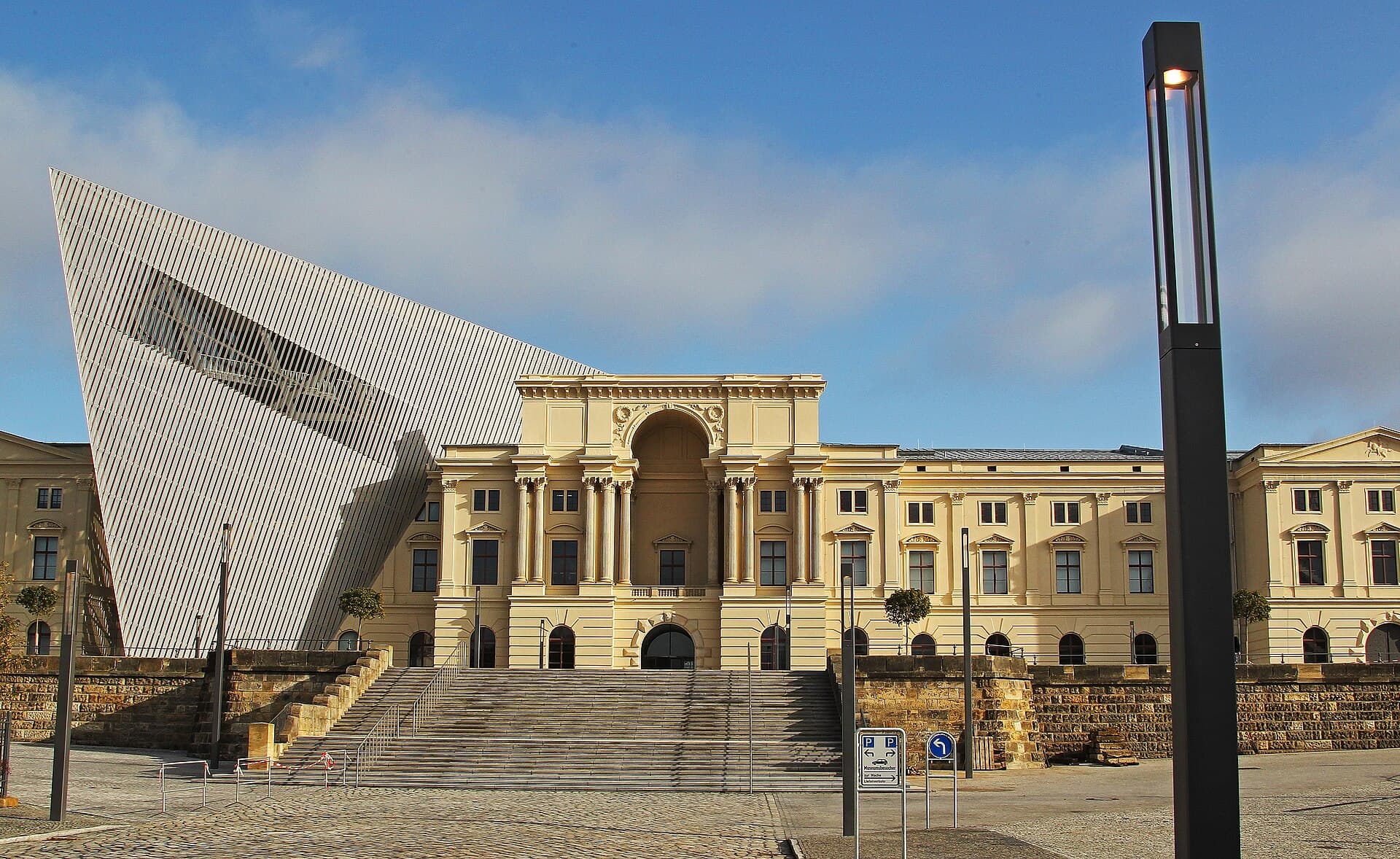 Bundeswehr Military History MuseumThe building began as a Saxon arsenal, put up between eighteen seventy-three and5 minutes walk4.5
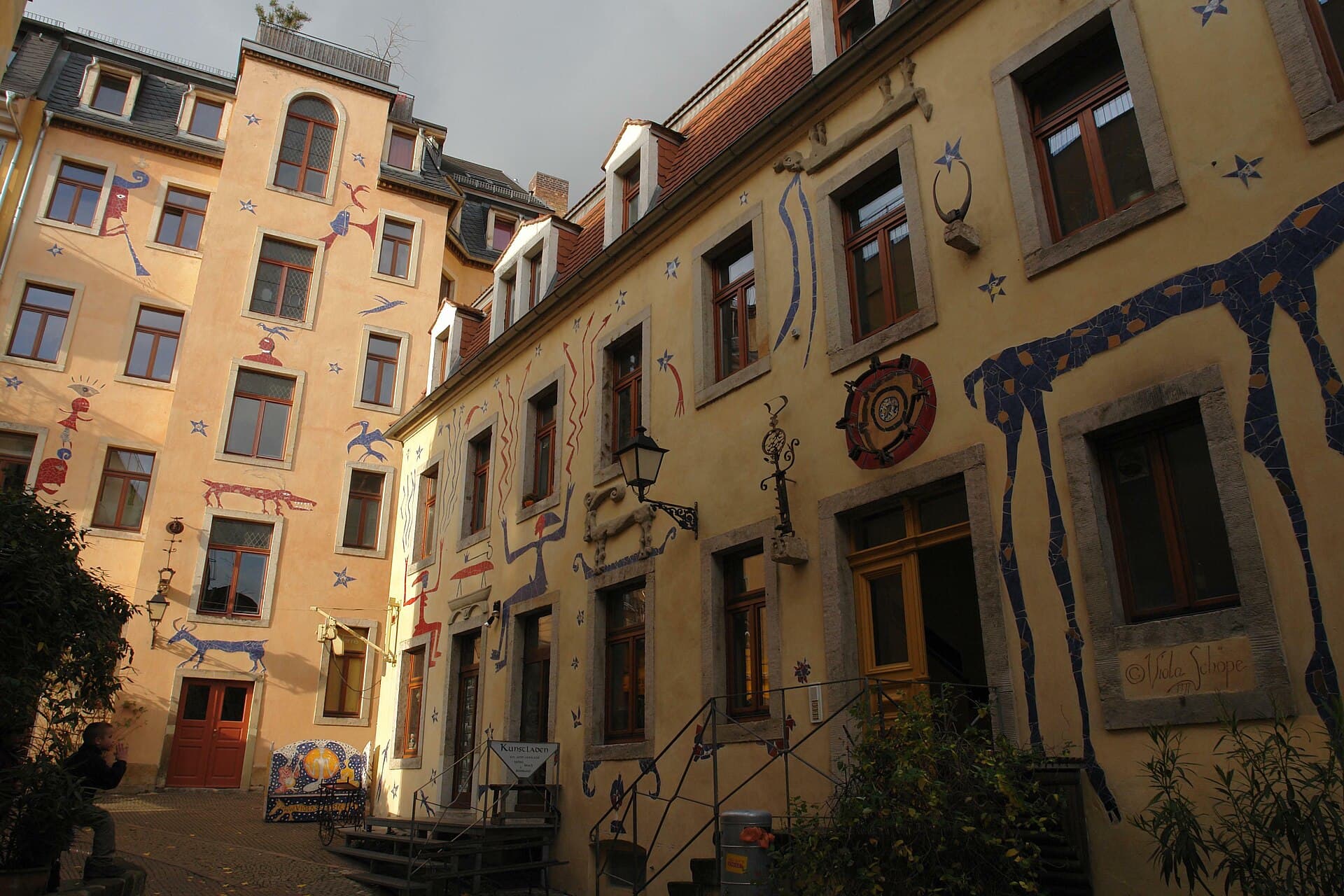 KunsthofpassageThe Kunsthofpassage is a chain of linked inner courtyards in the Neustadt distri10 minutes walk4.5
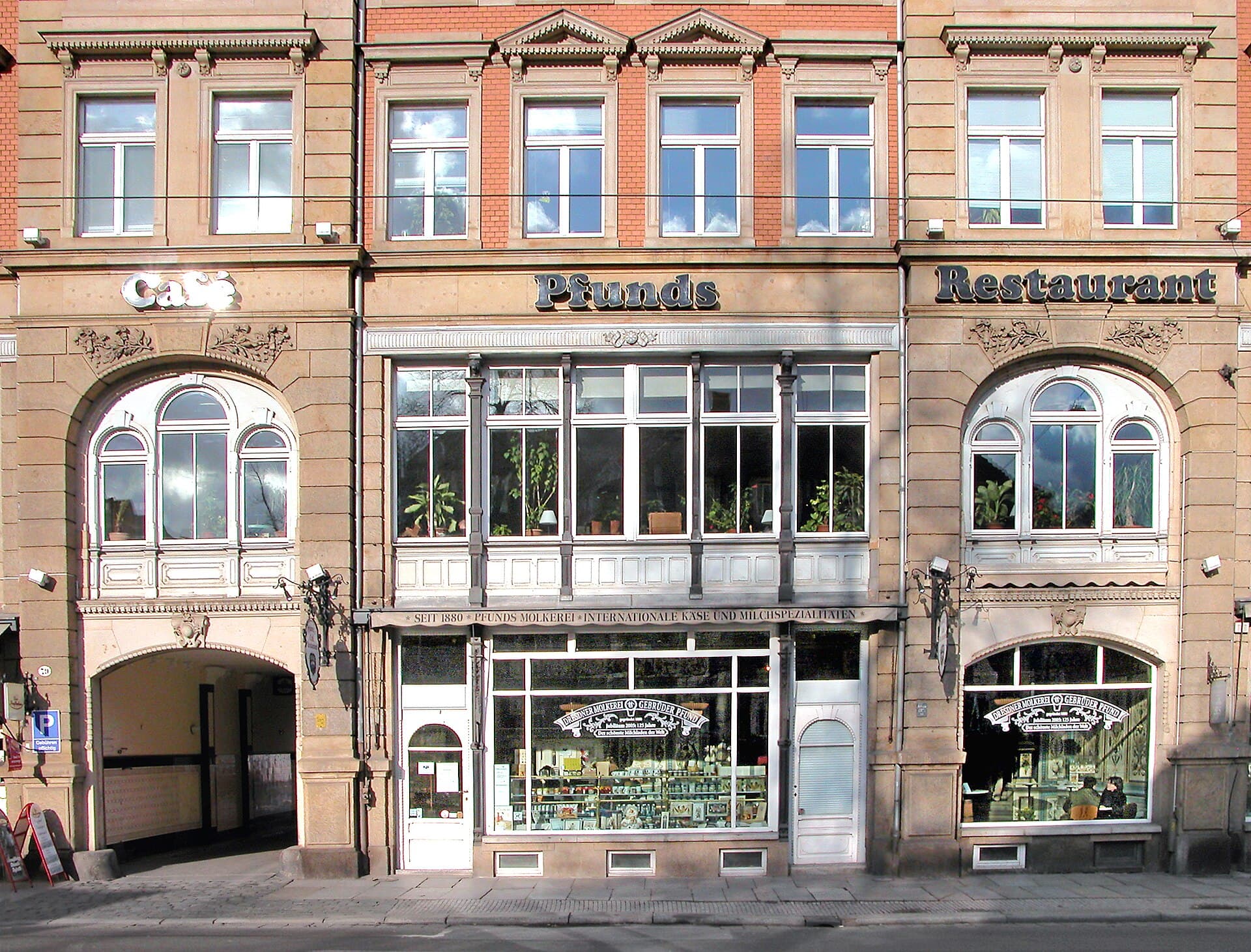 Pfunds MolkereiPfunds Molkerei is a small shop in Dresden's Neustadt that holds an official Gui15 minutes walk4.4
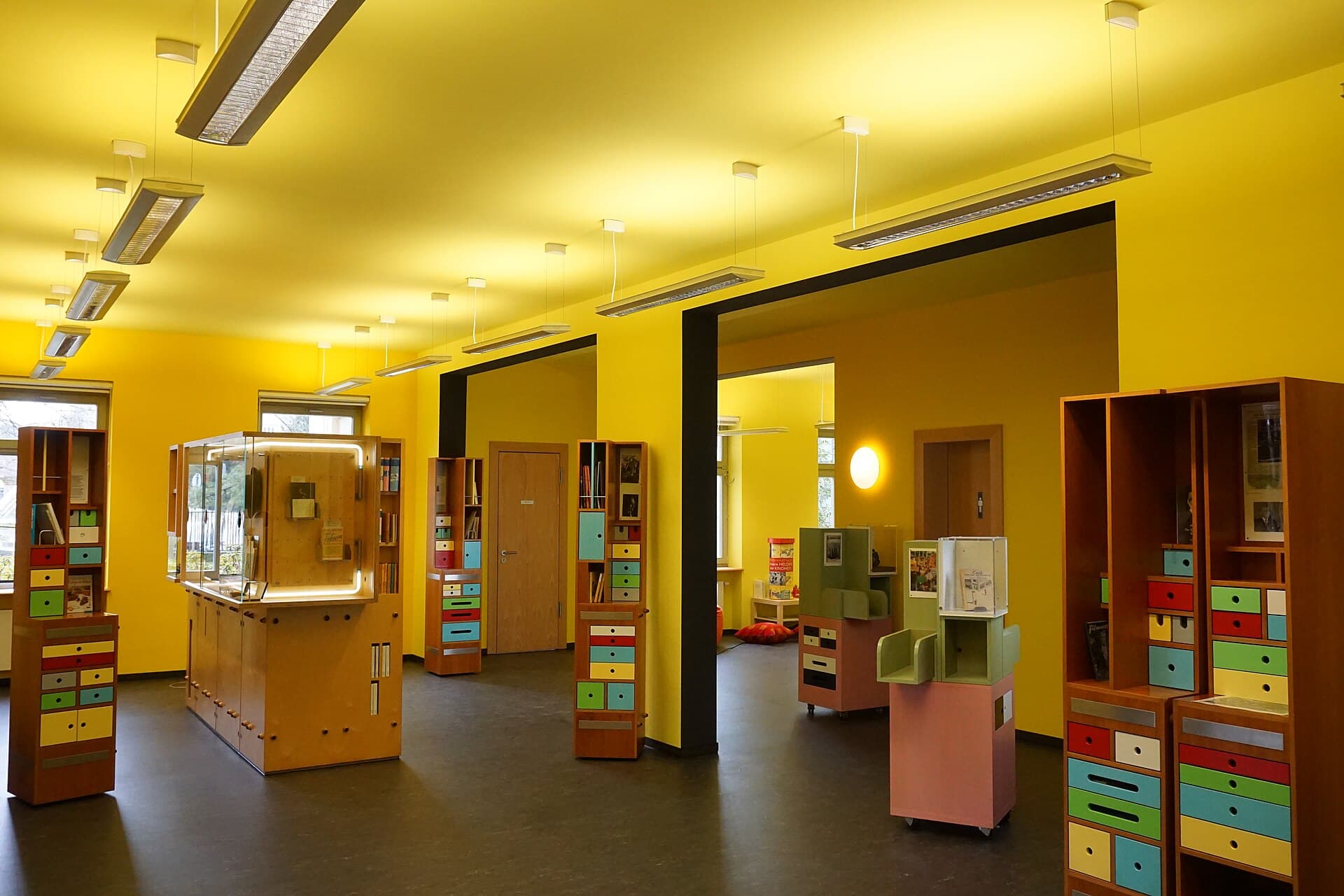 Erich Kaestner MuseumErich Kaestner was born in Dresden in eighteen ninety-nine and wrote some of the19 minutes walk4.5
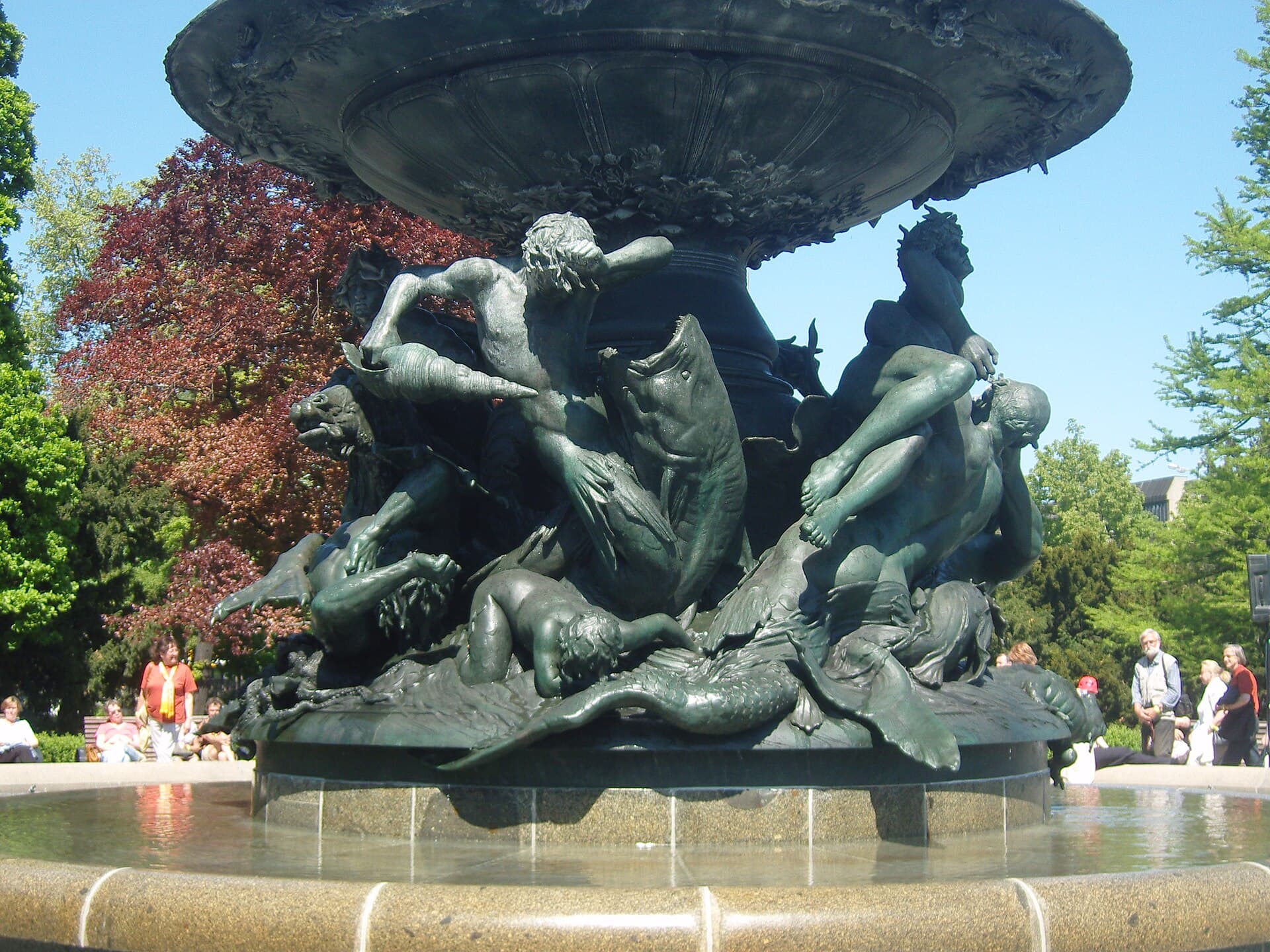 The Stormy Waves FountainsA pair of fountains in northern Dresden known together as Stormy Waves and Calm 20 minutes walk4.5
The Zwinger and the Old Masters Gallery, the rebuilt Frauenkirche, the Brühl Terrace on the river, the Residenzschloss and the Green Vault, and the Procession of Princes — a hundred-metre mural in Meissen tiles depicting the rulers of Saxony, which survived the 1945 bombing almost intact.
An eighteenth-century baroque church with a great stone dome, which collapsed after the bombing of February 1945 and whose rubble was left in place throughout the communist period as an unrepaired memorial. After reunification donations were gathered from Germany and abroad — from Britain in particular — and it was rebuilt between 1994 and 2005 using thousands of original stones recovered from the rubble and numbered. Today you see dark original stones set among light new ones.