
Field recordings
Headphones at each group play the instrument in its original setting.
C messier — CC BY-SA 4.0 · Jean-Pierre Dalbéra — CC BY 2.0 · Tilemahos Efthimiadis from Athens, Greece — CC BY-SA 2.0 · Tilemahos Efthimiadis from Athens, Greece — CC BY-SA 2.0
A museum in a small nineteenth-century mansion in Plaka showing the collection of the musician and ethnomusicologist Fivos Anoyanakis of Greek folk instruments. Anoyanakis gathered more than twelve hundred instruments across half a century and gave them to the state in 1978. The display is arranged by how the sound is produced: wind, strings, percussion, and metal sounds such as flock bells. What makes the visit work is the sound: at each group headphones play field recordings of that same instrument being played in its original setting — at a wedding, a procession, a hillside. You hear the bouzouki, the laouto, the zourna, the gaida (the Greek bagpipe) and the santouri. This reveals something that surprises many people: Greek folk music is closer to the music of the Balkans, Turkey and the Levant than to western Europe, and its instruments are shared with its neighbours. Small, quiet and cheap to enter.
Headphones at each group play the instrument in its original setting.
Closer to the Balkans and Turkey than to western Europe.
Classified by how the sound is made rather than by shape.
Plaka, near the Roman Agora
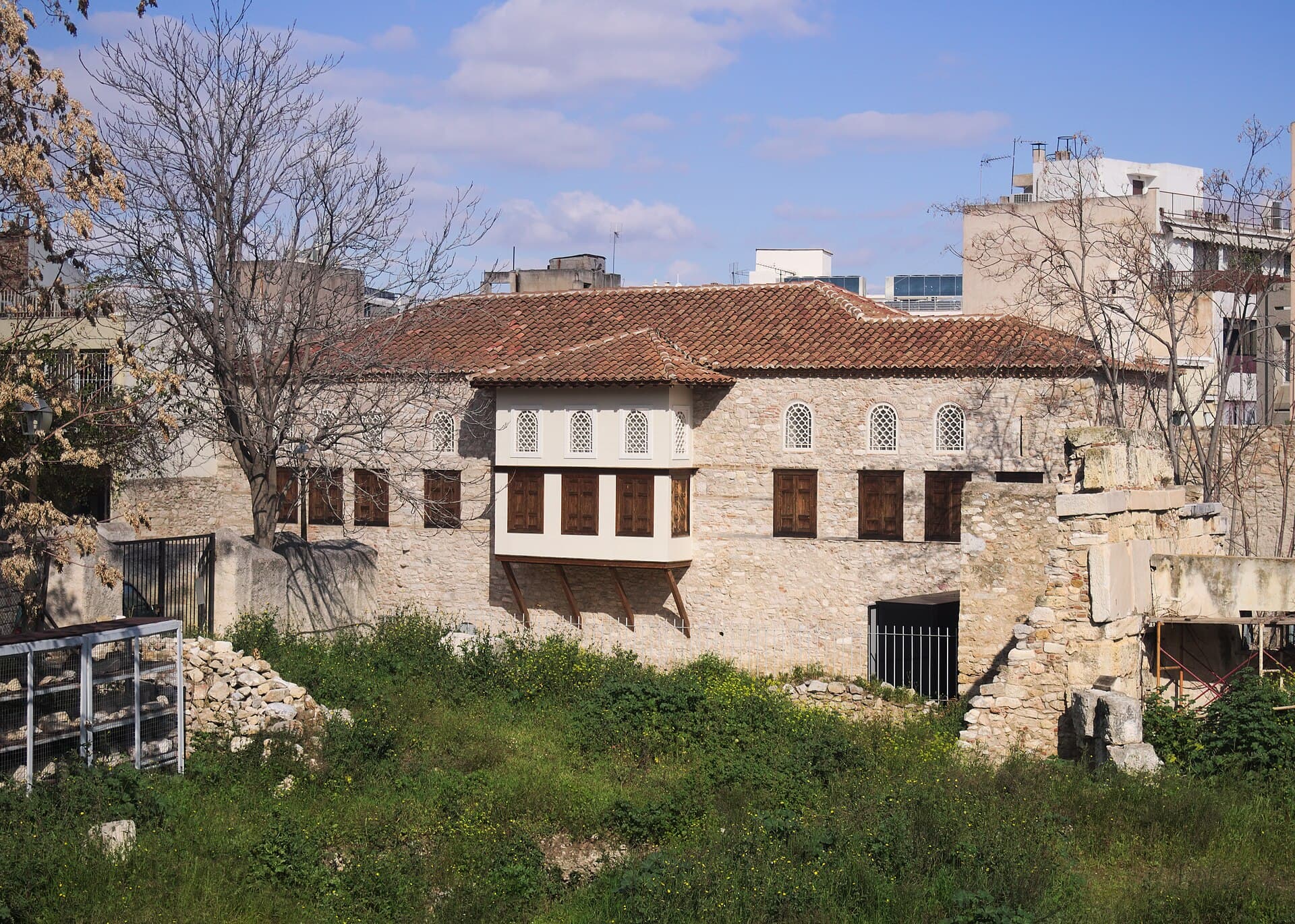 Benizelos Mansion**The oldest surviving house in Athens**, standing on Adrianou street in Plaka b2 minutes walk4.7
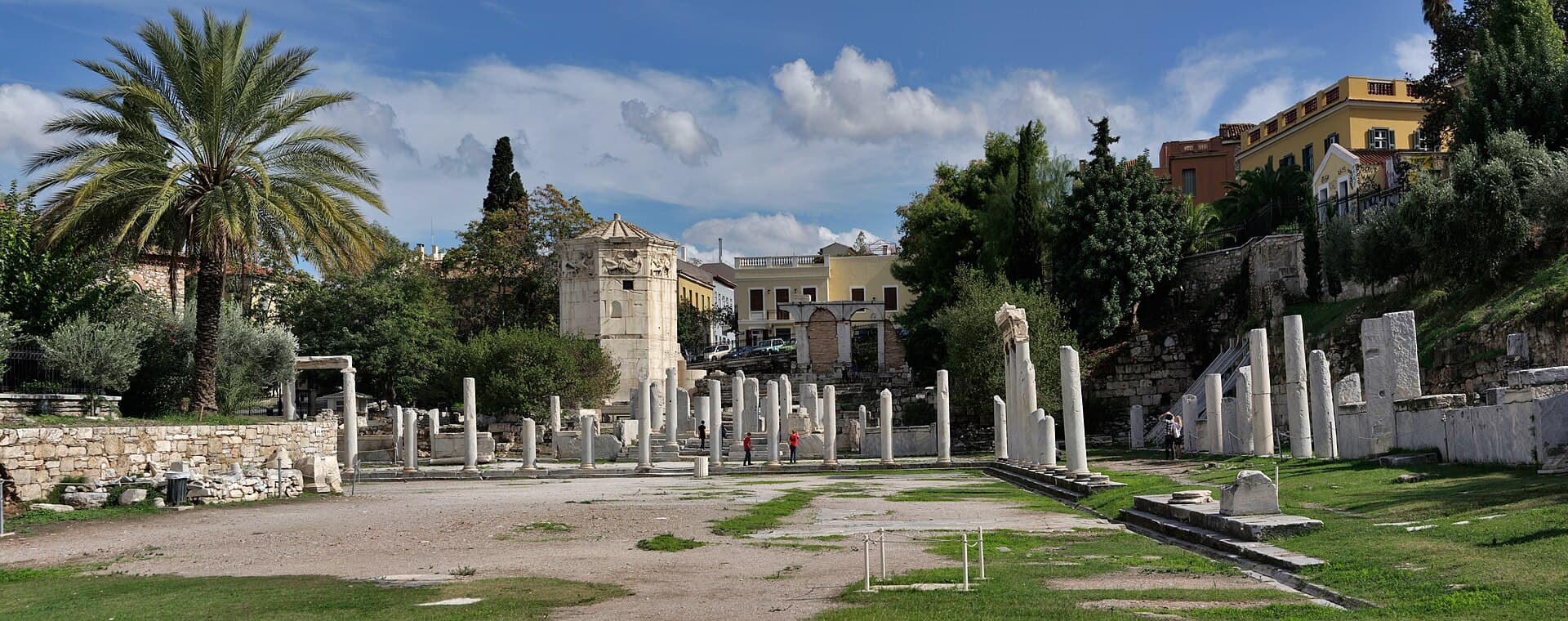 The Roman Agora & Tower of the WindsThe Roman Agora is the market the Caesars built Athens: Socrates' agora grown ol2 minutes walk4.6
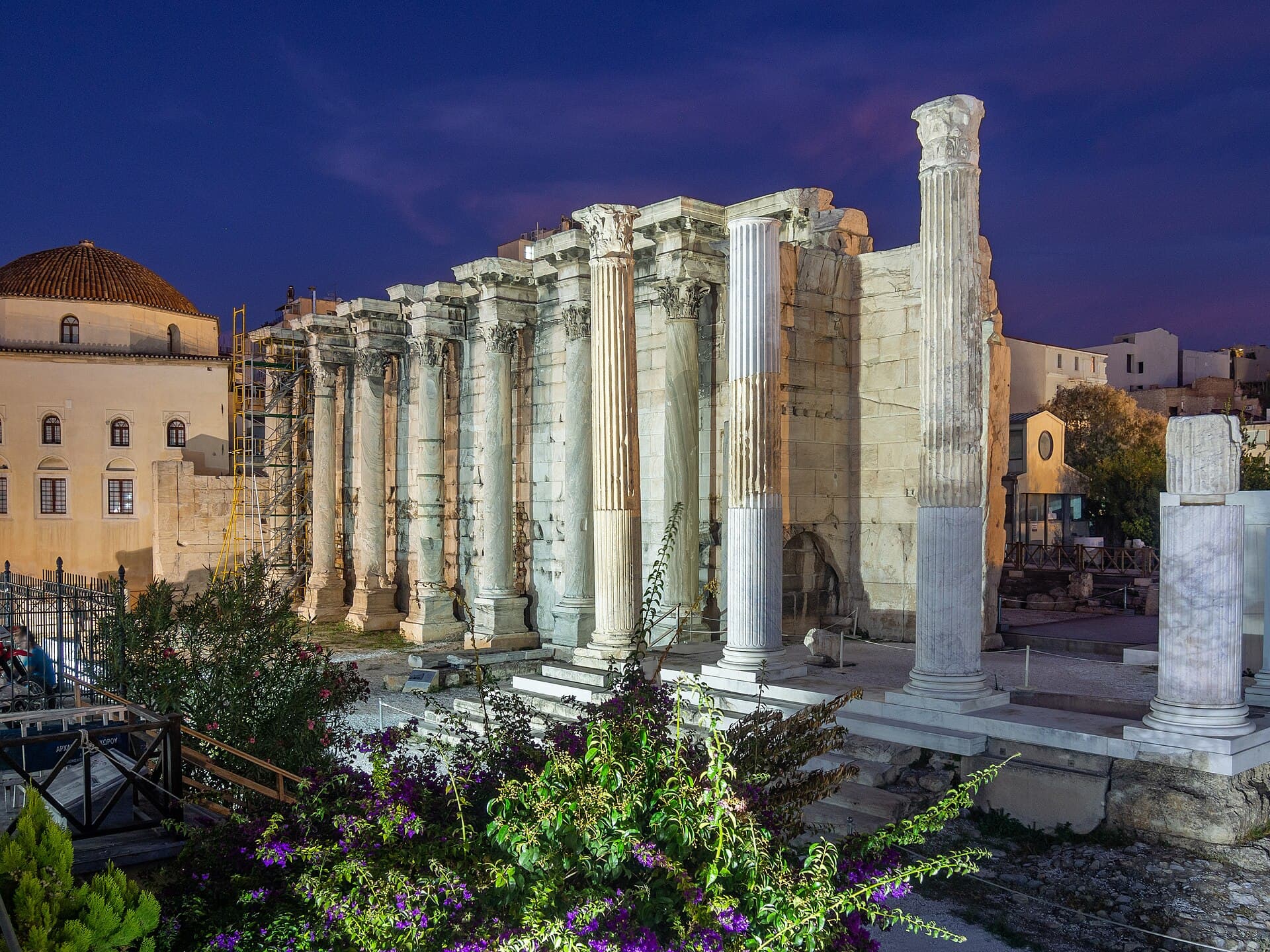 Hadrian's LibraryIn the middle of **Monastiraki**, steps from the metro station and the flea mark2 minutes walk4.5
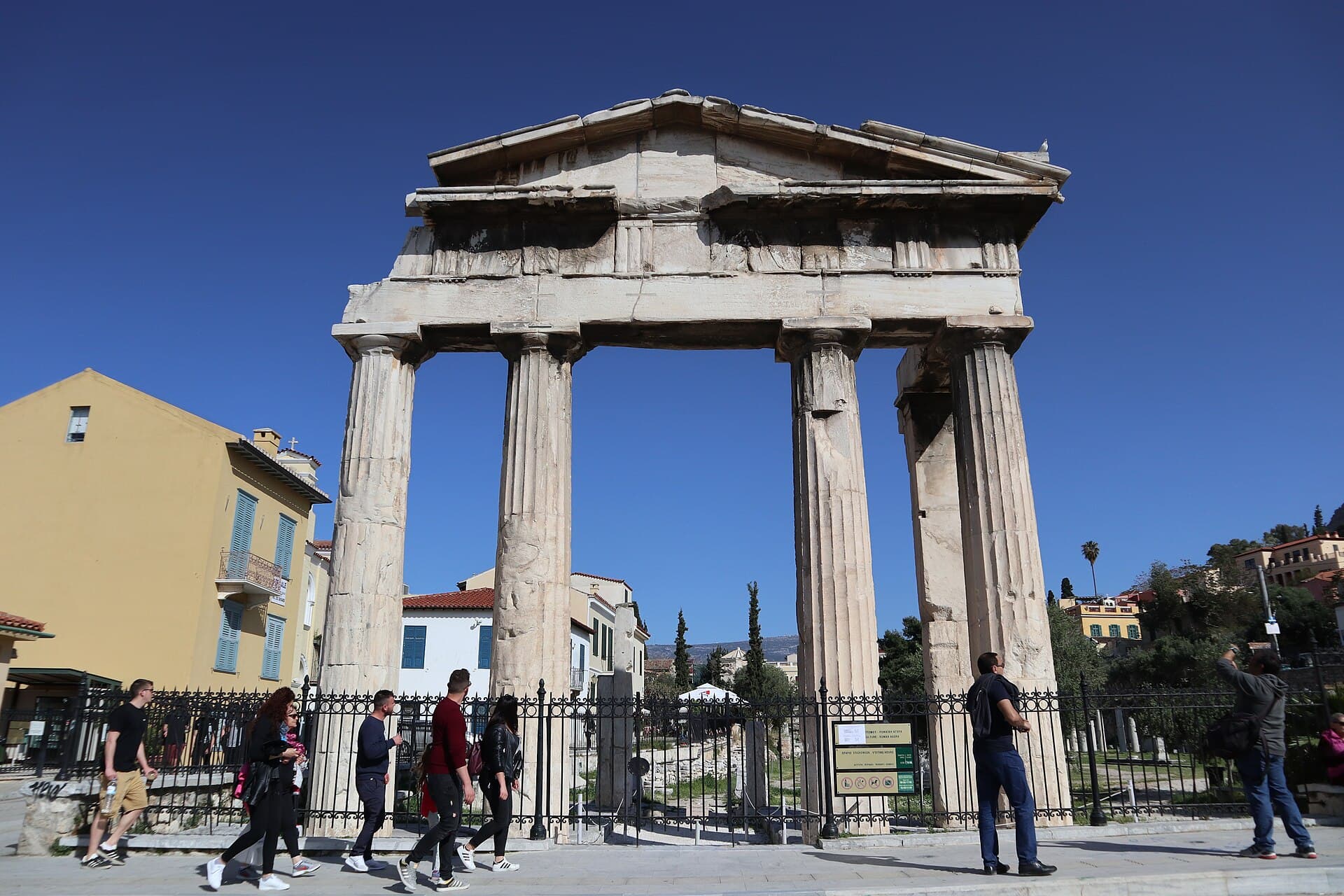 The Gate of Athena ArchegetisA marble gate of four Doric columns at the western entrance to the Roman Agora i2 minutes walk4.8
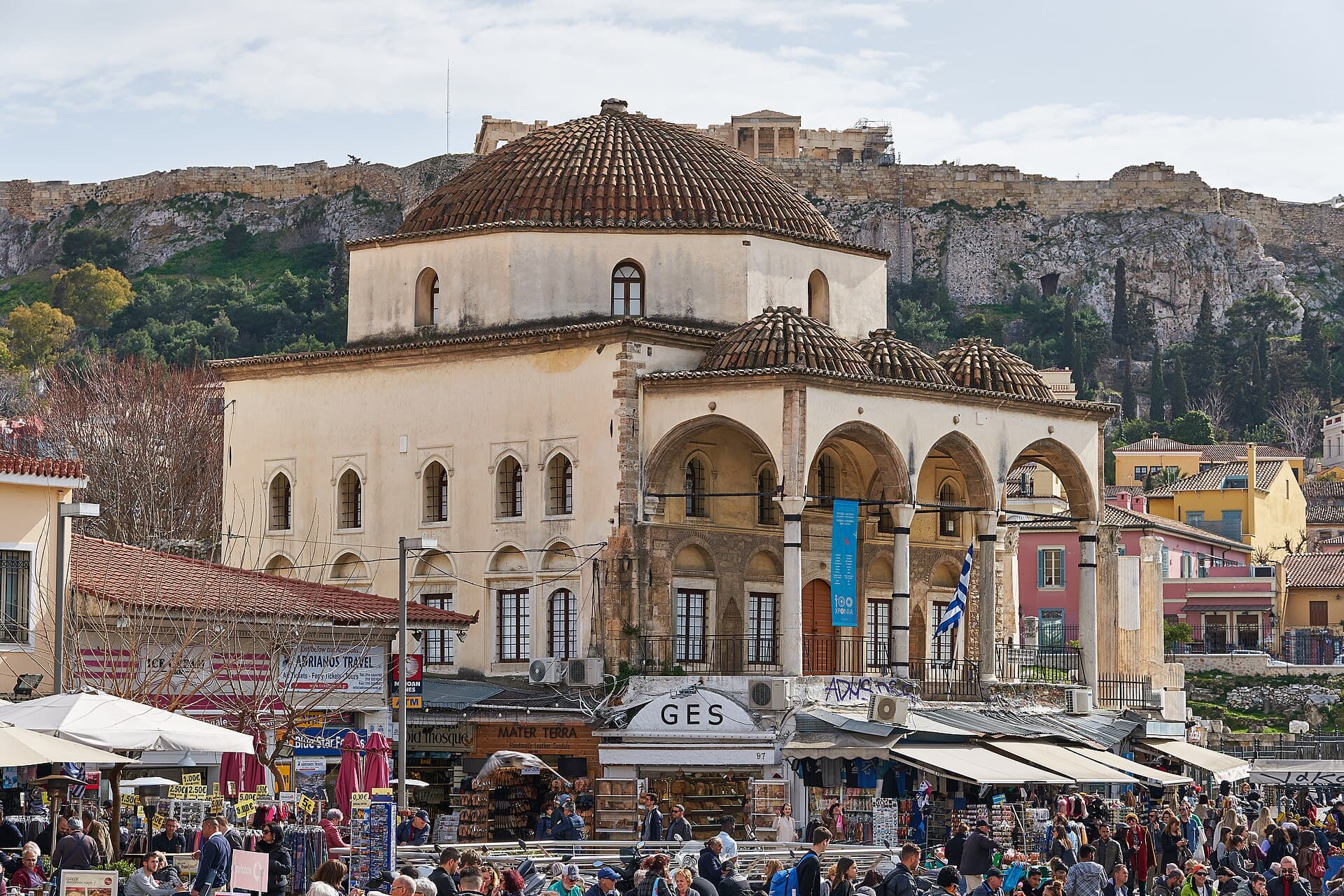 Tzistarakis MosqueIt stands directly on **Monastiraki Square**, and is among the clearest survival3 minutes walk4.5
An urban musical genre that arose in Greece's ports in the early twentieth century and flourished especially after the arrival of the refugees of the 1923 population exchange from Asia Minor. Its words are about poverty, prison, drugs and displacement, and its central instrument is the bouzouki. It was officially suppressed at times and treated as marginal music, then rehabilitated, and is today counted among Greece's most important musical output. It is played live in bars in Athens and Thessaloniki.
The rebetiko bars in Psiri and Exarcheia give live performances in the evening, most with no cover charge but with the expectation that you order food or drink. And the summer festivals at the Odeon of Herodes Atticus and the Lycabettus theatre offer wider programmes. Ask at the museum itself for recommendations — the staff know the live scene well and that is the best route.