
The Tower of the Winds
Eight winged wind gods on antiquity's clock.
Andreas Trepte — CC BY-SA 2.5 · George E. Koronaios — CC0 · George E. Koronaios — CC BY-SA 4.0 · George E. Koronaios — CC BY-SA 4.0
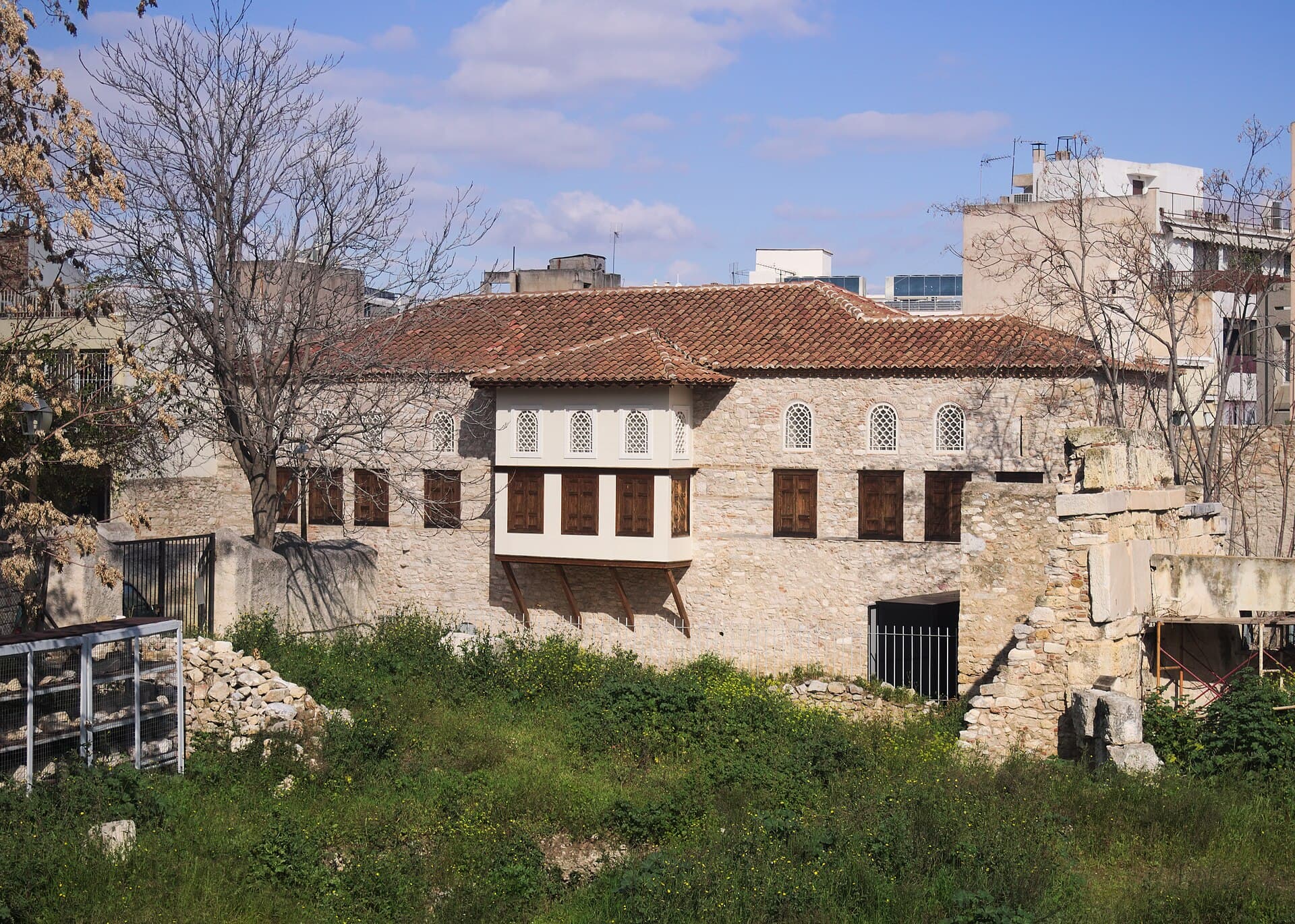
The Roman Agora is the market the Caesars built Athens: Socrates' agora grown old, Julius Caesar and Augustus funded a new trading square — the Doric Gate of Athena Archegetis its surviving front, the columns drawing the commercial quadrangle directly beneath the Acropolis. Its star is the Tower of the Winds: history's first weather station — an octagonal marble tower (1st BC) with its eight wind gods carved winged on its faces, carrying sundials, a water clock and a wind vane: the ancient world's complete astronomical clock, nearly perfectly preserved. The visit is short and pairs with neighbouring Hadrian's Library — and the Ottoman chapter stands present: the restored Fethiye Mosque (1456) in the corner. Same combo ticket, with Plaka's cafés all around.
Eight winged wind gods on antiquity's clock.
The Caesars' Doric columns standing since Augustus.
Pelopida, 10555 Athens
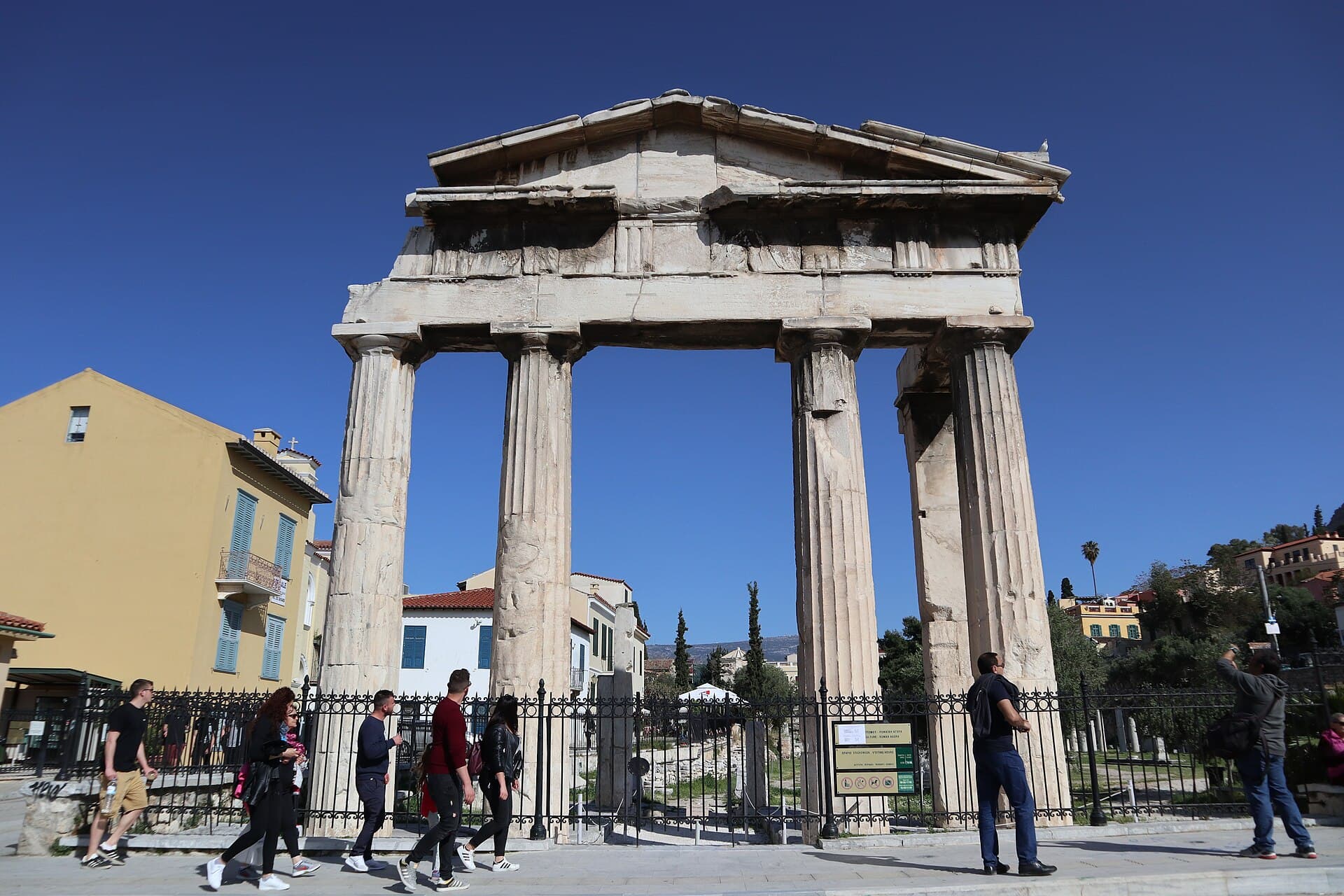 The Gate of Athena ArchegetisA marble gate of four Doric columns at the western entrance to the Roman Agora i1 minute walk4.8
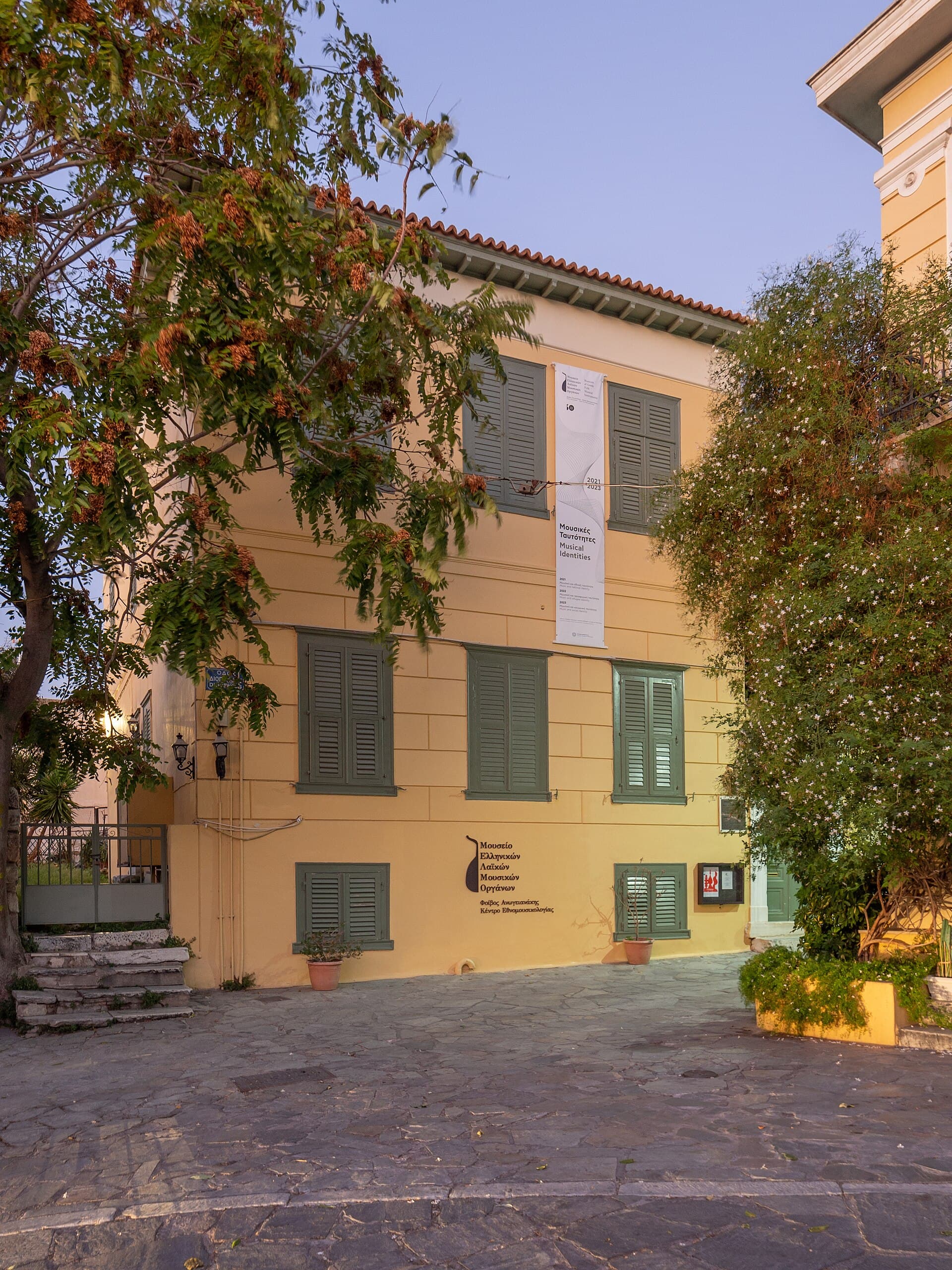 The Museum of Greek Folk Musical InstrumentsA museum in a small nineteenth-century mansion in Plaka showing the collection o2 minutes walk4.5
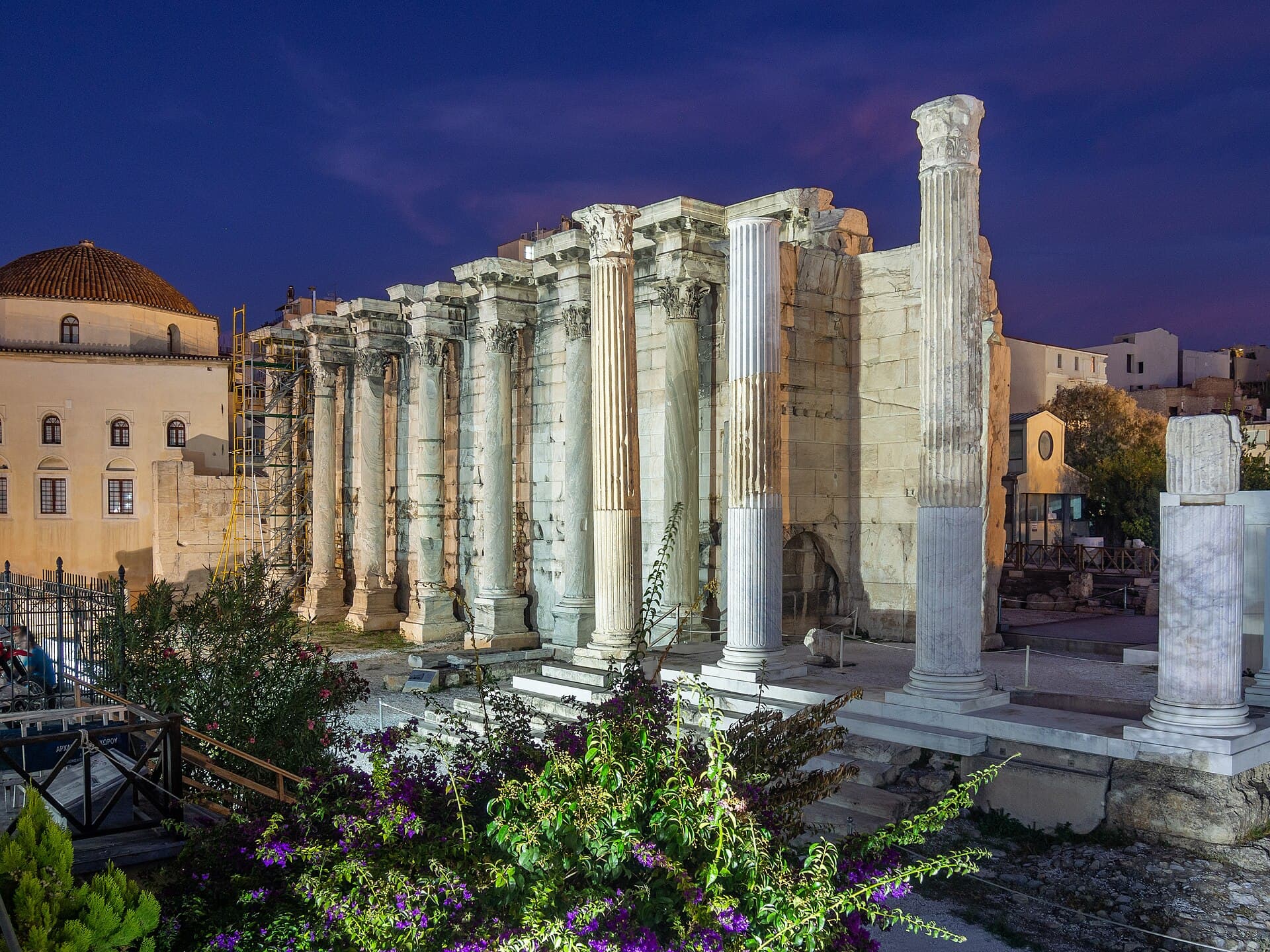 Hadrian's LibraryIn the middle of **Monastiraki**, steps from the metro station and the flea mark2 minutes walk4.5
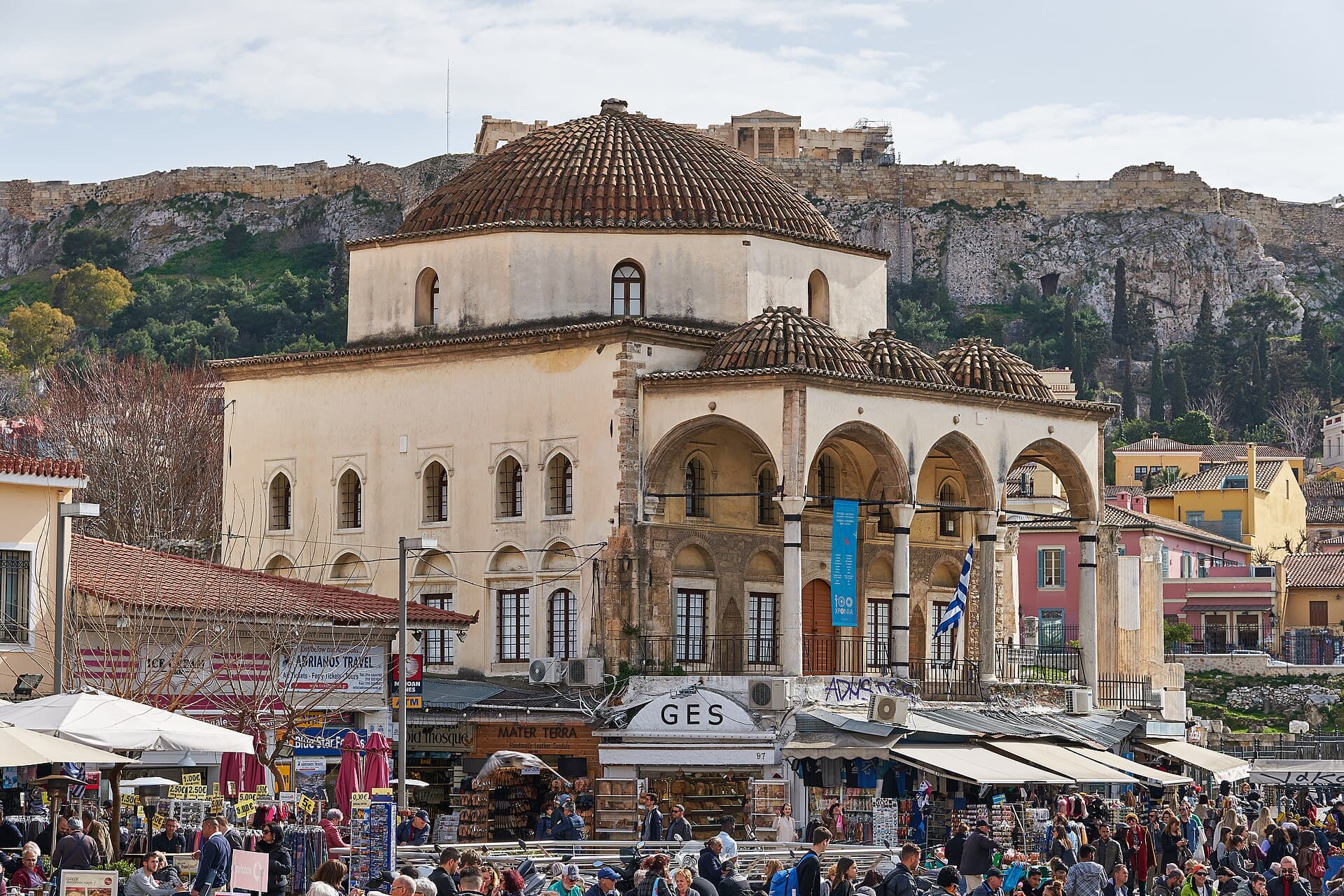 Tzistarakis MosqueIt stands directly on **Monastiraki Square**, and is among the clearest survival2 minutes walk4.5
 Benizelos Mansion**The oldest surviving house in Athens**, standing on Adrianou street in Plaka b3 minutes walk4.7
The Ancient, unhesitatingly: larger, shadier, historically heavier (Socrates, democracy) with Hephaestus and the Stoa. The Roman is a sweet combo-hour and its tower a singularity — but it ranks second, not first.