
Folon's bronze suitcase
Twelve works by Jean-Michel Folon, ten of them bronze, are scattered across the terraces, the best known an open suitcase that frames the Duomo if you stand behind it.
Sailko — CC BY-SA 3.0 · Txllxt TxllxT — CC BY-SA 4.0 · Alequihdez — CC0 · Wilrooij — CC BY-SA 4.0
A bronze suitcase lies open on the grass halfway down the slope. Stand behind it at the right angle and Brunelleschi's dome sits neatly inside it, as though someone packed the whole of Florence and then forgot it there. It is called Partir, the work of the Belgian artist Jean-Michel Folon, one of twelve pieces — ten of them bronze — that his widow gave the city in 2011 to honour a wish he had expressed before his death. But the real reason you are here is the view: the same panorama people are elbowing each other for up at Piazzale Michelangelo, seen instead from a shaded bench, with no coach unloading another forty people every five minutes. Giuseppe Poggi laid the garden out in 1865, during the few years Florence served as Italy's capital and Poggi redrew its hillsides wholesale; it only opened to the public thirty years later, in 1895. It is a single terraced hectare stepping down the slope, holding around a thousand varieties of roses and other ornamental plants, some three hundred and fifty of them old rose species, along with olive trees, potted lemons, and a small Japanese Shorai corner given in 1998 by Kyoto, Florence's twin city, and its Kodai-ji Zen temple. Be honest with yourself about timing: the roses peak from mid-April to the end of June, and outside that window you are visiting a quiet green terrace with an excellent view, not a rose spectacle. In a city as saturated as Florence the useful question is never whether a garden is pretty, but whether it deserves time taken from the Uffizi or the Accademia. It is not a substitute for either. It is free and it sits literally on the walk up to Piazzale Michelangelo, so thirty minutes here costs you thirty minutes and nothing else. Do not cross the city for it in January. Our Piazzale Michelangelo page covers the famous terrace itself; this is the quieter garden on the slope below it. And it is neither the Bardini Garden nor Boboli, both of which are walled, ticketed and run to fixed hours. This one is open, free, far smaller, and necessarily a shorter visit. No ticket, no booking, no queue. It opens daily at 9am, and the closing time moves with the season: 5pm from November to February, 6pm in March and October, 7pm in April, 8pm from May to September. It shuts only on Christmas Day and New Year's Day. The main entrance is on Viale Giuseppe Poggi, up from Piazza Poggi at Porta San Niccolo, with three smaller gates off the surrounding lanes, one of them at the top of a long staircase, so a baby carrier makes more sense here than a pushchair. Stretches of the internal paths are being relaid through 2026, so expect the odd fenced-off section. There is no cafe inside, so carry water, especially in August when the slope bakes. Families do well: grass, benches, shade, and nothing to stop children running. Halal food and a place to pray, however, are not on this side of the hill; sort both out across the Arno before you start the climb.
Twelve works by Jean-Michel Folon, ten of them bronze, are scattered across the terraces, the best known an open suitcase that frames the Duomo if you stand behind it.
The same panorama everyone photographs from the terrace above, but from a bench in the shade, with no coaches and no hawkers.
Outside the bloom the view, the olives and the Japanese corner remain, but the roses themselves will not be your reason for coming.
Viale Giuseppe Poggi 2, 50125 Florence
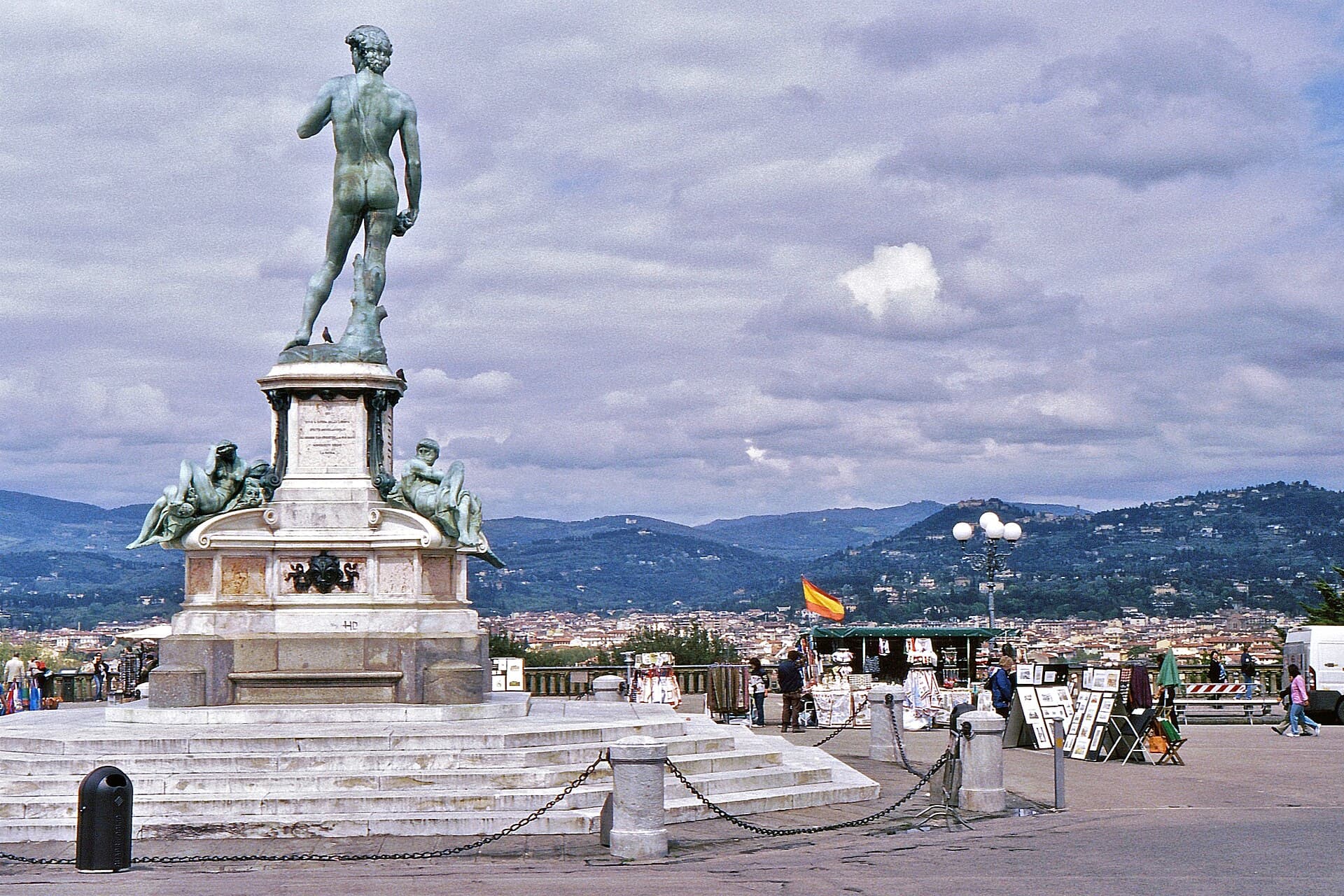 Piazzale MichelangeloThe Piazzale is Florence's balcony: a raised terrace on the southern hill openin2 minutes walk4.7
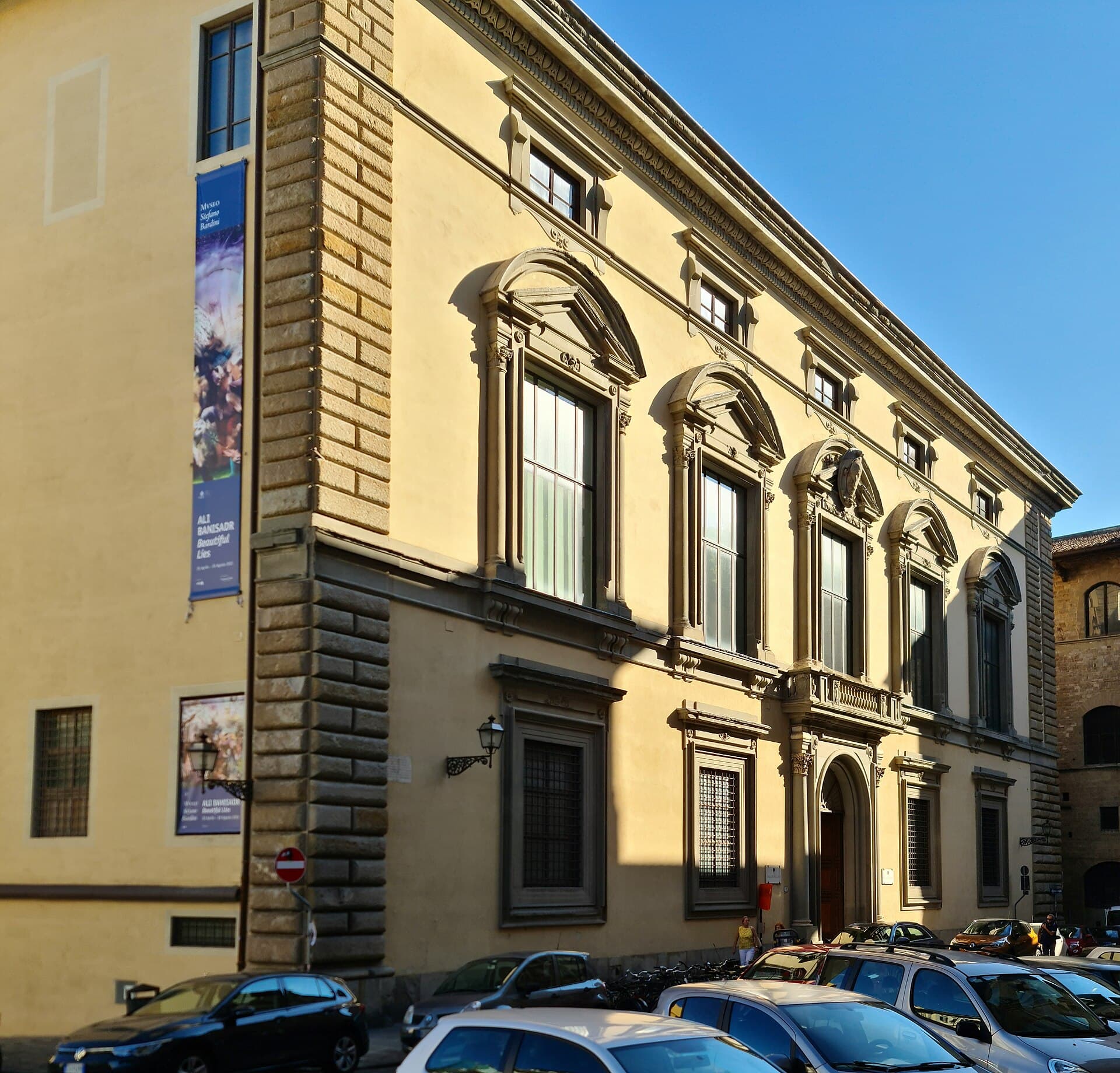 Stefano Bardini MuseumThe walls are a deep, saturated blue, and that colour alone half justifies the t5 minutes walk4.7
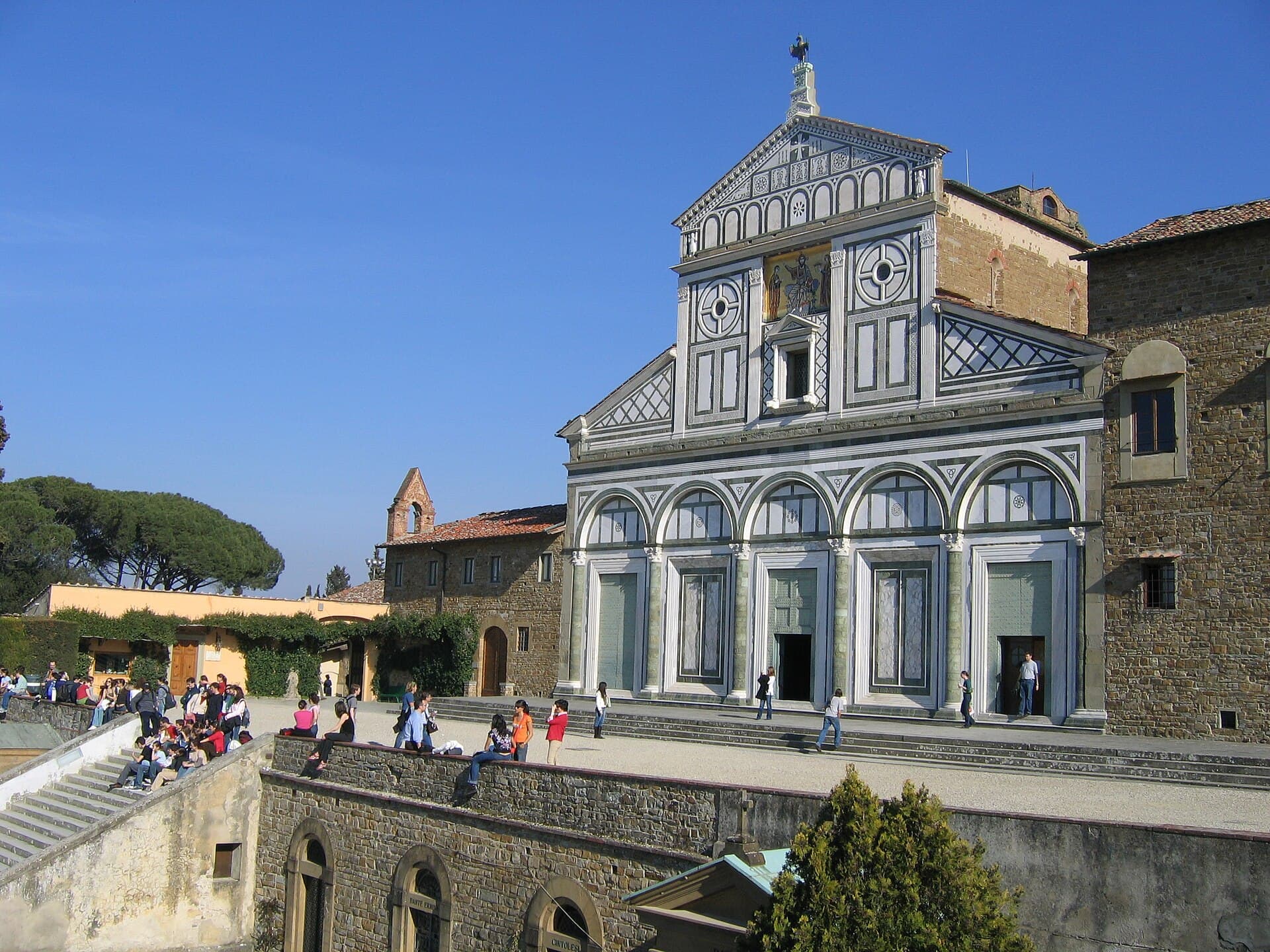 San Miniato al MonteFive minutes' climb above the Piazzale stands Florence's most beautiful Romanesq6 minutes walk4.9
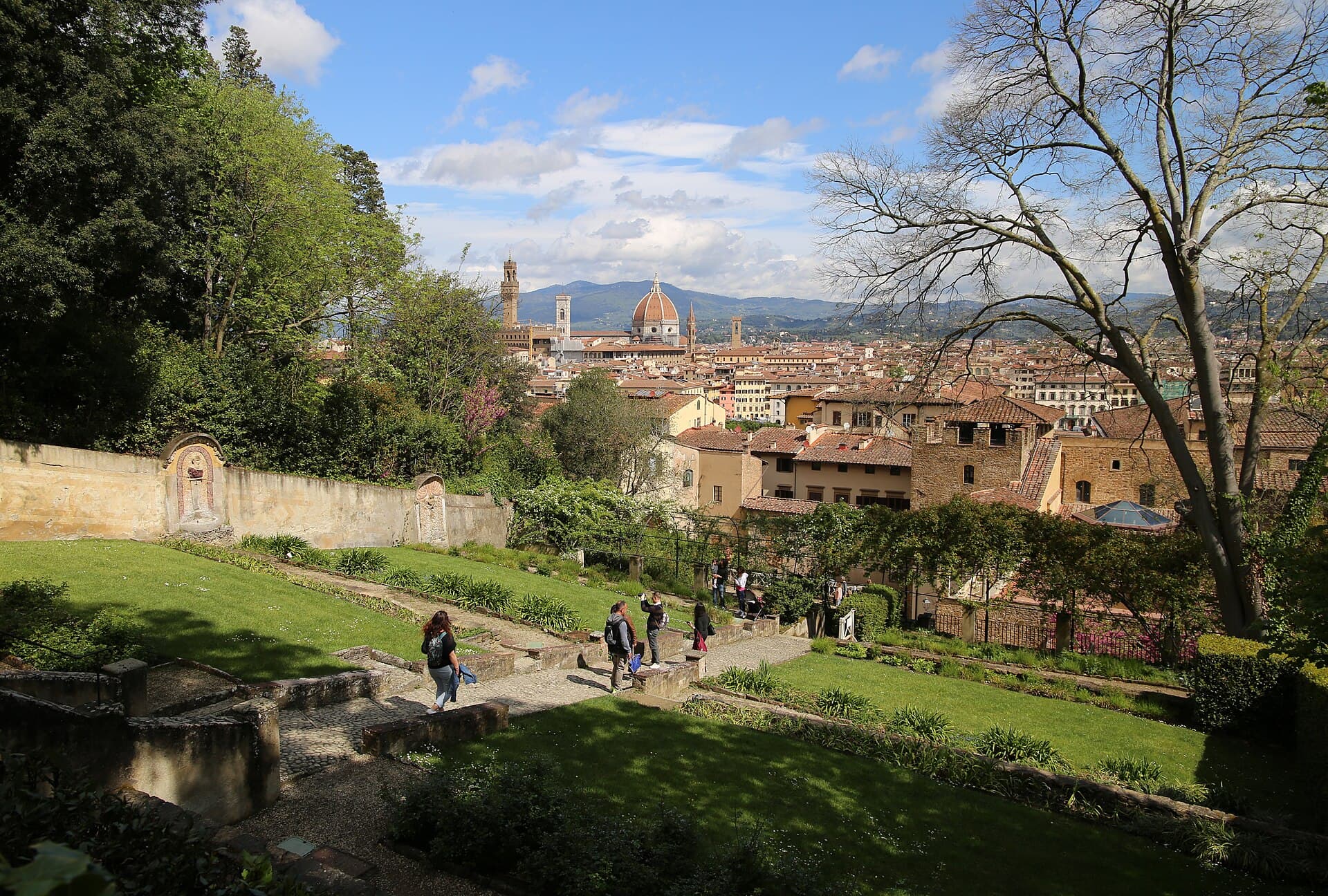 Bardini GardenThe Bardini is Florence's green secret: a hanging garden on the Oltrarno slope, 6 minutes walk4.4
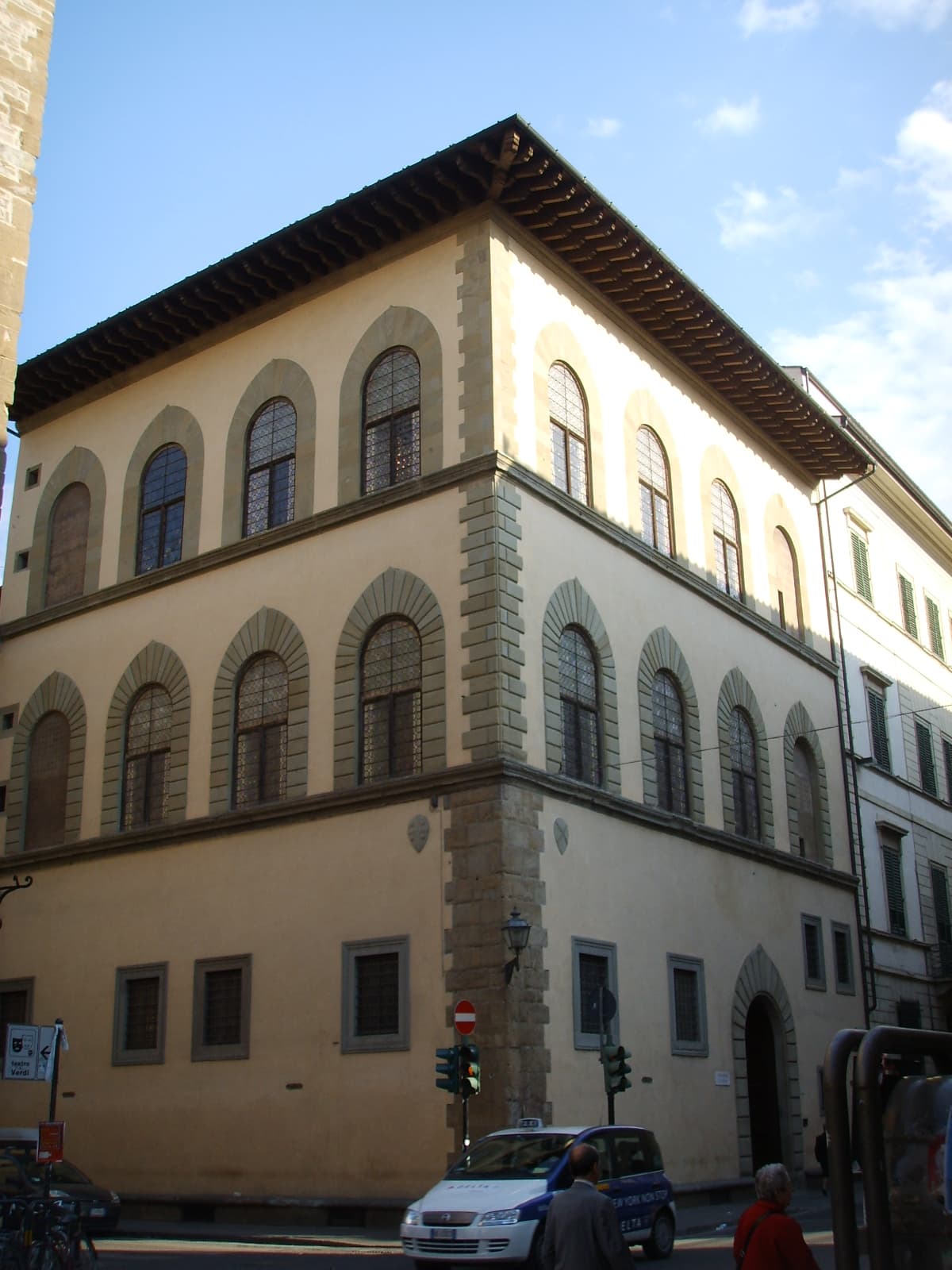 Horne MuseumIn a city where people book the Uffizi weeks out and queue around the block, the7 minutes walk4.5
Do not make it a destination in its own right, but do not walk past it either. If you are heading up to Piazzale Michelangelo for sunset, which you should be, the garden is directly on the way and free, and thirty minutes buys you the same view in peace before the crowd above — just note that in high summer it closes at 8pm, before the sun actually goes down. If you are on the other side of the city with a timed Uffizi or Accademia slot, sacrifice nothing for it.
Yes, as long as you know what you are getting. From November to March the roses are largely absent and what remains is a quiet terraced slope with olive trees, the Folon sculptures, the Japanese corner and a full view of the Duomo and the Arno. That is plenty for a short free stop on the way uphill, and nowhere near enough to justify a dedicated trip across town on a cold winter day — and remember it closes at 5pm in those months.