
The blue everyone copied
The wall colour was not decoration but a dealer's selling technique, and the great museums quietly took it from him.
Ricardalovesmonuments — CC BY-SA 4.0 · Enrica Ridolfi — CC BY-SA 4.0 · sailko — CC BY 2.5 · sailko — CC BY 2.5
The walls are a deep, saturated blue, and that colour alone half justifies the ticket. Stefano Bardini, the most powerful antiques dealer in Italy in his day, worked out that a dark blue ground makes gilding and white marble sing in a way no other backdrop does, and painted his entire palace in it, in varying shades room by room. The crucial thing is that this building was never designed as a museum. It was a showroom. Bardini received rich Americans and northern Europeans here and sold them pieces that now hang in many of the great collections of the world. When he died in September 1922 he left the house and whatever was still in it to the city of Florence, which opened it as a public museum in 1925, and that is why this is the one place where you see the Renaissance as it was sold rather than as it is taught. The shade even got a name of its own, 'Bardini blue', and museums and collectors have imitated it ever since. The building is itself an exhibit. In 1880 Bardini bought what was left of the old church and convent of San Gregorio alla Pace and raised his palazzo on it over the following years, fitting it out with doorways, ceilings and staircases salvaged from the palaces and churches being demolished in the old centre of Florence at exactly that moment. Inside is a mixture that obeys no curatorial logic but his own: Donatello's Madonna of the Cords, Antonio del Pollaiolo's Saint Michael, Tino di Camaino's Charity, glazed terracottas from the Della Robbia workshop, a Tintoretto, thirty Tiepolo drawings, and then rooms of armour, carpets, chests and architectural fragments stacked the way a dealer stacked them. Downstairs there is a small thrill: Pietro Tacca's bronze boar is here, the original. The one whose snout tourists rub in the Mercato Nuovo is a modern cast. So the honest question. Would you skip the Uffizi or the Accademia for this? No. If you have two days in Florence this is not your visit, and it is better to say so plainly. But if you are back in the city a second time, or worn down by the queues and the bookings that close weeks out, this is where you get your breath back: an hour to two hours, in rooms that stay near empty even in high August. Booking through the civic museums site is recommended rather than required, there is no real competition for slots, and walking up works almost every time. The real trap is the calendar. The museum shuts three days a week, Tuesday through Thursday, and that is what catches most visitors. One warning about the name. The Bardini Garden on the hillside, the one with the wisteria and the view, is a completely separate site under separate management with a separate ticket, even though it was the same man and the same fortune. The museum sits on Via dei Renai beside Ponte alle Grazie; the garden gate at Via de' Bardi 1r is a few minutes away and climbs the slope from there, so the two can be paired in one afternoon if the opening days line up. The Oltrarno setting is easy walking, and Masjid al-Taqwa at Borgo Allegri 64, behind Santa Croce, is about ten minutes over the bridge, with most of the centre's halal kebab and shawarma places clustered around it. Nothing here will upset children, but nothing will excite them either; this is firmly an adults' visit. Step-free entry is through the side door on Piazza de' Mozzi; ask staff about the upper rooms before counting on them.
The wall colour was not decoration but a dealer's selling technique, and the great museums quietly took it from him.
Pietro Tacca's bronze boar lives here on the ground floor; the market version everyone photographs is a modern cast.
Its doorways, ceilings and staircases were salvaged from the churches and palaces demolished in the old centre in the late 1800s.
Via dei Renai 37, Oltrarno, Florence (step-free side entrance at Piazza de' Mozzi 1)
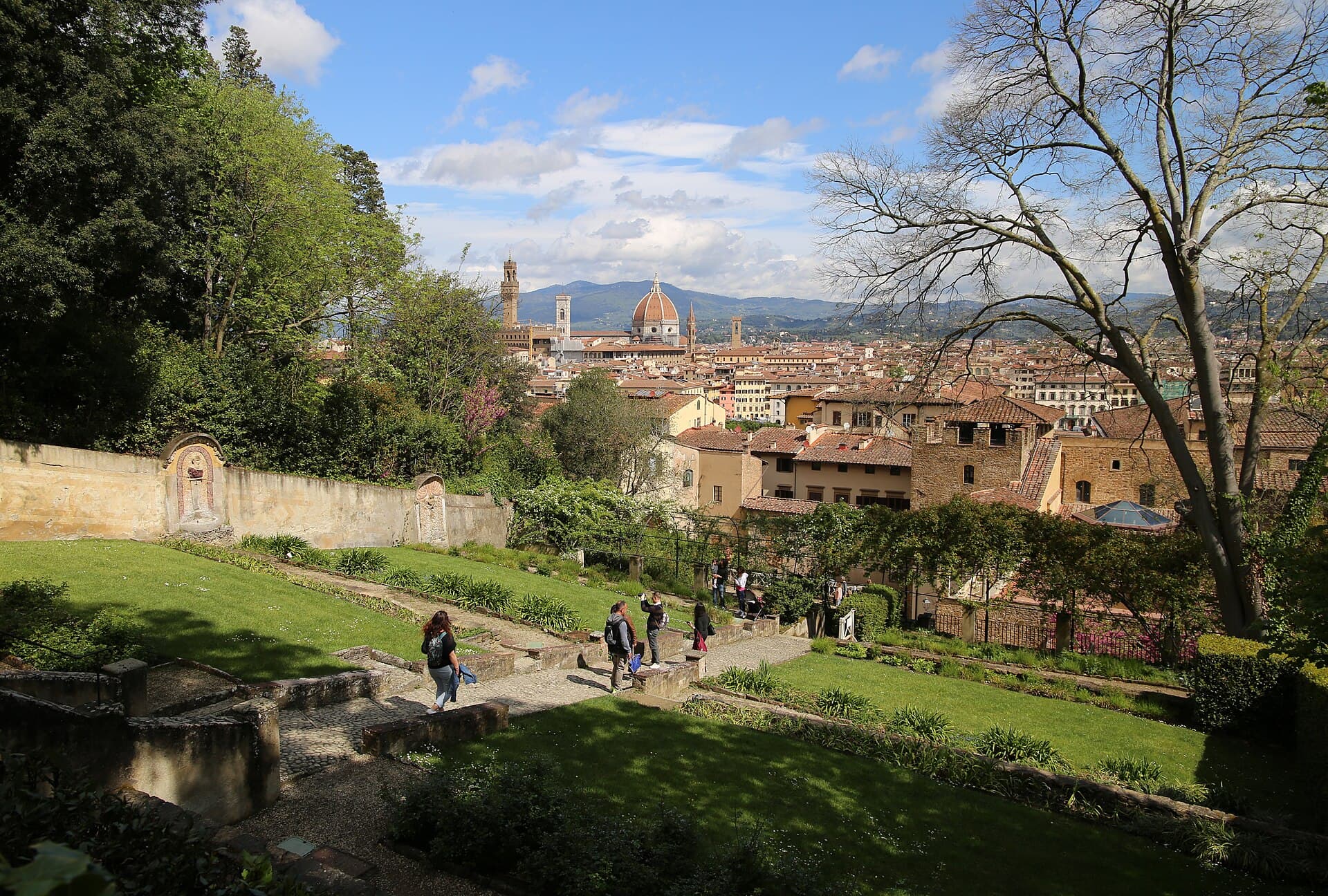 Bardini GardenThe Bardini is Florence's green secret: a hanging garden on the Oltrarno slope, 2 minutes walk4.4
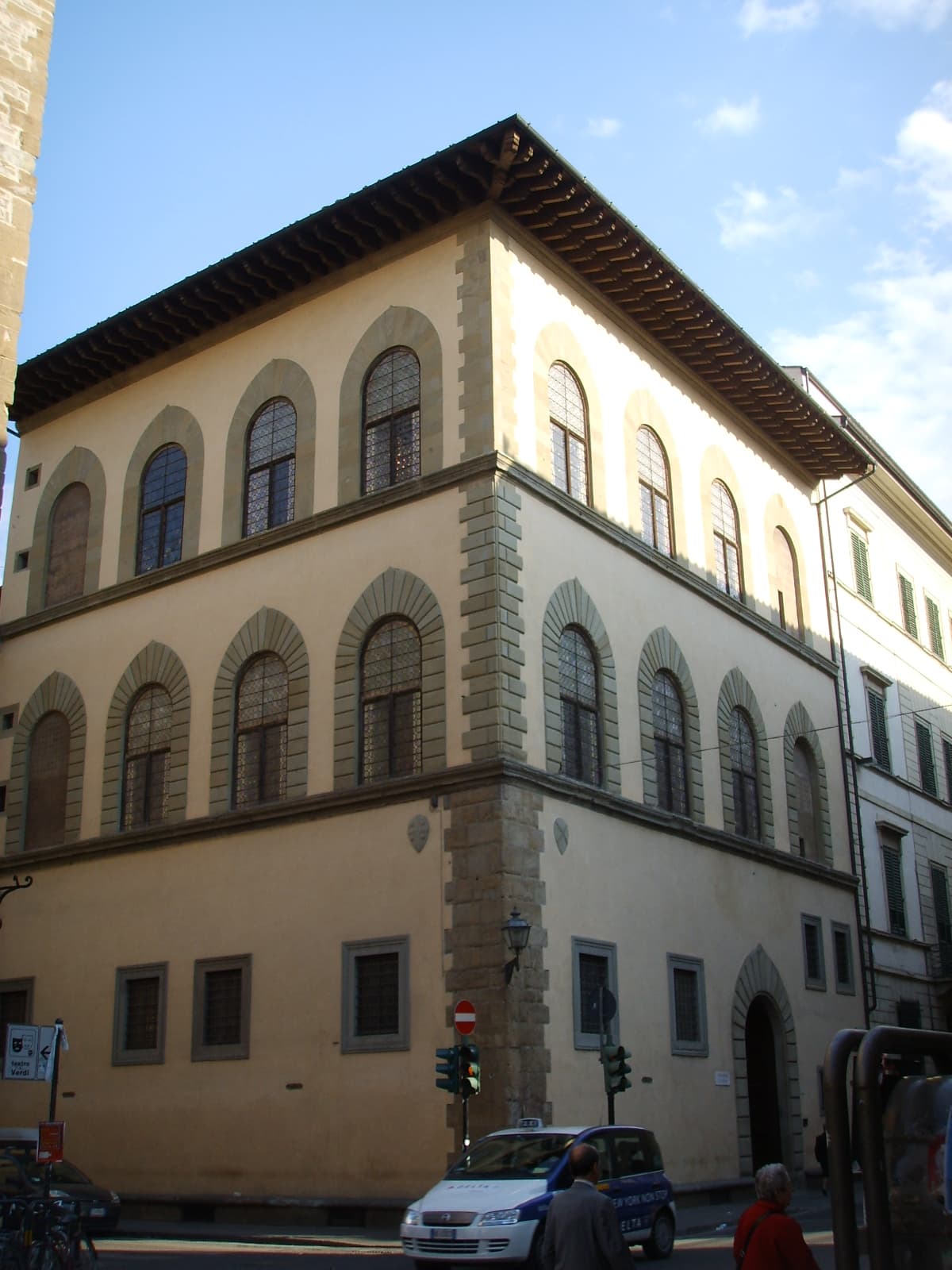 Horne MuseumIn a city where people book the Uffizi weeks out and queue around the block, the3 minutes walk4.5
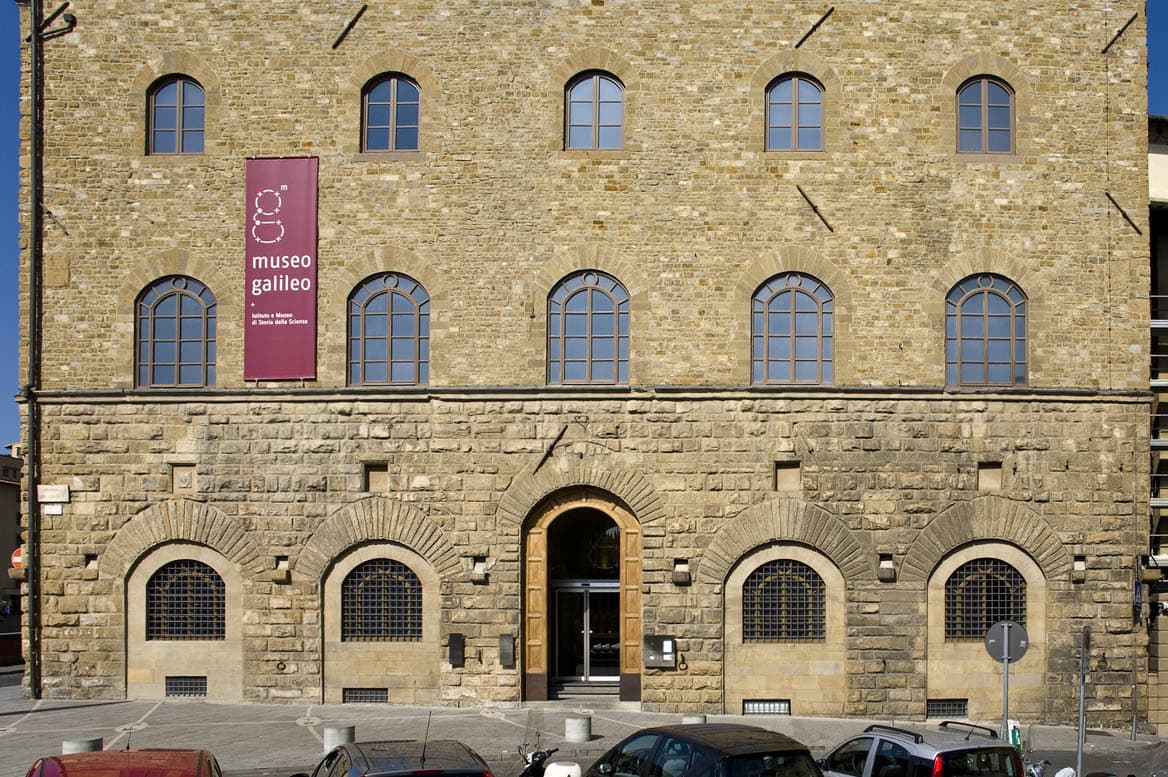 Museo GalileoDirectly behind the Uffizi on the riverbank stands the Museo Galileo — Florence'4 minutes walk4.6
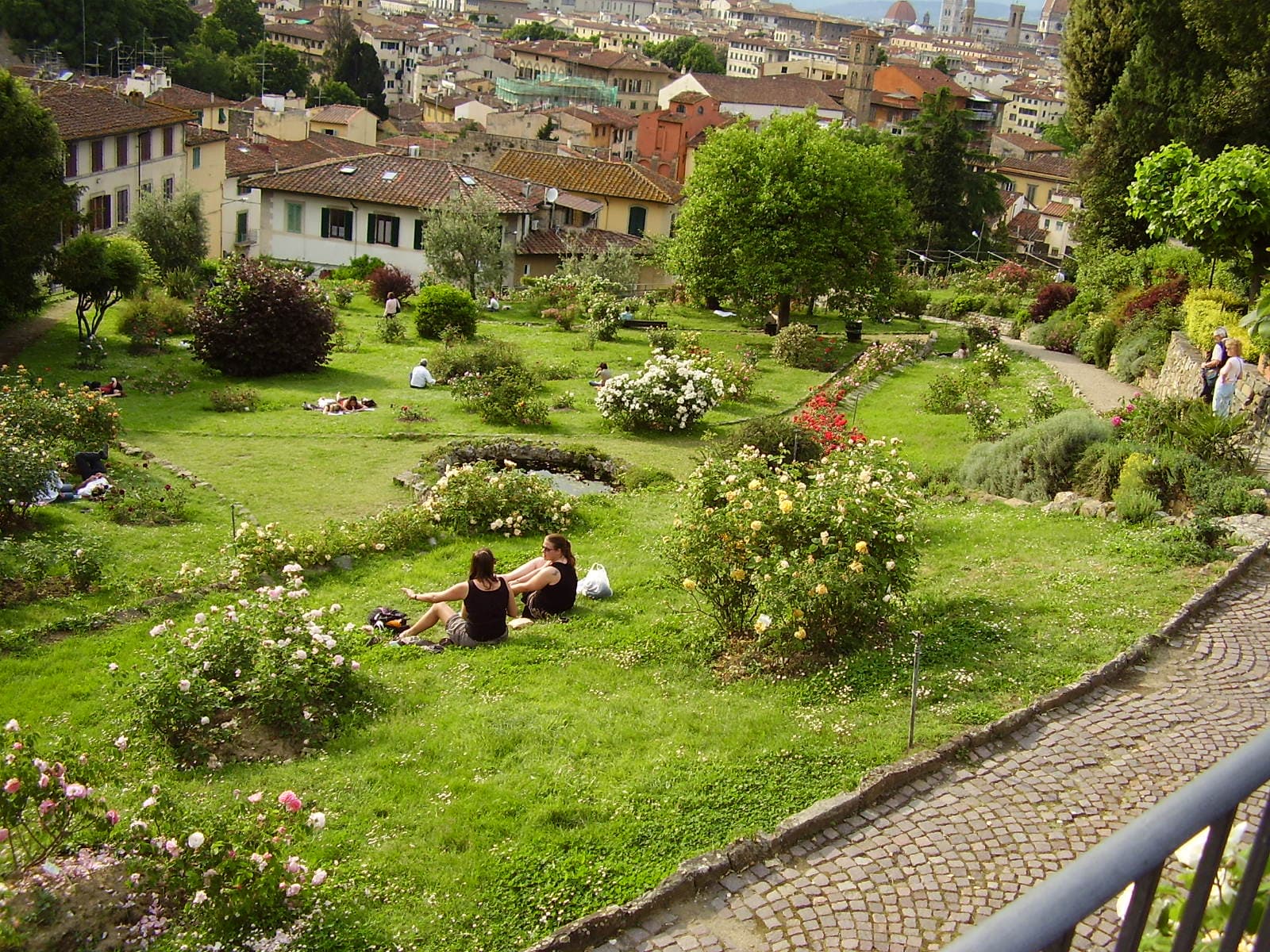 Giardino delle Rose (Rose Garden)A bronze suitcase lies open on the grass halfway down the slope. Stand behind it5 minutes walk4.5
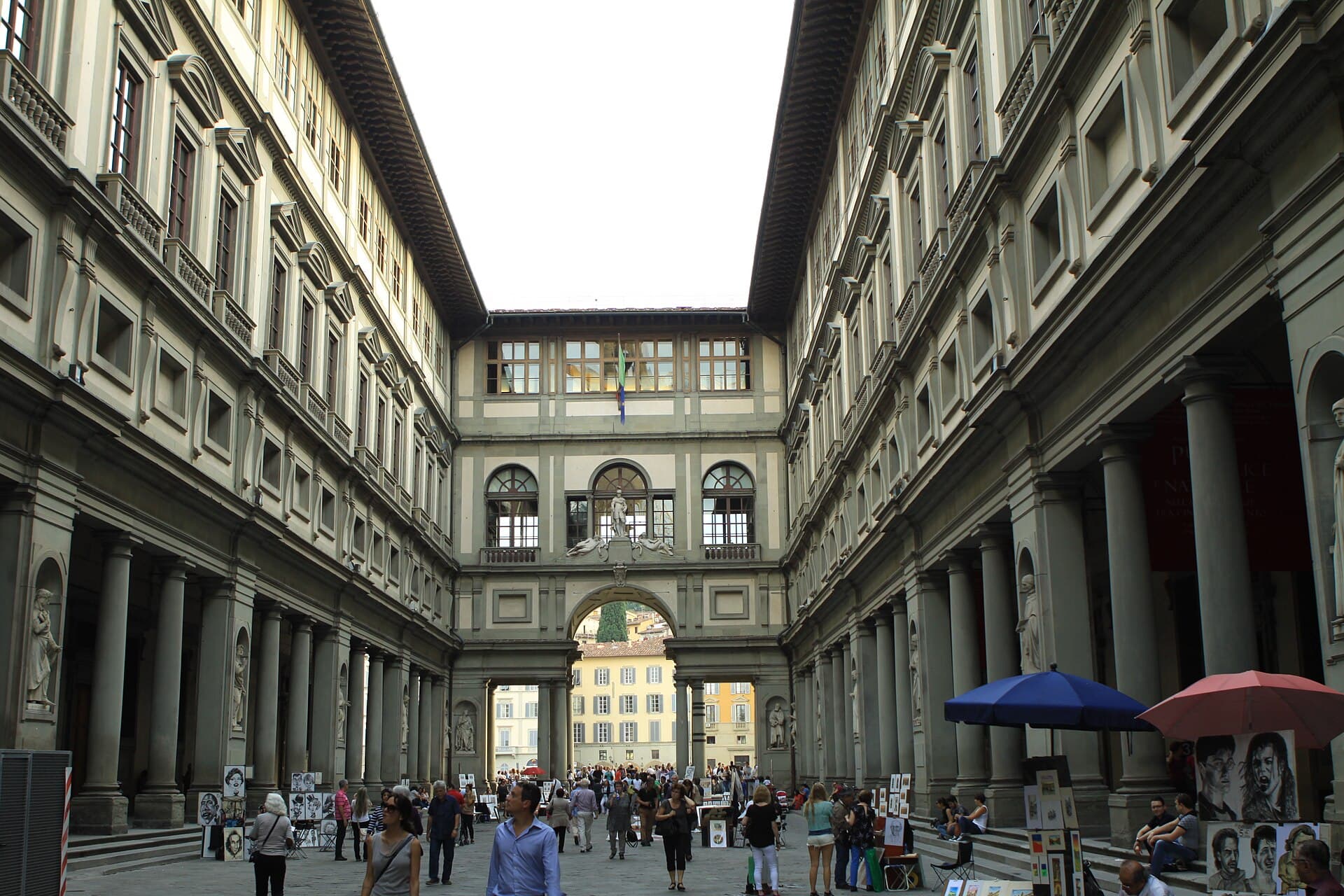 The Uffizi GalleryThe Uffizi is the first museum of Italian painting, absolutely: in the Offices V6 minutes walk4.6
Honestly, no. Two days barely covers the Uffizi, the Accademia and the Duomo, and this is a museum that rewards people who have already seen the essentials. Save it for a second trip, a rainy day that wrecks your plan, or a morning when nothing else can be booked. The exception is if you care about interiors, collecting and display more than about famous paintings, in which case it may well beat something on your list.
No, and this is the most common mix-up on the page. The garden is on the hillside, the museum is down on Via dei Renai near Ponte alle Grazie, and they are separately run and separately ticketed despite the shared name, although a ticket to one earns you a discount on the other. They are only a few minutes apart on foot, so doing both in one day works fine, as long as that day is not a Tuesday, Wednesday or Thursday, when the museum is shut.