
The ship hall
Viking vessel remains raised from the Gota river.
EVL, Erik of Gothenburg — Public domain · Unknown authorUnknown author — Public domain · Alicia Fagerving — CC BY-SA 3.0 · Axadem — CC BY 3.0
The Museum of Gothenburg occupies the Swedish East India Company building of 1750 — itself the most important exhibit: headquarters of the trading company that built Gothenburg's wealth through voyages to China lasting a year and a half and returning laden with tea, silk and porcelain. Its most valuable holding is the Askeberg ship, the remains of the only original Viking-age vessel on display anywhere in Sweden — raised from the Gota river and shown in a dedicated hall. Around it is a full exhibition on western Sweden in the Viking age, built on local archaeological finds. The other sections narrate the city's story in sequence: its Dutch foundation in the seventeenth century (Gothenburg was laid out with canals in the Dutch manner, traces of which remain visible), then the era of Asian trade, then industrialisation, the shipyards, and the mass emigration to America that departed from this port specifically.
Viking vessel remains raised from the Gota river.
The voyages that built the city's wealth.
Norra Hamngatan 12, 411 14 Gothenburg
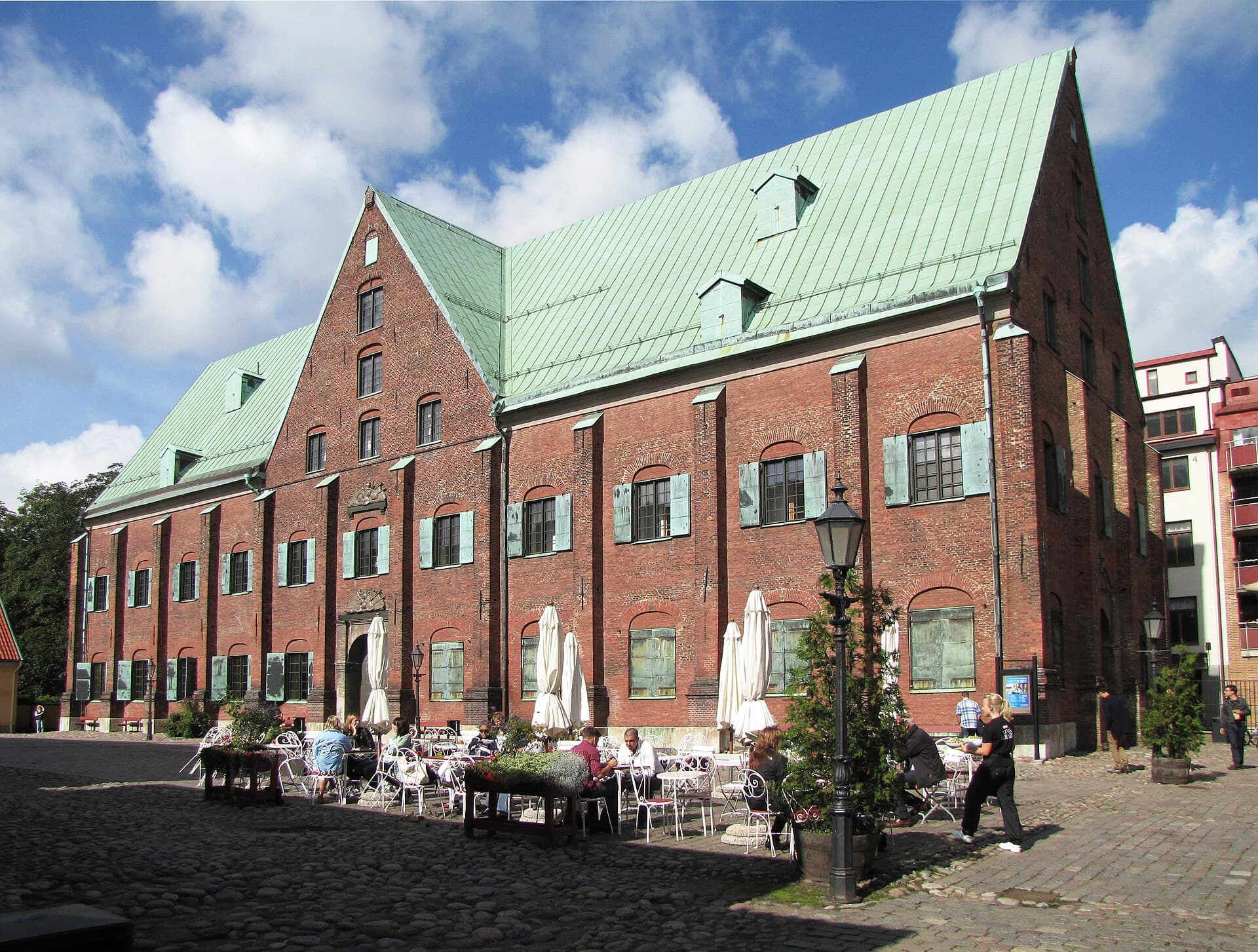 Kronhuset and the KronhusbodarnaKronhuset is **the oldest standing building in Gothenburg**: a red brick arsenal2 minutes walk4.1
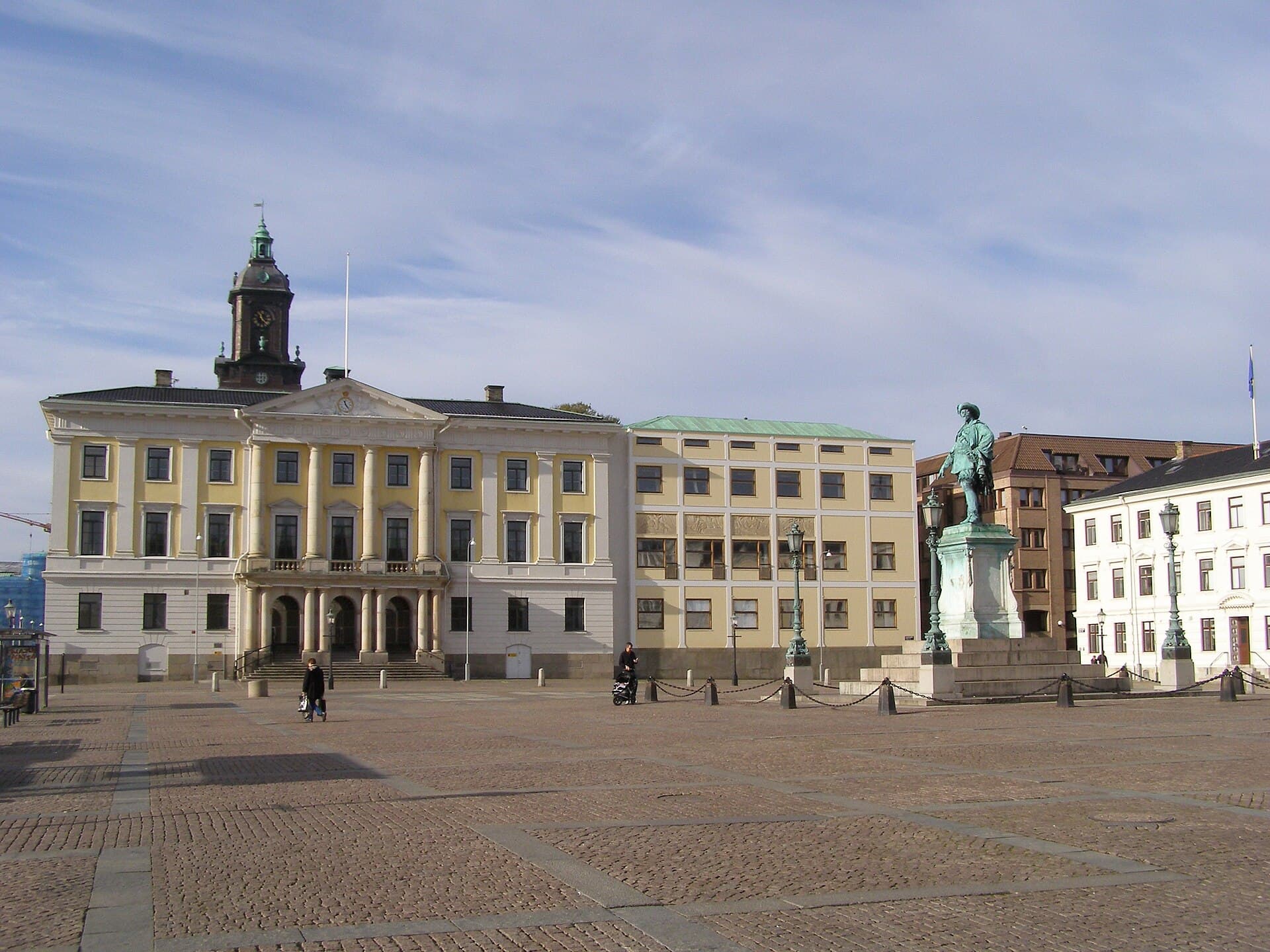 Gustaf Adolfs torgGustaf Adolfs torg is Gothenburg's official square, ringed by its administrative3 minutes walk4.1
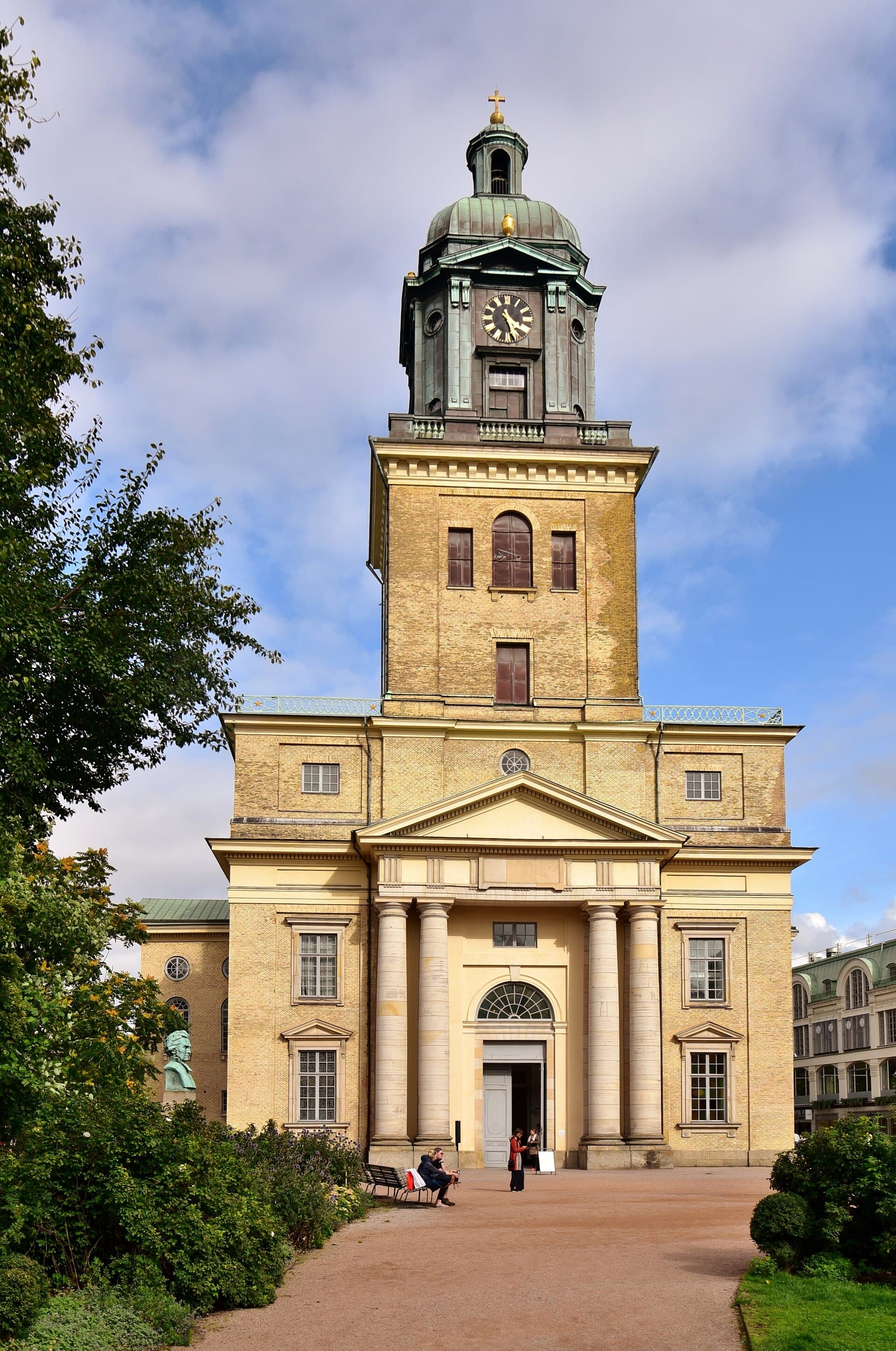 Gothenburg CathedralGothenburg Cathedral stands in the middle of the city, and is the **third** buil3 minutes walk4.5
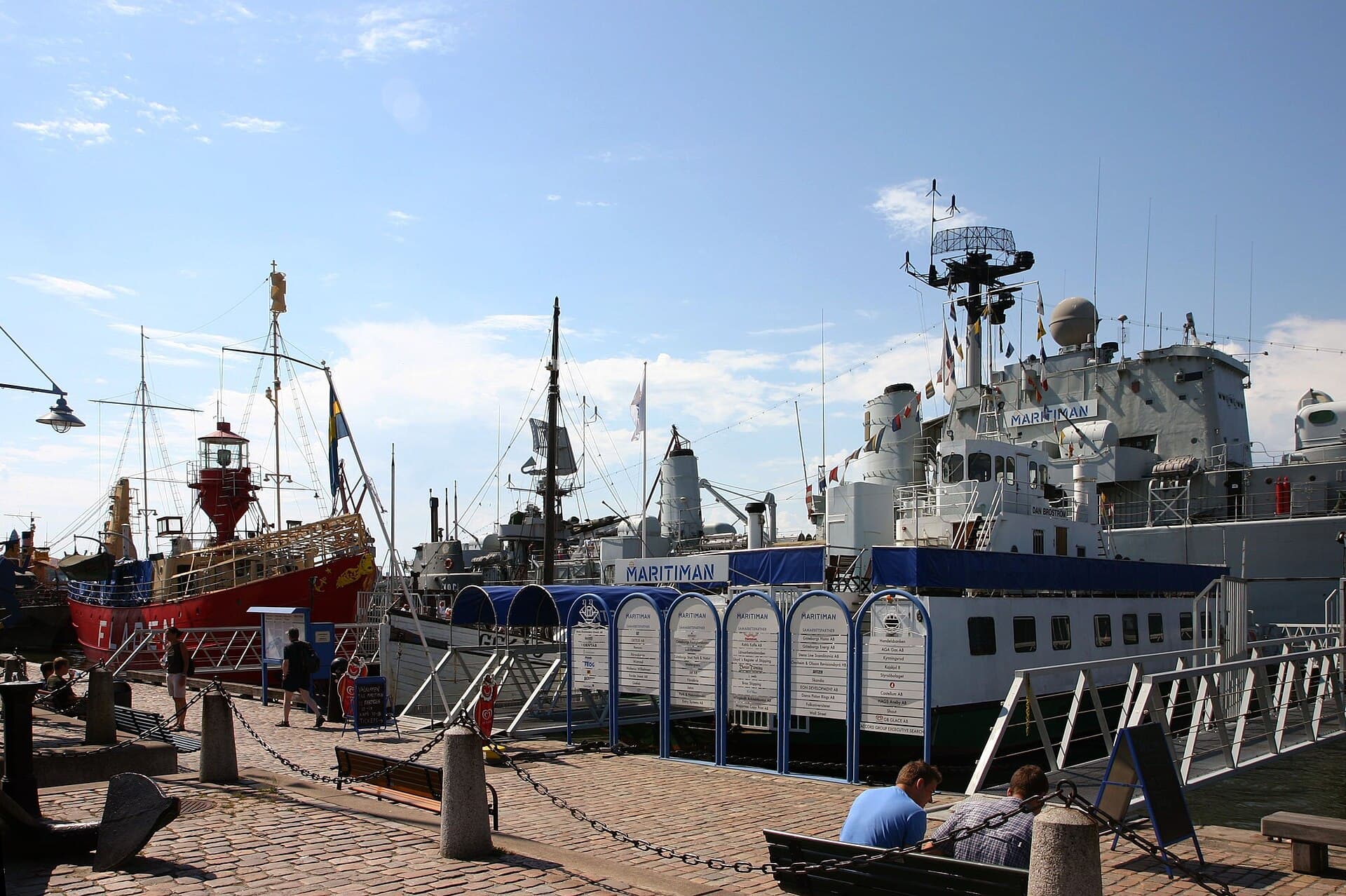 Maritiman — the Floating Maritime MuseumMaritiman is **the largest floating ship museum in the world**: nineteen histori4 minutes walk4.5
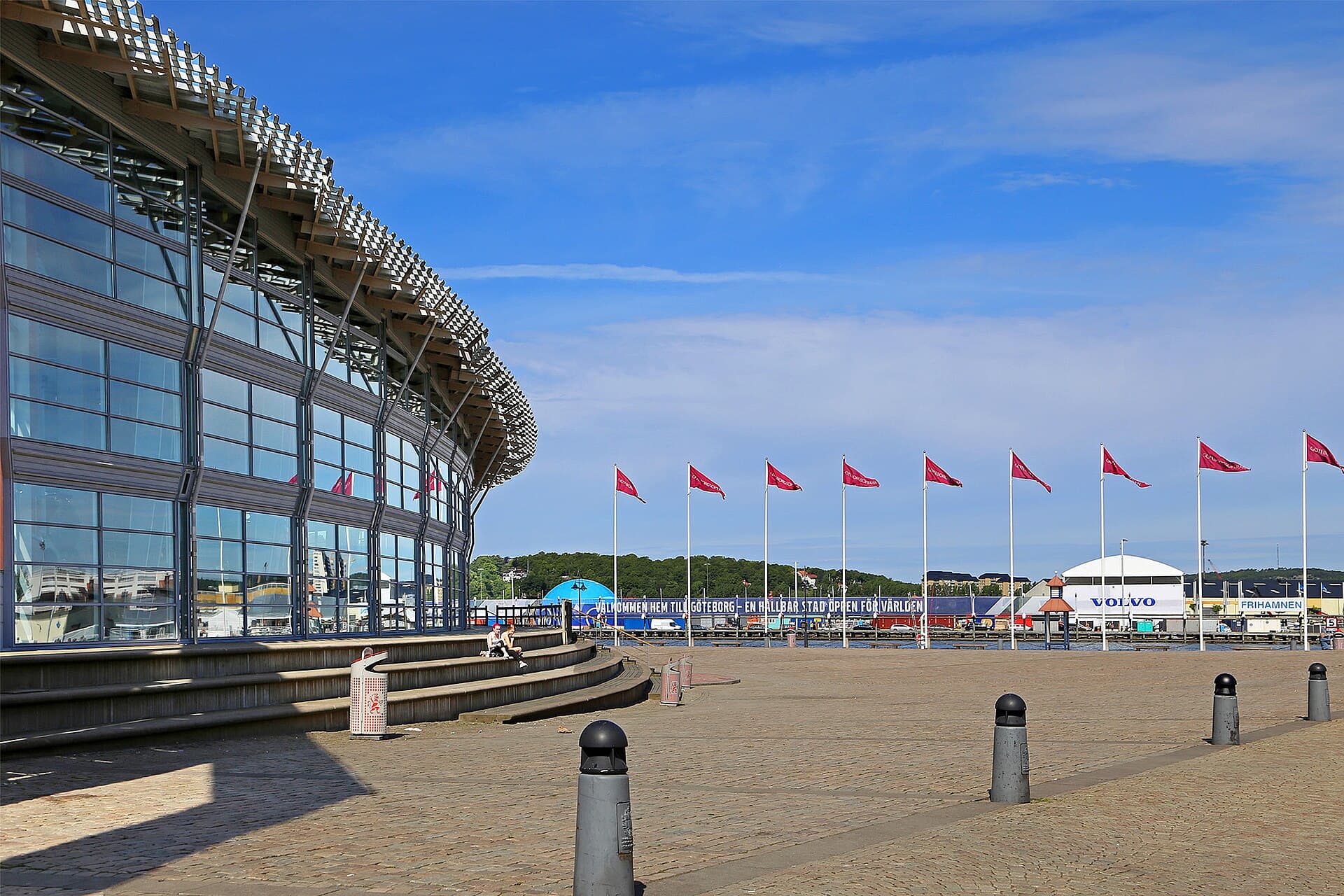 The Gothenburg OperaThe Gothenburg Opera stands directly on the harbour edge, opened in 1994, and it6 minutes walk4.7
Because King Gustav Adolf brought in Dutch engineers in 1621 to plan the city — they were then the world's most skilled at building on low, wet ground, which is exactly the situation at the mouth of the Gota river. They designed a canal network for drainage, transport and defence, and the main canal and the fortification moat are still visible in the city centre today.