
192 calligraphy panels
One of the largest gatherings of Ottoman calligraphy in any single mosque, by 41 masters; ask for the famous giant waw.
Beñat Irasuegi — CC BY-SA 4.0 · Mohammad Hijjawi — CC BY-SA 4.0 · Mustafa DUMAN — CC BY 3.0 · Mustafa DUMAN — CC BY 3.0
The story Bursa likes to tell is that Sultan Bayezid I vowed to build twenty mosques if he won at Nicopolis, and when he did win, in 1396, he built one mosque with twenty domes instead. True or not, the result is in front of you: a vast hall of roughly 55 by 69 metres, carried on twelve stone piers in four rows, with twenty domes packed shoulder to shoulder above. It was finished in 1399 and is usually credited to the architect Ali Neccar, and it is the largest and most ambitious of the early Ottoman multi-domed mosques in the Seljuk manner, a type the Ottomans soon abandoned for the single soaring dome you know from Istanbul. What justifies the trip, though, is the walls, not the ceiling. Across the piers and surfaces hang 192 monumental calligraphy panels by 41 Ottoman calligraphers, most written between 1778 and 1938, in jeli thuluth, Kufic and tughra forms: Quranic verses, hadith, the ninety-nine names of God. Few mosques anywhere hold this much calligraphy under one roof, which is why locals call it the calligraphy museum. Ask anyone to point you to the giant letter waw, the most famous panel here and the subject of more legends than one letter should have to carry. The walnut minbar, made in 1400 in the kündekari technique that locks pieces together without nails, is said to map the solar system in its carvings, a charming claim nobody has managed to prove. To its left hangs a curtain from the door of the Kaaba, by tradition sent by Selim I after the conquest of Egypt. In the middle of the hall itself, not in a courtyard, sits an eighteen-sided ablution fountain beneath a dome that was once open to the sky and is now glazed, so light falls onto running water and the sound of it fills the whole building. The mosque has not had an easy life: Timur's army burned it in 1402, the Karamanids vandalised it in 1412, and the 1855 earthquake brought down eighteen of the twenty domes; the roof was only rebuilt by 1889. It looks today as if none of it ever happened. Entry is free and the mosque is open daily from dawn to the night prayer, closing to visitors around each prayer and for much longer at Friday noon, when the crowd spills onto the pavement. Modest dress and shoes off are a given. It stands on Atatürk Caddesi in the dead centre of town with the hans district and the silk merchants of Koza Han directly behind it, so make it the first stop on a walk through old Bursa. Half an hour to an hour is plenty, and families are comfortable here: one carpeted hall, no stairs, and pushchairs parked at the door.
One of the largest gatherings of Ottoman calligraphy in any single mosque, by 41 masters; ask for the famous giant waw.
An eighteen-sided ablution basin in the middle of the prayer hall under a glazed dome, lit from above and audible everywhere.
A 1400 minbar in nail-free kündekari joinery, with a curtain from the Kaaba door, by tradition a gift from Selim I, hanging to its left.
Atatürk Caddesi, Osmangazi, central Bursa
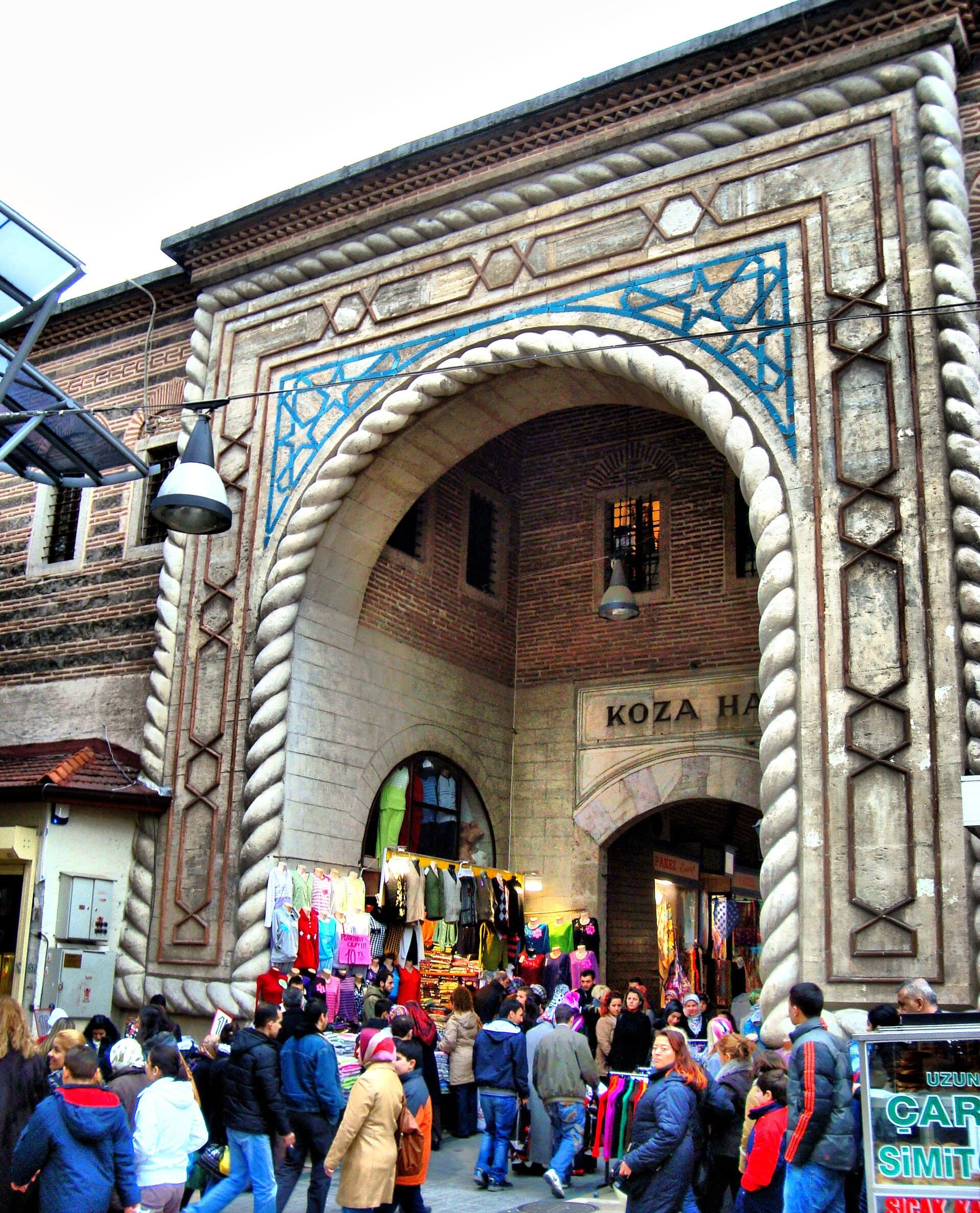 Koza Han and the Bursa BazaarSilk has been weighed and haggled over in this courtyard for more than five cent2 min walk
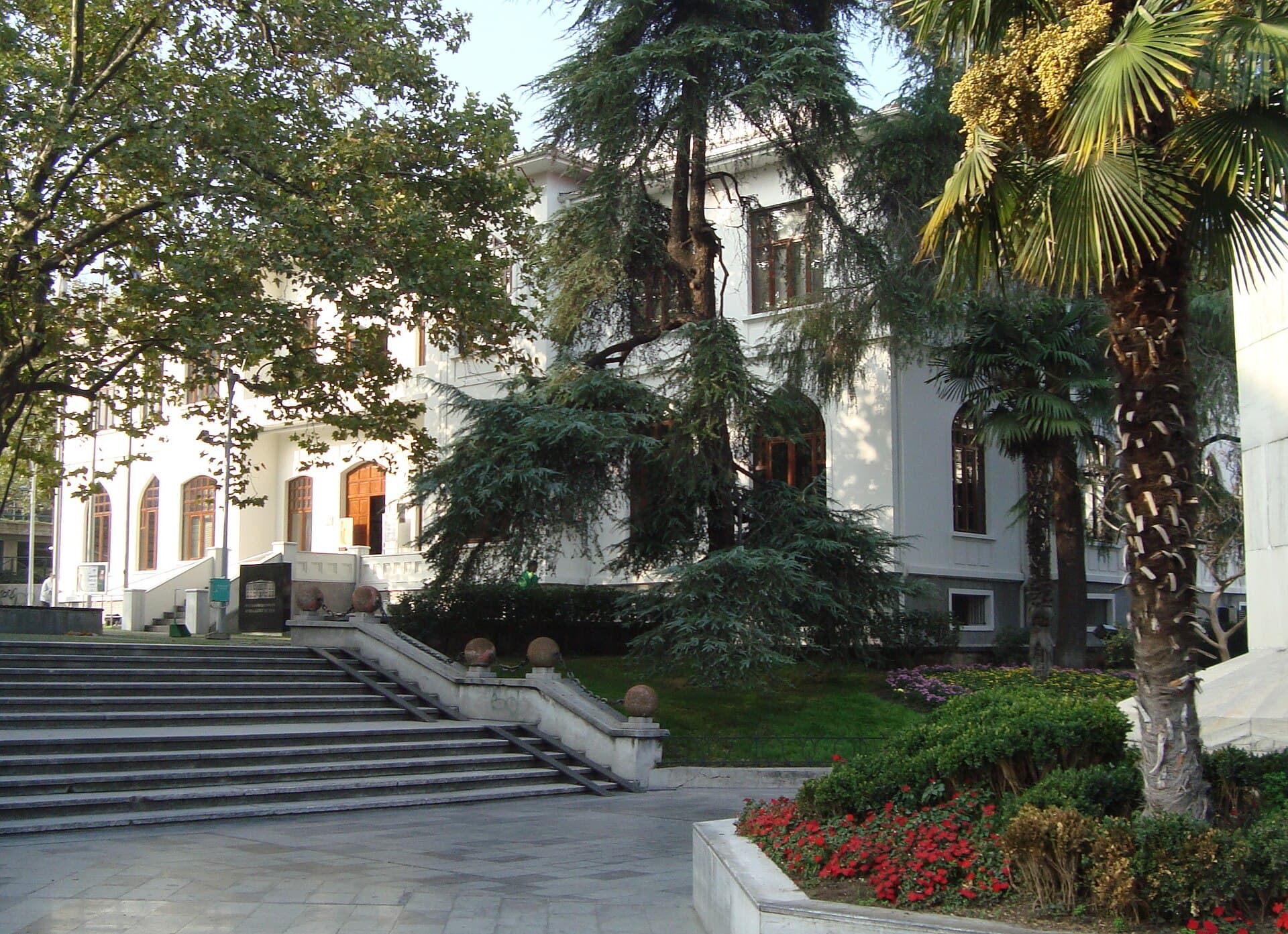 Bursa City MuseumTurkey's first city museum was never built to be one: it was the courthouse. The5 min walk
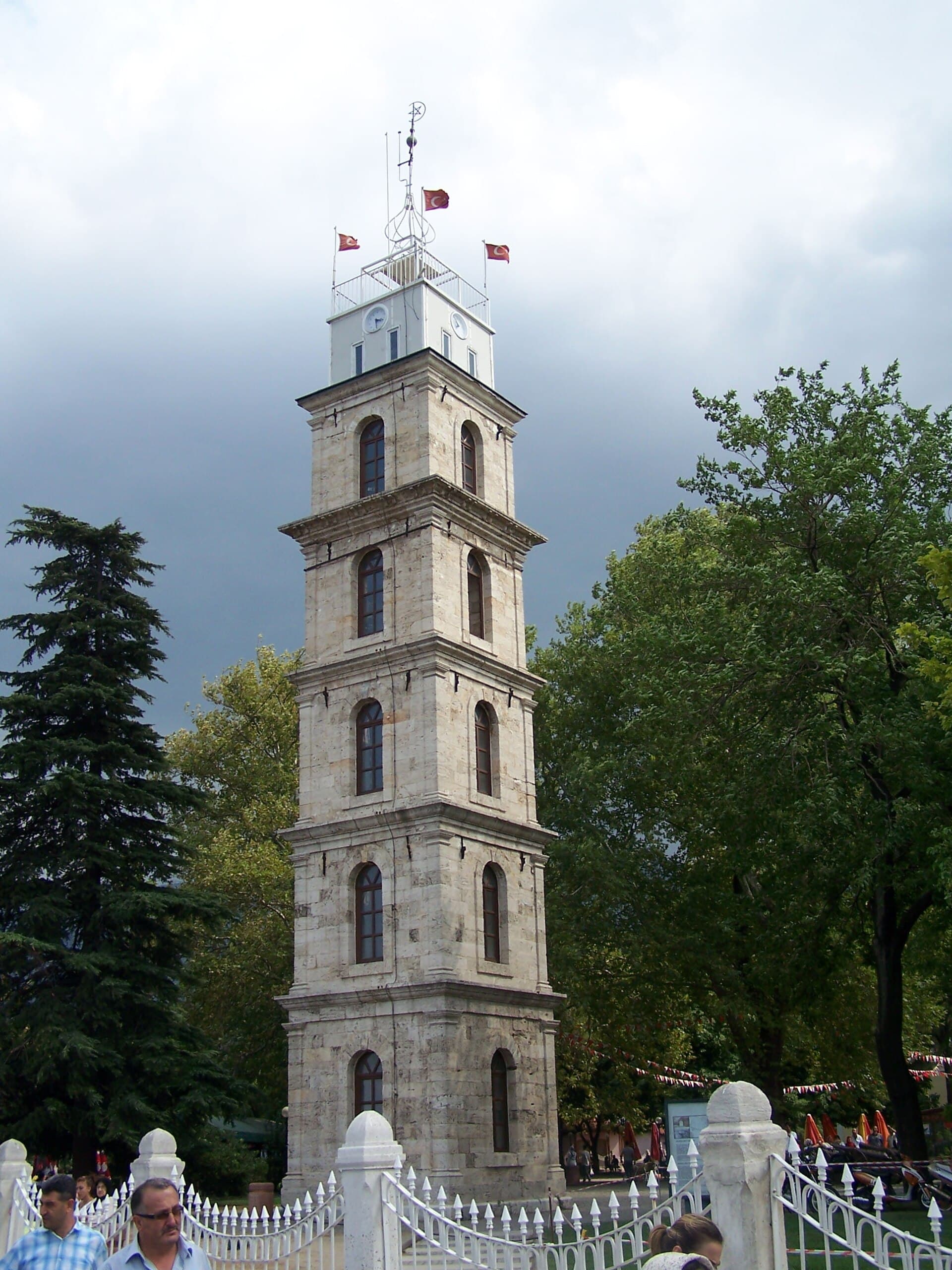 Tophane Clock Tower and the Tombs of Osman and Orhan GaziOn this hilltop lies the man the whole Ottoman state is named after, and the son7 min walk
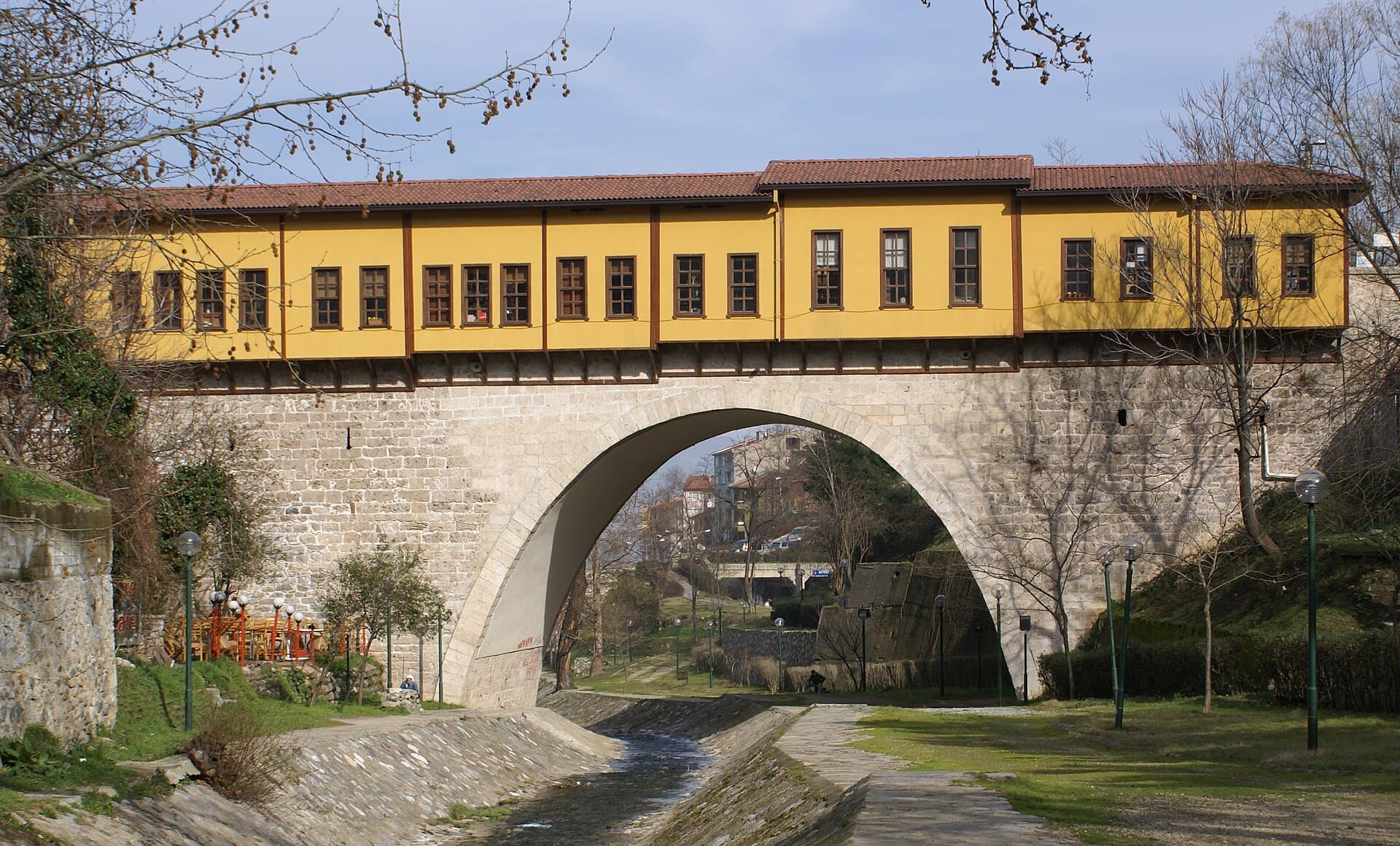 Irgandı BridgeIt is a bazaar that happens to be a bridge, not a bridge that happens to have a 10 min walk
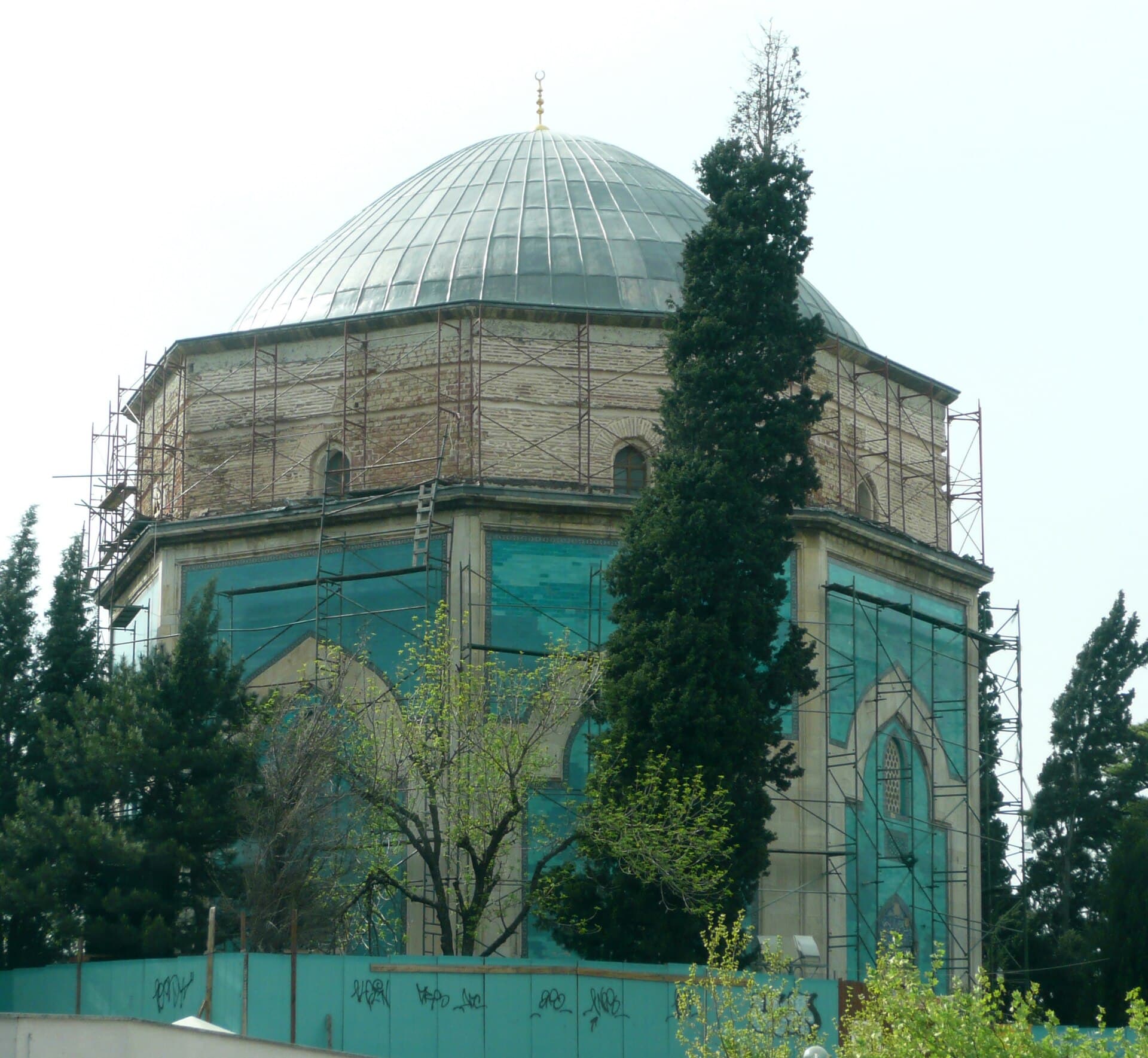 Green Mosque (Yeşil Cami)It is called the Green Mosque and its façade is white marble, so do not judge it14 min walk
The Grand Mosque if you want scale and calligraphy: a forest of piers, twenty domes and 192 panels under one roof. The Green Mosque is far smaller but has the finest tilework in the city. They are about twenty minutes apart on foot, or a few minutes by car, so honestly both fit in one morning.
Yes, because it is a completely different building. There is no single soaring dome here but a relatively low hall of twenty domes with a fountain in the middle, and the pleasure is in reading the walls rather than craning your neck. If calligraphy leaves you cold, half an hour is enough before you move on to Koza Han behind it.
Sign in to write your review of this place.
No reviews yet — be the first.