
Tea under the plane trees
The tea tables around the tiny octagonal mescit are the whole point; sit down before you shop.
Haluk Comertel — CC BY 3.0 · Dosseman — CC BY-SA 4.0 · Dosseman — CC BY-SA 4.0 · Dosseman — CC BY-SA 4.0
Silk has been weighed and haggled over in this courtyard for more than five centuries. Koza Han, the 'cocoon inn', was built for Bayezid II in 1490-91 as an endowment whose rents went to his mosque complex in Istanbul, and for centuries it was where Anatolian farmers brought sacks of silkworm cocoons to sell to the city's merchants; in the early 1500s the Medici of Florence kept their commercial agent here. Remarkably, it still does more or less the same job: two storeys of cut stone and brick, a hundred-odd rooms now holding scarf and fabric shops, and in the middle a tiny octagonal mescit raised on eight pillars over an ablution fountain, shaded by enormous plane trees with tea tables underneath. Honesty first: the silk is not the best thing here. Prices in the han's shops are tourist-grade, a fair amount of the stock is not woven in Bursa, and bargaining is expected. The real pleasure is sitting down, with a glass of tea or a coal-brewed Turkish coffee under the planes, looking up at the repeating arches of the upper gallery while the call to prayer drifts over from the Grand Mosque next door. The courtyard is flat and pushchair-friendly; the upper floor is stairs only, but that is where the photograph everyone sends home is taken. Step out of the han's gate and you are in the Khans District, inscribed in 2014 as part of the 'Bursa and Cumalıkızık' World Heritage site, which in practice is one continuous bazaar. The Kapalıçarşı, the covered market, begins directly behind the han, with the old Bedesten at its core for gold and silver, then the Yorgancılar and Sipahi lanes for quilts, fabrics and household goods. Two things are genuinely worth buying here: Bursa cotton towels, a local craft long before the phrase 'Turkish towel' existed, and Bursa candied chestnuts, sold in handsome boxes and the standard gift to carry home. Orhan Gazi Mosque sits at one end of the han and Ulu Cami at the other, so prayer is never far. Allow one to two and a half hours for han and bazaar together. Mornings are calmest, Saturday afternoon is the crush, and on Sundays the han and its cafés usually stay open on shorter hours while most of the covered-bazaar lanes shut. In August Bursa is hot but this shaded courtyard is one of the coolest corners of the city; in winter the tea moves indoors and the han makes a warm stop after a day in the snow on Uludağ.
The tea tables around the tiny octagonal mescit are the whole point; sit down before you shop.
Climb the stairs to the upper arcade for the full sweep of arches and courtyard, one of the best photographs in old Bursa.
The bazaar's real buys are not silk but Bursa cotton towels and boxed candied chestnuts.
Uzunçarşı Caddesi, Osmangazi, central Bursa
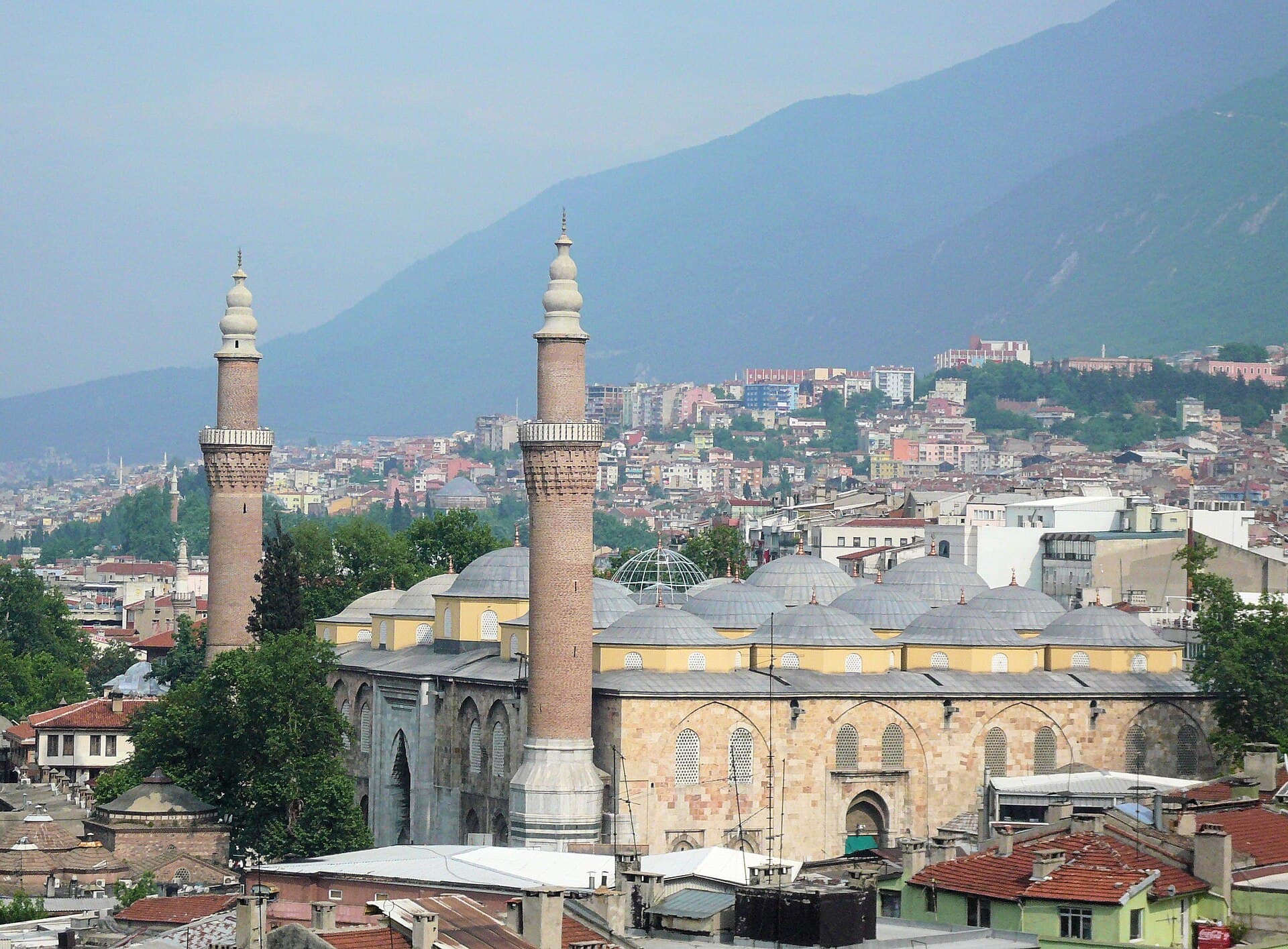 Grand Mosque of Bursa (Ulu Cami)The story Bursa likes to tell is that Sultan Bayezid I vowed to build twenty mos2 min walk
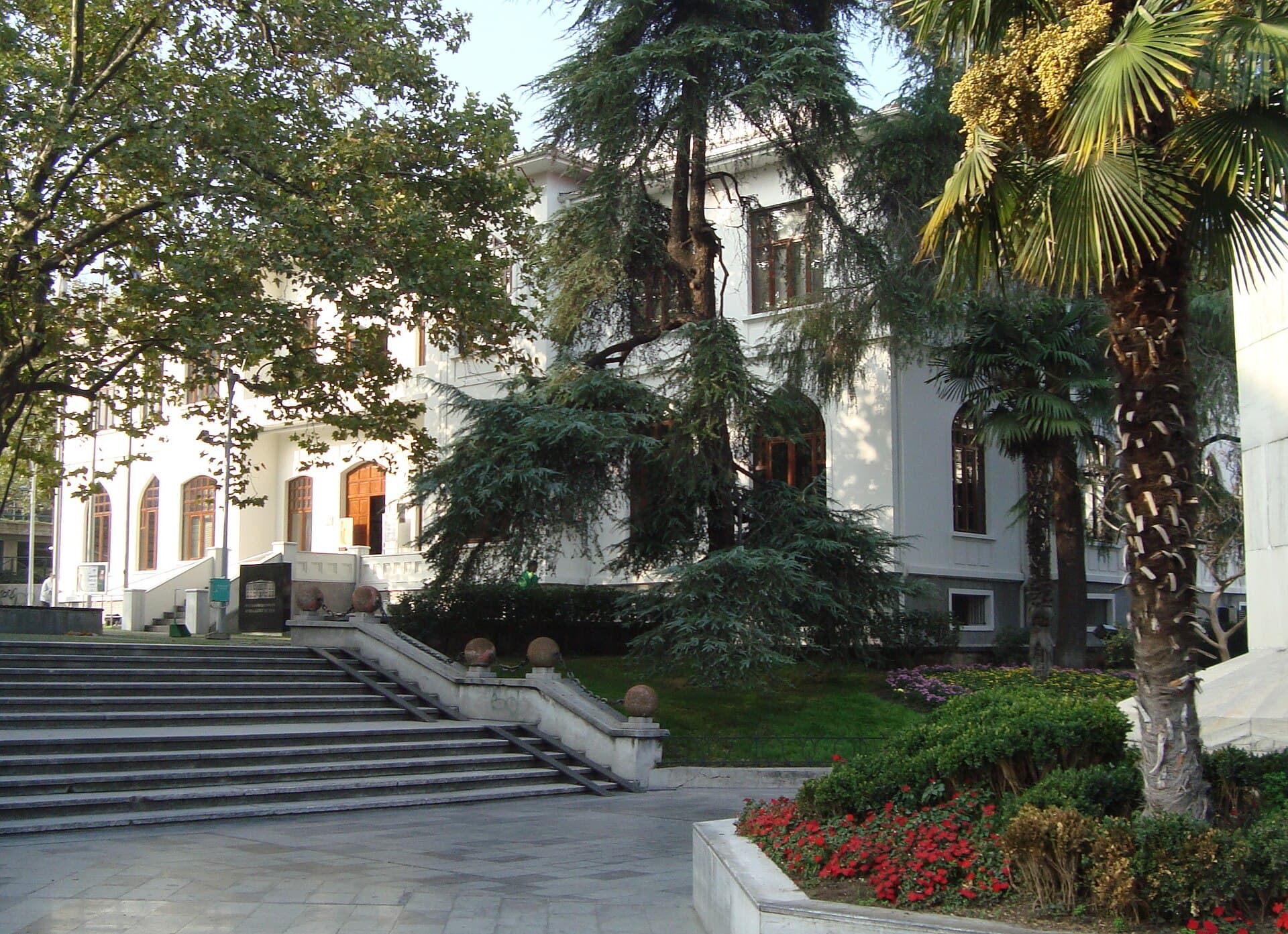 Bursa City MuseumTurkey's first city museum was never built to be one: it was the courthouse. The4 min walk
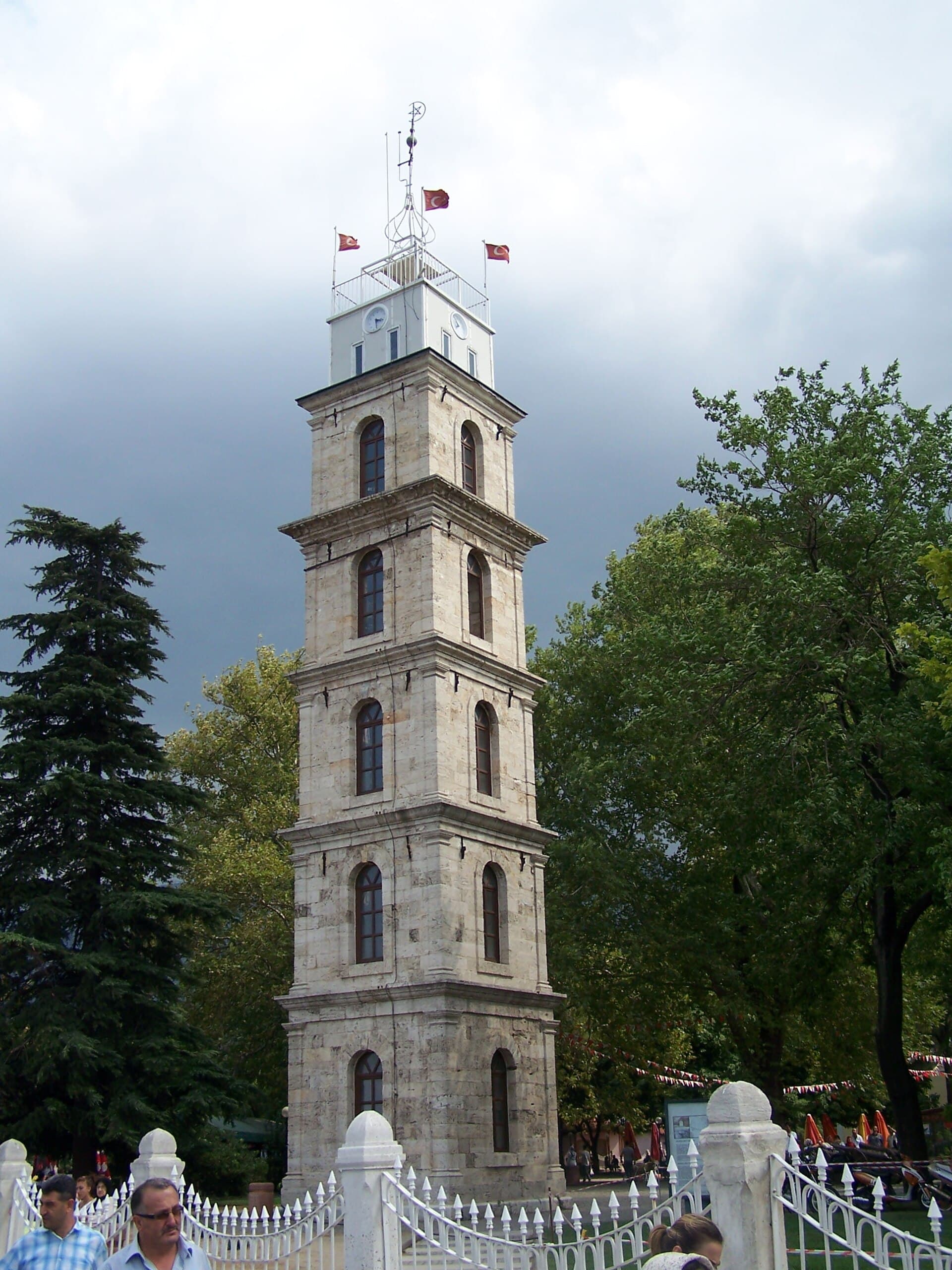 Tophane Clock Tower and the Tombs of Osman and Orhan GaziOn this hilltop lies the man the whole Ottoman state is named after, and the son8 min walk
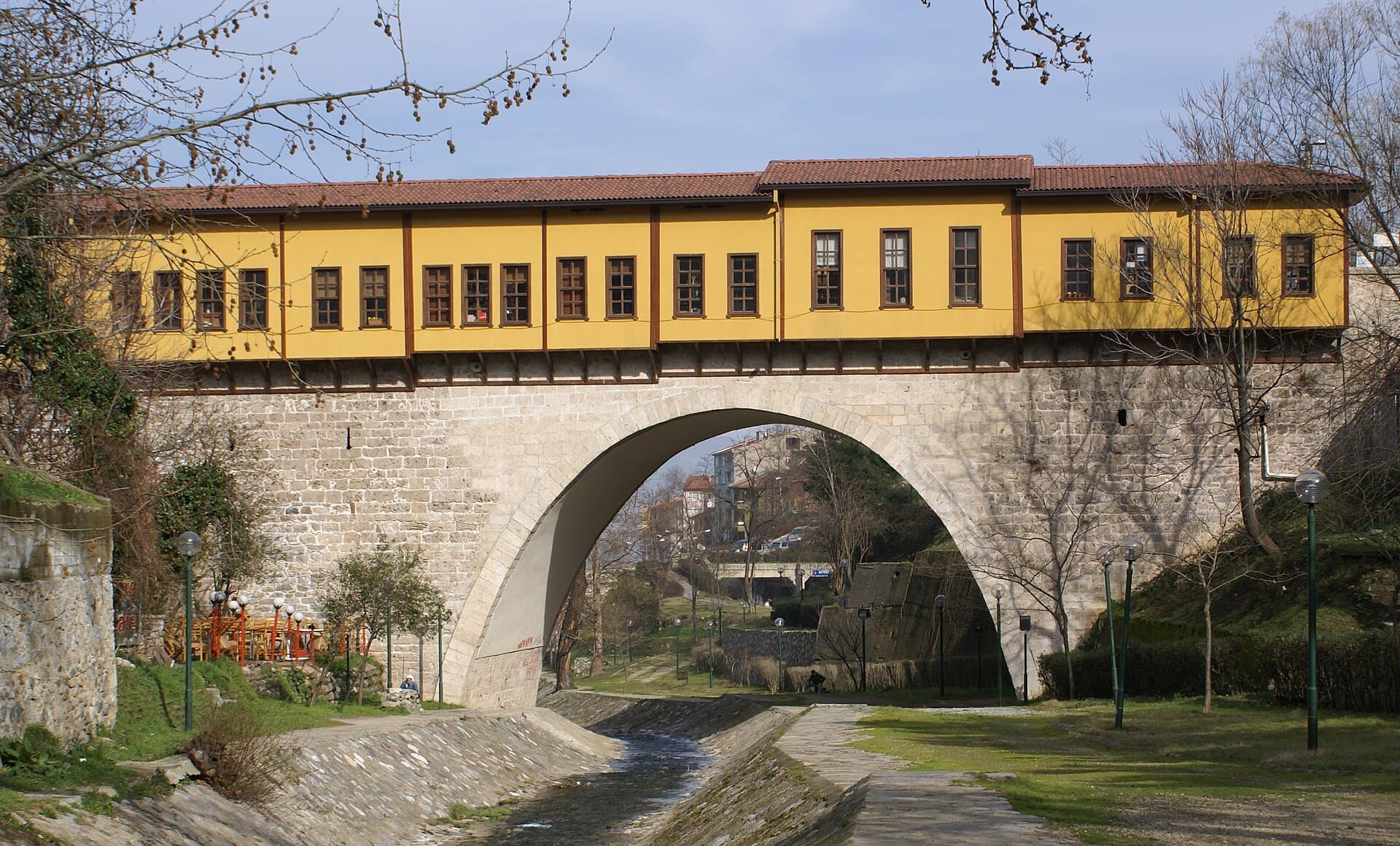 Irgandı BridgeIt is a bazaar that happens to be a bridge, not a bridge that happens to have a 8 min walk
 Green Mosque (Yeşil Cami)It is called the Green Mosque and its façade is white marble, so do not judge it12 min walk
Not necessarily. Bursa was the silk capital, but much of what hangs in the shops today is imported or blended, and prices in the han are no lower than Istanbul's Grand Bazaar. Ask what is locally woven, feel the fabric, and bargain down by at least a third. For a safe purchase, buy towels and candied chestnuts instead of silk.
Worth it, but as a short break rather than a shopping expedition. The courtyard is flat, safe and takes a pushchair, and children like the fountain and the pigeons. Pair it with Ulu Cami next door in a single hour, and avoid Saturday afternoon when the bazaar lanes get uncomfortably packed.
Sign in to write your review of this place.
No reviews yet — be the first.