
Ribbed dome
Azure blue.
Adam Jones from Kelowna, BC, Canada — CC BY-SA 2.0 · Shuhrataxmedov — CC BY-SA 3.0 · LBM1948 — CC BY-SA 4.0 · SAKRI — CC BY-SA 4.0 · Arina Pan — CC BY-SA 4.0 · Jean-Pierre Dalbéra from Paris, France — CC BY 2.0 · BeshevI — CC BY-SA 4.0 · შალვა მინდაძე 11 — CC BY-SA 4.0
The mausoleum of the Turco-Mongol conqueror Timur (Tamerlane) in Samarkand, whose Persian name means «Tomb of the King». Known for its ribbed azure dome, it was the precursor of the Mughal tombs of India built by Timur's descendants, including Humayun's Tomb in Delhi and the Taj Mahal in Agra. Work began in 1403 after the sudden death of Timur's grandson and heir, Muhammad Sultan, for whom it was intended. Timur had built himself a smaller tomb in his home town of Shahrisabz, but when he died he was buried here. It holds the tombs of Timur, his sons Shah Rukh and Miran Shah, his grandsons Ulugh Beg and Muhammad Sultan, and his teacher Sayyid Baraka. Visitors pass an ornate portal into a hall whose walls are covered in gilded decoration, with the gravestones, among them Timur's of dark jade. Tickets are about 75,000 som, per visitor guides. It is about a 15-minute walk from the Registan and loveliest in the evening, when the dome is lit.
Azure blue.
Around the tombs.
Framing the dome.
Southwest of Registan Square, Samarkand
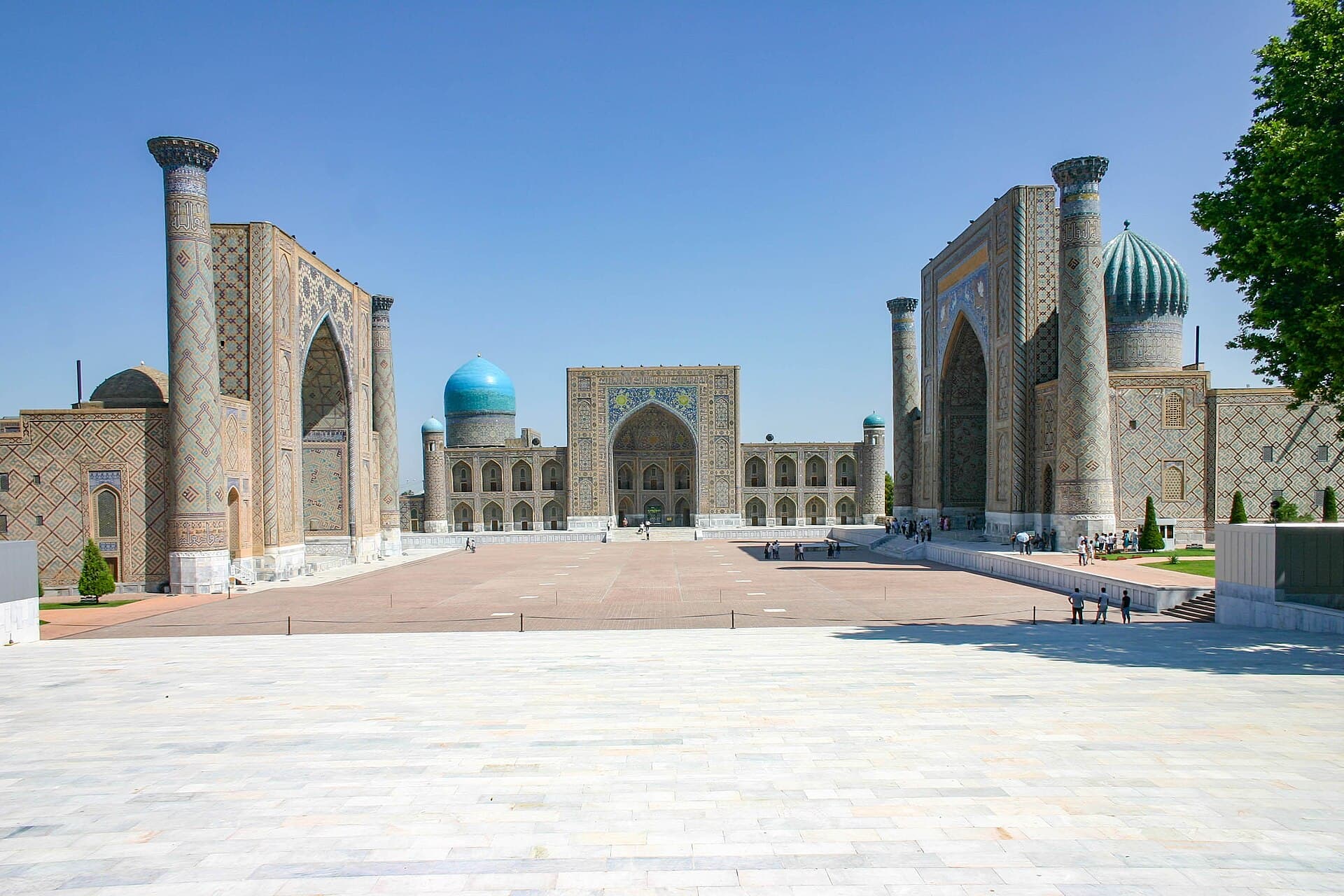 Registan SquareThe historic square at the heart of Samarkand, centre of the Timurid Empire and 11 minutes walk4.7
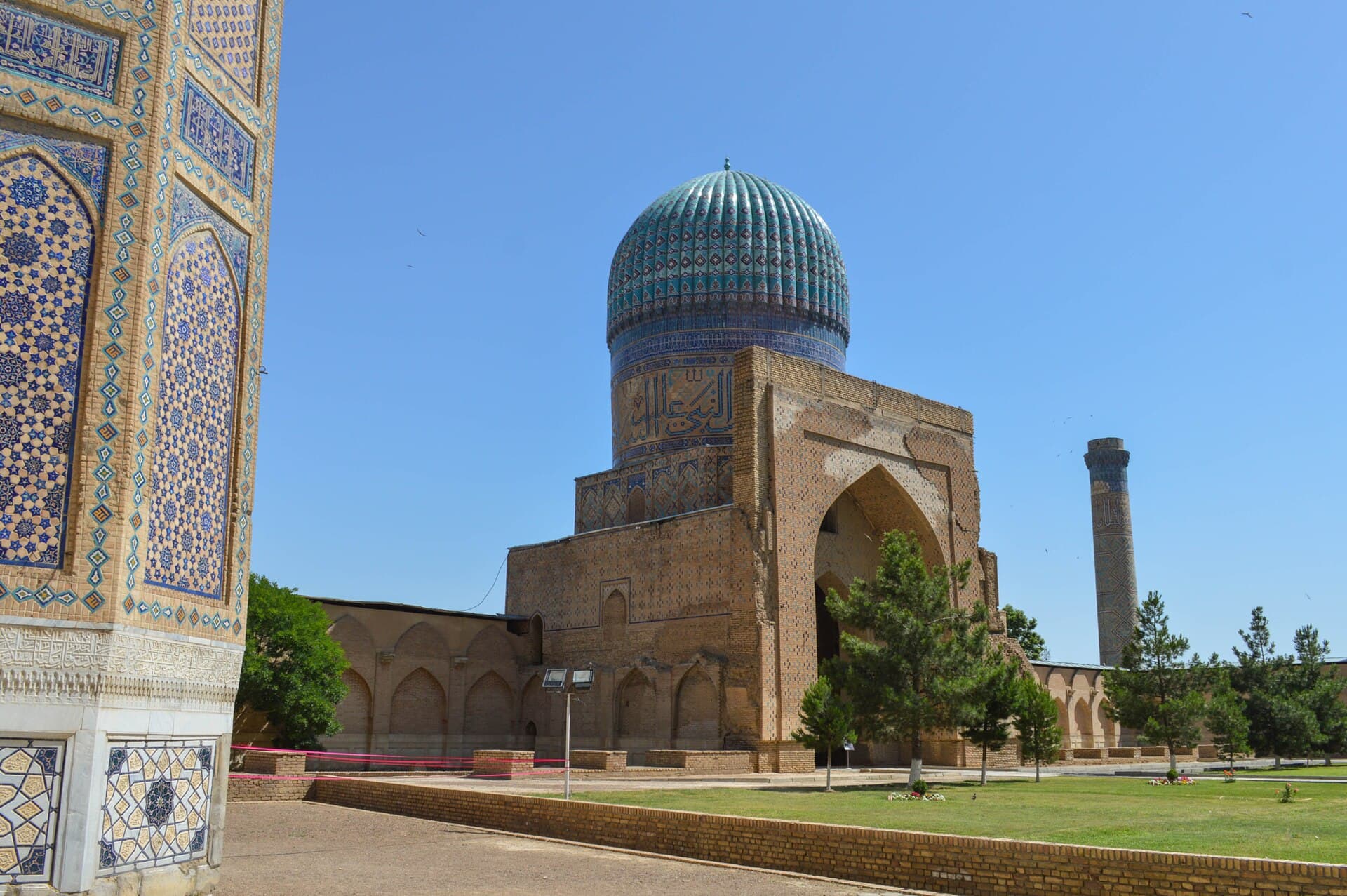 Bibi-Khanym MosqueOne of Samarkand's most important monuments and, in the 15th century, one of the21 minutes walk4.7
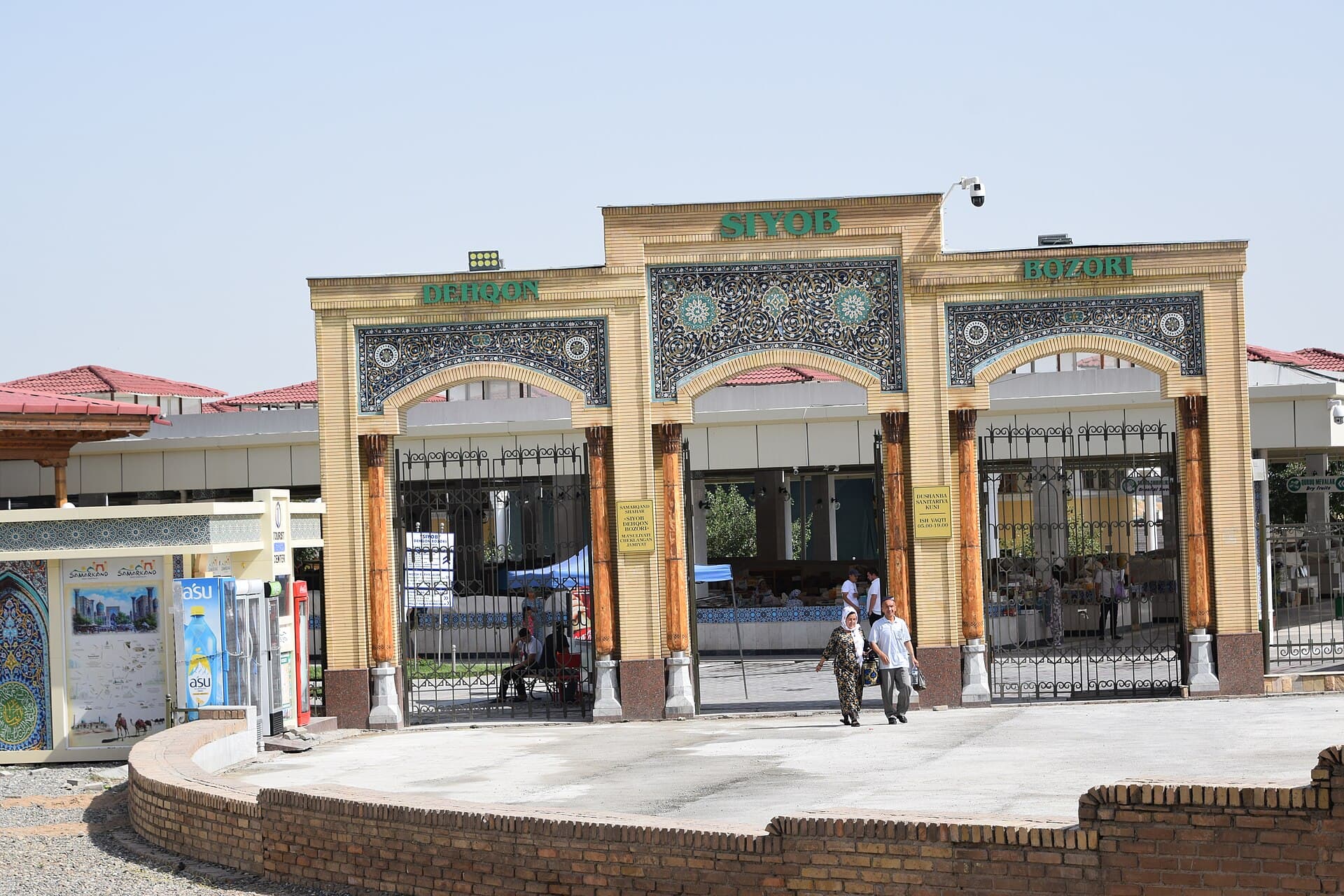 Siyob Bazaar, SamarkandSamarkand's largest bazaar, spreading over more than seven hectares in the old c22 minutes walk4.6
Timur, his sons Shah Rukh and Miran Shah, his grandsons Ulugh Beg and Muhammad Sultan, and his teacher Sayyid Baraka.