
Things actually used
Images and robes that go out in the Holy Week processions once a year.
Daniel Csörföly — CC BY-SA 3.0 · Judgefloro — CC BY-SA 4.0 · Judgefloro — CC BY-SA 4.0 · Judgefloro — CC BY-SA 4.0
A seventeenth-century church in central Seville, formerly attached to a Carmelite convent, holding a display space for religious art and brotherhood objects. Churches in Seville are not only places of worship but the seats of brotherhoods — the associations that organise the Holy Week processions, institutions centuries old with enormous social presence in the city. That is what makes the place interesting: what is shown here is not art in a museum but things actually used — images carried in procession, robes embroidered in gold thread, candlesticks and ritual objects. You see them at rest in their building, and once a year they go out into the street. The interior is baroque, with gilded altarpieces and dense detail, emphatically Seville's religious manner. Entry is normally free as in Seville's churches, but hours follow prayer and mass times and can be very narrow outside them. Early morning or before the evening mass are the best times.
Images and robes that go out in the Holy Week processions once a year.
Gilded altarpieces and dense detail — emphatically the city's religious manner.
Centuries-old institutions with enormous social presence in Seville.
Calle Rafael González Abreu, central Seville
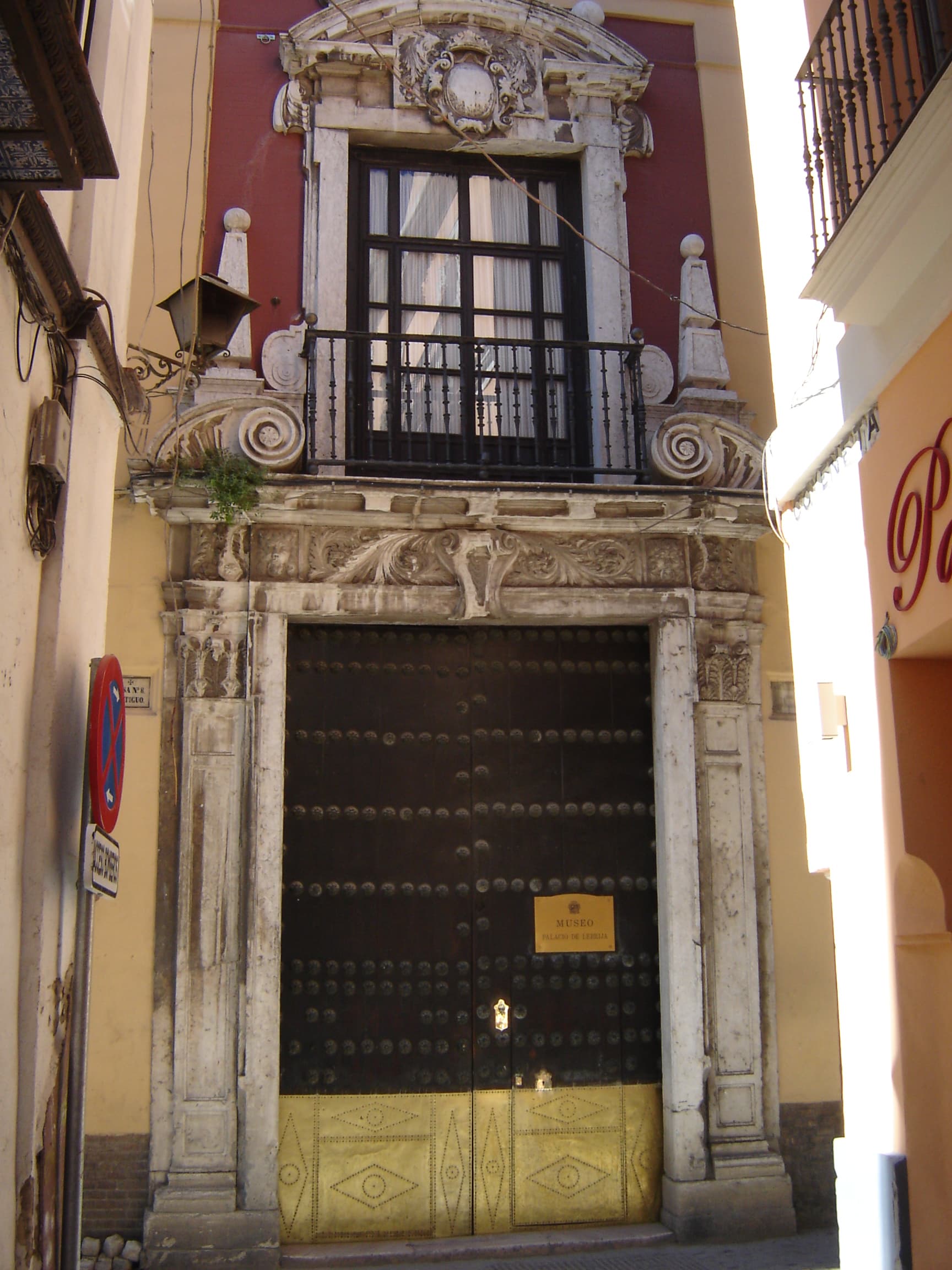 Palace of the Countess of LebrijaThe Lebrija palace houses Seville's strangest passion: the antiquity-loving Coun3 minutes walk4.6
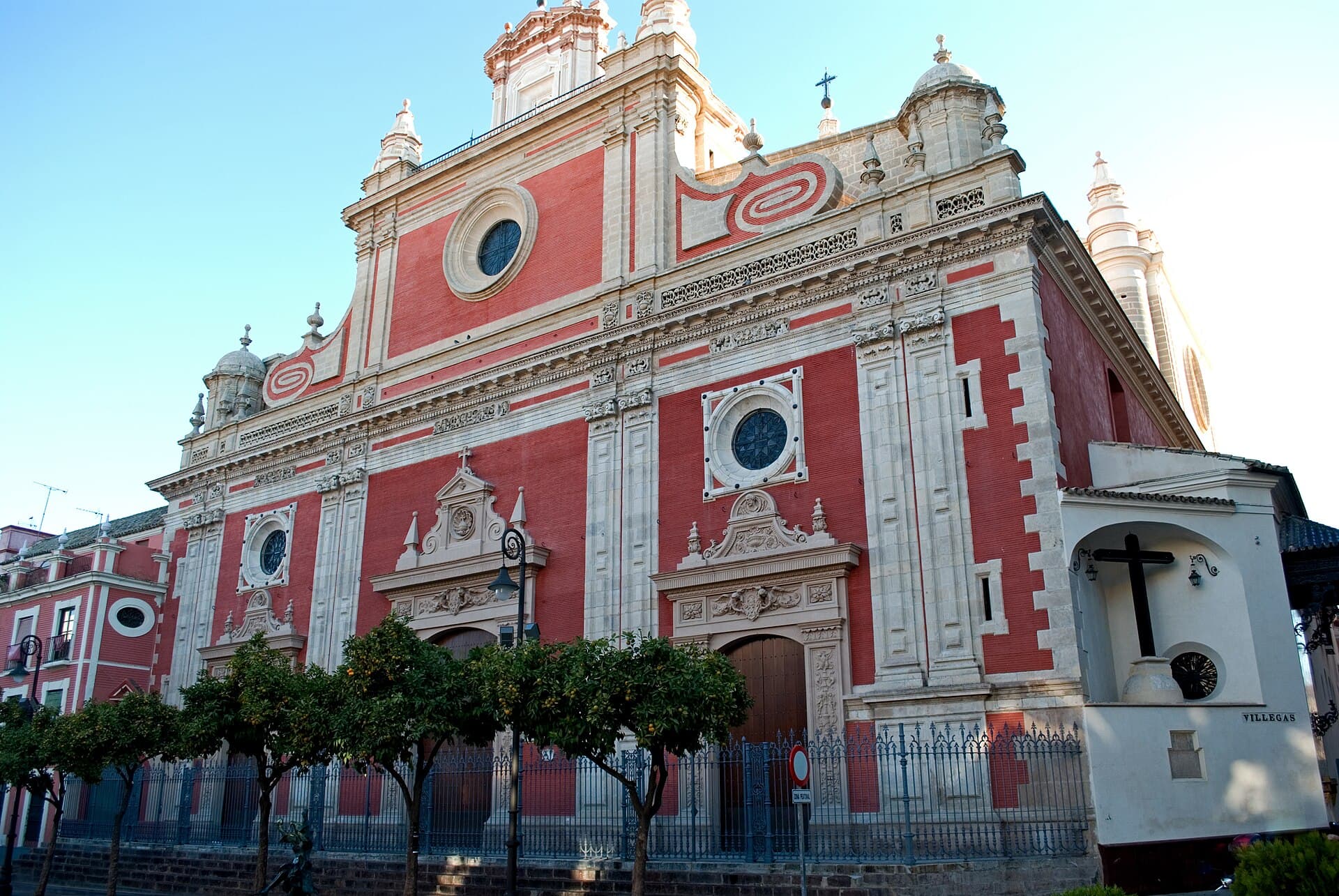 Church of El SalvadorSeville's second largest church after the cathedral, standing on a square in the4 minutes walk4.7
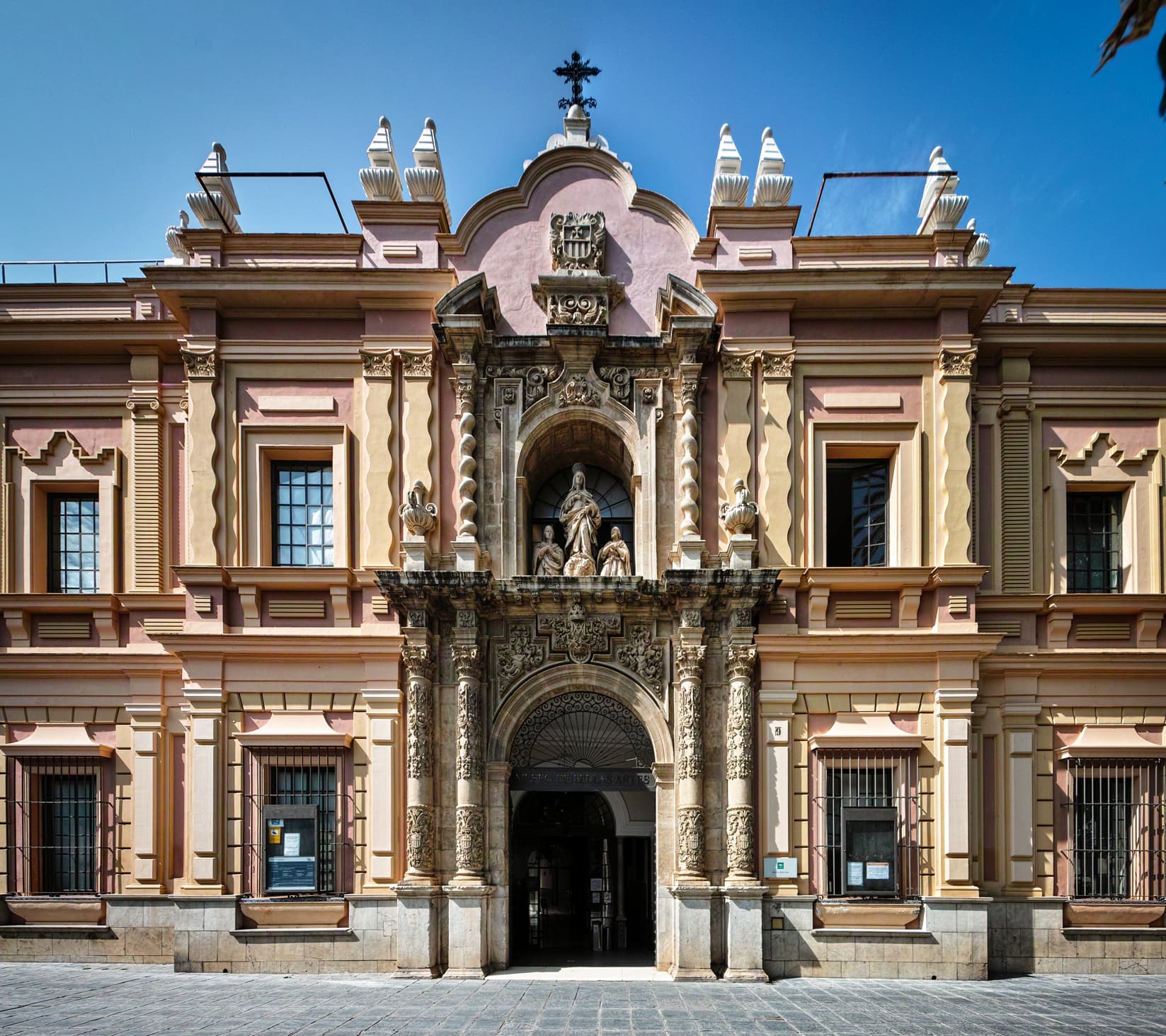 Museum of Fine ArtsSeville's Fine Arts Museum earns its "Prado of the South" name twice over: the w5 minutes walk4.6
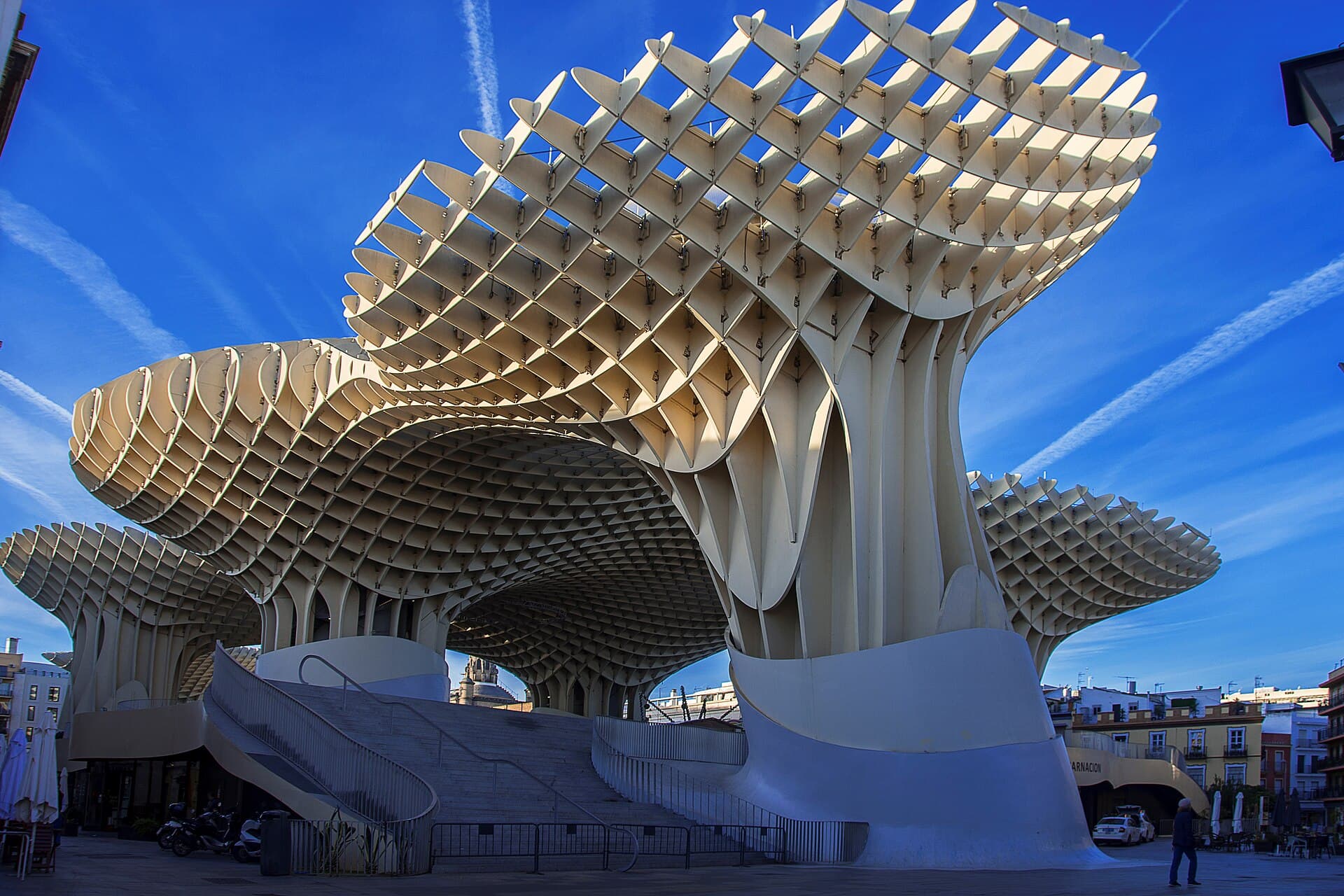 Setas de Sevilla (Metropol Parasol)"The mushrooms" — as Sevillians named them on sight — form the world's largest t6 minutes walk4.3
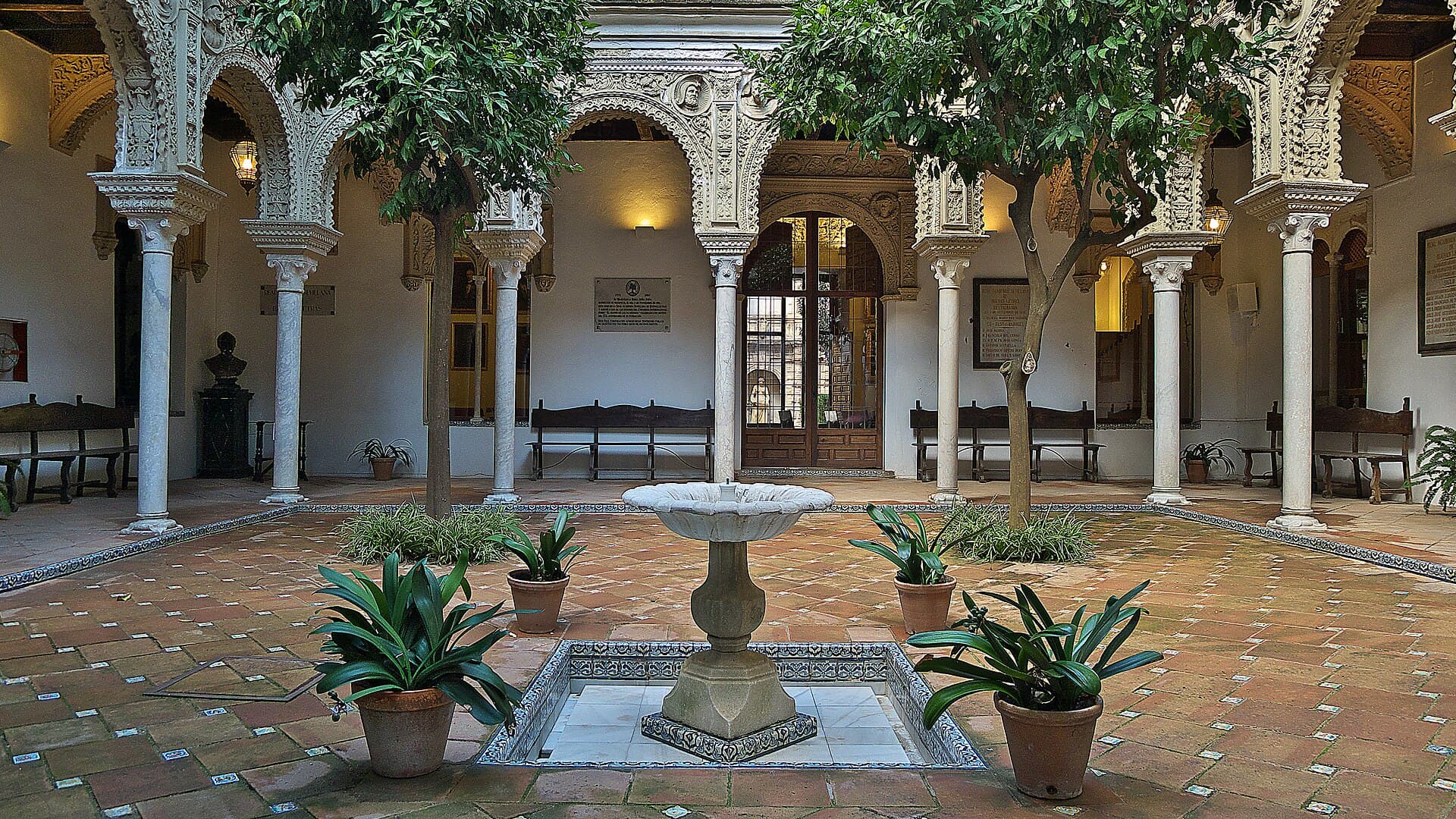 Royal Academy of Fine ArtsSeville's academy of fine arts, an institution going back to the eighteenth cent7 minutes walk4.8
Lay religious associations, some founded five centuries ago, each with its own church, images, robes and music. In Holy Week each processes from its church to the cathedral and back, some taking over twelve hours. Membership is inherited within families.
Modest dress covering shoulders and knees, silence inside, and not walking in front of worshippers or photographing during mass. Many churches are free but rely on donations. Avoid mass times if you want to look rather than attend.