
The Elephant Clock
A full-scale reconstruction of al-Jazari's most famous machine greets you in the entrance hall, and it is the piece everyone lingers at longest.
Bjørn Erik Pedersen — CC BY-SA 4.0 · Dosseman — CC BY-SA 4.0 · Dosseman — CC BY-SA 4.0 · Dosseman — CC BY-SA 4.0
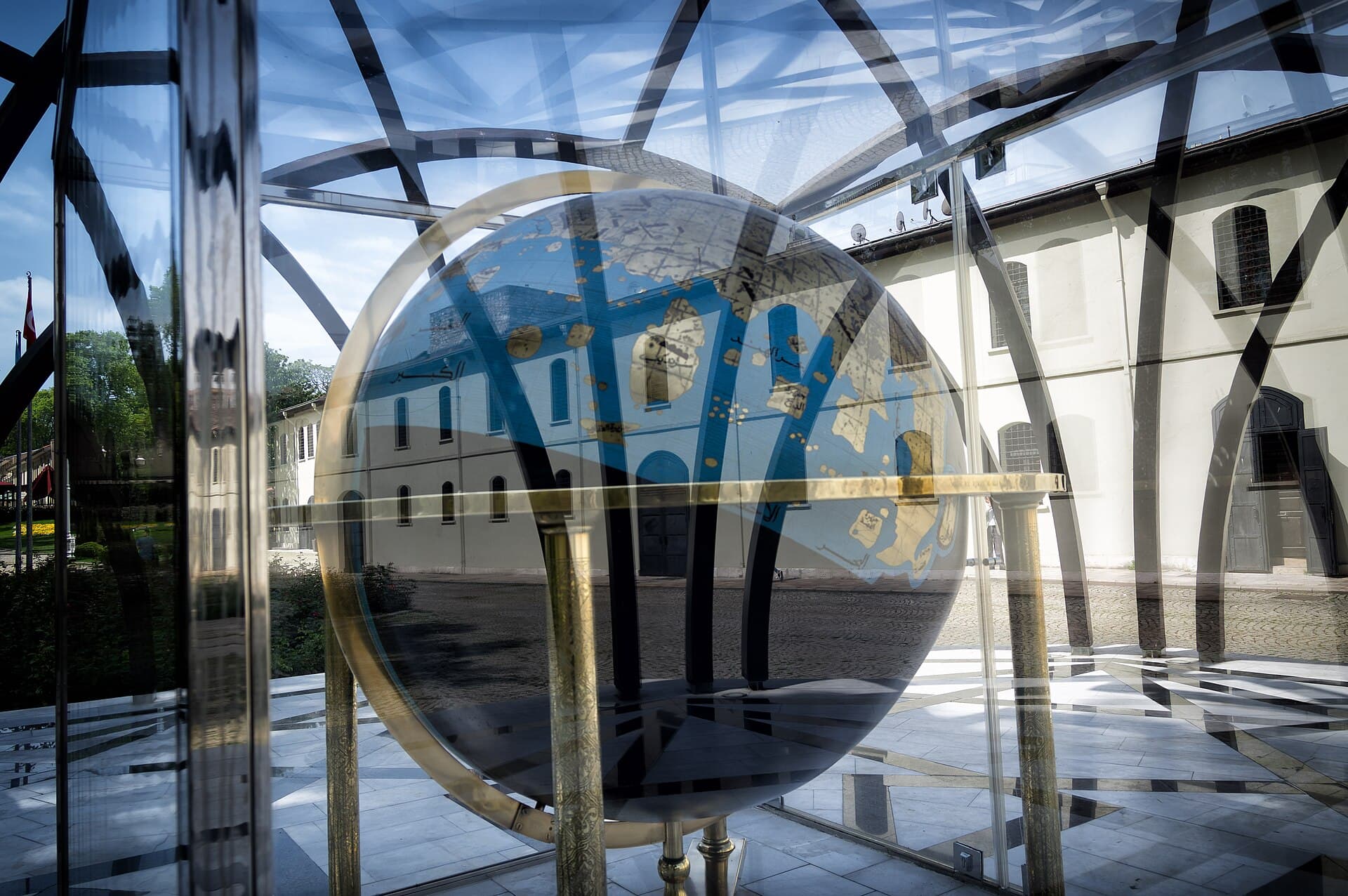
In stables that once housed the sultans' horses beneath the walls of Topkapı Palace, al-Jazari's Elephant Clock stands at full scale, surrounded by some 800 instruments and models explaining how the scholars of Baghdad, Córdoba and Cairo measured the sky, mapped the earth and treated the body. Know this before you go in, though: the museum shows what the manuscripts described, not what survived them. Almost everything was reconstructed at Fuat Sezgin's institute in Frankfurt from old texts and drawings, and you will struggle to find an original object. Visitors who arrive knowing that enjoy it; those expecting archaeological treasure leave puzzled. There are twelve sections and astronomy is the strongest: astrolabes of every size, models of the instruments used at the Maragha observatory and at Taqi al-Din's observatory in Istanbul, and celestial globes that explain how prayer times and the direction of the qibla were calculated. Clocks and navigation follow, then medicine, with al-Zahrawi's surgical tools looking uncannily like what surgeons use today, then chemistry, optics, mining and military technology, and a copy of the Piri Reis map in the geography room. Outside in the courtyard sits a large globe carrying the world map drawn up on the orders of Caliph al-Ma'mun in the ninth century, next to a small garden of the medicinal plants named in Ibn Sina's Canon; the courtyard alone is worth a pause with children. Practically, this is one of the rare quiet corners of Sultanahmet: no queue, and no tour group elbowing you away from the clock. Labels are in Turkish and English only, with no Arabic, but the names of al-Jazari, Ibn al-Haytham, al-Biruni and al-Khwarizmi are enough for an Arab reader to find their bearings. The corridors are level and wide, fine for a pushchair, and the whole visit takes an hour or a little less. Take the T1 tram to Gülhane and walk a few minutes into the park. When does it earn the ticket? Once you have done Hagia Sophia and Topkapı and want a cool hour away from the crowds, especially in August heat, when the shade of Gülhane Park and the museum's cool halls are a genuine relief. Pair it with the neighbouring Archaeological Museums in the same park, and if you hold a Museum Pass Istanbul it is already covered. What it does not deserve: half a day, or a dedicated trip over from the Asian side.
A full-scale reconstruction of al-Jazari's most famous machine greets you in the entrance hall, and it is the piece everyone lingers at longest.
A large globe showing the world as Caliph al-Ma'mun's geographers mapped it, beside a garden of medicinal plants from Ibn Sina's Canon.
Astrolabes and instruments from the Maragha and Istanbul observatories showing how prayer times and the qibla were calculated.
Alemdar Cad., Gülhane Park, Has Ahırlar building, Sirkeci – Fatih
 Gülhane ParkNot everything in Gülhane Park is trees. This was the outer garden of Topkapı Pa2 min walk
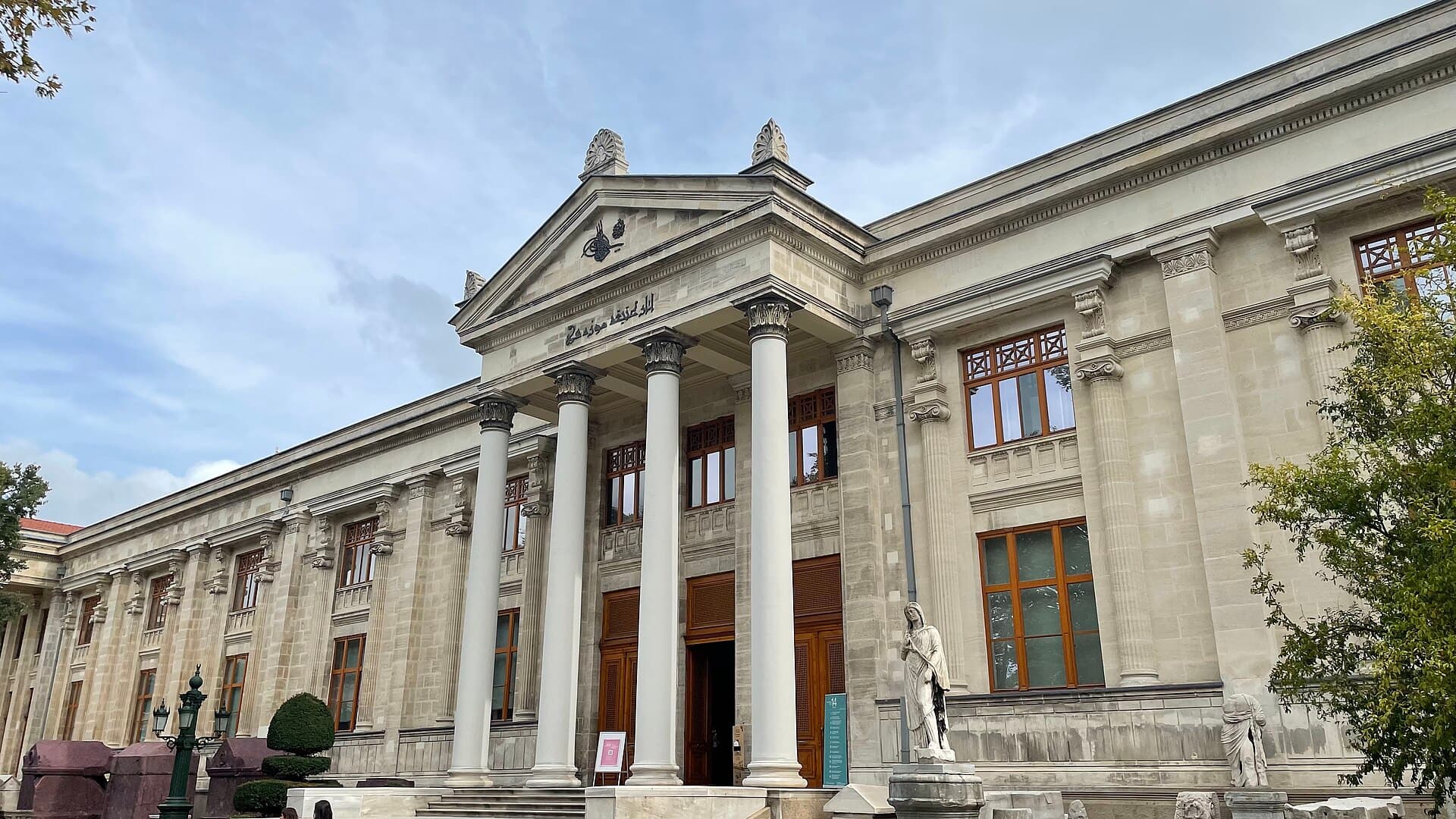 Istanbul Archaeological MuseumsA complex of three museums below Gülhane Park beside Topkapı Palace, holding one3 min walk4.5
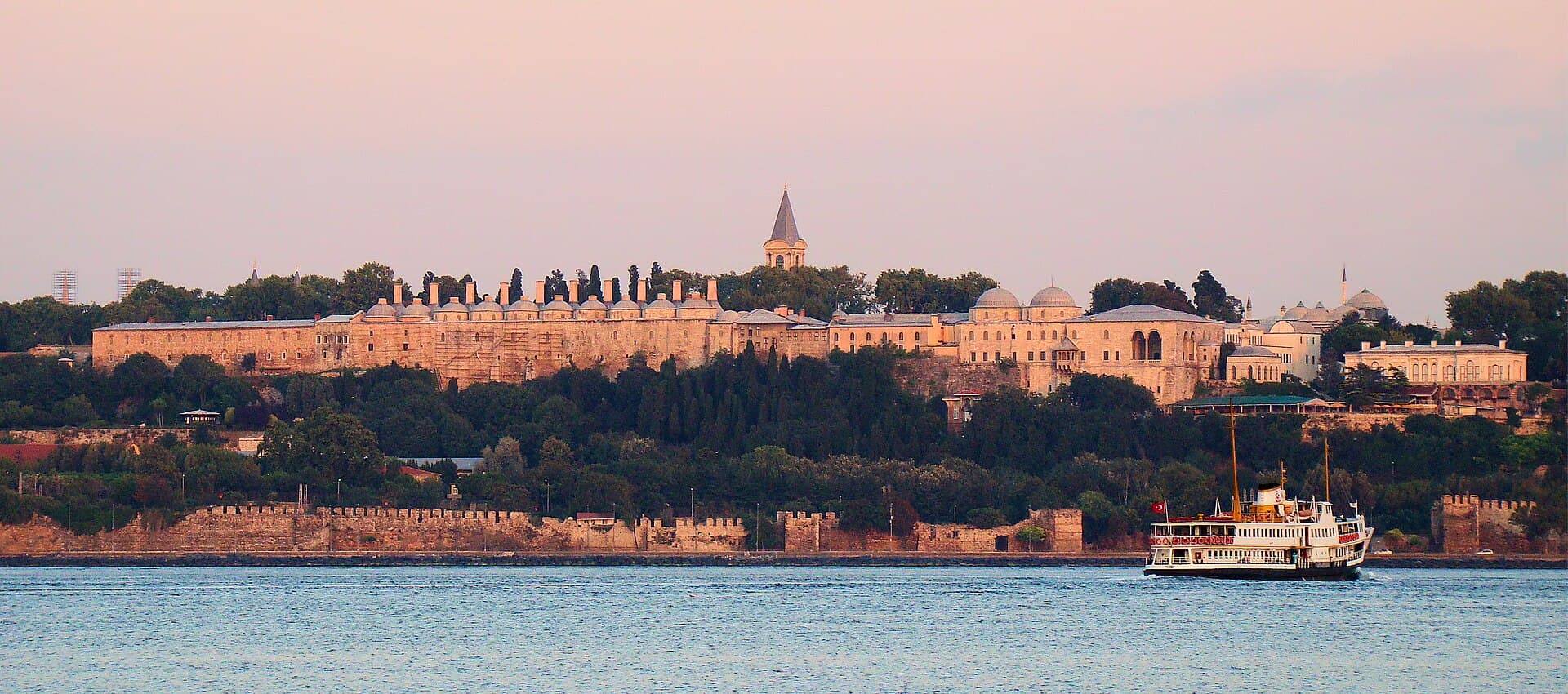 Topkapı PalaceThe principal seat of the Ottoman sultans for some four hundred years, on the he5 min walk4.7
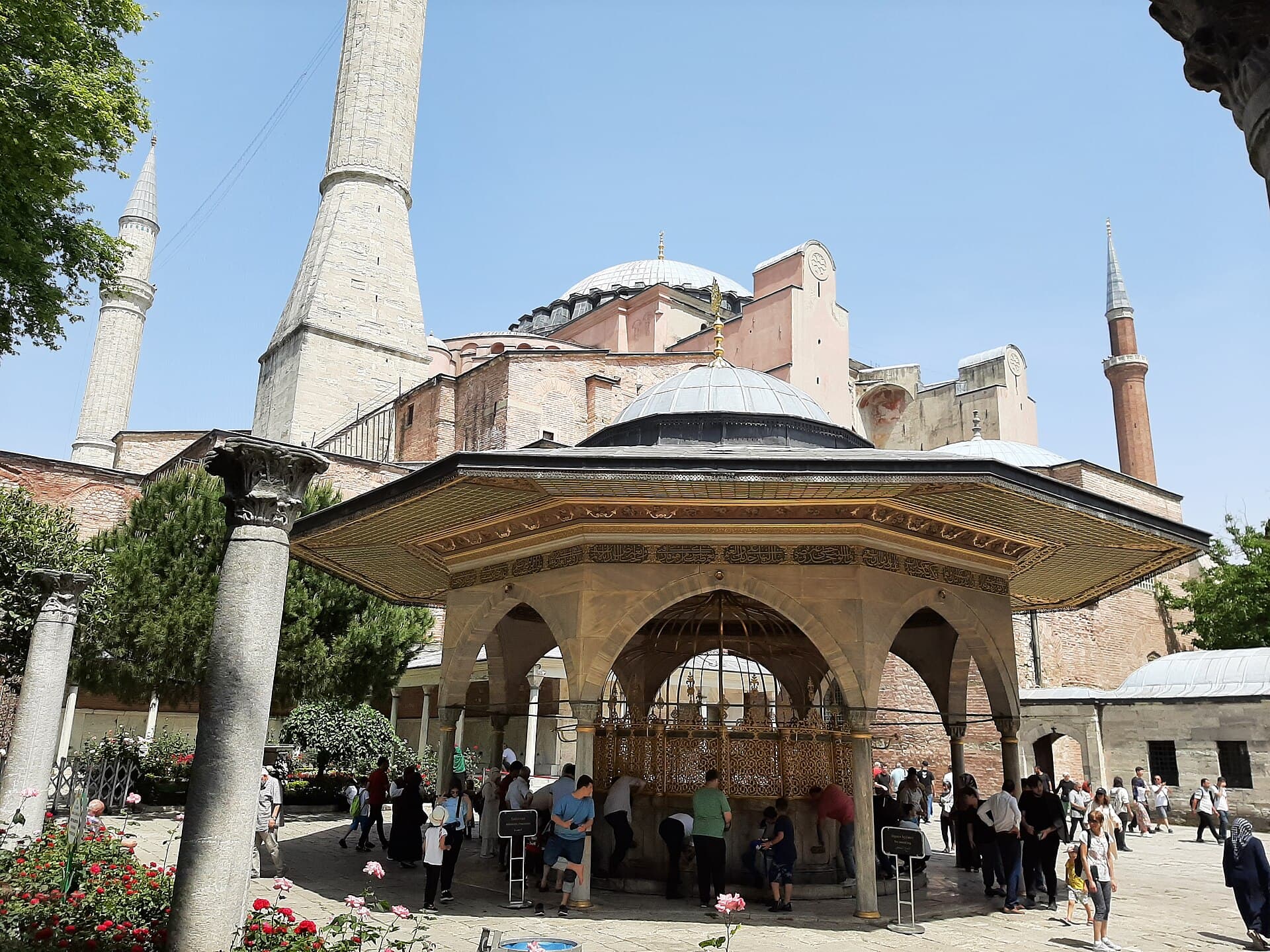 Hagia SophiaOne building that has carried three identities across fifteen centuries. The emp7 min walk4.7
 Basilica CisternThe largest surviving underground cistern of Constantinople, below ground a few 8 min walk4.5
They are completely different. The Museum of Turkish and Islamic Arts on the Hippodrome shows original objects, centuries-old carpets, Qurans and manuscripts, and is the one for anyone who wants the real thing. This museum shows reconstructed models that explain a scientific idea, and suits anyone who wants to understand what al-Jazari and Ibn al-Haytham built, or show it to their children. If you have time for only one, choose the former.
Yes, if they are old enough to grasp how a machine works, roughly eight and up: the clocks, pumps and siege engines hold them, and the courtyard with its big globe and garden gives them a breather. Very young children will be bored within twenty minutes, since almost nothing can be touched or set in motion; with them, stick to Gülhane Park.
Sign in to write your review of this place.
No reviews yet — be the first.