
History's first ghetto
The word itself was born here in 1516, from an old foundry's name.
San Marco Venice — CC BY-SA 4.0 · יאיר ליברמן — CC BY-SA 4.0 · יאיר ליברמן — CC BY-SA 4.0 · David Pirmann — CC BY 2.0
From this small quarter of Cannaregio the word "ghetto" entered every language: in 1516 Venice confined its Jews to this islet — a former foundry, "geto" in dialect — its gates locked at night. It was history's first ghetto, the model that gave its name to all that followed. The place reads in its architecture: with space fixed and people many, they built upward — Venetian "skyscrapers" of seven and eight low-ceilinged storeys unlike anything else in the city, with synagogues hidden on the top floors, invisible from outside. Today it is a quiet working Jewish quarter around its tree-shaded square, holding the Jewish Museum, tours of the five historic synagogues, and traditional pastry bakeries — among Venice's most genuine corners, farthest from the souvenir groove.
The word itself was born here in 1516, from an old foundry's name.
Eight squat storeys stacked by necessity — still legible today.
Five sixteenth-century synagogues concealed on top floors, seen by tour.
Campo di Ghetto Novo, Cannaregio, 30121 Venice
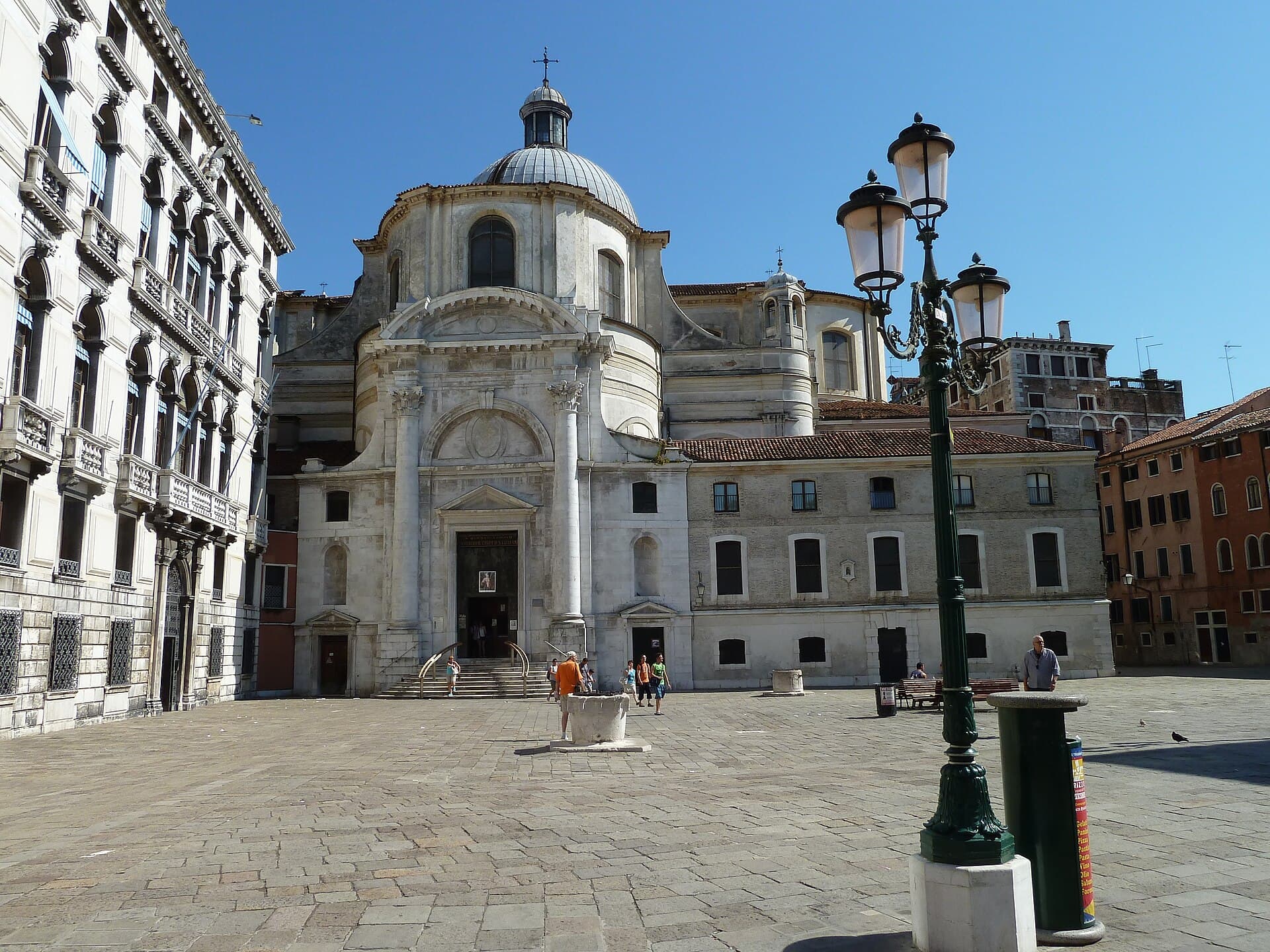 Campo San GeremiaA wide square in Cannaregio on the route between the railway station and the Ria3 minutes walk4.5
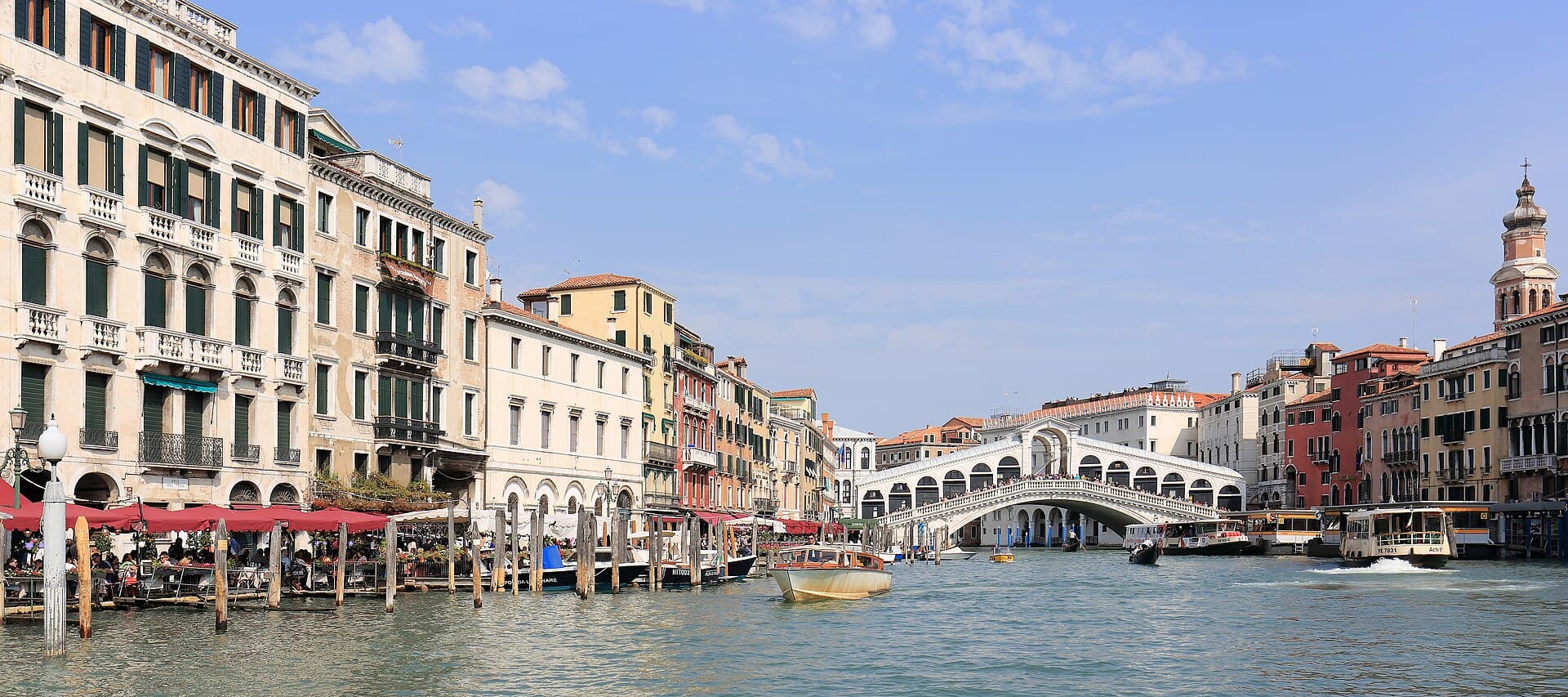 Grand CanalThe Grand Canal is Venice's main street — four kilometres of water cutting the c4 minutes walk4.7
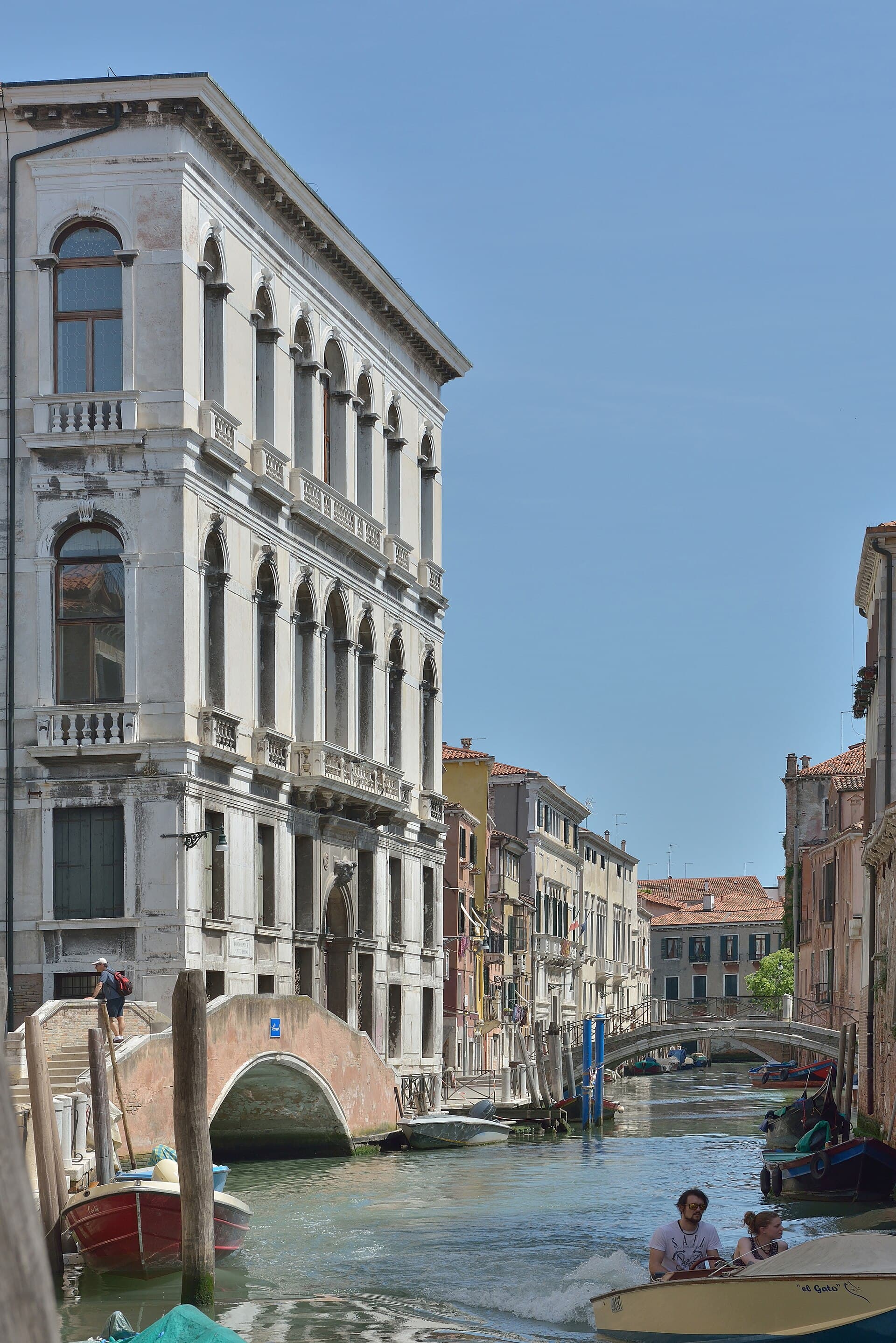 Palazzo Diedo – Berggruen Arts & CultureUntil 2012, people came into this palace to stand before a judge. Now they come 6 minutes walk4.2
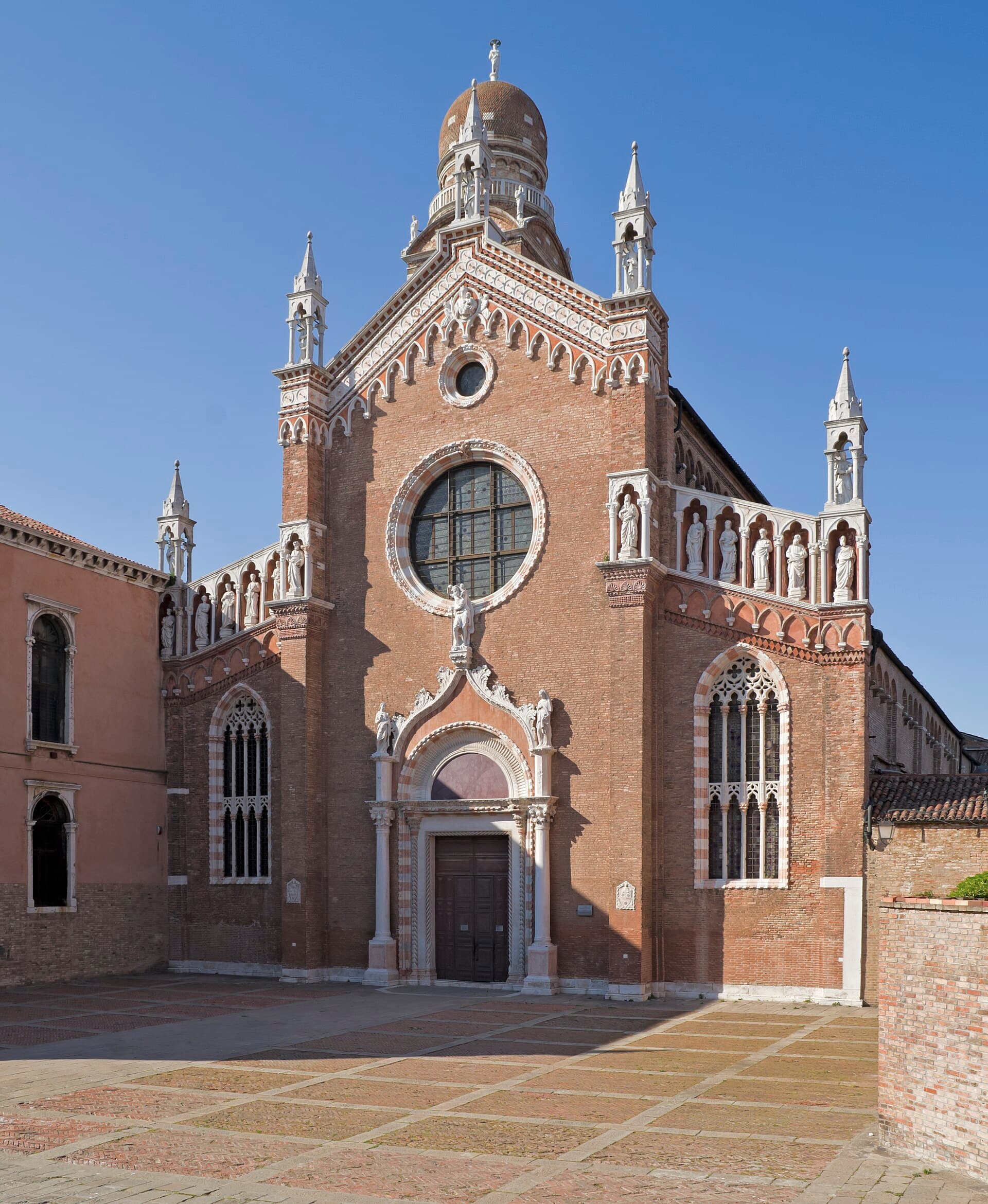 Madonna dell'OrtoTwo canvases roughly fourteen and a half metres tall stand guard over the high a6 minutes walk4.7
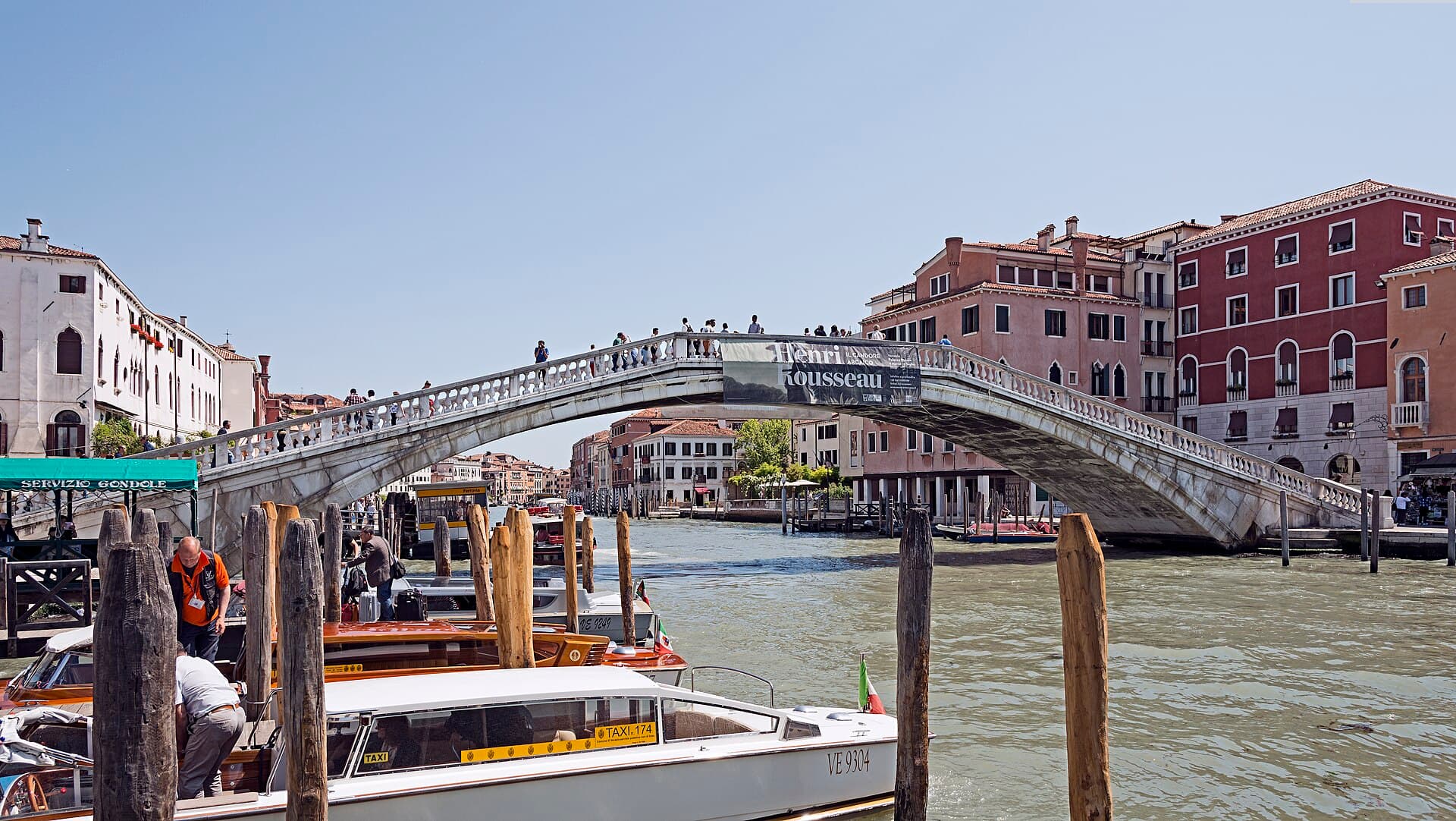 The Ponte degli ScalziOne of only four bridges crossing the Grand Canal in Venice, standing near the S7 minutes walk4.7
No — the quarter is one of Venice's loveliest quiet corners: a rare shaded square, Cannaregio's canals around it, no crowds. The history deepens it for those who want it; the place is beautiful enough for those who don't.
It sits roughly between the station and Rialto — take it on arrival or departure, and finish on nearby Fondamenta Misericordia, where local Venice dines by the water.
Two or three of the five interiors depending on the day, with the quarter's history — about an hour, and the only way into the hidden interiors. It leaves from the museum at set times.