
Only four bridges
The Grand Canal is crossed by four bridges and no more.
Didier Descouens — CC BY-SA 4.0 · This Photo was taken by Wolfgang Moroder. Feel free to use my photos, but please mention me as the author and send me a message. This image is not in the public domain. Please respect the copyright pr — CC BY-SA 3.0 · This Photo was taken by Wolfgang Moroder. Feel free to use my photos, but please mention me as the author and send me a message. This image is not in the public domain. Please respect the copyright pr — CC BY-SA 3.0 · Tiia Monto — CC BY-SA 3.0
One of only four bridges crossing the Grand Canal in Venice, standing near the Santa Lucia railway station — so usually the first a visitor arriving by train walks over. A single stone arch spanning about forty metres without a support in the water, built between 1932 and 1934 to replace an Austrian iron bridge of 1858 considered unworthy of the setting. The four bridges summarise Venice's history: the stone Rialto of 1591, the wooden Accademia, the Scalzi of the 1930s, and Calatrava's glass Constitution Bridge of 2008 — the last of which caused sharp controversy over its slippery steps and the difficulty of crossing it with a disability. The name comes from the neighbouring church of the Scalzi, the Discalced Carmelite friars. From the top there is a view along the Grand Canal in both directions, among the best free photographic points in the city. A public bridge, free to cross.
The Grand Canal is crossed by four bridges and no more.
The 1858 iron one was thought unworthy of the setting.
The name comes from the friars' church beside it.
The Grand Canal near Santa Lucia station
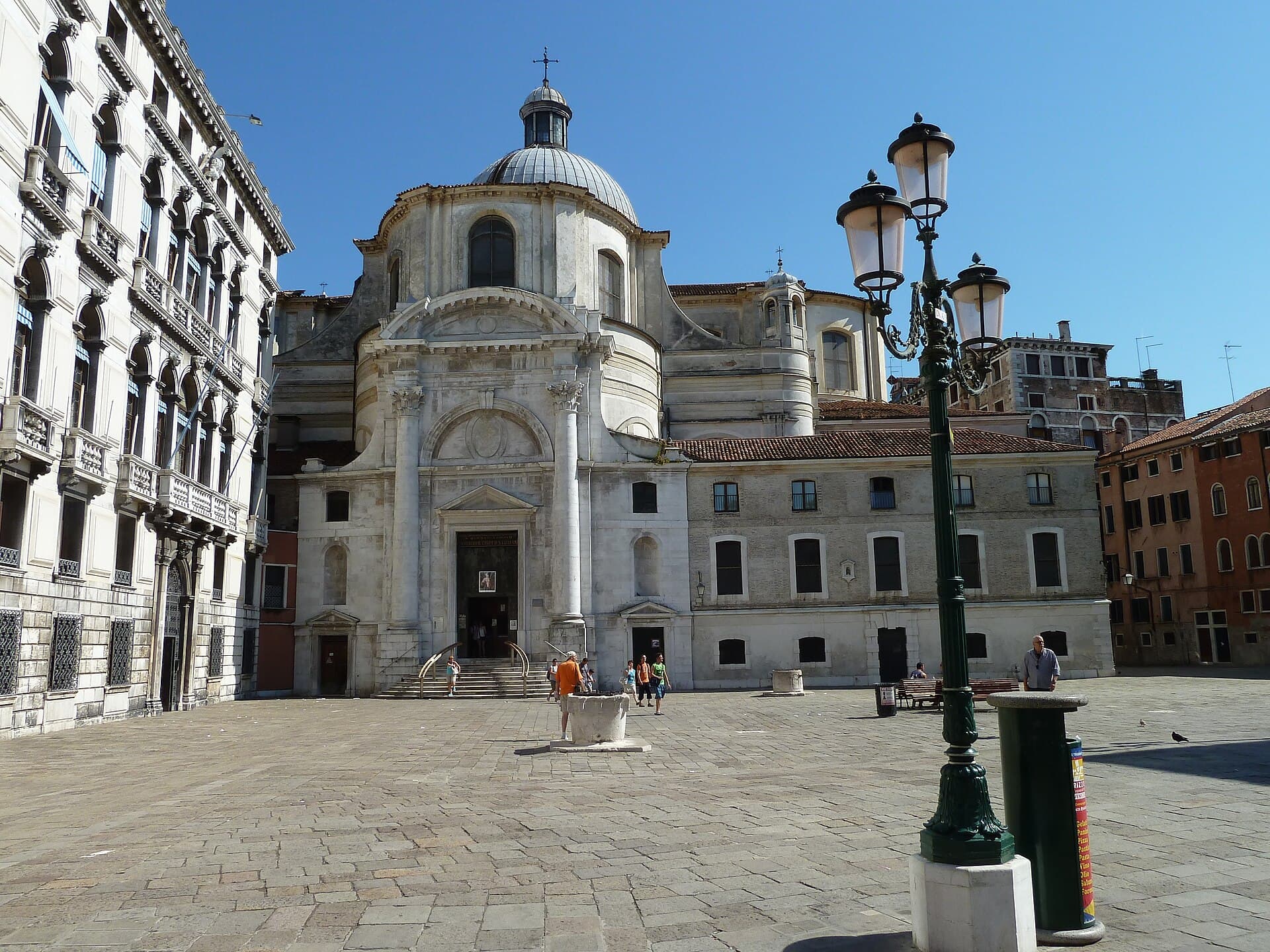 Campo San GeremiaA wide square in Cannaregio on the route between the railway station and the Ria3 minutes walk4.5
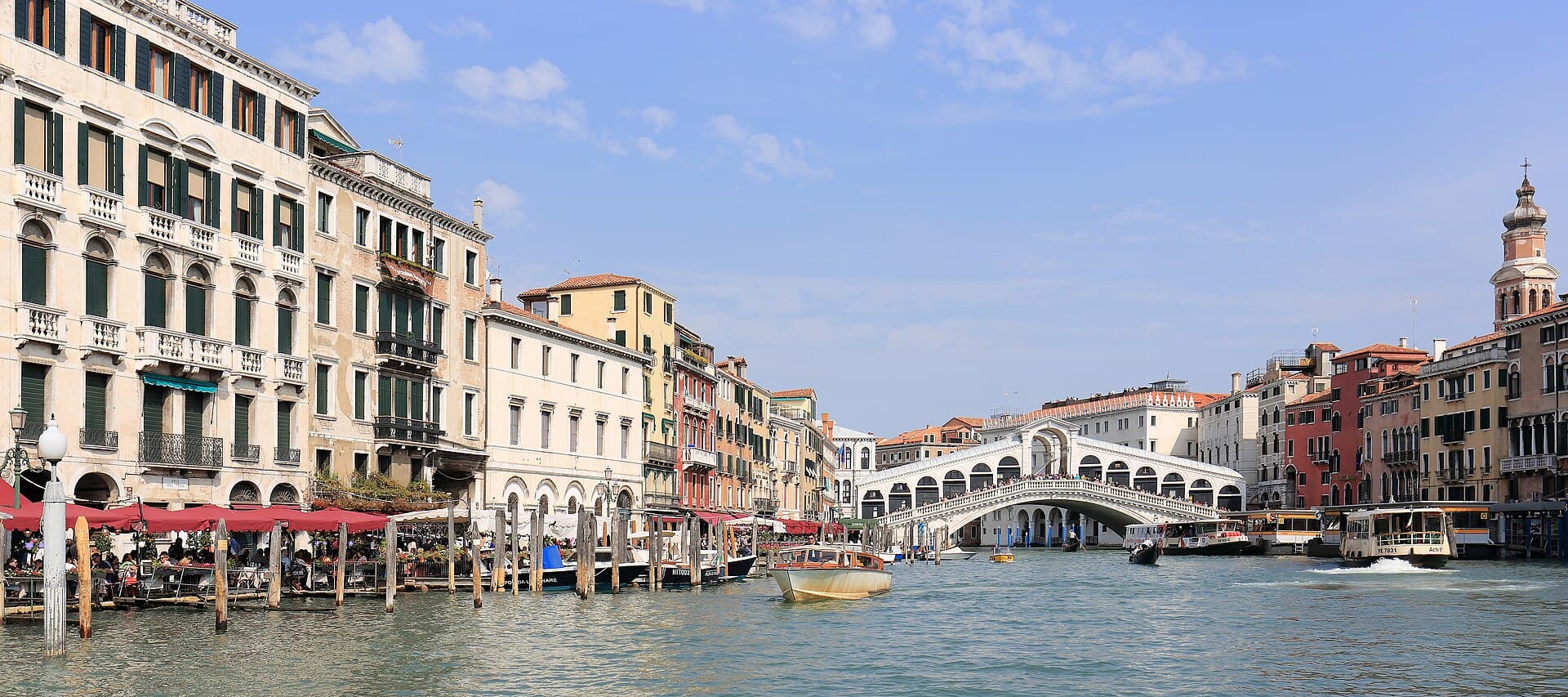 Grand CanalThe Grand Canal is Venice's main street — four kilometres of water cutting the c4 minutes walk4.7
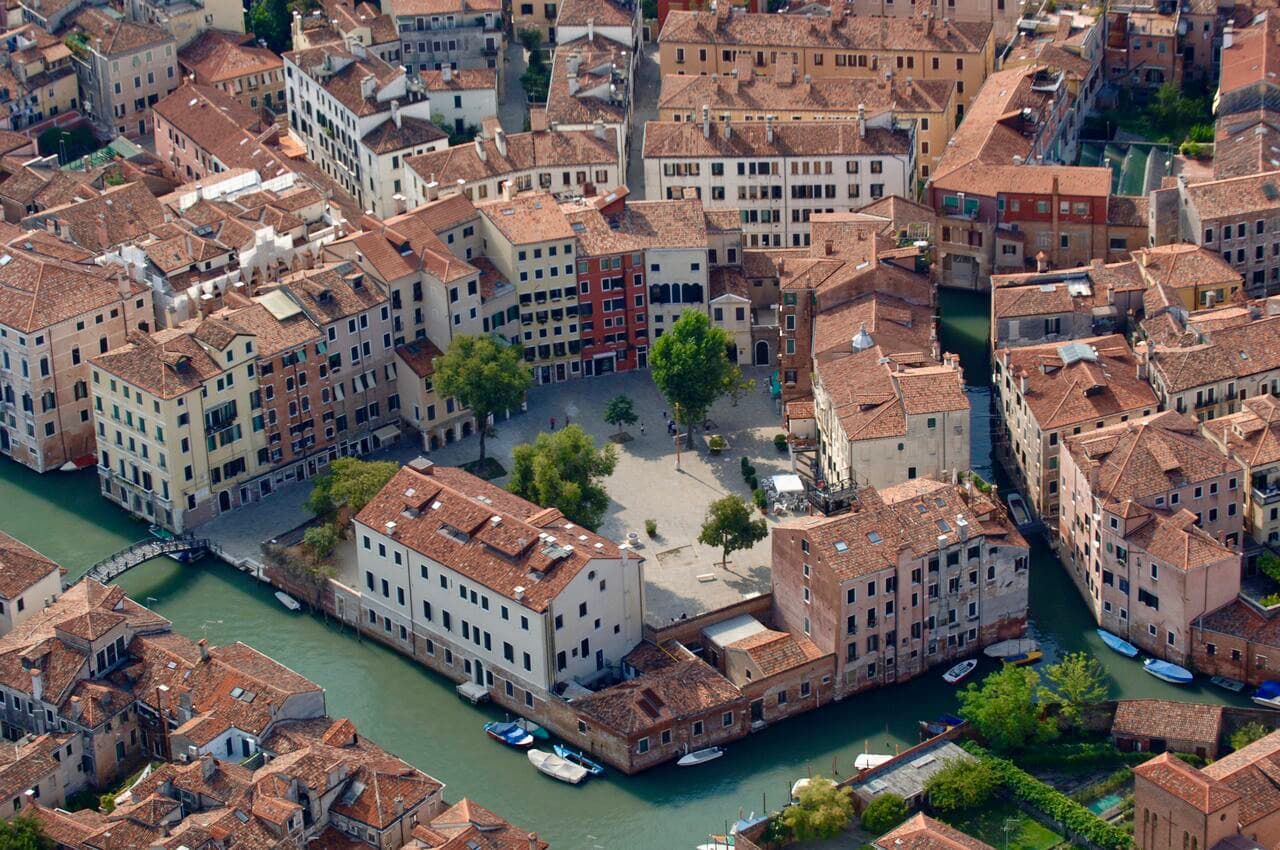 The Venice GhettoFrom this small quarter of Cannaregio the word "ghetto" entered every language: 7 minutes walk4.4
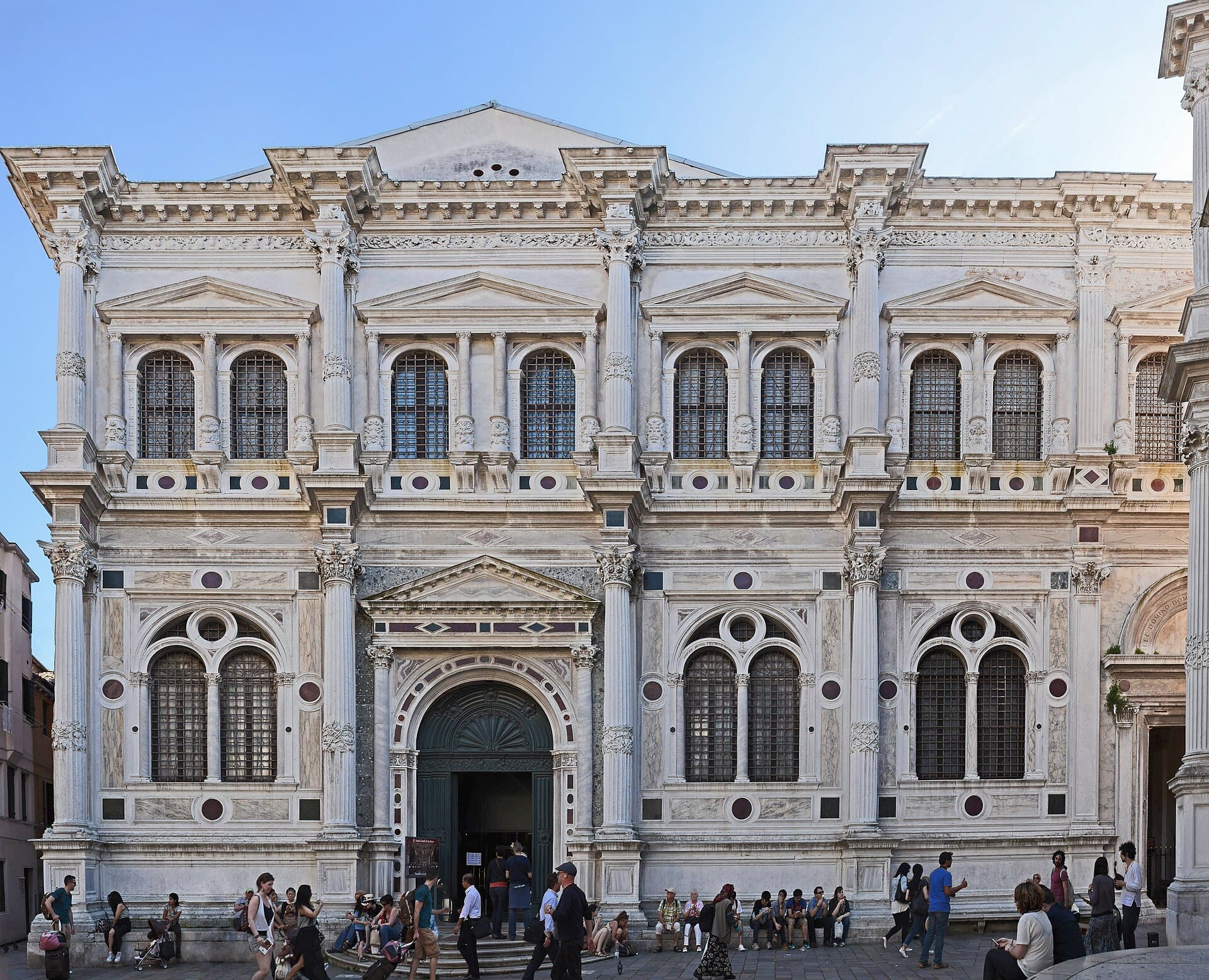 Scuola Grande di San RoccoA scuola in Venice was a wealthy charitable brotherhood, and San Rocco was the r7 minutes walk4.9
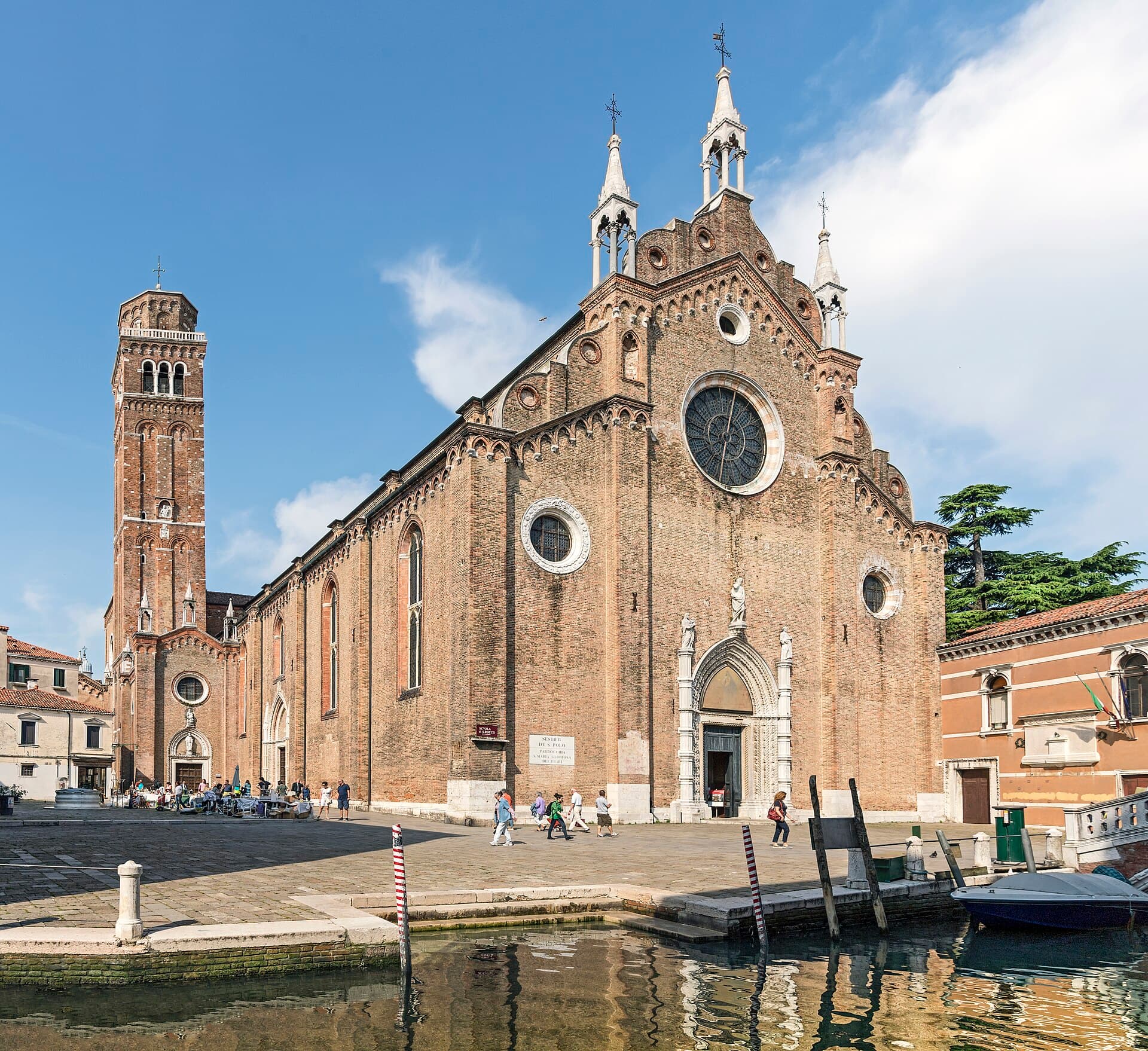 Frari BasilicaThe Frari is Venice's greatest Gothic church, built by Franciscans in plain red 7 minutes walk4.6
Because Venice was built on water and movement in it was primarily by boat rather than on foot. The Grand Canal is a major navigation route and any bridge across it had to be high enough for shipping. For centuries the Rialto was the only one. The Accademia and Scalzi were added in the nineteenth and twentieth centuries as pedestrian traffic grew, and the fourth in 2008. To cross elsewhere, traghetto boats are used — a plain ferrying gondola for a small fare.
A gondola ferry service at seven or eight points along the Grand Canal, taking you bank to bank in a minute for a very small fare — far cheaper than a tourist gondola ride. Locals cross standing; visitors may sit. The service shrinks year by year and some crossings have closed, but it remains the best way to ride a real gondola at a reasonable price. Hours are mostly in the morning.