
The channel of life
A fountain, a channel and a pool that tell the span of a human life from birth to the afterlife.
Nevit Dilmen — CC BY-SA 3.0 · Buda2000 — CC BY-SA 4.0 · Buda2000 — CC BY-SA 4.0 · Gemici49 — CC BY-SA 4.0
This madrasa took two building campaigns and Timur's invasion to finish. The Artuqids laid it out in the late fourteenth century, Timur's armies stopped the work, and it was only completed in the second half of the fifteenth century under Kasım ibn Cihangir of the Aq Qoyunlu, who gave it his name. What you get is one of the largest buildings in Mardin: two storeys of honey-coloured ashlar around a single open courtyard, twenty-three student cells, two small mosques (one Shafi'i, one Hanafi), a tomb said to hold Kasım and his sister, and a vast domed iwan that frames the Mesopotamian plain all the way to the Syrian horizon. The story every guide tells here is about water. It rises from a fountain at the back of the iwan, runs down a narrow channel, widens into a large pool, narrows again and then disappears into the ground: birth, childhood, the strength of youth, old age, death, and finally the afterlife where the water overflows and is gone. Students are said to have studied the stars in the pool's reflection at night. The cell doors are deliberately low so that whoever entered had to bow, and there are dark stains on the iwan wall that locals will tell you are Kasım's blood, murdered on this spot, showing more clearly when splashed with water. Believe it or not, it is part of the place. This is not a mute monument. It has housed the El Cezire art museum, Mardin Artuklu University has held classes for its students here in recent years, and you may well find a lecture in progress behind one of those low doors as you wander. It is also a filming location for Turkish series, Uzak Şehir among them, so weekends can be busy. The visit itself needs no more than an hour: courtyard, pool and the two prayer rooms downstairs, then a stone staircase to the upper gallery for the best shot of the iwan with the plain behind it. There are no lifts or ramps and a pushchair only works in the courtyard, but children enjoy the water channel and the cats that have colonised the cells. Sunset is the time to come, without question. In August, Mardin sits above 40°C and the stone radiates heat into the evening; in winter the wind off the plain is sharp on this exposed terrace. The madrasa lies below the old town to the south-west, on the road down to the new city: five minutes by taxi from Cumhuriyet Meydanı, or a gentle twenty-five-minute walk downhill, with a much steeper climb back that you should factor in. Entry is 80 TL according to the provincial culture directorate (fees may rise again during 2026, so expect movement), free under twelve and over sixty-five, and no booking is needed.
A fountain, a channel and a pool that tell the span of a human life from birth to the afterlife.
A huge stone vault opening onto Mesopotamia; one of Mardin's best sunset photographs, taken from the upper gallery.
Cells you enter bowing, and a Shafi'i and a Hanafi mosque side by side in one madrasa.
Yeniyol Altı, below the old town past the city stadium, Artuklu, Mardin
 Church of the Forty Martyrs (Mor Behnam)Prayers have been said in this church since 569, a good seventy years before Isl16 minutes walk4.4
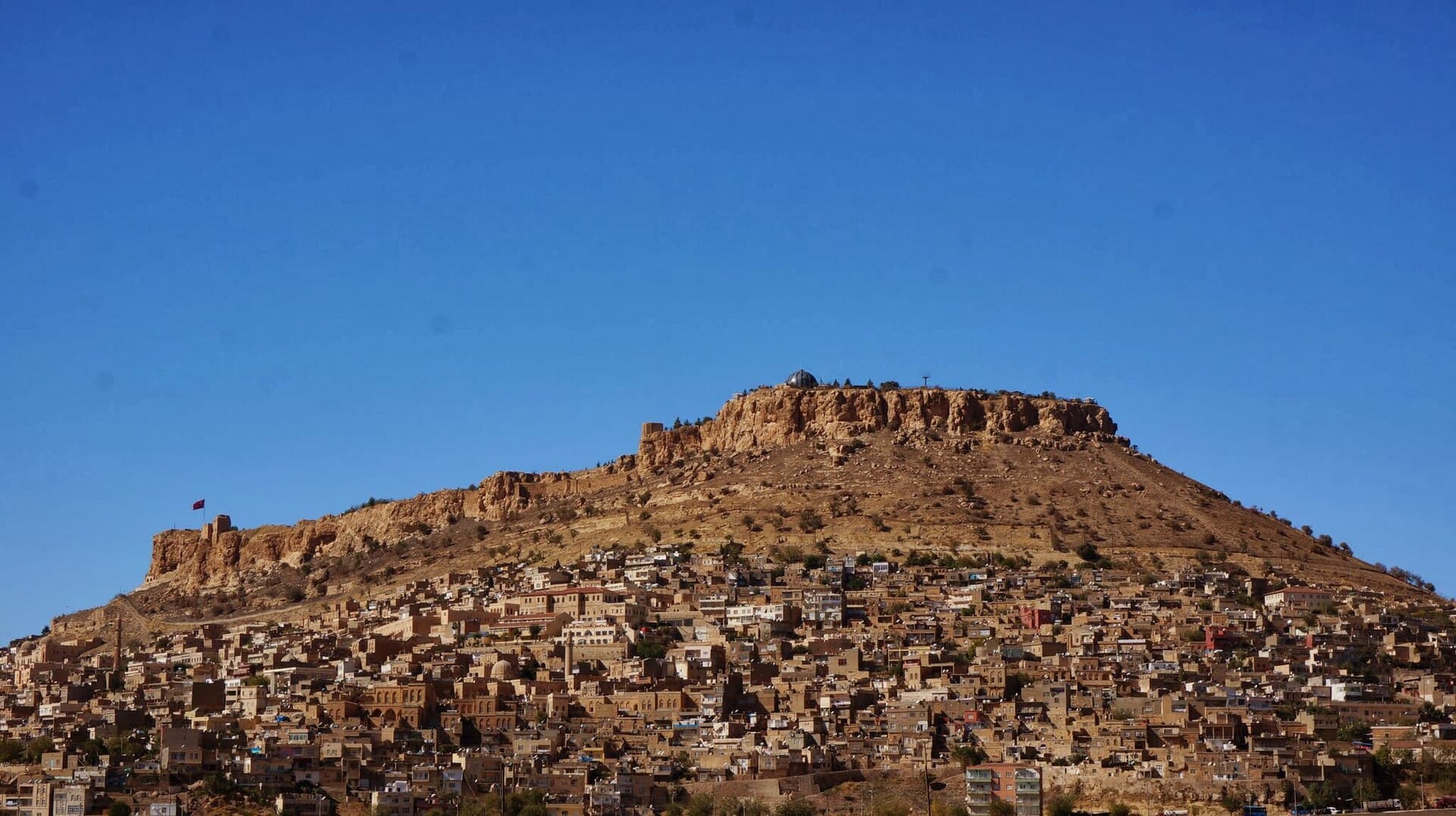 Old MardinFrom any rooftop in Old Mardin the Mesopotamian plain runs flat to the horizon u18 minutes walk4.8
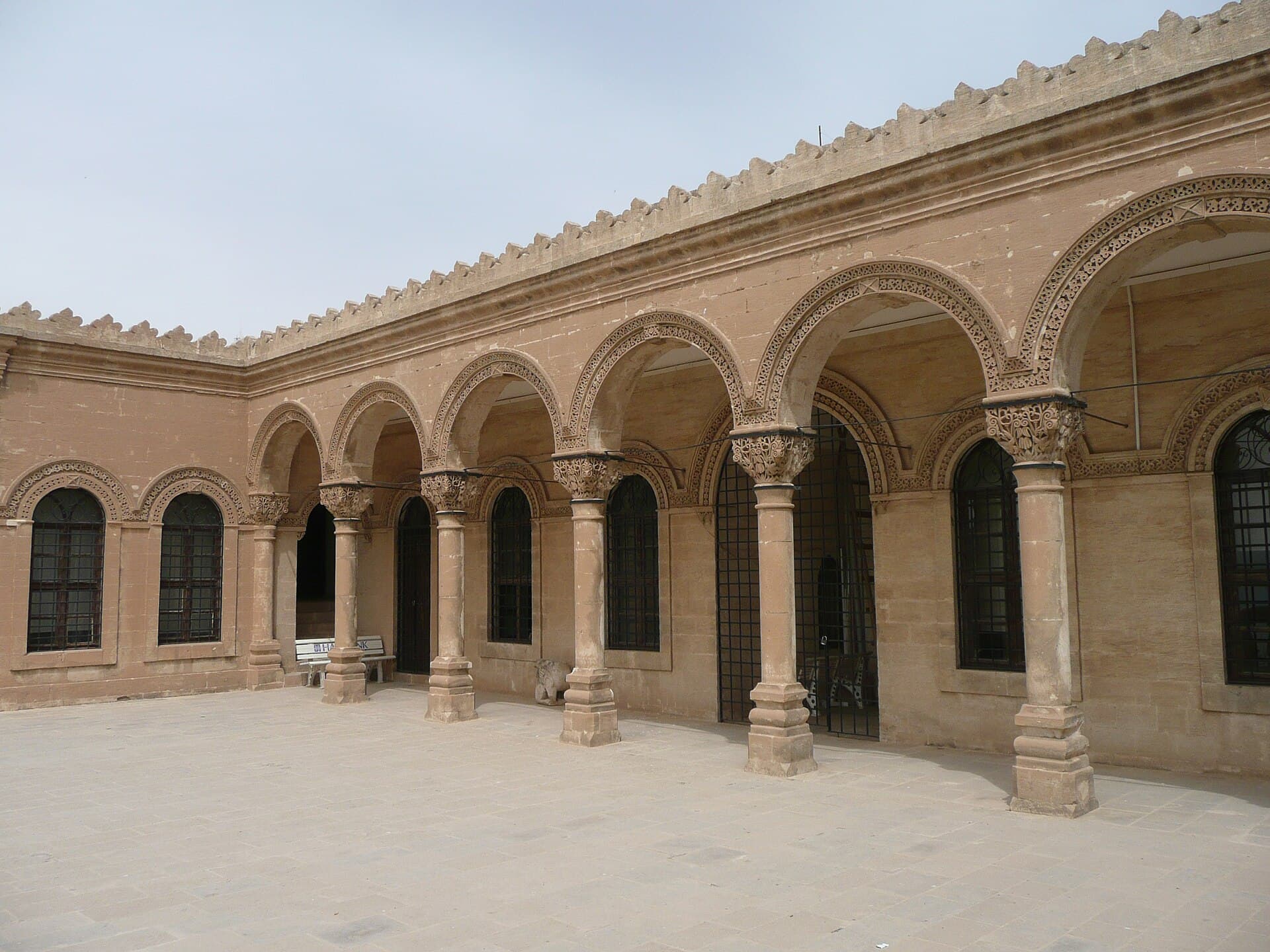 Mardin MuseumThe finest exhibit in Mardin Museum is the building it lives in. Patriarch Ignat18 minutes walk4.7
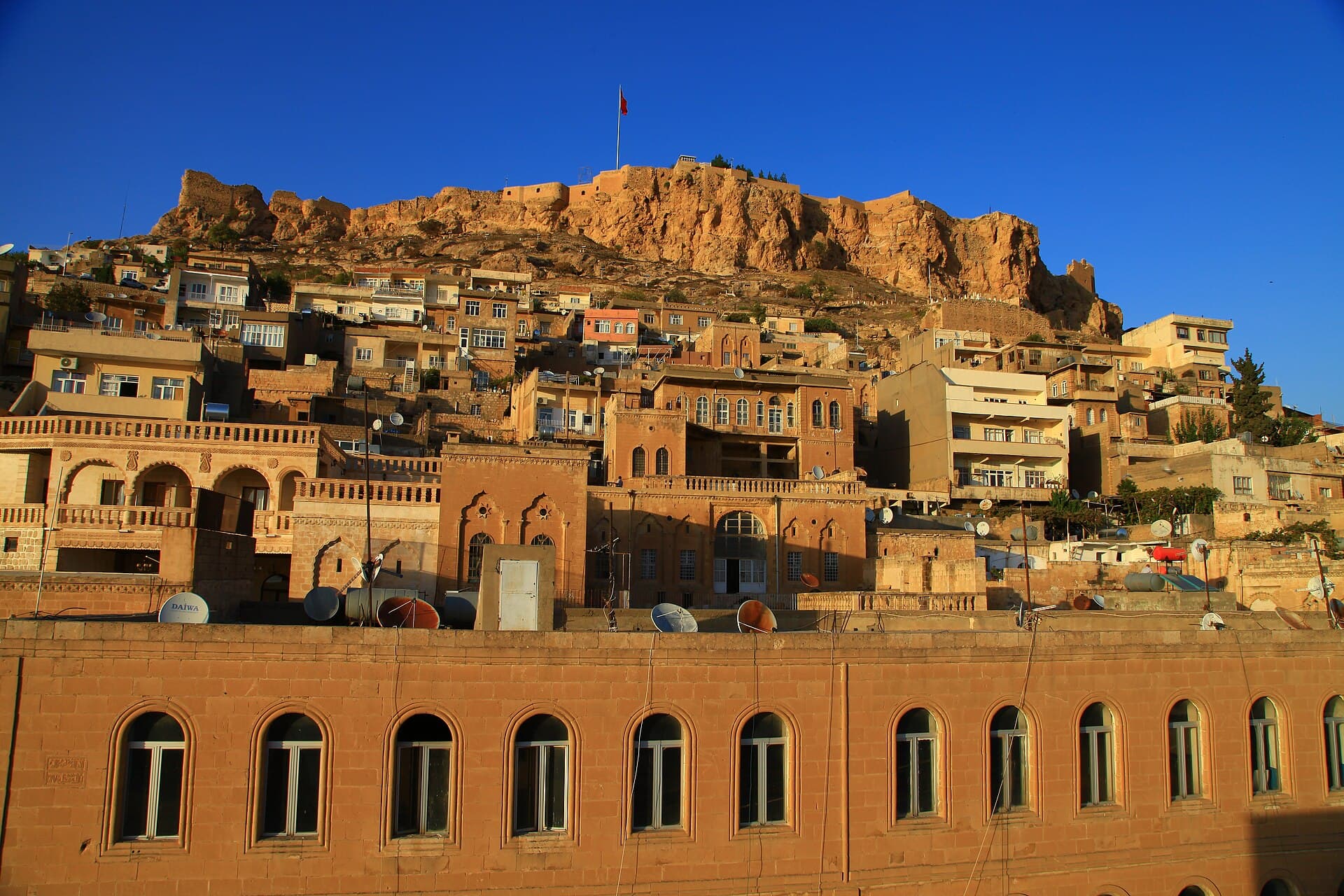 Mardin CastleMardin's most famous monument is the one nobody is allowed into. The castle the 23 minutes walk4.6
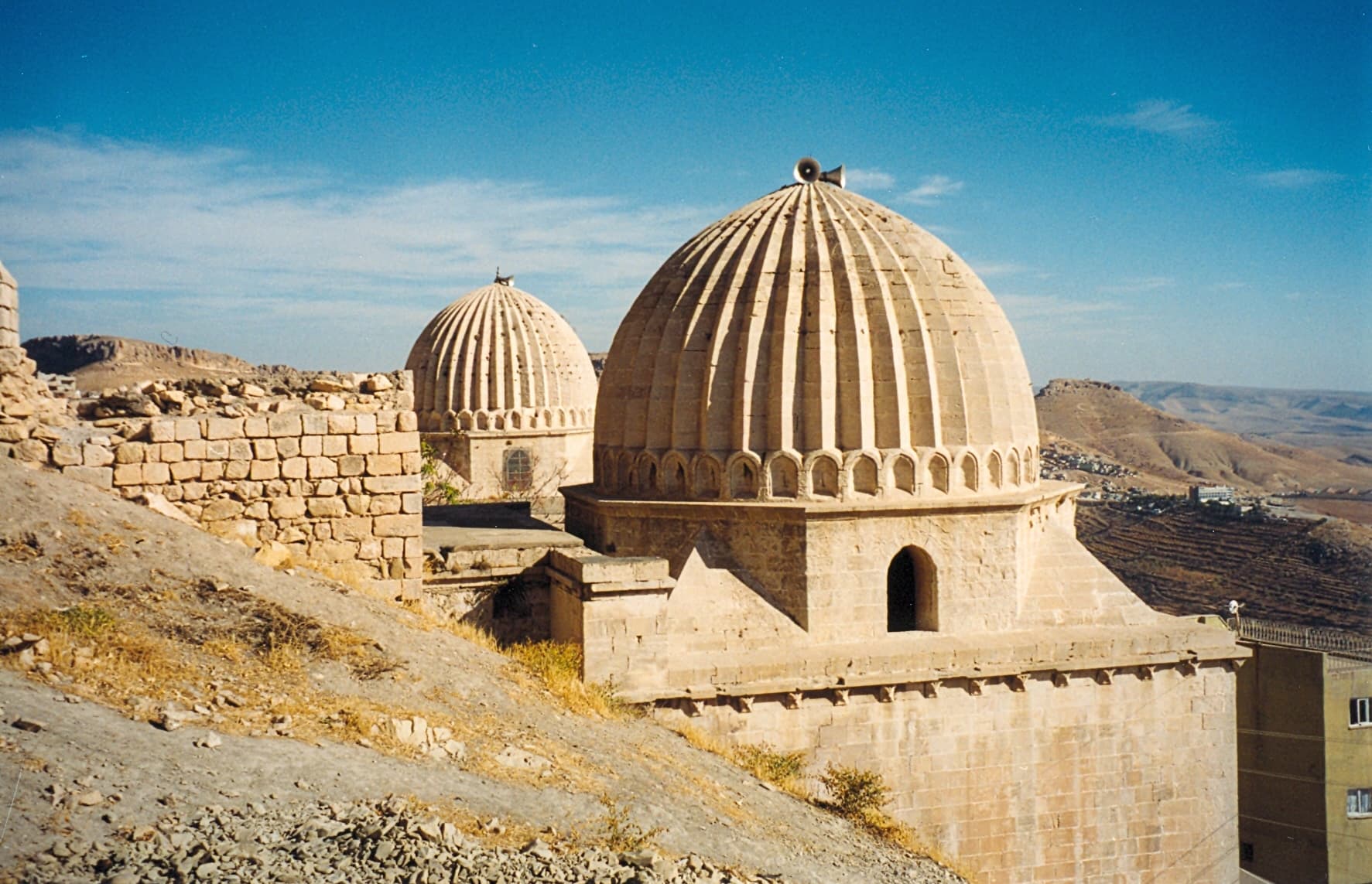 Zinciriye (Sultan Isa) MadrasaThe last Artuqid sultan of Mardin built this madrasa in 1385 and, as the town te24 minutes walk4.7
Kasımiye if you want the bigger building, the iwan and the view over the plain; it is worth the trip down from the old town. Zinciriye sits inside the old town itself, is smaller and easier to reach, and its roof looks up at the citadel. Both together take half a day at most, but forced to choose, take Kasımiye at sunset.
Children like the courtyard, the water channel and the cats, and the visit is short enough not to bore them. A pushchair works in the courtyard only; the upper floor is reached by a stone staircase with no lift, and the approach road is steep.