
The upper terrace
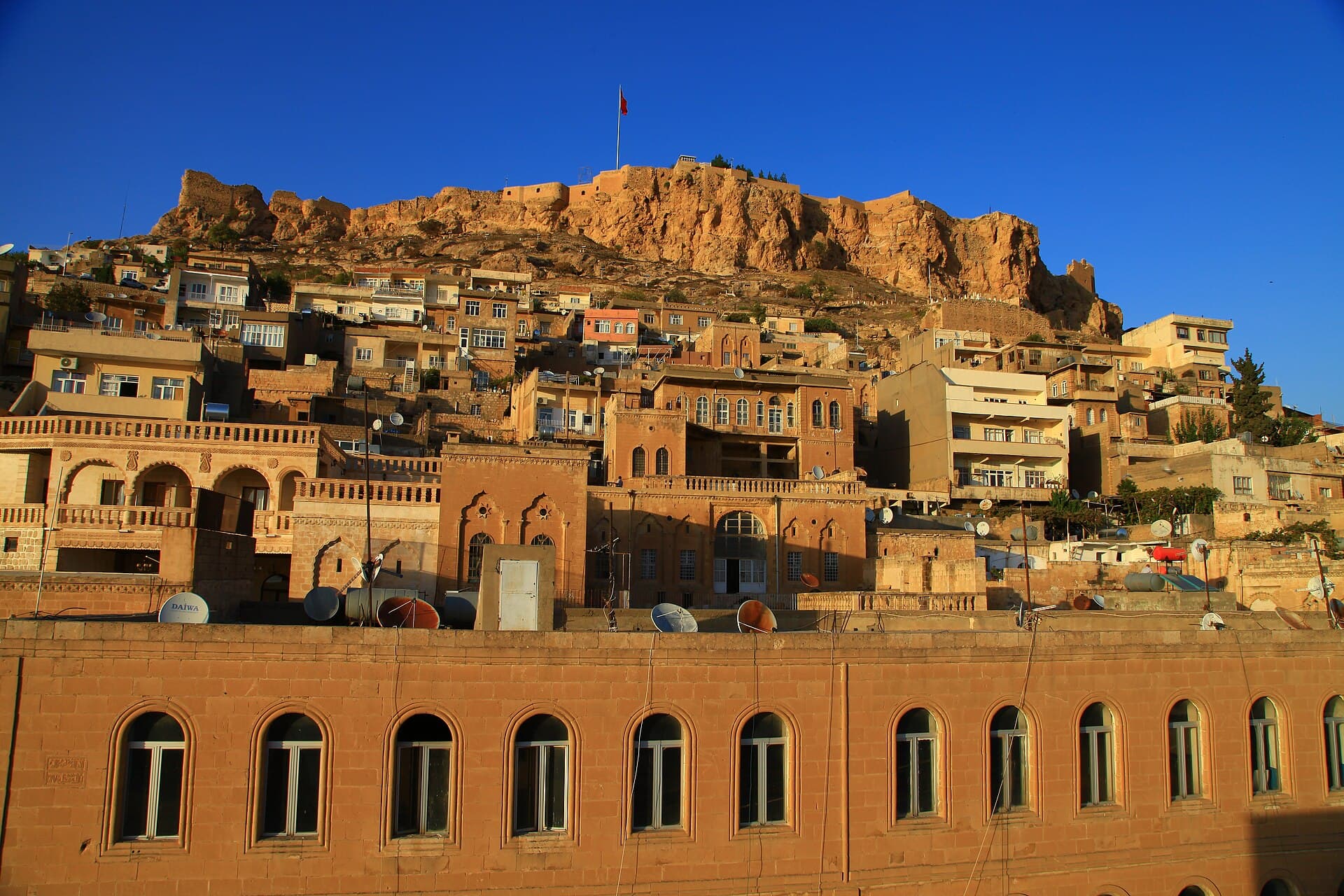
The best open view of Mardin's rooftops and the Mesopotamian plain without climbing to the castle.
Doron — CC BY-SA 3.0 · Misa.stefanovic.07 — CC BY-SA 4.0 · Dosseman — CC BY-SA 4.0 · Dosseman — CC BY-SA 4.0
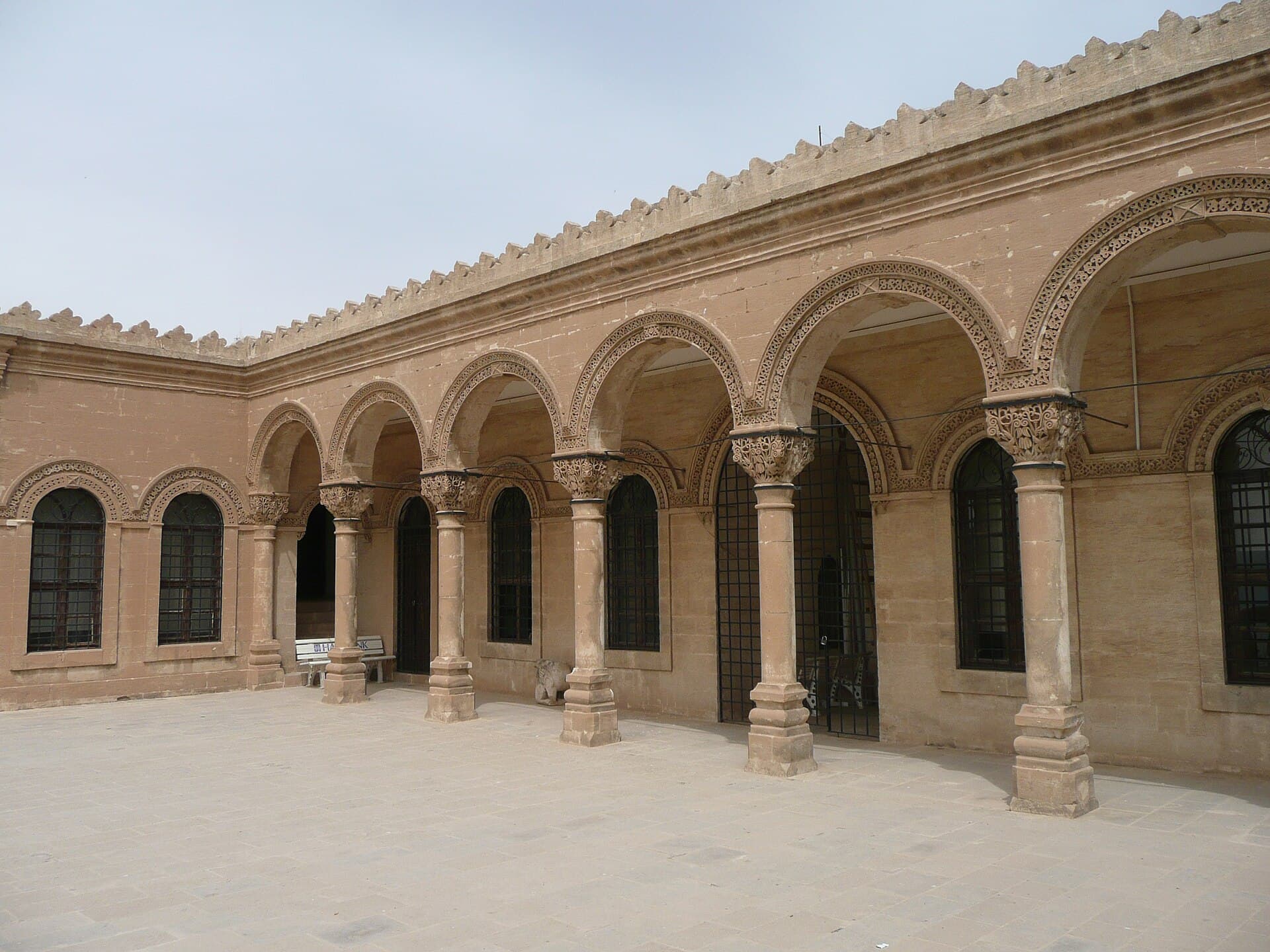
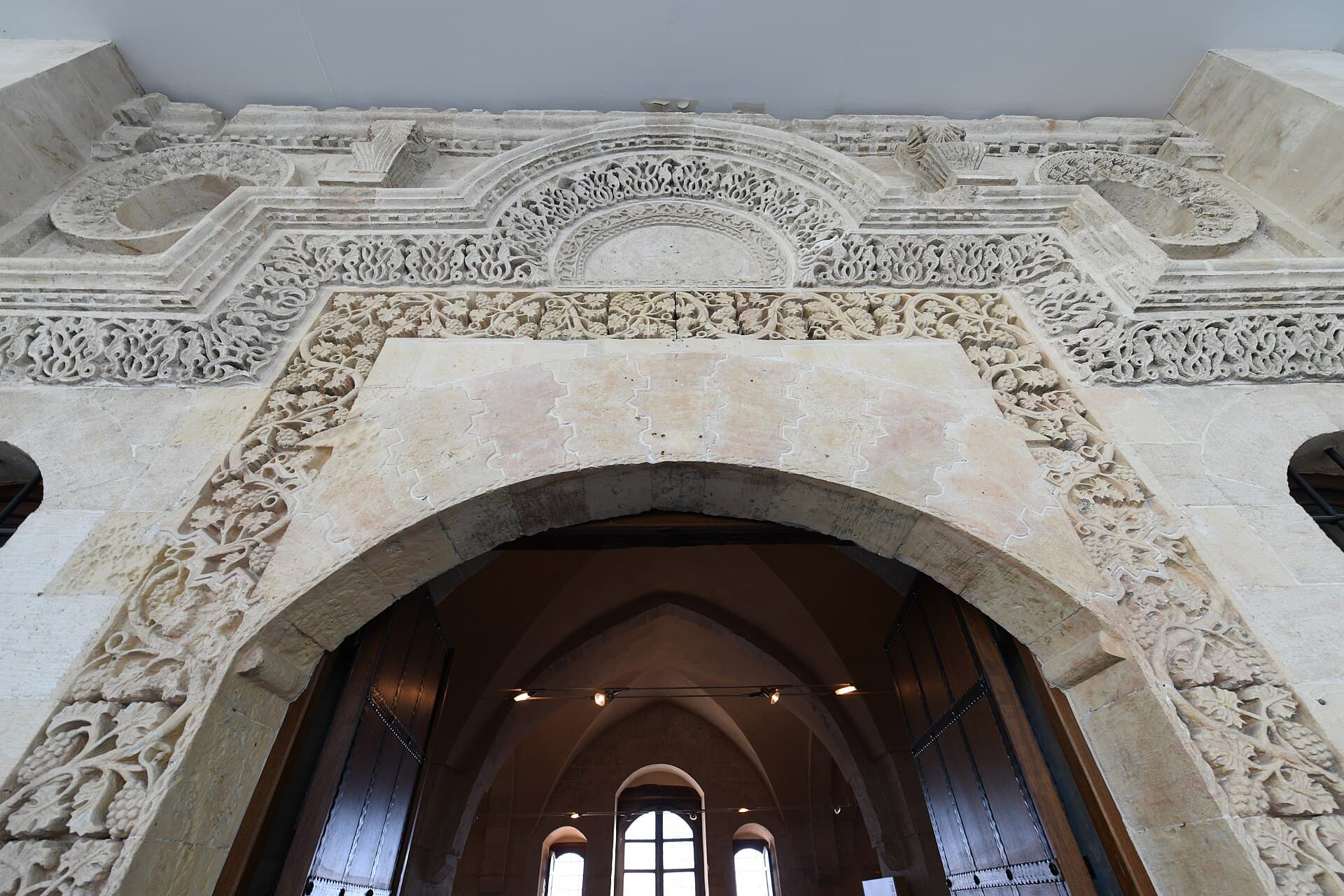
The last Artuqid sultan of Mardin built this madrasa in 1385 and, as the town tells it, was briefly held inside it after his clash with Timur's army. That alone gives the place a flavour no Ottoman madrasa in Istanbul can match: two ribbed stone domes, fluted like halved lemons, sit on the top row of the old town directly beneath the castle, and a portal roughly twelve metres high is smothered in muqarnas and carved calligraphic medallions. All of Mardin is cut from the same honey-coloured stone, but Zinciriye is the piece they put on the book covers and the postcards. The plan steps down two terraced courtyards, one above the other, the most complete example of the Artuqid two-courtyard scheme. From the portal you enter a vaulted hall, then the lower courtyard with its pool and arcades, then the mosque under the eastern dome with its decorated mihrab and stone minbar, and finally the tomb chamber Sultan Isa prepared for himself and was never buried in. The mosque is still a working prayer space, so the usual decorum applies. Upstairs are the small student cells looking down on the arcades. As for the name, meaning 'the chained one', the town stories involve chains hung at the gate or across the entrance; the truth is nobody knows for certain. What everyone actually comes for is the upper terrace: the best open view in Mardin without climbing on to the castle. Stepped rooftops, the minaret of the Great Mosque, and the Mesopotamian plain running to the Syrian horizon on a clear day. Photographers and wedding parties pack the terrace from mid-morning until sunset, so be at the gate for the 08:00 opening or come back in the last hour before closing for the evening light. Access is on foot only: a steep stone stairway branches off 1. Cadde near the Great Mosque, about ten minutes of climbing, and inside there are more uneven steps to the upper floor and the terrace. Children over about seven love the scramble and the view; a pushchair has no place here at all. In August Mardin pushes towards forty degrees, so go in the morning and carry water; in winter snow occasionally settles on the roofs and turns the view into something rare. Admission is 200 Turkish lira in 2026, paid at the gate. Much of what you overhear from the traders and craftsmen on the way up is Mardin's local Arabic, which makes the whole town feel oddly familiar to visitors from the Levant and Iraq in a way nowhere else in Turkey quite does.
The best open view of Mardin's rooftops and the Mesopotamian plain without climbing to the castle.
A twelve-metre muqarnas doorway and two lemon-ribbed stone domes visible from all over town.
A decorated mihrab and stone minbar under a muqarnas dome, still a prayer space rather than an exhibit.
Şar Mahallesi, above 1. Cadde near the Great Mosque, Artuklu, Mardin
 Mardin CastleMardin's most famous monument is the one nobody is allowed into. The castle the 2 minutes walk4.6
 Old MardinFrom any rooftop in Old Mardin the Mesopotamian plain runs flat to the horizon u6 minutes walk4.8
 Mardin MuseumThe finest exhibit in Mardin Museum is the building it lives in. Patriarch Ignat6 minutes walk4.7
 Sakıp Sabancı Mardin City MuseumAt the entrance, in a large glass case against the barracks wall, sits a copper-7 minutes walk4.2
 Church of the Forty Martyrs (Mor Behnam)Prayers have been said in this church since 569, a good seventy years before Isl8 minutes walk4.4
Zinciriye if you want the view and the heart of the old town: it is minutes from 1. Cadde and its terrace is the classic Mardin photograph. Kasımiye is quieter, larger and on the edge of town, charges half as much, and its courtyard with the cascading pool is finer inside, but you need a car or taxi. On a one-night visit, Zinciriye is enough.
The approach is a steep stone stairway with no alternative, then more uneven steps inside up to the terrace. Anyone who walks with difficulty will find it hard work, especially in summer heat. Children over about seven enjoy it; carry infants and leave the pushchair at the hotel.