
The black basalt walls
Eighteen towers of Erciyes volcanic stone in the heart of Cumhuriyet Square, at their finest under winter snow.
Bernard Gagnon — CC BY-SA 3.0 · W. Bulach — CC BY-SA 4.0 · Bernard Gagnon — CC BY-SA 3.0 · Bernard Gagnon — CC BY-SA 3.0
The walls are black. That is the first thing about Kayseri Castle: eighteen rectangular towers of volcanic basalt, quarried from what Mount Erciyes threw out millennia ago, standing not on a crag or behind a moat but in the middle of Cumhuriyet Square, between bus stops and shopfronts. The city never moved away from its fortress; it simply grew around it until the ramparts became part of the daily shopping route. The history is layered. The walls are first recorded under the Roman emperor Gordian III in the third century, Justinian rebuilt them in the sixth, but the shape you see today belongs mostly to the Seljuk sultan Alaeddin Keykubad, who remodelled the fortress in 1224; the Karamanids (a marble inscription records a repair of 1466) and then the Ottomans kept patching it into the late nineteenth century. The inner castle is a rough rectangle of about 800 by 200 metres, with a south gate whose arrow slits are still plain to see, an east gate where Byzantine and Turkish masonry sit side by side, and a modern third entrance opening onto the square. Of the outer wall only fragments survive. The interior calls for honesty. After a long restoration begun in 2013, the castle reopened in 2019 as a polished civic space of paved courts, cafés and cultural halls, not a romantic ruin to scramble over. Decades earlier the courtyard had been a vegetable market, then a huddle of small shops. What genuinely justifies going in is the Kayseri Archaeology Museum, which moved into a new building inside the walls that same year: thirteen halls, headlined by the cuneiform tablets from Kültepe, the oldest written documents found in Anatolia, left by Assyrian merchants some four thousand years ago just over twenty kilometres from here. Also inside the walls is the small Fatih Mosque, built under Mehmed the Conqueror, convenient for prayer mid-visit. Wandering the courtyard and whatever stretch of the wall-walk is open costs nothing; the ground is flat and paved, fine for pushchairs, and stairs only come into it if you climb the ramparts. In August the heat is dry and often past thirty degrees, with little shade in the courtyard at midday, so make it a late-afternoon visit that ends with tea at a café. Winter turns the place inside out: the black walls under snow are one of the best sights in the city, and the heated museum is a perfect refuge for a family taking a day off the Erciyes slopes. The Hunat Hatun complex and the covered bazaar are minutes away on foot, so fold all three into one loop.
Eighteen towers of Erciyes volcanic stone in the heart of Cumhuriyet Square, at their finest under winter snow.
Anatolia's oldest written records, left by Assyrian merchants some four thousand years ago, across thirteen halls inside the walls.
Arrow slits in one, Byzantine and Turkish masonry side by side in the other, eighteen centuries of repair in stone.
Cumhuriyet Meydanı, Kazancılar Caddesi No:2, Melikgazi, Kayseri
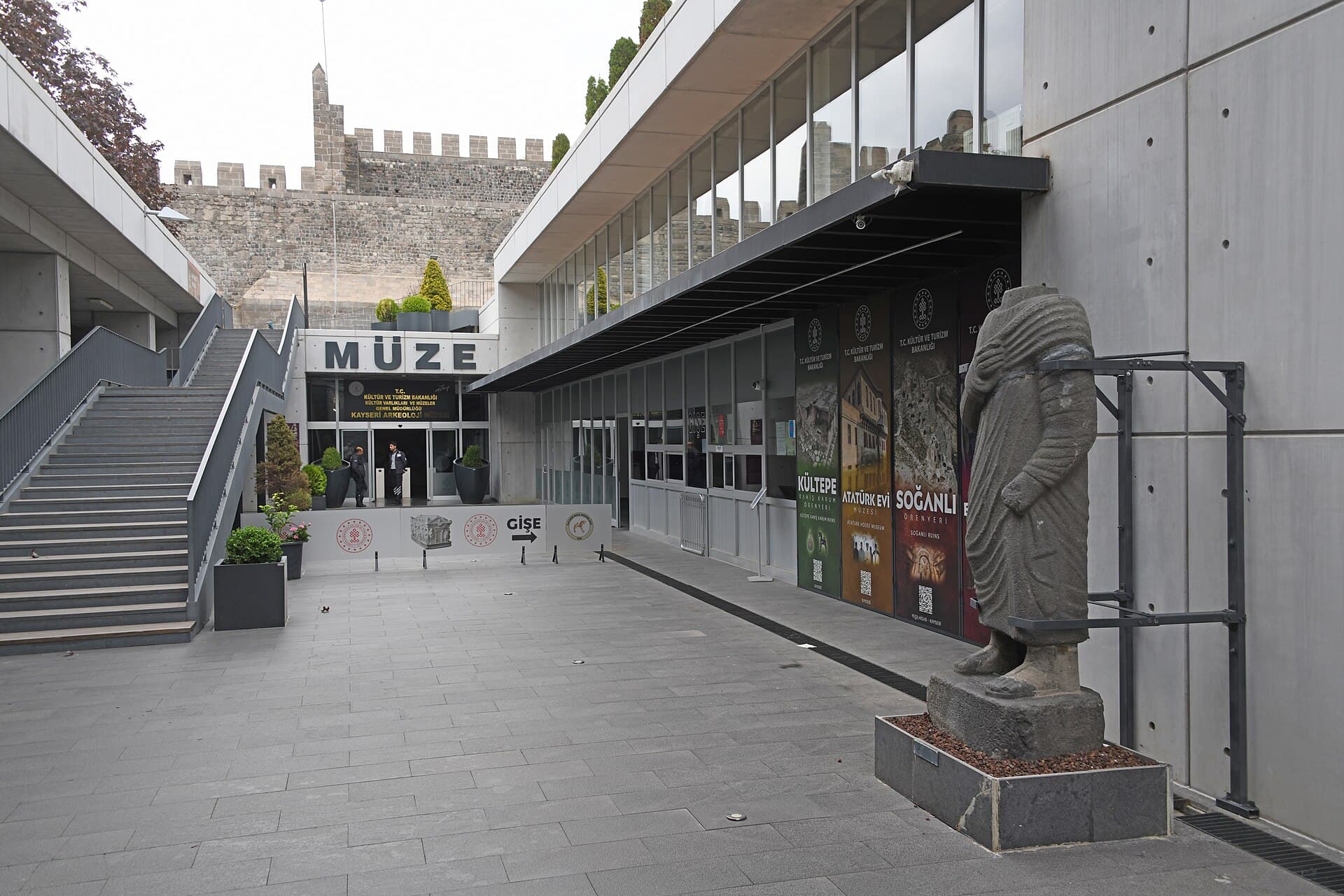 Kayseri Archaeology MuseumFour thousand years ago Assyrian merchants were writing their letters and contra1 minute walk
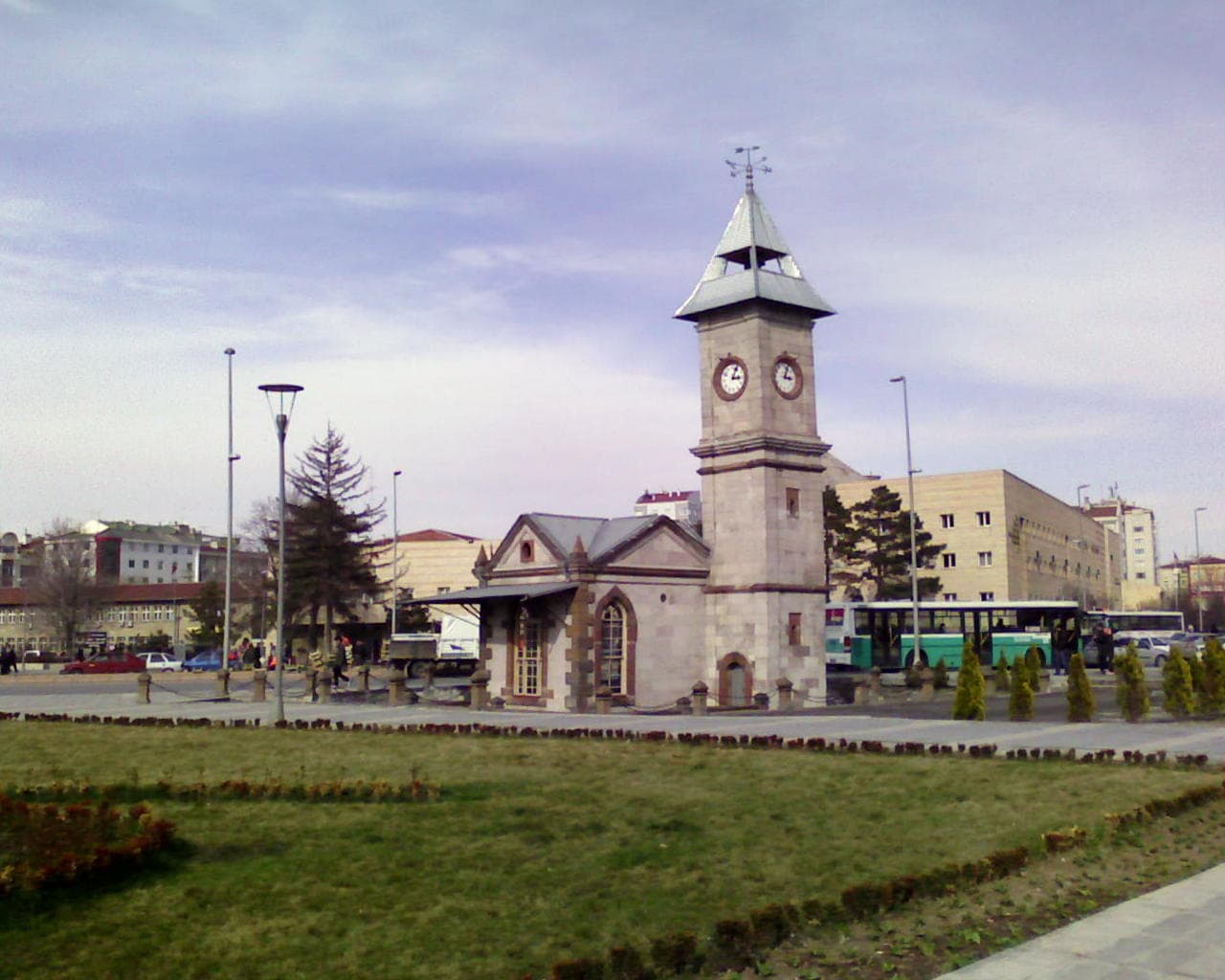 Kayseri Clock TowerA Leipzig-made clock has been striking the hours over this Anatolian square sinc2 minutes walk
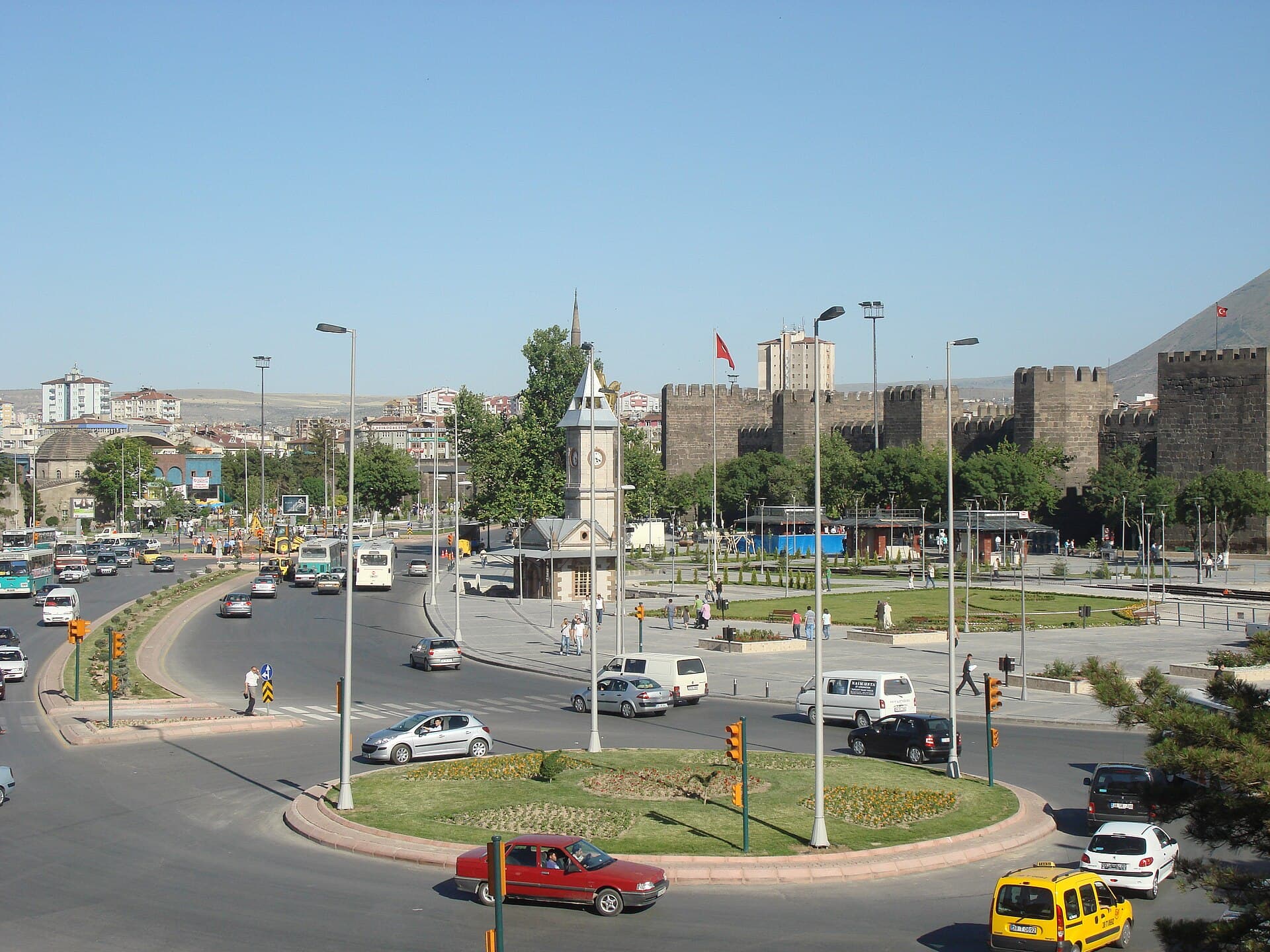 Republic Square (Cumhuriyet Meydanı), KayseriA third-century Roman fortress with black volcanic-stone walls sits in the middl2 minutes walk
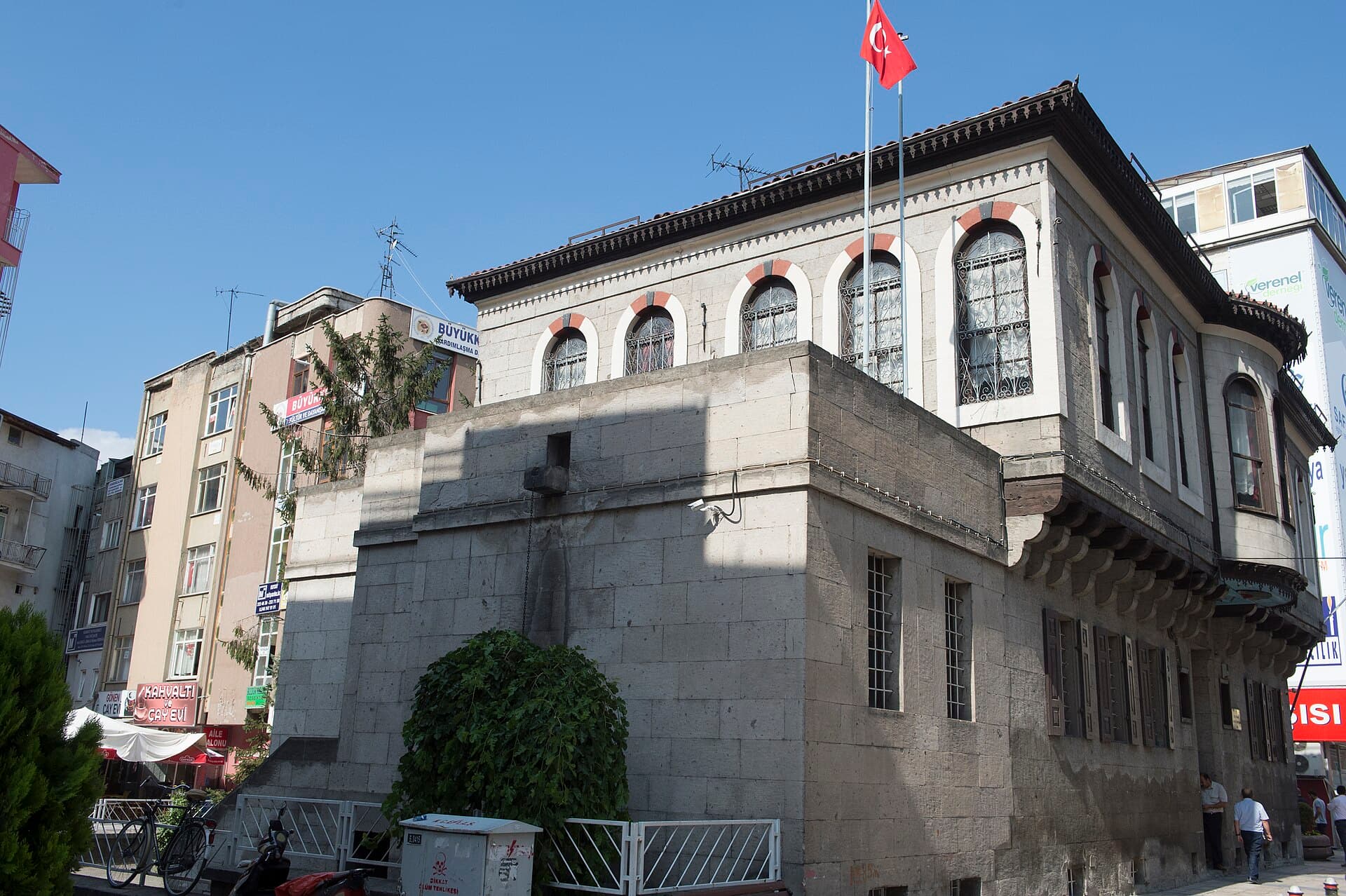 Atatürk House Museum, KayseriTwo nights were all it took. Mustafa Kemal slept here on 19 and 20 December 19193 minutes walk
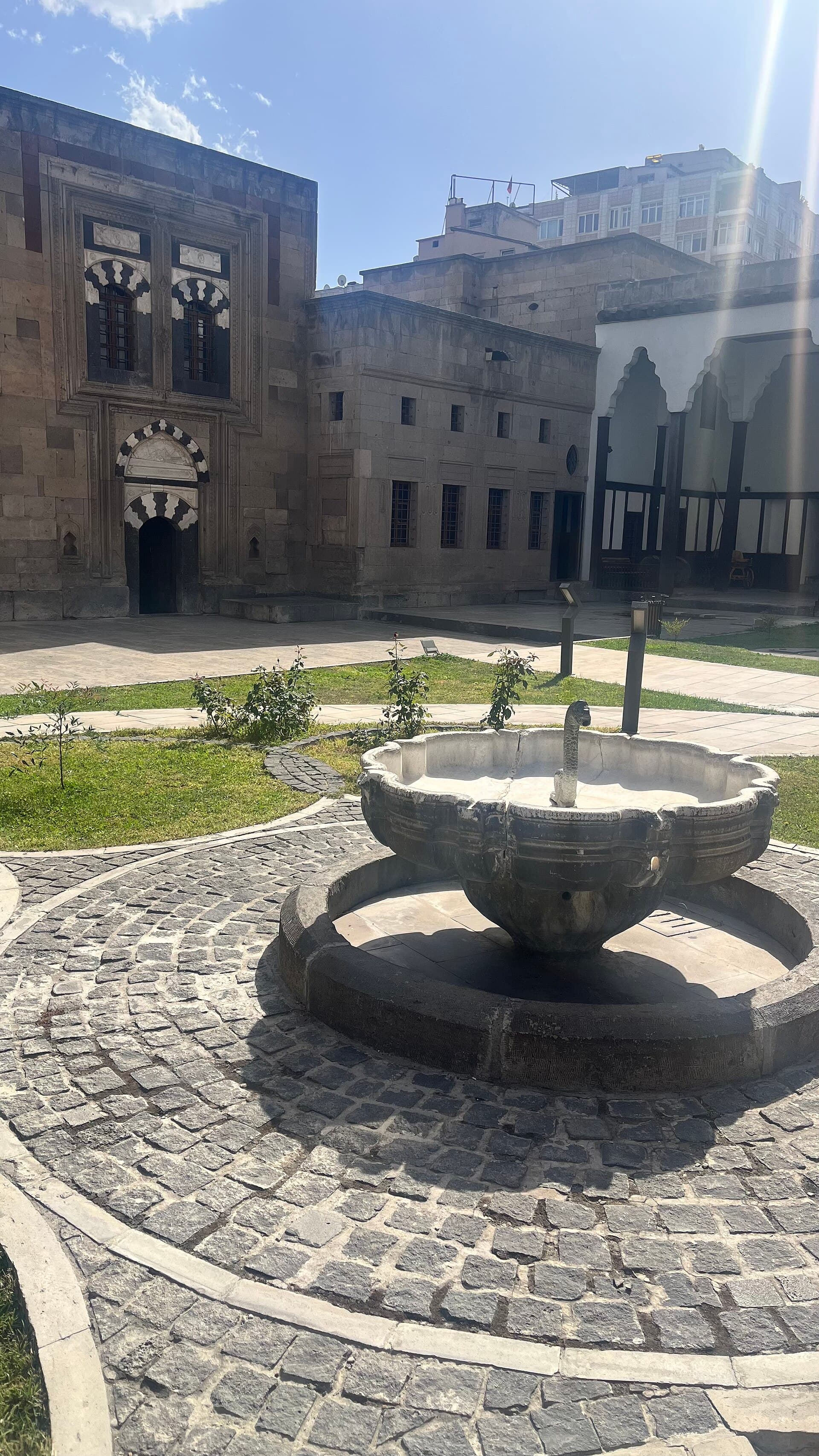 Güpgüpoğlu Mansion and Ethnography MuseumThe oldest house still standing in Kayseri went up between 1419 and 1497 in the 4 minutes walk
Yes, as a one- to two-hour stop rather than a full day. It sits in the city centre about a quarter of an hour by car from Erkilet airport; pair it with the neighbouring Hunat Hatun complex and the covered bazaar, then carry on to Cappadocia roughly an hour away. If time is really tight, the walls from outside and the courtyard are enough, and go into the museum only if antiquities are your thing.
With under half an hour, stick to the free courtyard and walls; the interior is restored and polished, so you are not missing an atmospheric ruin. With an hour to spare the museum earns its modest fee for the Kültepe cuneiform tablets and the Heracles sarcophagus, and it is the only heated, shaded refuge on site in either season.