
The water gates
An engineering answer to the river gap.
Photo: Andreas Praefcke — CC BY 3.0 · GFreihalter — CC BY-SA 4.0 · GFreihalter — CC BY-SA 4.0 · Bärwinkel,Klaus — CC BY-SA 4.0
The Schlayerturm is one of the water towers in Nuremberg's medieval wall: it stands at the point where the river Pegnitz leaves the city to the west, and it was part of a system that closed the river channel with iron grilles to prevent hostile boats entering. That river system is the most interesting detail in Nuremberg's fortifications: the Pegnitz crosses the city from east to west, an obvious defensive gap in any wall. The solution was towers at the entry and exit points with water gates and lowerable grilles — complex defensive engineering for a problem cities away from rivers never faced. The tower today is a private building and not visitable, and it stands at the edge of the Hallerwiese — the oldest public park in Germany, opened to the public in 1434. Walking the riverbank there passes the tower and remnants of the wall, and it is among the quietest walking routes in Nuremberg.
An engineering answer to the river gap.
Among the quietest routes in Nuremberg.
Hallerwiese, 90419 Nuremberg
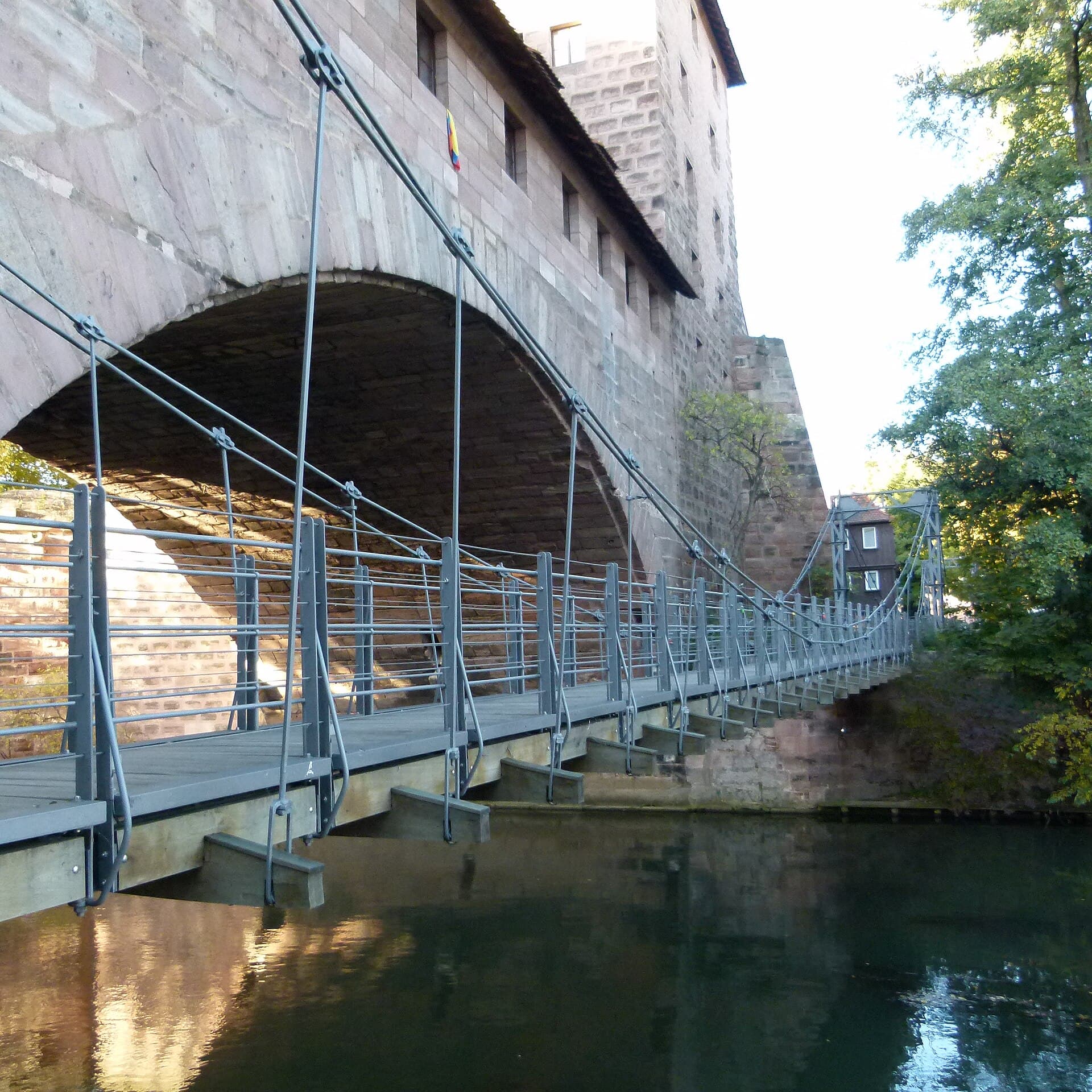 Kettensteg Chain BridgeA sixty-eight-metre footbridge crossing the river Pegnitz at the western end of 1 minute walk4.6
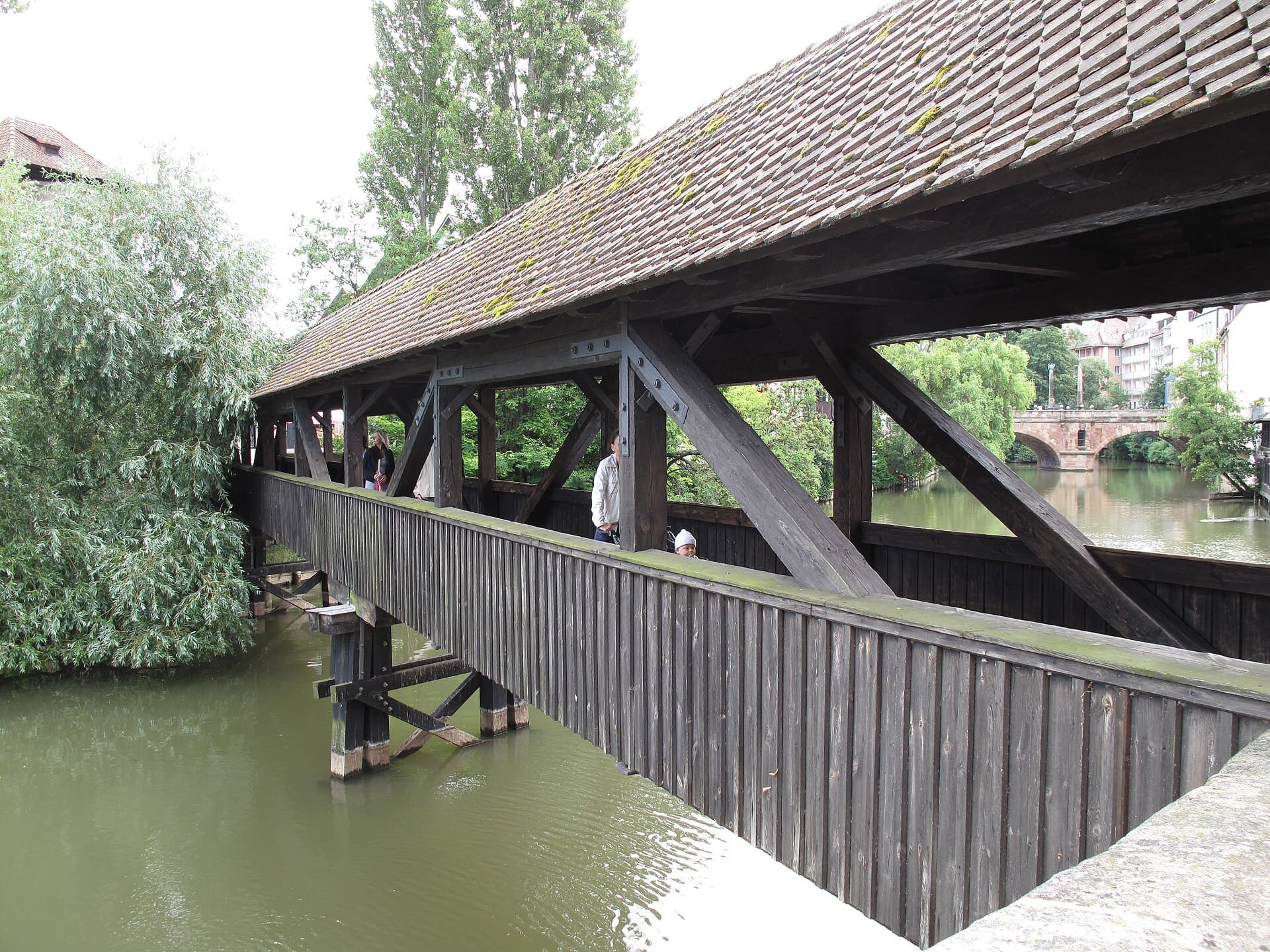 Hangman's Bridge & HouseA covered wooden bridge crosses the Pegnitz to a stone tower and a half-timbered3 minutes walk4.9
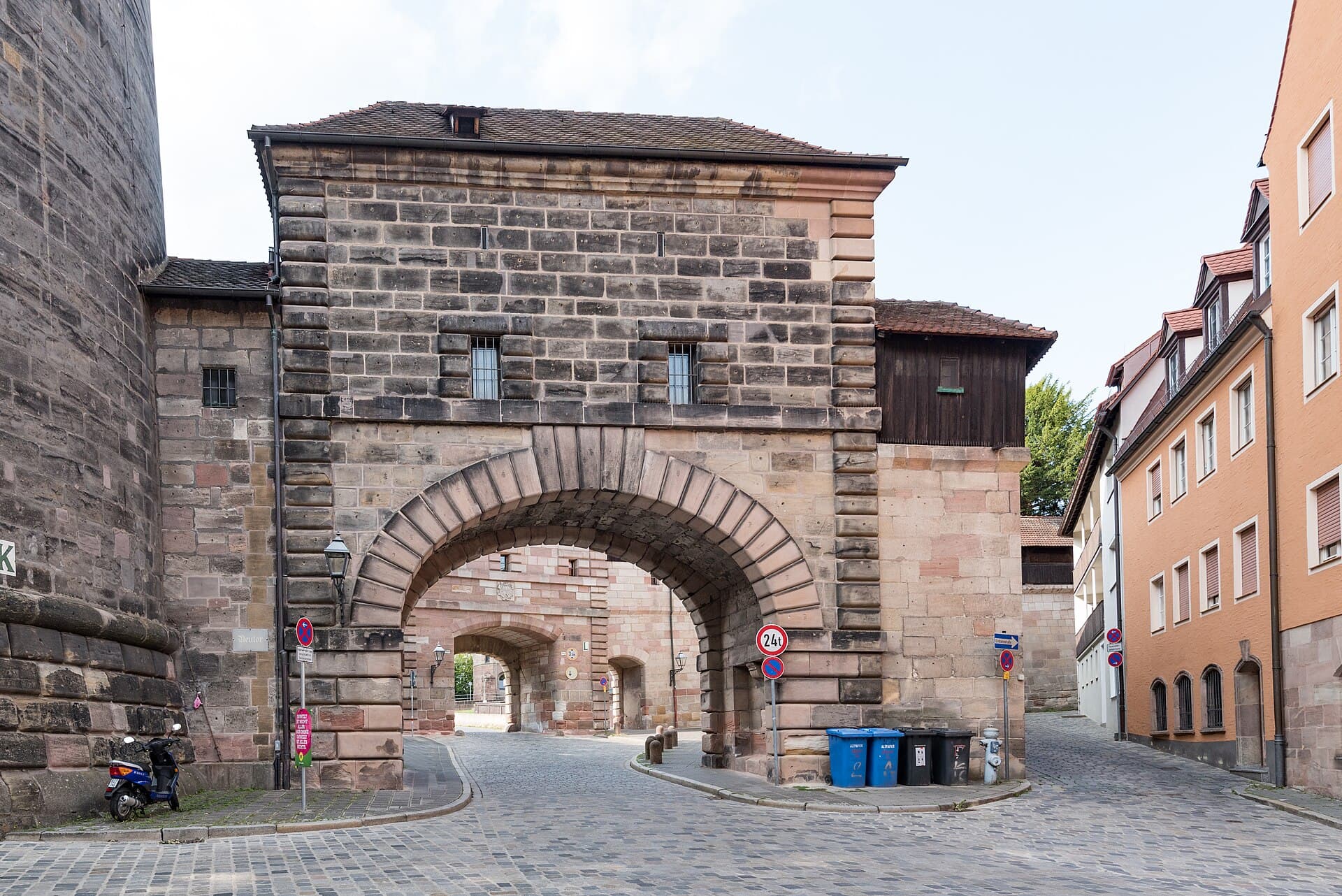 The Neutor BastionThe Neutor bastion is part of the advanced fortifications of Nuremberg's wall, b3 minutes walk4.5
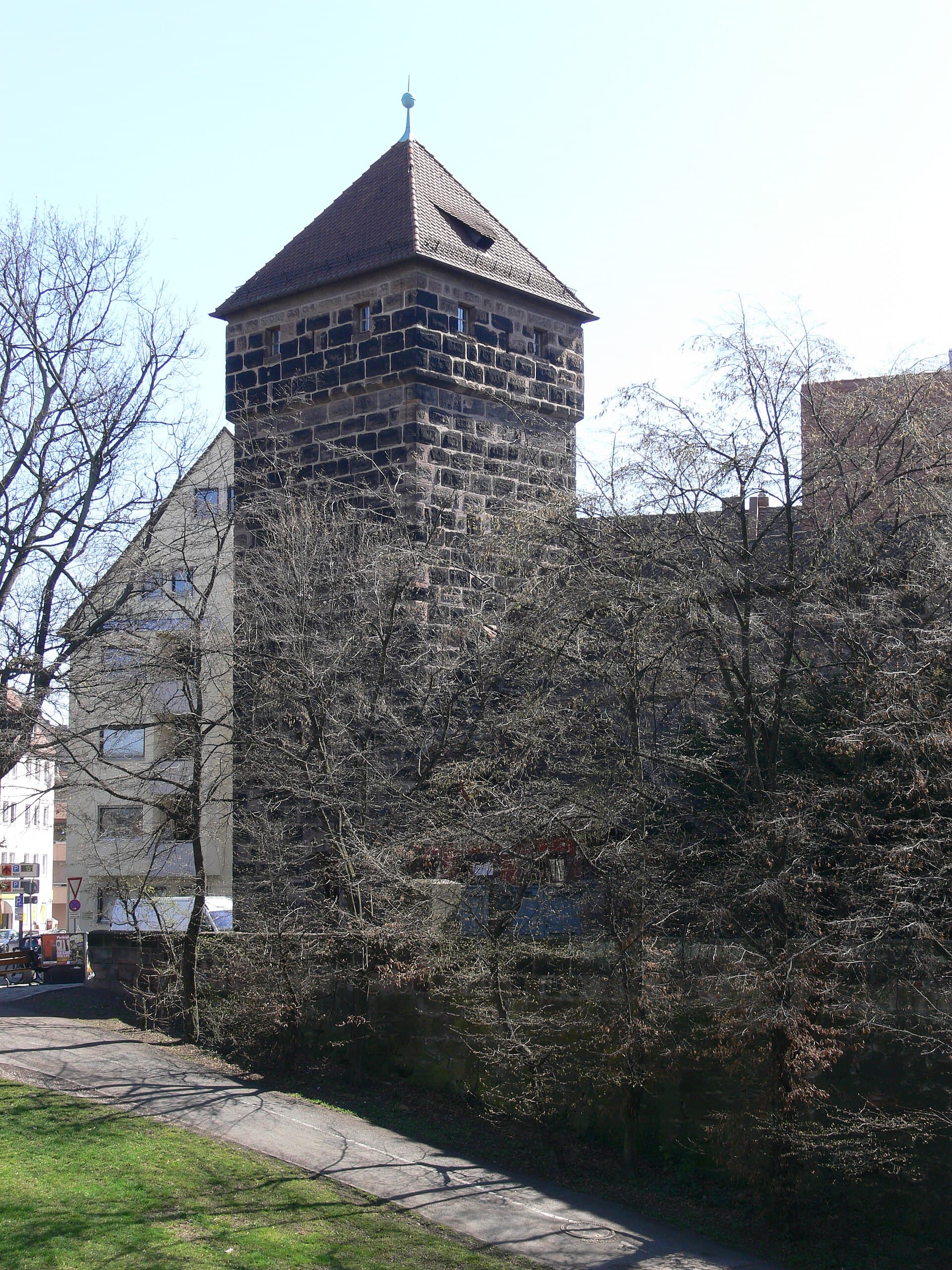 The Tower of the SensesThe Turm der Sinne is an interactive science museum inside a medieval defensive 3 minutes walk4.1
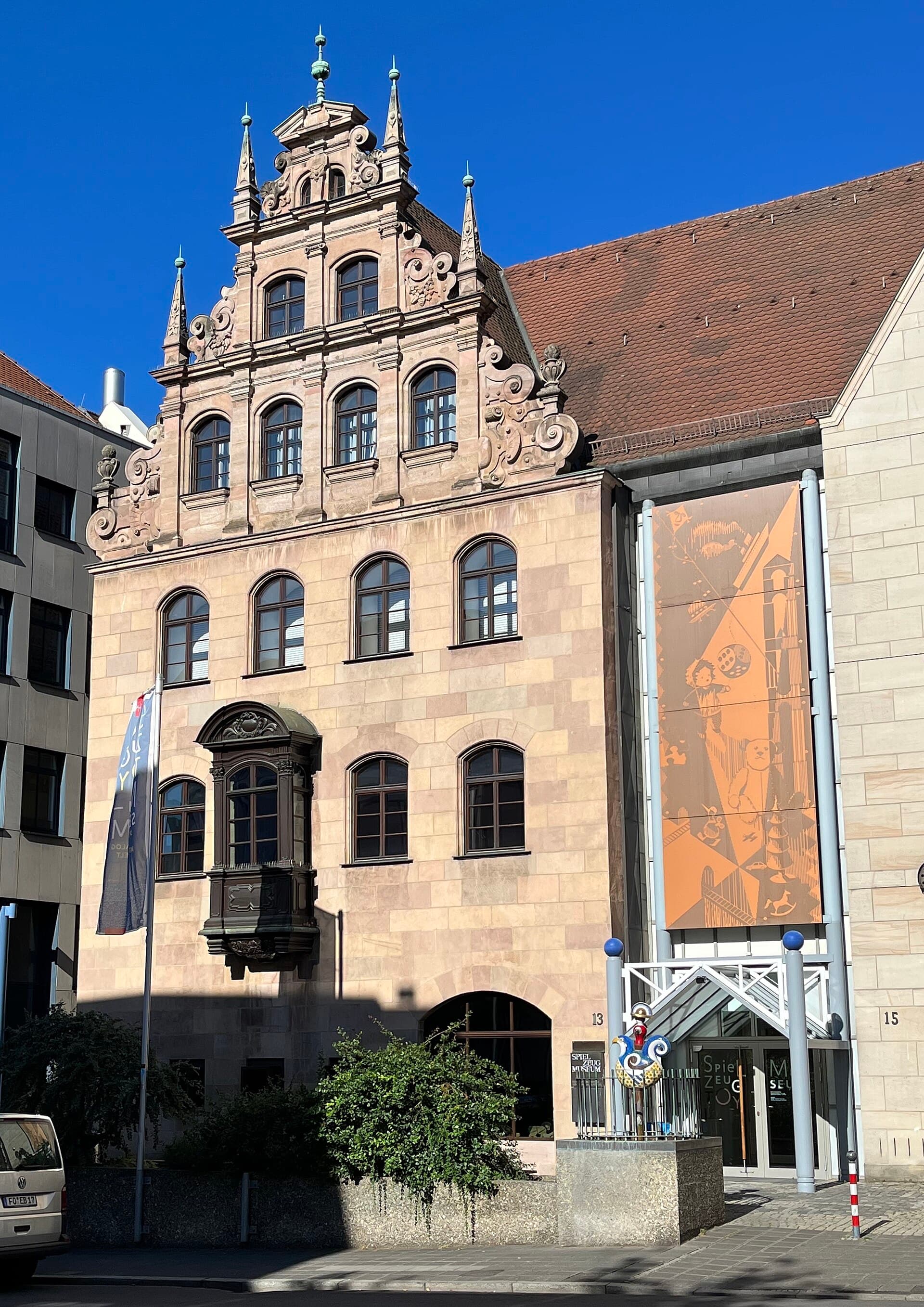 Nuremberg Toy MuseumThe Nuremberg Toy Museum is among the best-known toy museums in the world, and i3 minutes walk4.6
A meadow on the Pegnitz bank that the city council gave over to public use in 1434 — ground formally designated as recreation space for all residents rather than a particular class, which makes it the oldest documented public park in Germany. It was used for washing, throwing games and festivities, and it remains a public park used by the district's residents today.