
Two houses, one church
Minorites and Clares neighbouring since the fourteenth century.
Jirka Dl — CC BY-SA 4.0 · Jirka Dl — CC BY-SA 4.0 · Infrogmation — CC BY-SA 4.0 · Czeva — CC BY-SA 3.0
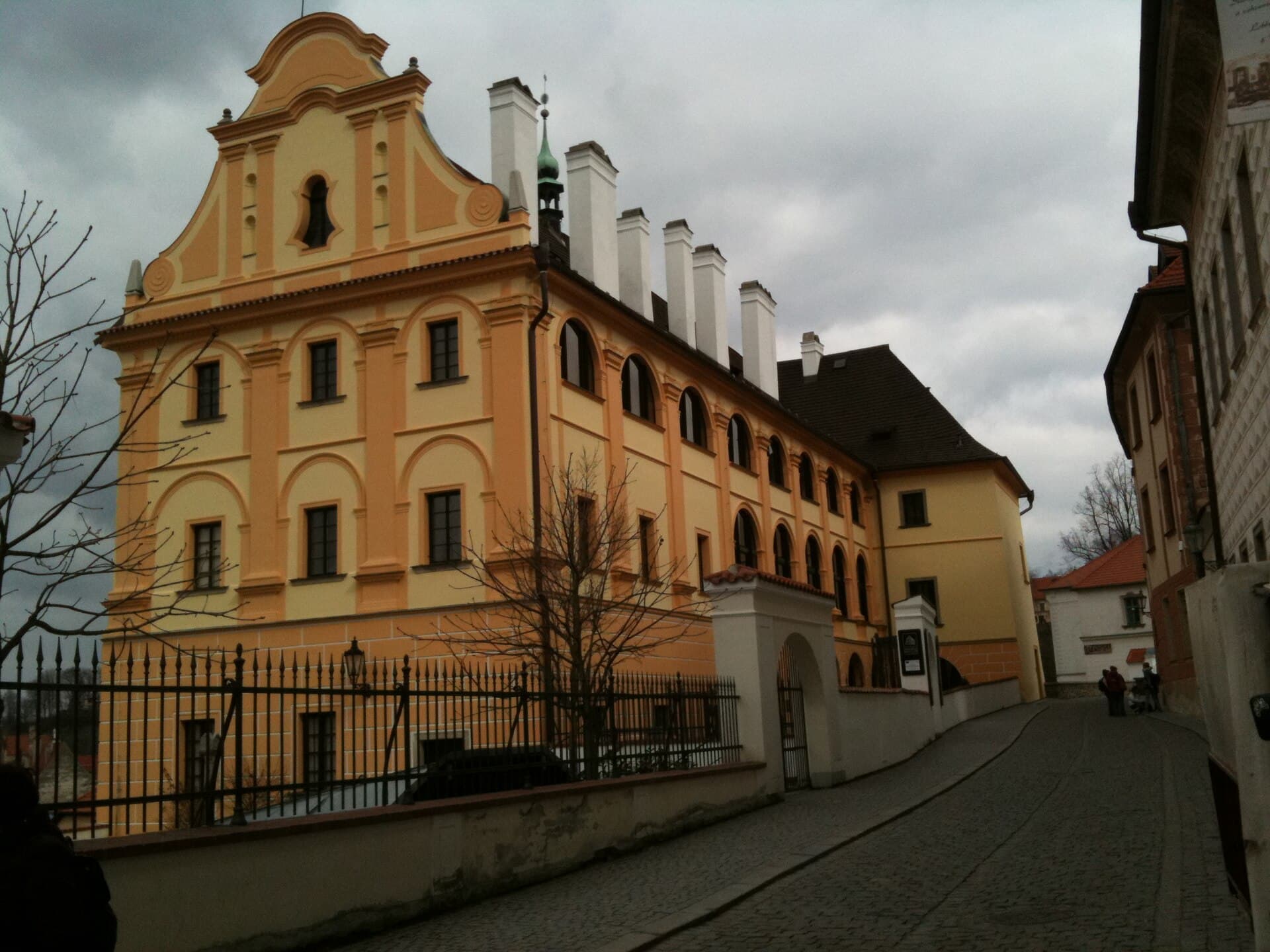
A monks' town behind the castle: the fourteenth-century complex joined two houses — Minorite friars and Poor Clares — with shared church, gardens and arcaded passages, restored whole as a living craft centre: the historic town's third limb, and its quietest by a startling margin. Its philosophy is the medieval hand: workshops that actually work — a baker firing his oven, a potter at his wheel, a glass-smith, a manuscript scribe — and bookable sessions to make your own paper, bread or glass piece. The historical route runs muraled cloisters, the Corpus Christi church, and vast timber attics as exhibition halls. For families a particular treasure: children's wings dressing the small in period clothes and setting them to crafts — an hour that soaks up lane-weary energy, cleverly.
Minorites and Clares neighbouring since the fourteenth century.
Vast centuries-old trusses over the cloisters — today's galleries.
Klášterní dvůr 97, 381 01 Český Krumlov
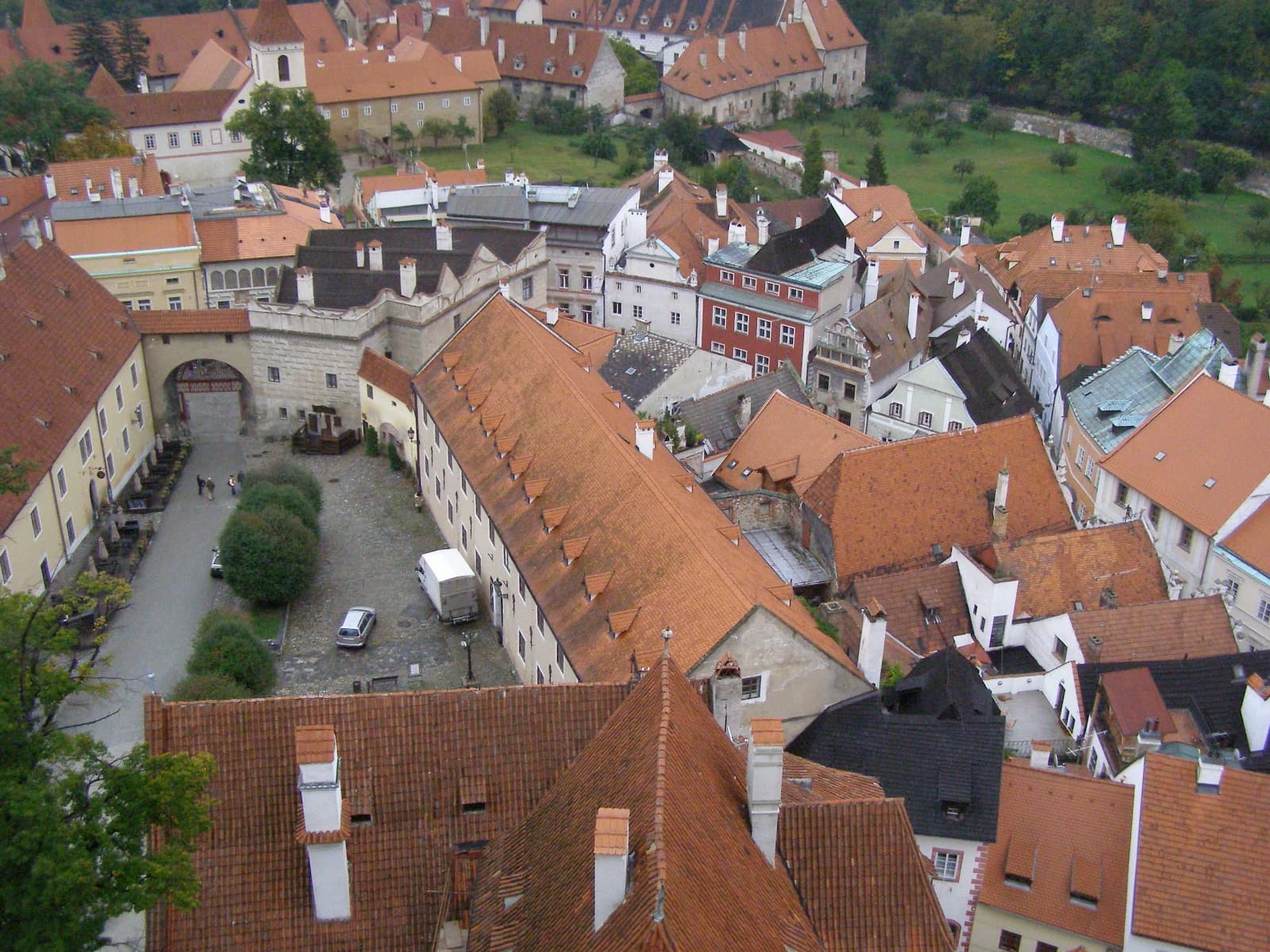 Latrán QuarterThe castle's town beneath its walls: Latrán is the servants' and craftsmen's ban1 minute walk4.7
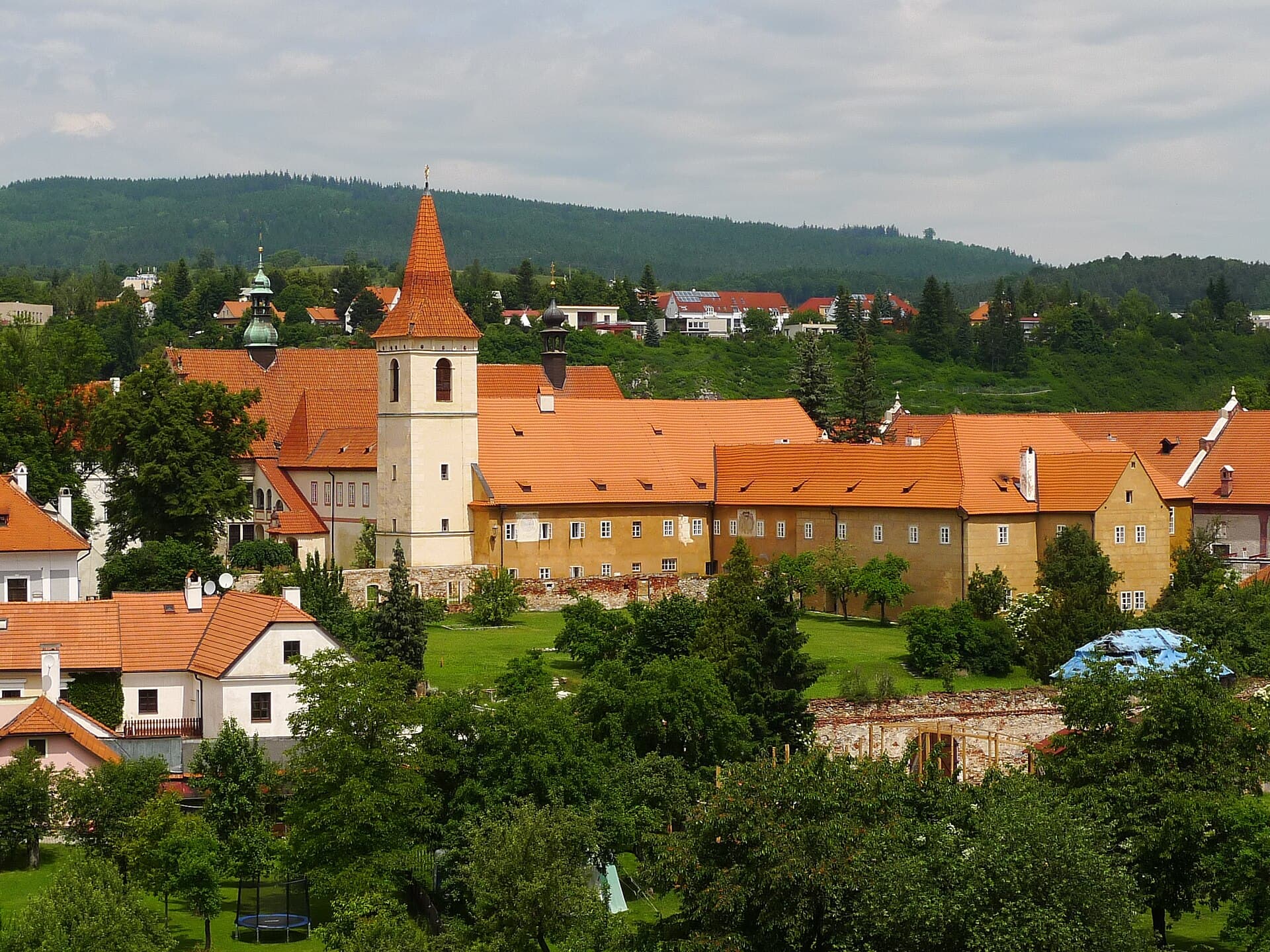 The Minorite Monastery and its GardenA monastic complex in Český Krumlov's old town, founded in 1350 and holding thre1 minute walk4.9
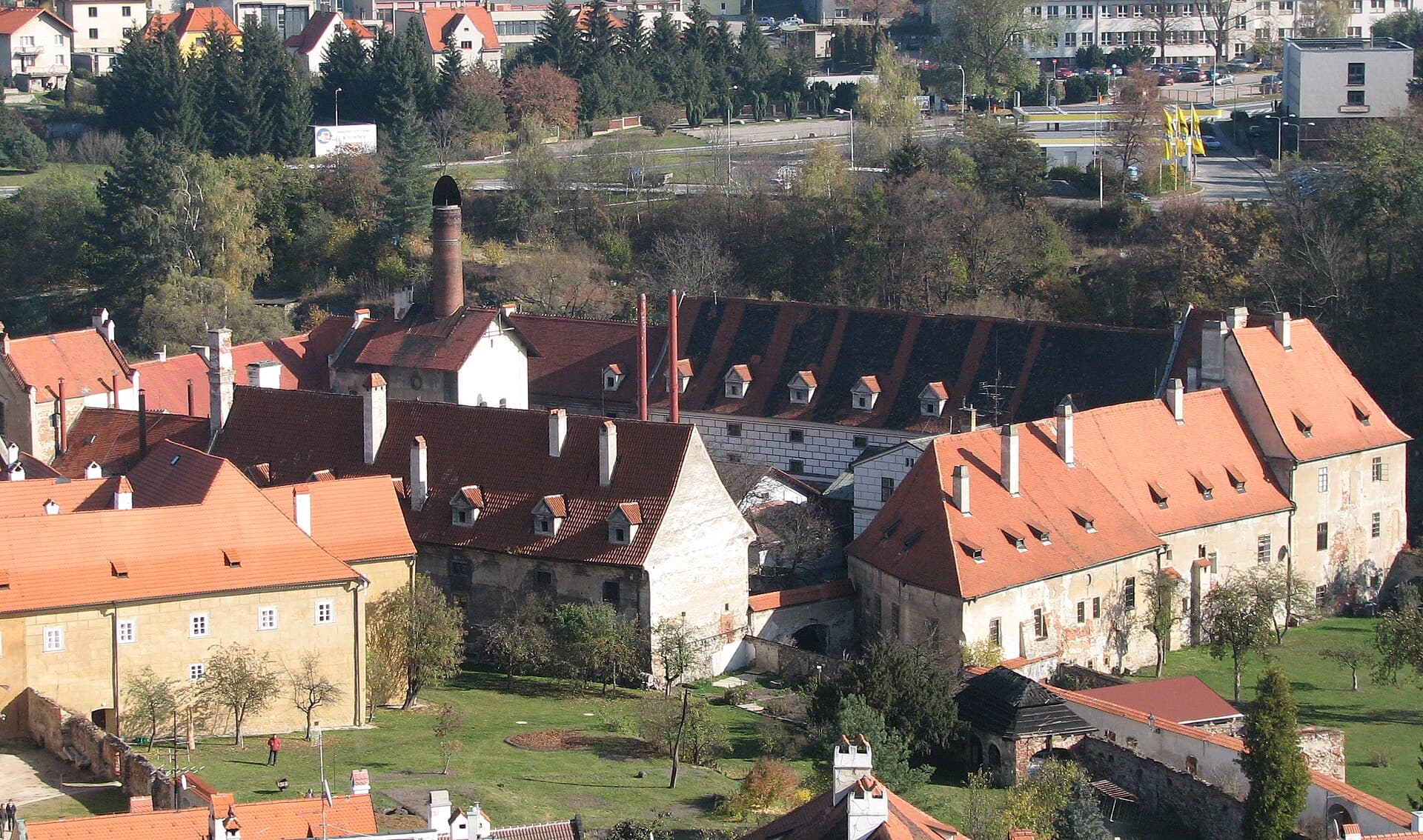 Historic Brewery, Český KrumlovA historic brewery in Český Krumlov brought back into operation after years of c2 minutes walk3.9
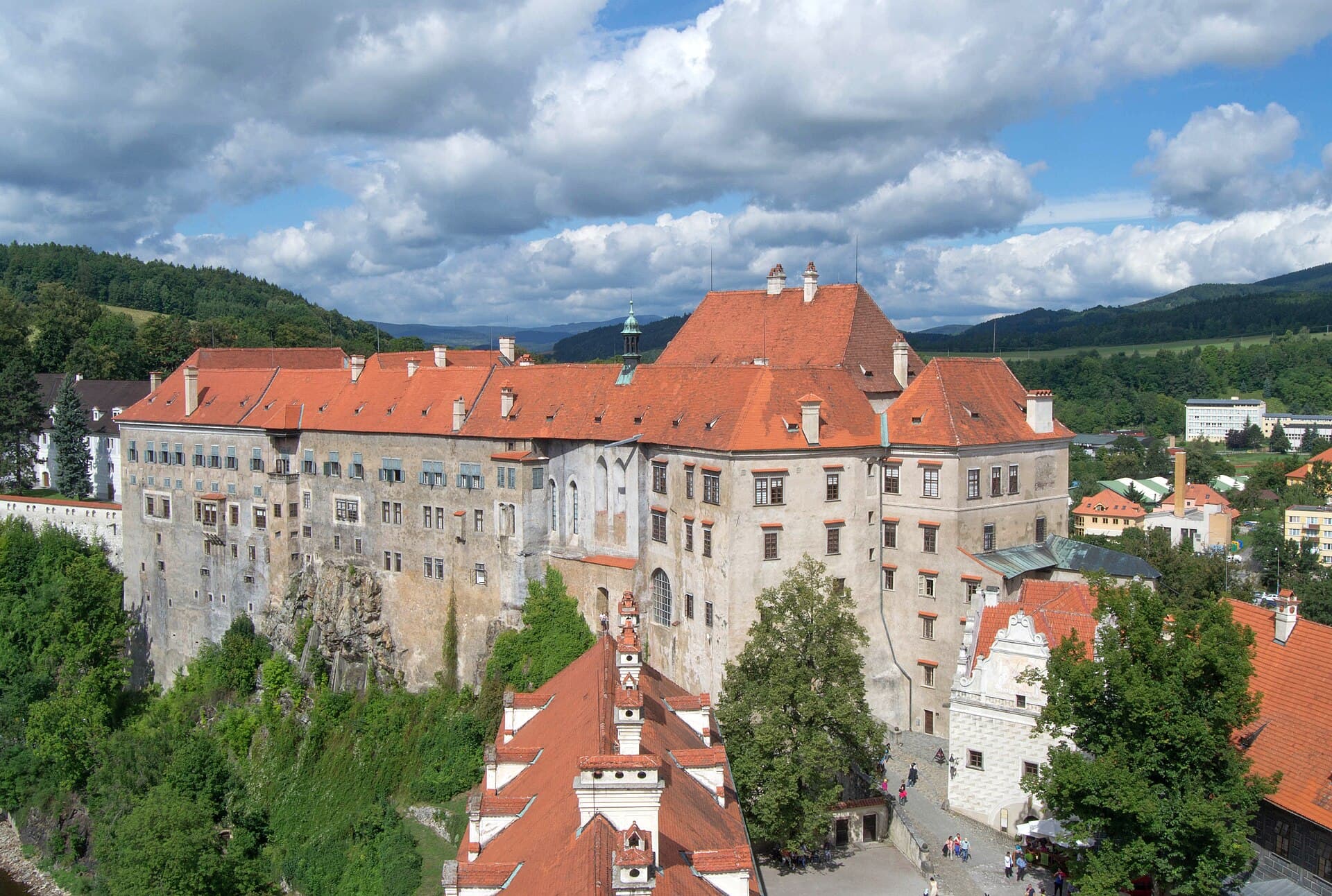 Cesky Krumlov CastleCzechia's second-largest castle after Prague's — above a town of mere thousands:3 minutes walk4.7
 The Regional MuseumThe town's memory in a 1652 Jesuit college: the Regional Museum at Horní street'4 minutes walk4.7
Two days solve it: castle and lanes first, monasteries as the second morning's quiet — on one packed day make them your crowd-escape: when the square chokes after noon the cloisters stay near-empty always. With children they become mandatory: workshops beat guided rooms for them without debate.
The centre's site posts open-workshop times (turning up mostly suffices) while private sessions (bread/paper/glass) ask days ahead — summer crowds, so early. Their prices sit atop the ticket, and your piece leaves with you: a souvenir genuinely made.